The evolution of street photography has transitioned from the heavy, mechanical rangefinders of the mid-20th century to the sophisticated, AI-driven smartphones of the modern era. While the equipment has changed, the core objective remains the same: capturing the "decisive moment," a term coined by Henri Cartier-Bresson, in the rawest form possible. Black and white street photography remains a cornerstone of this genre, stripping away the distractions of color to focus on the fundamental elements of light, shadow, and human emotion. With the iPhone now serving as the primary tool for millions of photographers, mastering the device’s specific capabilities has become essential for both amateur enthusiasts and professional visual storytellers.
The Monochromatic Advantage in Urban Environments
Street photography is inherently chaotic. Urban landscapes are filled with competing colors, neon signs, and erratic lighting that can often overwhelm a composition. By choosing to work in black and white, a photographer can simplify a scene, allowing the viewer to focus on the narrative and the structural integrity of the frame. In a monochromatic world, the emphasis shifts to "tonal contrast"—the range between the brightest whites and the deepest blacks.
Historically, street photography was defined by the limitations of film. Icons like Robert Frank and Diane Arbus utilized high-contrast black and white film to evoke mood and grit. Today, the iPhone replicates and enhances this aesthetic through computational photography. According to industry data from the Camera & Imaging Products Association (CIPA), the rise of high-end smartphone sensors has led to a significant shift in how street photography is consumed, with over 90% of casual street captures now originating from mobile devices.
1. Real-Time Visualization: Shooting in Mono
A common mistake among mobile photographers is shooting in color with the intention of converting to black and white during the editing phase. While this preserves data, it fails to train the "photographic eye" to see tonal values. The iPhone’s native camera app provides a solution through its "Noir" and "Silvertone" filters, which allow for real-time monochromatic previewing.
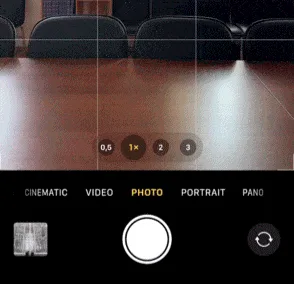
To access these, a user must swipe up within the Camera app, select the Filters icon (represented by three overlapping circles), and choose the Noir setting. This method is non-destructive, meaning the iPhone still records the full color data in the background, allowing for a reversion to color if necessary. However, the psychological benefit of seeing the world in grayscale through the viewfinder cannot be overstated. It allows the photographer to instantly identify how light interacts with textures and how shadows define shapes without the distraction of hue.
2. Minimalism and the Power of Negative Space
The "less is more" philosophy is particularly effective in black and white street photography. Minimalism involves reducing a composition to its barest essentials, often featuring a single subject against a vast, uncluttered background. This technique utilizes "negative space"—the empty areas surrounding a subject—to direct the viewer’s eye with surgical precision.
In a dense city, finding negative space requires intentionality. Large public squares, minimalist modern architecture, and open parks serve as ideal stages. Professional street photographers often "fish" for a shot: they find a visually striking, empty location and wait for a single human subject to enter the frame. This patience results in a high-impact image where the subject is isolated, emphasizing their movement or posture against the urban void.
3. Utilizing Leading Lines for Depth and Direction
Leading lines are a fundamental compositional tool used to draw the viewer’s eye toward a specific focal point or to create a sense of three-dimensional depth on a two-dimensional screen. In the urban landscape, these lines are ubiquitous: sidewalks, railings, road markings, and the silhouettes of skyscrapers.
When composing a shot on an iPhone, positioning the device so that lines originate from the corners of the frame can create a more dynamic and immersive perspective. This is particularly effective in tunnels or along long corridors. The monochromatic treatment enhances these lines, as the contrast between the dark architectural features and the lighter surroundings makes the geometry of the city pop.
4. Capturing Repetitive Patterns and Urban Texture
Human psychology is naturally drawn to patterns and repetition. The modern city is a grid of repetitive elements—windows on a glass building, a row of pillars, or the steps of an escalator. These patterns create a rhythmic quality in a photograph that can be both hypnotic and aesthetically pleasing.
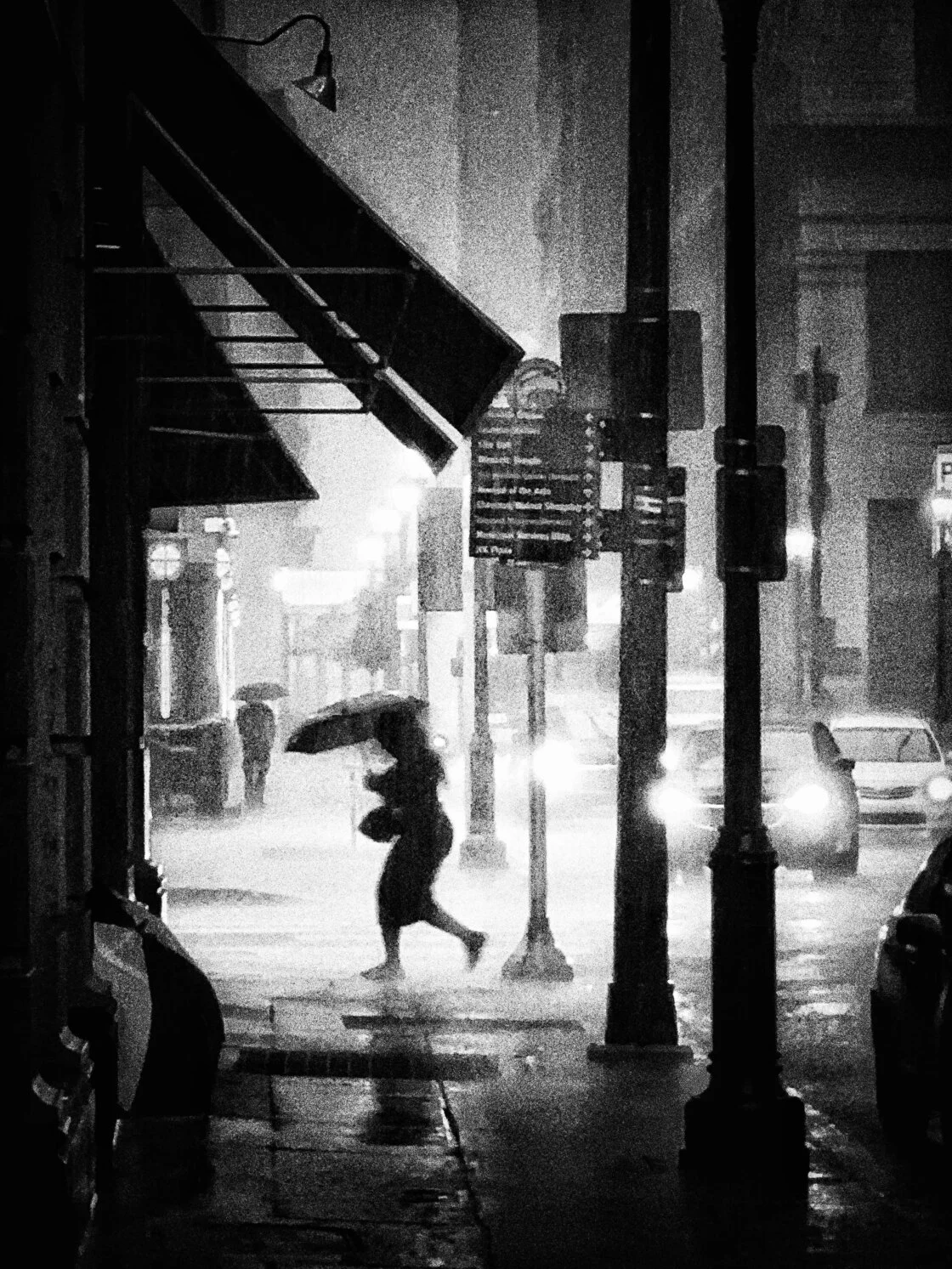
Black and white photography excels here because it highlights the "micro-contrast" of textures. The rough concrete of a brutalist building or the reflective surface of a rainy street becomes a character in the story. When a human subject is introduced into a repetitive pattern, they act as a "pattern breaker," providing a focal point that gives the image scale and a human connection.
5. Architectural Framing: Creating a "Photo within a Photo"
Framing is a technique where the photographer uses elements within the scene—such as archways, windows, or doorways—to surround the primary subject. This adds layers to the image and creates a sense of voyeurism or intimacy.
The iPhone’s deep depth of field is particularly useful for framing. Because the phone’s sensor is small compared to full-frame cameras, it is easier to keep both the frame (e.g., a window) and the subject (e.g., a person on the street) in sharp focus. To ensure the best result, photographers should use the iPhone’s "Burst Mode" by dragging the shutter button to the left. This captures a rapid sequence of images, allowing the photographer to choose the exact millisecond when the subject is perfectly centered within the frame.
6. The Science of Silhouette Photography
Silhouettes are one of the most striking forms of black and white imagery. They rely on "backlighting," where the light source is located behind the subject, rendering the subject as a dark, featureless shape. This technique adds an air of mystery and anonymity to street photography.
To achieve a perfect silhouette on an iPhone, the photographer must manually override the device’s auto-exposure. By tapping on the brightest part of the background (such as the sky during "Golden Hour") and swiping down on the sun icon, the exposure is lowered. This forces the subject into total shadow while preserving the detail in the highlights. Data from mobile photography platforms like VSCO indicates that high-contrast silhouettes are among the most engaged-with styles in the black and white category.
7. Chiaroscuro: The Play of Dramatic Shadows
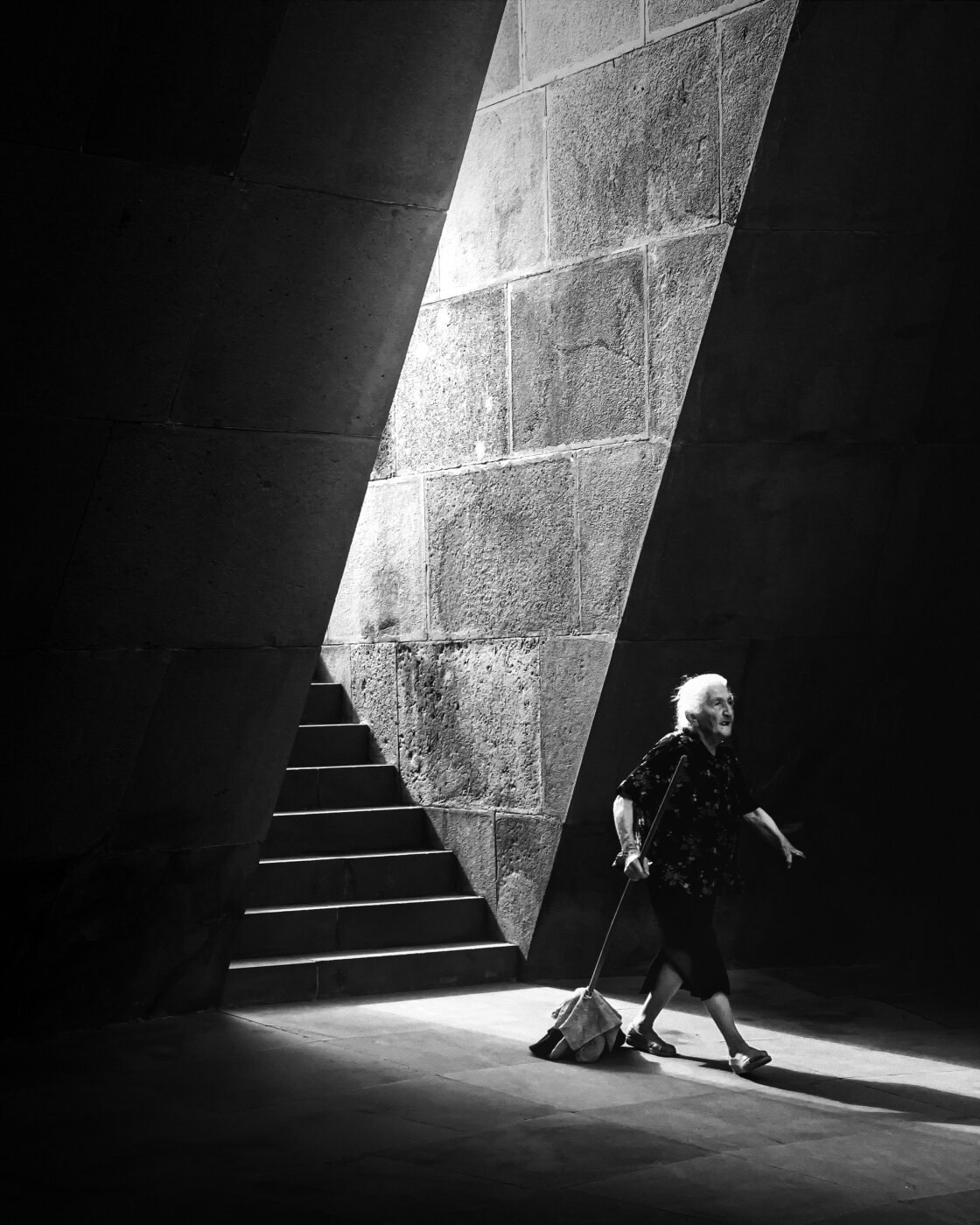
Derived from the Italian words for "light" and "dark," Chiaroscuro is a technique that uses strong contrasts between light and dark to give a sense of volume and drama. In street photography, this often involves capturing subjects as they pass through "pools of light" created by the sun hitting gaps between buildings.
Shadows should not be viewed merely as the absence of light, but as physical elements of the composition. A long shadow cast by a pedestrian at sunset can be more interesting than the pedestrian themselves. By reducing the exposure value (EV) in the iPhone settings, a photographer can deepen these shadows, creating a noir-like atmosphere that feels cinematic and timeless.
8. Digital Post-Processing and the "Clean" Aesthetic
The final stage of a professional street photography workflow is post-processing. While the iPhone’s internal processing is powerful, third-party apps like Adobe Lightroom Mobile or Snapseed offer more granular control over the final image.
Key adjustments in the editing phase include:
- Contrast and Clarity: Enhancing the distinction between tones.
- Cropping: Refining the composition to remove distractions that were missed during the shoot.
- Healing Tools: Using AI-powered tools to remove distracting elements like trash cans or stray power lines.
According to a 2023 report on digital imaging trends, the use of "Generative Fill" and advanced healing brushes in mobile apps has increased by 40%, allowing photographers to achieve a "clean" minimalist look that was previously only possible through hours of desktop editing.
The Broader Impact and Implications of Mobile Street Photography
The democratization of street photography through the iPhone has profound implications for how we document the human condition. In the past, the presence of a large camera could alter the behavior of subjects, destroying the candid nature of the shot. The ubiquity of the smartphone allows for a "stealth" approach, enabling photographers to capture more authentic, unposed moments.
However, this ease of access also raises questions regarding privacy and the ethics of public documentation. As mobile sensors become more capable, the line between casual snapping and professional photojournalism continues to blur. The black and white aesthetic serves as a bridge between these two worlds, elevating a simple mobile snap into a piece of art that feels connected to the history of the medium.
In conclusion, the iPhone is no longer just a communication device; it is a sophisticated optical instrument capable of producing world-class street photography. By mastering visualization, composition, and light manipulation, photographers can use the device to find extraordinary stories in the ordinary rhythms of the city. As technology continues to evolve, the timeless principles of black and white imagery will remain the gold standard for capturing the soul of the streets.