The digital landscape for graphic designers and sign shop proprietors is currently characterized by a paradoxical surplus of resources and a critical shortage of high-fidelity, production-ready assets. When a designer enters the query "free vehicle wrap templates Illustrator" into a search engine, they are met with an immediate deluge of forum threads, legacy file-sharing sites, and community-contributed vector outlines. While these free resources offer an accessible entry point for students, hobbyists, and those conducting initial proof-of-concept tests, the professional sign industry is increasingly moving toward a model of paid, verified template libraries to mitigate the substantial financial risks associated with installation errors and licensing ambiguities.
The Evolution of Mobile Advertising and the Precision Mandate
The vehicle wrap industry has transitioned from a niche customization market into a primary pillar of the global out-of-home (OOH) advertising sector. According to industry market reports, the global automotive wrap market is projected to continue its expansion at a significant compound annual growth rate (CAGR), driven largely by small to medium-sized enterprises (SMEs) seeking cost-effective mobile billboards. Unlike stationary billboards, a vehicle wrap provides years of impressions for a one-time capital expenditure. However, the efficacy of this medium relies entirely on the precision of the design’s execution.
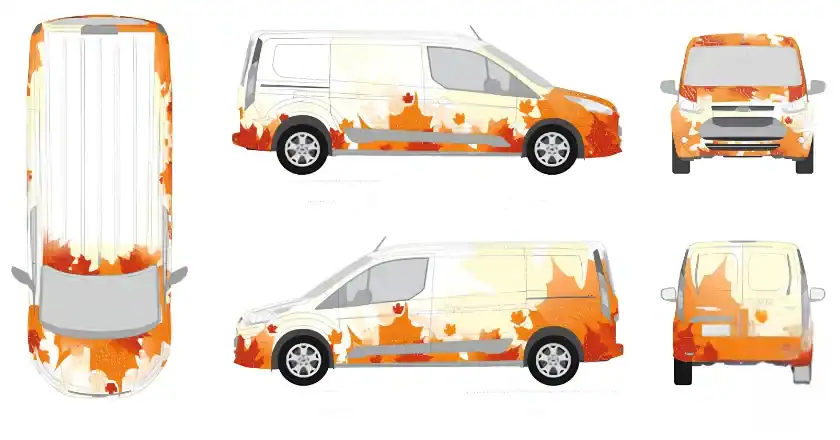
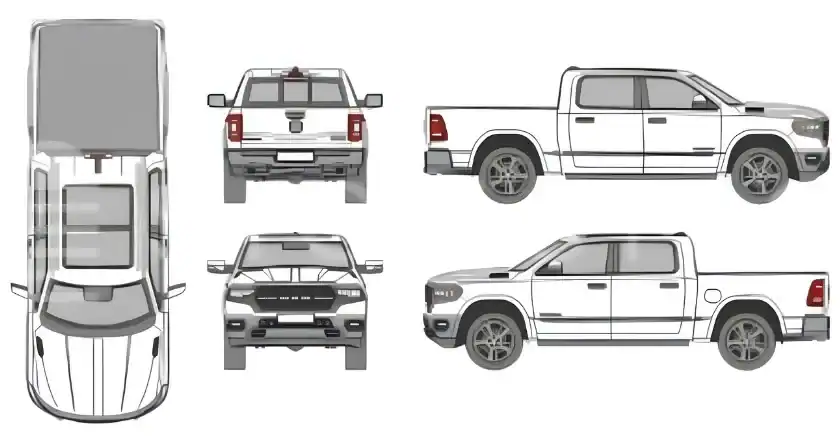
Adobe Illustrator remains the gold standard for this work due to its robust vector handling capabilities. A vehicle wrap is not a simple two-dimensional print; it is a complex mathematical projection of a 2D design onto a 3D surface characterized by compound curves, recessed handles, sensors, and varying panel gaps. Professional templates are typically built at a 1:20 or 1:10 scale, requiring absolute mathematical accuracy when the design is eventually scaled up to full size for high-resolution printing on wide-format machines.
The Technical Limitations and Hidden Costs of Free Assets
The appeal of a free template is rooted in the elimination of upfront overhead. For a freelance designer or a startup shop, "free" represents a zero-risk starting point. However, veteran installers and shop owners often argue that free templates carry a significant "hidden cost" that manifests during the production and installation phases.
One of the primary issues is the rapid cycle of automotive manufacturing. Vehicle manufacturers frequently update body styles, often making subtle changes to fender flares, light housing shapes, or sensor placements that are not immediately reflected in user-submitted free templates. A template designed for a 2021 model may appear identical to a 2024 model to the untrained eye, but a three-millimeter discrepancy in a door handle placement can ruin a design that costs hundreds of dollars in cast vinyl and hours of specialized labor to print and laminate.

Furthermore, free templates often lack the technical metadata required for efficient workflow. Professional files typically include dedicated layers for body outlines, windows (which require perforated film), and "no-print" zones like rubber seals and chrome trim. Free files are frequently "flat" or poorly organized, forcing the designer to spend billable hours cleaning up the vector paths before the actual creative work can begin.
Chronology of a Professional Design Workflow
To understand the transition from free to professional templates, one must examine the standard chronology of a commercial wrap project:
- Client Consultation and Measurement: The shop identifies the exact make, model, year, and trim level of the vehicle.
- Asset Acquisition: The designer searches for a template. If using free resources, this often involves "cross-referencing" multiple files to guess at accuracy. In a professional setting, the designer downloads a verified file from a library like SignSilo.
- Layout and Mockup: The design is created in Illustrator. High-quality templates allow for 2D layouts that can be easily translated into 3D renderings for client approval.
- Pre-flight and Tiling: The design is scaled to 1:1. This is where the accuracy of the template is truly tested. If the template is off by even 1%, the panels will not align across the vehicle’s doors and fenders.
- Printing and Installation: The vinyl is applied. If the template was accurate, the "bleed" areas and "wrap-around" margins align perfectly with the vehicle’s physical edges.
SignSilo and the Shift Toward Integrated Libraries
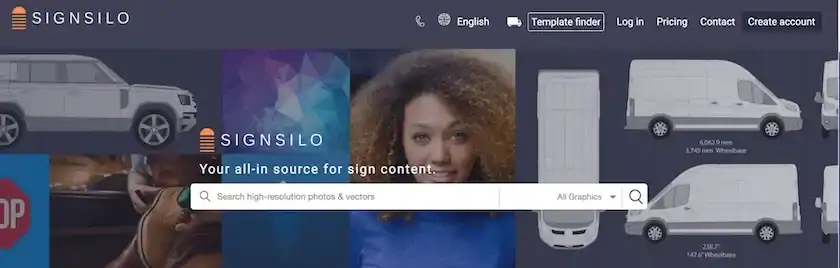
In response to the fragmentation of the template market, platforms such as SignSilo have emerged to provide a centralized, managed alternative. These platforms function as the "next step" for designers who have outgrown the unreliability of scattered downloads. SignSilo differentiates itself by offering a library that is not only vast—spanning decades of vehicle models—but also centrally maintained. When a manufacturer like Ford or Mercedes-Benz releases a new van chassis, professional libraries prioritize the creation of a corresponding template to ensure sign shops can service the latest fleets.
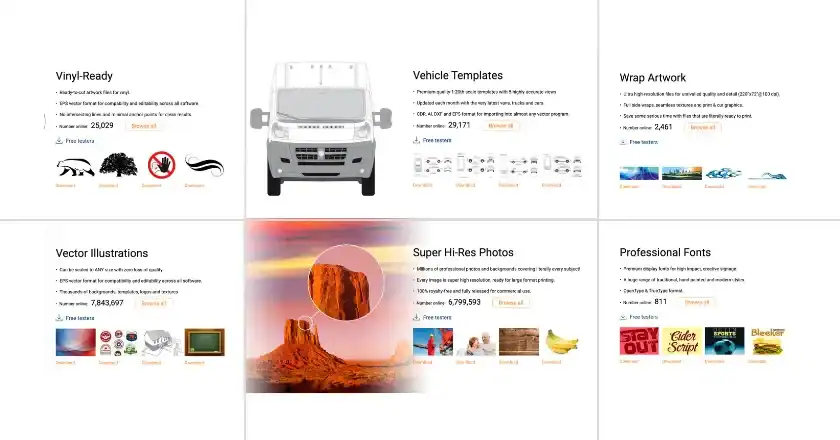
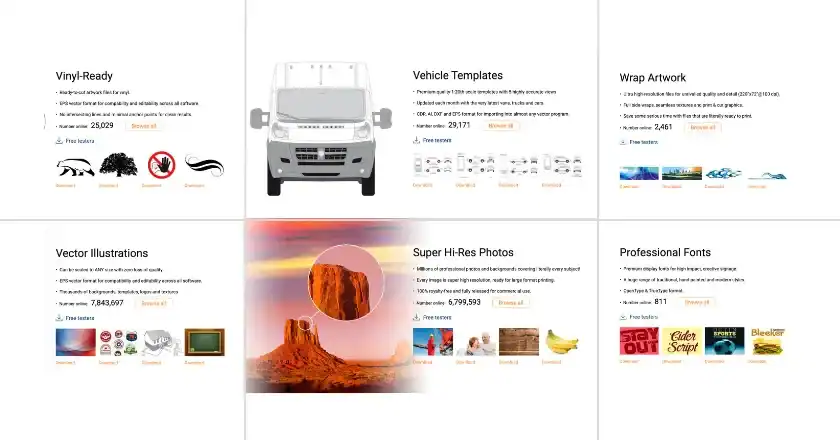
Beyond the templates themselves, the industry is seeing a trend toward "bundled" creative assets. SignSilo, for instance, integrates vehicle outlines with stock photography, vinyl-ready vector illustrations, and specialized fonts. This reflects a broader shift in the creative economy: the move from "asset hunting" to "workflow integration." By providing all necessary components under a single commercial license, these platforms eliminate the legal "gray areas" that often plague free downloads found on community forums.
Economic Impact of Template Accuracy
The financial implications of using an inaccurate template are significant. A standard full wrap for a commercial van can cost between $3,000 and $6,000, depending on the complexity and the quality of the vinyl (such as 3M or Avery Dennison cast films).
If a design is printed based on an inaccurate free template and the error is only discovered during installation, the costs include:
- Material Waste: 50 to 70 yards of high-end vinyl and laminate.
- Ink and Machine Time: Several hours of wide-format printing and CNC cutting.
- Labor: The cost of the installer’s time (often billed at $75-$150 per hour) and the designer’s time to fix the file.
- Opportunity Cost: The bay space in the shop is occupied, preventing other revenue-generating projects from moving forward.
By contrast, a subscription to a professional library often costs less than the price of a single wasted roll of vinyl, representing a form of "production insurance" for the shop owner.
Bridging the Gap: The Role of Free Testers
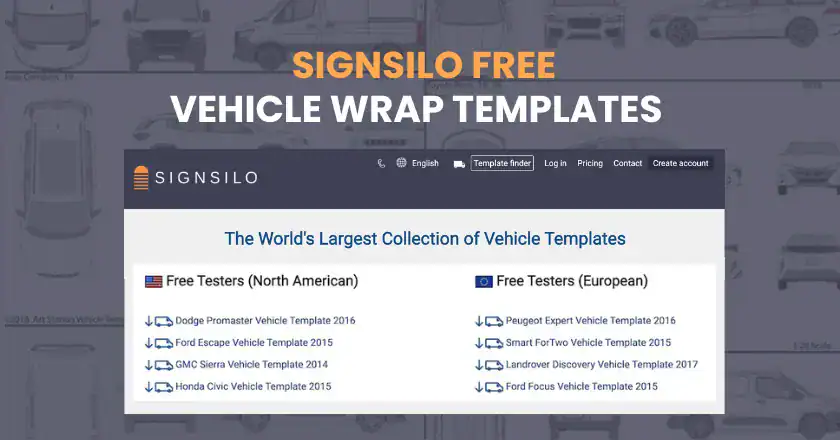
Recognizing that the jump from free to paid can be a hurdle for emerging designers, some professional platforms have adopted a "freemium" bridge. SignSilo, for example, provides free sample vehicle templates that maintain the same technical standards as their premium catalog. These "testers" allow designers to open the files in Adobe Illustrator and verify the layer structure, path precision, and scaling accuracy before committing to a subscription. This transparency serves to educate the market on the tangible differences between a "community-shared" file and a "production-grade" asset.
Broader Industry Implications and the Future of Wrap Design
The transition toward professionalized template libraries is part of a larger maturation of the sign and graphics industry. As vehicle technology becomes more complex—incorporating Advanced Driver Assistance Systems (ADAS) with sensors embedded in bumpers and mirrors—the margin for error in wrap design is shrinking. Designers now need to know exactly where a radar sensor is located to ensure they do not cover it with metallic-based films that could interfere with the vehicle’s safety functions.
Looking ahead, the industry is likely to see further integration between vector templates and 3D mapping technology. Augmented Reality (AR) tools are already being developed to allow installers to "overlay" a digital design onto a physical vehicle using a smartphone or tablet. However, even the most advanced AR tools require a foundational 2D vector template that is mathematically perfect.
In conclusion, while the search for "free vehicle wrap templates Illustrator" remains a common starting point for many in the industry, the professional trajectory almost inevitably leads to curated, licensed, and maintained libraries. The "zero-tolerance" environment of modern vehicle wrapping, where material costs are high and client expectations are even higher, leaves little room for the uncertainties of unverified files. For the modern sign shop, the move from free to professional is not merely a change in where they source their files, but a strategic decision to prioritize accuracy, legal safety, and operational efficiency.
Note: This analysis is based on current industry standards and the service models provided by platforms like SignSilo. As the automotive and printing industries continue to evolve, professional designers are encouraged to maintain rigorous standards for asset verification.