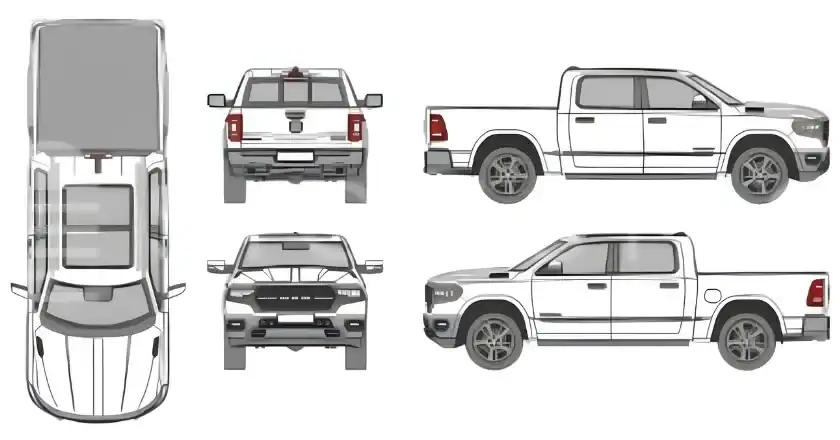
The global automotive wrap market is undergoing a period of unprecedented transformation, driven by a surge in demand for mobile advertising and personalized vehicle aesthetics. As businesses increasingly recognize the high return on investment offered by fleet branding—often cited as having the lowest cost-per-impression of any outdoor advertising medium—the pressure on sign shops and graphic designers to deliver flawless results has intensified. At the center of this industry evolution is SignSilo, a specialized platform that has redefined the technical workflow of vehicle wrap design through its comprehensive library of high-precision templates and digital assets.
The Evolution of Vehicle Branding: From Hand-Lettering to Digital Precision
The history of vehicle graphics has transitioned from labor-intensive hand-painting and vinyl lettering to the modern era of full-color digital printing and complex 3D wraps. In the late 20th century, sign painters relied on manual measurements and physical rubbings of vehicle panels to estimate the placement of logos. This process was fraught with human error, often leading to misaligned graphics or wasted materials.
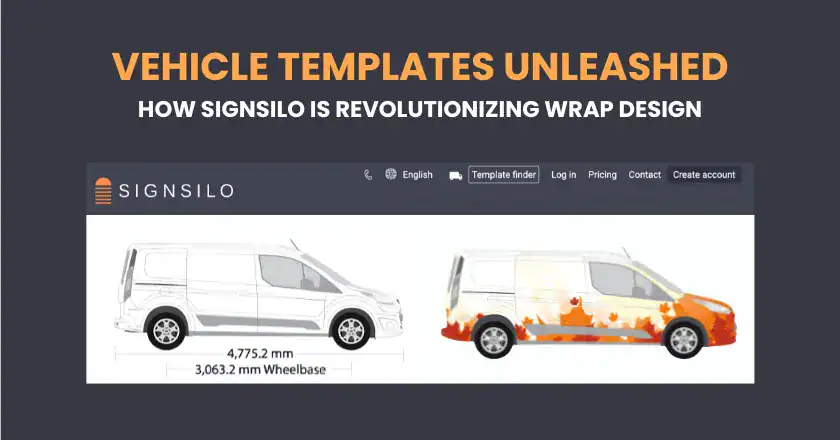
The introduction of computer-aided design (CAD) software in the 1990s laid the groundwork for digital templates. However, early templates often lacked the granularity required for modern, complex vehicle shapes featuring deep recesses and aerodynamic curves. SignSilo entered this space to bridge the gap between abstract design and physical reality, providing a centralized repository of vector-based blueprints that account for the exact dimensions of thousands of vehicle makes and models.
The Technical Imperative of 1:10 Scale Accuracy
In professional wrap design, the margin for error is nearly non-existent. A vehicle wrap is essentially a two-dimensional skin applied to a three-dimensional object. The primary challenge for designers is ensuring that elements such as door handles, fuel caps, and body sensors do not intersect with critical text or brand imagery.
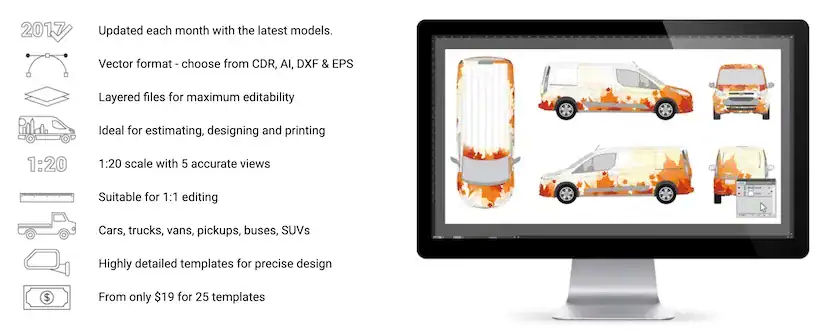
SignSilo addresses this through 1:10 scale vector templates. By utilizing a standardized scale, designers can work within software like Adobe Illustrator or CorelDRAW without taxing system resources, while maintaining the mathematical integrity required for full-scale printing. When a design is scaled up by 1,000% for the final print, every line must remain crisp. Because SignSilo’s templates are vector-based rather than raster-based, they retain infinite resolution, preventing the pixelation that occurs with standard photographic references.

Economic Impact and Material Efficiency in the Sign Industry
The financial implications of inaccurate templates are significant for small to medium-sized sign shops. The cost of premium cast vinyl, which is required for full vehicle wraps, can range from $15 to $25 per yard. For a standard commercial van, a full wrap may require 20 to 30 yards of material. A single measurement error that necessitates a reprint can cost a shop hundreds of dollars in raw material alone, not including the labor costs of removal and re-installation.
Industry data suggests that shops utilizing professional template services like SignSilo reduce material waste by an average of 15% to 20%. By having access to "unleashed" templates that include "bleed" areas—extra graphic space that wraps around the edges of panels—installers are given the necessary tolerance to ensure full coverage without the risk of exposing the vehicle’s original paint.
A Comprehensive Digital Ecosystem for Professionals
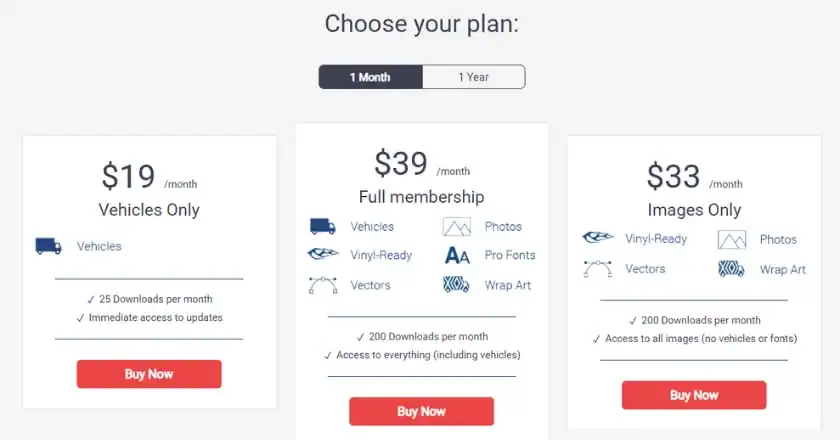
SignSilo has expanded its value proposition beyond simple outlines, positioning itself as an all-in-one resource for the graphics industry. The platform’s ecosystem includes several critical components:
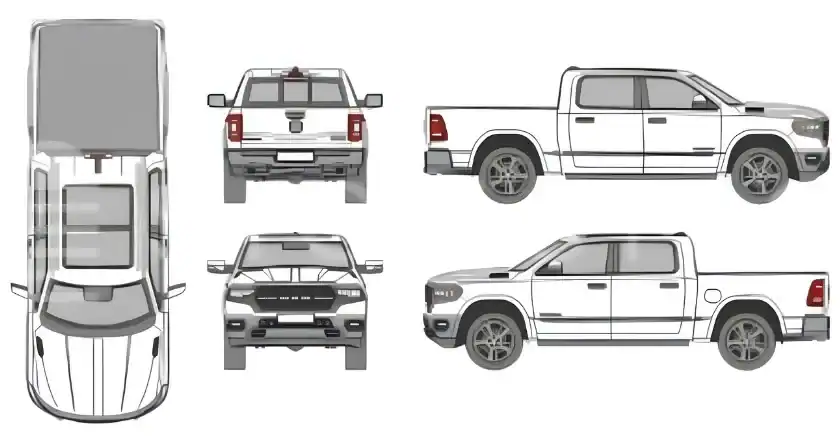
- Extensive Vehicle Library: Covering everything from the latest electric vehicles (EVs) and heavy-duty trucks to specialty trailers and transit buses. This ensures that shops can bid on diverse contracts without worrying about how to measure a niche vehicle.
- High-Resolution Stock Photography: Integrated assets that allow designers to incorporate lifestyle imagery into commercial wraps without sourcing from multiple third-party providers.
- Vector Graphics and Fonts: A curated selection of design elements specifically chosen for their legibility and impact in an outdoor, moving environment.
- Texture and Wrap Previews: Tools that allow designers to create realistic 3D mockups. This is a vital part of the sales process, as it allows the client to visualize the final product before a single inch of vinyl is printed.
Chronology of a Professional Wrap Project
To understand the impact of SignSilo on the industry, one must examine the typical timeline of a vehicle wrap project in a modern shop:
- Phase 1: Client Consultation and Sourcing (Day 1): The designer identifies the specific vehicle trim and year. Using SignSilo, the exact template is downloaded in seconds, replacing the hours previously spent on manual measurements and photography.
- Phase 2: Conceptual Design (Day 2-3): The designer applies branding to the template, ensuring that logos are not cut off by windows or sliding door tracks. The 1:10 scale allows for rapid iteration and client feedback.
- Phase 3: Client Approval (Day 4): A high-fidelity mockup, often utilizing SignSilo’s texture overlays, is presented to the client. This professional presentation increases the "close rate" for high-value contracts.
- Phase 4: Pre-Press and Production (Day 5): The design is scaled to 1:1, tiled into printable sections, and sent to a wide-format printer. The precision of the template ensures that panels align perfectly during installation.
- Phase 5: Installation (Day 6-7): The installation team applies the vinyl. Because the design was built on an accurate template, the graphic elements land exactly where intended, requiring minimal trimming or stretching.
Market Projections and Industry Growth
The demand for vehicle templates is closely tied to the broader growth of the automotive wrap market. According to recent market research reports, the global vehicle wrap market was valued at approximately $5.8 billion in 2022 and is projected to expand at a compound annual growth rate (CAGR) of 22.2% through 2030. This growth is fueled by the rising number of small businesses using "mobile billboards" and the popularity of color-change wraps among automotive enthusiasts.
Furthermore, the rise of fleet management services has created a need for consistency. A company with a fleet of 500 vehicles across the country requires every van to look identical. SignSilo’s standardized templates provide the technical foundation for this level of brand uniformity, allowing different print shops in different regions to produce consistent results.
Industry Reactions and Professional Standards
Leading figures in the sign-making community have noted that the "democratization" of high-quality templates has raised the professional standard across the board. Previously, only large-scale agencies with massive budgets could afford the time and resources for perfect vehicle mockups. Today, a solo designer with a SignSilo subscription can produce work that rivals national branding firms.
"Accuracy in the design phase is the difference between a profitable job and a loss," says one veteran shop owner. "When we use verified templates, we are essentially buying insurance against mistakes. It allows our designers to be creative because they aren’t worried about the math of the door handle."
Broader Implications: The Future of Wrap Design
Looking forward, the integration of augmented reality (AR) and artificial intelligence (AI) is expected to further revolutionize the industry. There is a clear path toward AI-assisted layout tools that can automatically suggest the best placement for text based on the contours of a SignSilo template. Additionally, as vehicle manufacturers move toward more complex, aerodynamic shapes to increase fuel efficiency and EV range, the necessity for high-precision, 3D-aware templates will only grow.
SignSilo’s role in this future is as a data provider. By maintaining a current and accurate database of vehicle geometries, they provide the essential infrastructure that the rest of the industry relies upon. As vehicle branding continues to move toward more sustainable materials and digital integration, the "unleashed" template remains the indispensable starting point for every successful project.
In an industry where time is money and precision is the primary product, platforms like SignSilo have moved from being a luxury to a fundamental necessity. By streamlining the design-to-installation pipeline, they have not only empowered designers but have also contributed to the professionalization and economic health of the global sign and graphics sector.