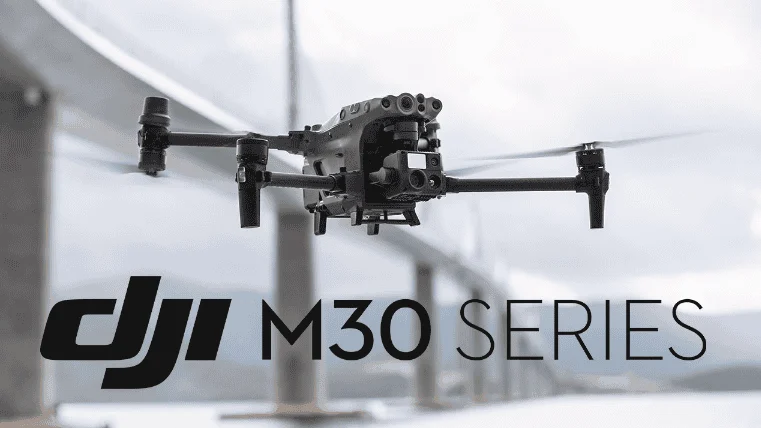
The integration of the AVSS PRS-M30 parachute recovery system has officially enabled the DJI Matrice 30 (M30) series to operate safely over crowds, marking a transformative shift in the landscape of industrial drone operations. This advancement addresses one of the most significant regulatory and safety hurdles in the Unmanned Aircraft Systems (UAS) industry: the risk associated with flying heavy, high-speed drones in densely populated urban environments. By combining DJI’s robust enterprise hardware with the specialized safety engineering of Aerial Vehicle Safety Solutions (AVSS), the M30 series is now positioned as a primary tool for public safety agencies, infrastructure inspectors, and emergency responders who must operate in areas where human presence is unavoidable.
The capability to fly over people is not merely a technical upgrade but a regulatory milestone. For years, aviation authorities such as the Federal Aviation Administration (FAA) in the United States and the European Union Aviation Safety Agency (EASA) have maintained strict prohibitions or required complex waivers for flight over unprotected persons. The primary concern is kinetic energy; should a drone experience a motor failure or software glitch, its descent could cause catastrophic injury. The PRS-M30 system mitigates this risk by ensuring that, in the event of a critical failure, a parachute deploys to slow the descent to a survivable velocity, while simultaneously terminating power to the rotors to prevent laceration injuries.
The Engineering Behind the AVSS PRS-M30 Parachute
The PRS-M30 is a purpose-built safety peripheral designed specifically for the DJI M30 and M30T airframes. It operates through a sophisticated combination of hardware and software known as an Autonomous Trigger System (ATS). Unlike manual deployment systems, which rely on the operator’s reaction time, the ATS uses independent sensors to detect abnormal flight attitudes—such as a sudden roll, pitch, or rapid loss of altitude—and deploys the parachute in milliseconds.
A critical component of this system is the Flight Termination System (FTS). When the parachute is triggered, the FTS immediately cuts power to the drone’s motors. This is essential for two reasons: first, it prevents the parachute lines from becoming entangled in spinning propellers, which would render the safety device useless; and second, it ensures that the drone does not continue to travel horizontally under power, allowing for a predictable, vertical descent. The PRS-M30 is designed to meet the rigorous ASTM F3322-18 standard, a global benchmark for drone parachutes that requires 45 successful test deployments in various failure scenarios, including hovering and full-speed forward flight.
Technical Specifications of the DJI Matrice 30 Series
The DJI M30 series itself represents the "middle ground" of industrial drones, offering the power of the larger Matrice 300 RTK in a foldable, more portable format. This balance of power and portability is what makes the ability to fly over crowds so impactful. The drone features an IP55 weather resistance rating, allowing it to fly in heavy rain and snow, and can operate in temperatures ranging from -20°C to 50°C.
From an imaging perspective, the M30 is equipped with a multi-sensor payload. The standard M30 includes a 48-megapixel zoom camera capable of 16x optical and 200x digital zoom, alongside a 12-megapixel wide-angle camera. The M30T (Thermal) model adds a 640×512 radiometric thermal imaging sensor, which is indispensable for search and rescue operations at night or for identifying hotspots during a structural fire. The drone’s OcuSync 3 Enterprise transmission system provides a stable, encrypted video feed even in environments with high electromagnetic interference, which is common in urban centers and near power infrastructure.
Regulatory Evolution: Breaking the Barrier of Flight Over People
The introduction of the PRS-M30 comes at a time of significant regulatory evolution. In the United States, the FAA’s Part 107 rules traditionally limited "Flight Over People" (OOP) to very small drones or those with specific safety certifications. The DJI M30, weighing approximately 3.7 kg (8.2 lbs) without the parachute, falls into a category that requires a certified Means of Compliance (MOC) to fly over crowds.
By integrating a parachute that meets ASTM standards, operators can now apply for or operate under Category 2 or Category 3 frameworks, which are based on the kinetic energy the drone would transfer upon impact. The parachute effectively lowers the drone’s "impact energy" to levels deemed acceptable by civil aviation authorities. This regulatory alignment is a prerequisite for the expansion of "Drone as a First Responder" (DFR) programs, where drones are launched from fixed stations to arrive at emergency scenes before ground units.
Chronology of Development and Certification
The journey toward crowd-safe operations for the M30 has been a multi-year effort involving collaboration between hardware manufacturers and safety engineers:
- March 2022: DJI officially launches the Matrice 30 series, touting it as the new standard for portable enterprise drones.
- Mid-2022: AVSS begins the development of a dedicated parachute system for the M30, recognizing the airframe’s potential for urban public safety.
- Late 2023: The PRS-M30 undergoes rigorous third-party testing to satisfy the ASTM F3322-18 requirements. This involves dozens of controlled "crash" scenarios to prove the system’s reliability.
- 2024-2025: Regulatory bodies begin accepting the M30 with the PRS-M30 as a compliant solution for advanced operations, leading to widespread adoption by police and fire departments globally.
Strategic Applications in Public Safety and Emergency Response
The ability to legally and safely fly over crowds changes the operational protocol for several sectors. In the realm of Public Safety and Penegakan Hukum (Law Enforcement), the M30 can now be used to monitor large-scale public events, such as parades, protests, or sporting events. Previously, operators had to fly around the perimeter of these crowds to remain compliant, often losing the best vantage points. Now, the drone can maintain a "top-down" view, providing real-time situational awareness that can help identify bottlenecks in crowd flow or spot criminal activity in the heart of a gathering.
In Layanan Darurat (Emergency Services), the M30T’s thermal capabilities can be deployed over disaster zones where survivors may be gathered. Whether it is a flood-stricken neighborhood or a collapsed building in an urban center, the drone can hover directly over the affected area. The parachute provides the "safety net" that allows commanders to prioritize the mission without the constant fear of a technical failure causing secondary casualties on the ground.
For Inspeksi Infrastruktur (Infrastructure Inspection), the M30 can now perform close-up assessments of bridges, high-rise buildings, and communication towers in busy metropolitan areas. Often, these inspections would require closing streets or sidewalks to protect the public from a potential drone fall. With the PRS-M30, these "exclusion zones" can be significantly reduced or eliminated, drastically lowering the logistical cost and public inconvenience of maintenance work.
Economic Implications and Operational Efficiency
The economic impact of this technology is substantial. Traditional aerial surveillance over crowds has historically been the domain of manned helicopters, which cost thousands of dollars per flight hour and carry their own significant safety risks. The DJI M30, equipped with a parachute, offers a similar capability at a fraction of the cost.
Furthermore, the "peace of mind" provided by the parachute system reduces the insurance premiums for drone service providers. Insurance companies are more likely to cover complex urban missions when a validated safety system is in place. This lower barrier to entry allows smaller municipalities and private inspection firms to utilize advanced drone technology that was previously considered too high-risk from a liability standpoint.
Broader Impact and Future Outlook
The success of the DJI M30 and AVSS integration serves as a blueprint for the future of the UAS industry. It proves that the path to advanced drone operations is not found through hardware alone, but through a holistic ecosystem of safety peripherals and regulatory compliance.
As the industry moves toward more autonomous operations, such as fully automated docking stations (like the DJI Dock), the role of parachute systems will become even more critical. If a drone is flying a pre-programmed route over a city without a pilot on-site, the autonomous trigger system of a parachute becomes the final line of defense. The M30’s current capability is a foundational step toward a future where drones are a seamless and safe part of the urban sky, operating as essential infrastructure for the modern world.
In conclusion, the DJI M30’s ability to fly over crowds is not just an incremental update; it is a professional-grade solution to a complex problem. By prioritizing safety through the AVSS PRS-M30 system, DJI has reinforced its position as a leader in the enterprise market, ensuring that as drones become more prevalent, they also become safer for the public they serve.