When my parents chose to move our small family from Saskatchewan to the remote Arctic and undertake the biggest adventure of our lives, we had to let go of certain comforts. Both my mother and father came from farming families and inherited the unyielding work ethic that serves as the backbone of Canada’s heartland. Still, we found joy in the simple pleasures afforded by society – easy access to family, mild summer evenings, and the predictable cycles of the seasons. Uprooting to the Arctic meant trading the familiar for the unknown, but I quickly found that the benefits of living closer to nature far exceeded what we left behind.
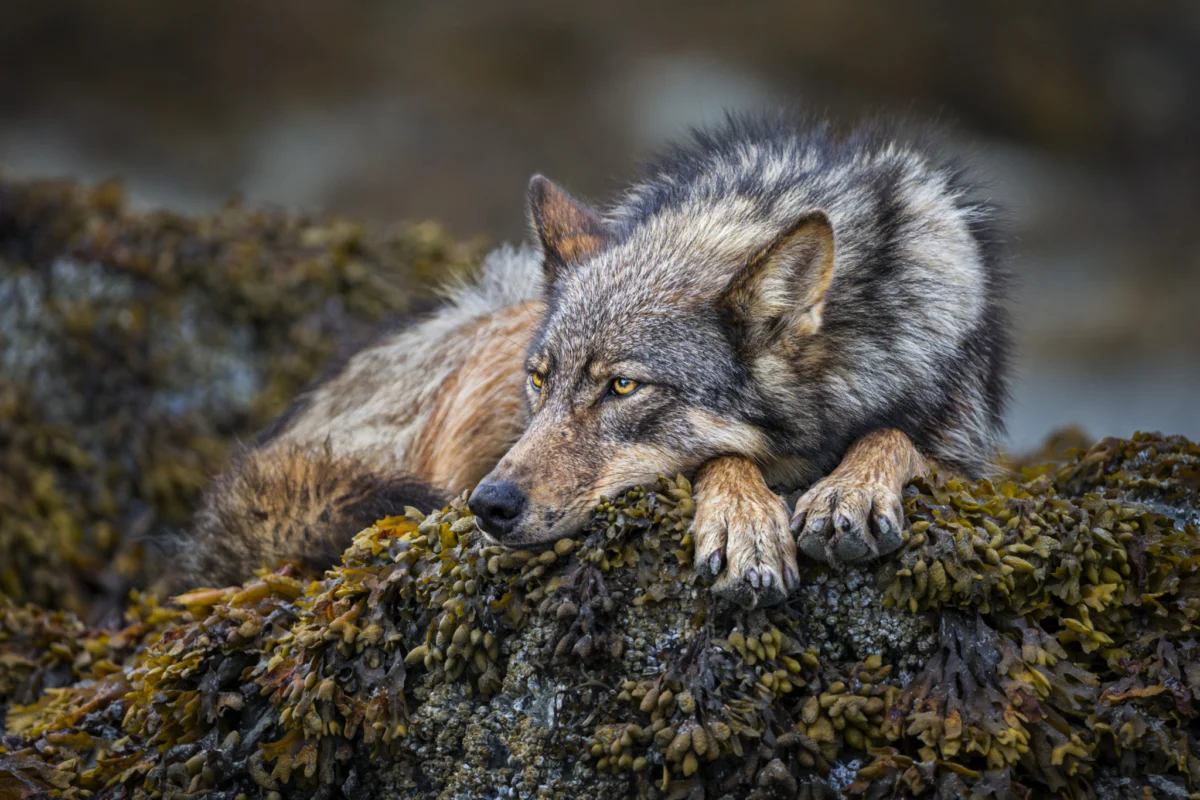
Since those early years, the best gifts in my life have always come from nature. After becoming a photographer, I used my camera to get closer to our wild kin. Wolves, penguins, lynx, sharks, and even the more elusive animals like spirit bears all became subjects of my lens. In my eyes, there is no greater privilege than living each day on a planet overflowing with more species and beauty than we could ever fully grasp. Of all the encounters I have shared with wildlife around the world, my experiences with whales, the true giants of Earth, have been some of the greatest gifts.
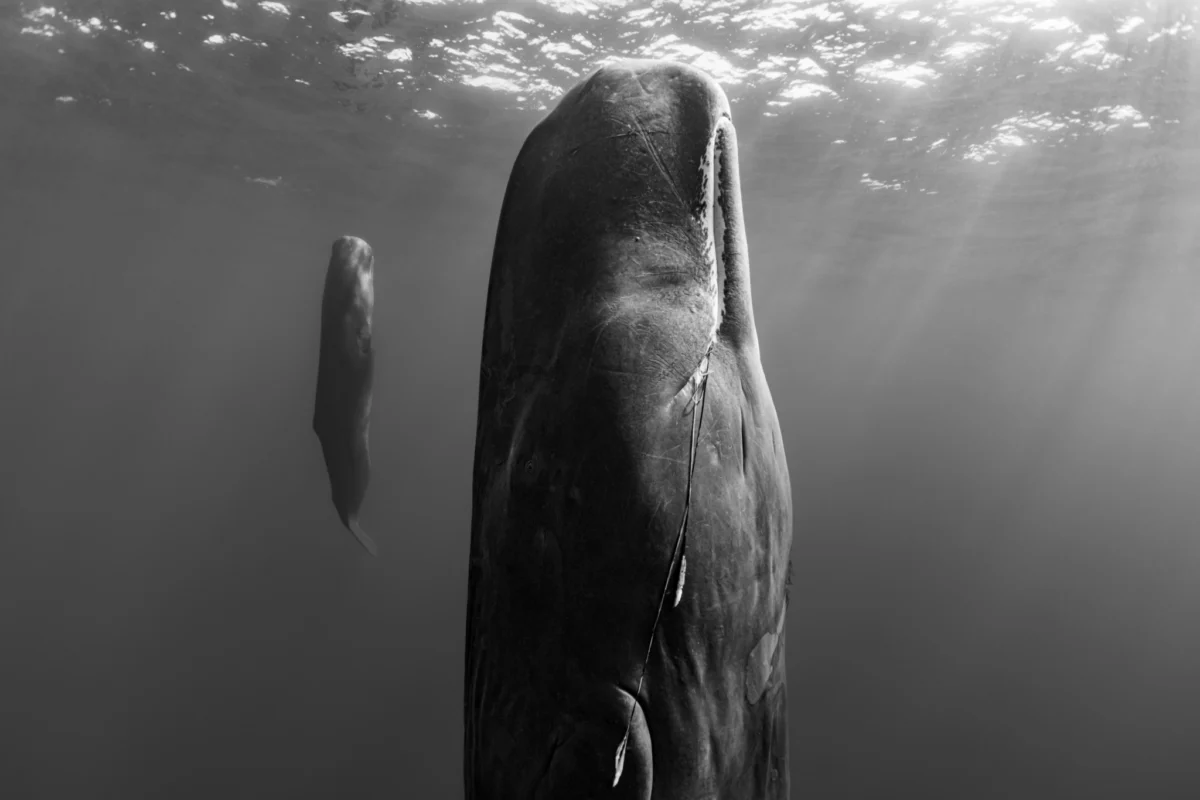
Like the Arctic wildlife I grew up with, such as wolves and polar bears, creatures like orcas and sperm whales inspire a mix of fear and awe in people. Despite their size and status as some of the ocean’s greatest hunters, there is no definitive record of orcas or sperm whales ever killing anyone. In fact, my own experiences have revealed their gentle nature and deep intelligence – a side that often goes unnoticed beneath the myths and misconceptions. Sperm whales, in particular, have garnered a reputation fueled in part by works of fiction, stories, and legends. Of all my encounters with whales, however, swimming with a pod off the coast of Dominica proved to be one of the most wholesome and eye-opening experiences of my life. Free-diving with a snorkel, I was able to get fairly close to a group dozing vertically in the water column. Sperm whales spend most of their time deep below the surface until they finally come up to breathe and rest, suspended with their heads pointed skyward.
A Chance Encounter with a Young Giant
The photographic session was progressing with a sense of mutual respect and understanding. The matriarch of the sperm whale pod and her companions were fully aware of my presence, exhibiting a remarkable level of comfort and acceptance. This calm atmosphere, however, was about to be punctuated by an unexpected interaction. As I ascended to the surface for a breath of air, my attention was drawn to a distinct movement within the group. The youngest member of the pod, a calf affectionately nicknamed "Ariel" by the local community, had broken away from its resting position and was heading directly towards me.
What followed was a moment that blended mild apprehension with profound wonder. Ariel, a juvenile sperm whale estimated to be around 20 feet in length, charged towards me at a surprising speed. My immediate instinct was to brace myself, anticipating a potentially overwhelming encounter. However, Ariel’s intentions were far from aggressive. As she approached, she opened her mouth – a mouth thankfully devoid of the formidable teeth of older sperm whales – and began to playfully gum my camera housing. The action was reminiscent of an oversized toddler exploring a new toy, an image that starkly contrasted with the fearsome reputation often attributed to these magnificent creatures. Drawing upon years of experience navigating interactions with large and unpredictable wildlife, I calmly maneuvered away, allowing myself to regain my composure and breath. The encounter with Ariel was a vivid testament to the gentle curiosity of these marine behemoths, a far cry from the monstrous depictions found in literature and folklore.
The Ecological Significance of Sperm Whales
Sperm whales (Physeter macrocephalus) are the largest toothed whales, recognized for their immense size, bulbous heads, and their crucial role in deep-sea ecosystems. Adult males can reach lengths of up to 60 feet and weigh over 40 tons, while females are considerably smaller, typically reaching around 40 feet and weighing up to 20 tons. Their unique physiological adaptations allow them to dive to incredible depths, estimated to be over 2,000 meters, in search of their primary food source: giant squid. These deep-sea foraging expeditions are vital for regulating deep-ocean food webs, and their excrement, rich in iron and other nutrients, plays a significant role in fertilizing surface waters, supporting phytoplankton blooms that form the base of marine food chains.
A History of Misconception and Fascination
The perception of sperm whales has been shaped by centuries of human interaction and cultural narratives. Their imposing size and deep-diving capabilities have long inspired awe and, at times, fear. This fascination is perhaps most famously captured in Herman Melville’s novel Moby Dick, where the white whale, although a sperm whale, is portrayed as a vengeful and almost supernatural antagonist. Such fictional portrayals, while compelling, have contributed to a persistent mythos that often overshadows the reality of the species’ behavior and ecological importance. Scientific research, however, continues to reveal a more nuanced picture. Studies on sperm whale social structures indicate complex matriarchal societies, with intricate communication systems and a profound capacity for learning.
The Arctic Origins of a Deep Connection to Nature
The decision by my parents to relocate our family from the agricultural heartland of Saskatchewan to the stark, remote beauty of the Arctic marked a profound shift in our lives. For parents accustomed to the rhythms of farming, this move represented a significant departure from the familiar comforts and predictable cycles of rural life. The work ethic instilled by generations of farmers, a fundamental pillar of Canadian identity, was about to be tested in an entirely new environment.
The initial transition involved a conscious relinquishing of certain conveniences. The ease of access to extended family, the gentle warmth of summer evenings, and the predictable progression of seasons were replaced by the vast, often harsh, grandeur of the Arctic landscape. Yet, what was lost in terms of familiar comforts was more than compensated for by the unparalleled opportunities for connection with the natural world. The remote setting fostered a deep appreciation for the simple pleasures that emerged from close proximity to untamed wilderness. This immersion in nature, a stark contrast to the predictability of prairie life, proved to be a profoundly enriching experience, laying the foundation for a lifelong passion for wildlife and conservation.

The Photographer’s Lens: Documenting Earth’s Wild Inhabitants
My journey as a photographer has been intrinsically linked to this early exposure to the wild. The camera became an indispensable tool, a means to bridge the gap between myself and the diverse array of creatures that inhabit our planet. My photographic endeavors have taken me across continents, seeking out both the iconic and the elusive. I have spent countless hours documenting the stoic presence of wolves, the determined march of penguins, the silent prowl of lynx, and the powerful grace of sharks. Even the more spectral inhabitants of the natural world, such as the rare spirit bear, have become subjects of my lens.
This pursuit has solidified my conviction that the greatest privilege of existence lies in sharing a planet that teems with an astonishing diversity of life and an almost incomprehensible depth of beauty. Each species, from the smallest insect to the largest marine mammal, contributes to the intricate tapestry of life. The opportunity to witness and document these beings in their natural habitats is a profound honor, fostering a sense of responsibility for their preservation.
Dominica: A Sanctuary for Gentle Giants
The encounter with Ariel and her pod off the coast of Dominica stands out as a particularly poignant experience within my extensive work with whales. Dominica, often referred to as the "Nature Isle of the Caribbean," is renowned for its pristine marine environment and its status as a critical habitat for sperm whales. The island’s waters provide a vital breeding and feeding ground for these magnificent creatures, and conservation efforts have been instrumental in protecting their populations.
The Dominica Sperm Whale Project, for instance, has been actively involved in studying and advocating for the protection of these whales since the 1980s. Their research has contributed significantly to our understanding of sperm whale behavior, social structures, and the threats they face, including entanglement in fishing gear and noise pollution. My presence in these waters was facilitated by a deep respect for the ongoing conservation work and a desire to contribute to the public’s understanding and appreciation of these animals.
A Unique Ecosystem and a Remarkable Interaction
The waters off Dominica offer a unique ecological niche. The island’s volcanic topography creates deep underwater canyons and trenches, providing the ideal environment for sperm whales to hunt their prey at extreme depths. These dives, which can last for over an hour, are crucial for the whales’ survival and are a testament to their extraordinary physiological capabilities.
During my expeditions, the opportunity to free-dive with sperm whales requires careful planning and adherence to strict ethical guidelines. The aim is always to observe and document with minimal disturbance, ensuring the well-being of the animals. This particular encounter with Ariel occurred during a period when the whales were in a resting phase, a crucial part of their life cycle. Sperm whales, after prolonged deep dives, ascend to the surface to breathe and recuperate, often remaining suspended vertically in the water column. This state of semi-dormancy, with their heads pointed towards the sky, allows them to conserve energy and prepare for their next deep-sea excursion.
The moment Ariel, a young whale still reliant on her mother for guidance and protection, decided to investigate my presence was a serendipitous confluence of curiosity and opportunity. Her playful interaction, characterized by gentle nuzzling rather than any form of aggression, served as a powerful reminder of the inherent gentleness that often lies beneath a formidable exterior. This experience reinforced my belief that true understanding of wildlife comes not from preconceived notions but from direct, respectful observation.
The Enduring Gift of Nature
Reflecting on my life’s journey, from the stark beauty of the Arctic to the vibrant depths of the Caribbean, I am continually struck by the profound impact of immersing oneself in the natural world. Those formative years, spent observing the habits of Arctic foxes and the movements of bears, provided an invaluable education in the intricate relationships that govern ecosystems. This early connection has undoubtedly deepened my ability to connect with Earth’s wildest inhabitants, including the majestic sperm whales I have been privileged to encounter.
The more time we dedicate to exploring and understanding the natural world, the more it unfolds before us, offering new perspectives and enriching experiences. Beyond the material comforts and superficial distractions of modern society, nature offers a profound sense of belonging and genuine connection. It is in these moments of shared existence with the planet’s diverse life forms that we find a wellspring of strength, resilience, and a deep, abiding peace. This connection, I firmly believe, is the most precious gift that life can offer.
The enduring strength found in nature, as eloquently captured by Rachel Carson, resonates deeply with my own experiences. The ability to find reserves of strength that endure as long as life lasts is a testament to the profound and often underestimated power of the natural world to sustain and inspire us. My photographic work is a continuous effort to share this profound connection, to remind people of the beauty and wonder that exists beyond our immediate human concerns, and to advocate for the preservation of these irreplaceable natural treasures for generations to come.