The pre-dawn chill aboard the SeaLegacy 1 was a familiar sensation, a ritual that had accompanied the vessel’s Pacific crossing from Mexico to Tahiti. However, this particular morning hummed with an electric anticipation. As the crew and I prepared for what was to be the most anticipated dive of our expedition, the full moon cast an ethereal glow across the starlit sky. Donning masks and regulators, we slipped into the inky blackness of the ocean depths.
Initially, the underwater world offered a deceptive serenity. This stillness, however, was a prelude. Soon, the currents would begin to surge, heralding the commencement of one of the ocean’s most extraordinary natural dramas.
The Fakarava Atoll: A Sanctuary and a Stage
Located approximately 700 nautical miles north of Papeete, the Fakarava atoll in French Polynesia is renowned for its pristine, crystal-clear lagoons, idyllic white-sand beaches, and vibrant coral reefs teeming with an astonishing diversity of marine life. For much of the year, countless species of fish, seabirds, sharks, sea turtles, and majestic manta rays patrol these reefs in a state of relative ecological equilibrium. However, as the ocean waters warm during specific months, a profound transformation occurs. Thousands of resident groupers, a vital component of this delicate ecosystem, begin to congregate for their annual spawning event, transforming the tranquil atoll into a dynamic stage for life and predation.
The Annual Spawning Cycle: A Delicate Dance of Reproduction

The aggregation of groupers at Fakarava is a critical event for the species’ survival and for the broader health of the coral reef ecosystem. Over several weeks, both male and female groupers, the females laden with eggs and the males primed for fertilization, migrate towards the mouth of the atoll’s channel. This strategic location, spanning roughly 10 by 30 nautical miles, lies between the protected lagoon and the open sea. The unique tidal patterns of this region play a crucial role: every six hours, the deep, nutrient-rich waters of the ocean surge into the lagoon, and then, for the next six hours, they recede. This ebb and flow not only helps to distribute essential nutrients into the wider ocean but also creates the ideal conditions for dispersing the groupers’ fertilized eggs. The apex of this biological phenomenon occurs around the time of the full moon, when the tide reaches its highest point, signaling the opportune moment for spawning to commence.
The Predator’s Feast: Sharks Converge on the Spawning Grounds
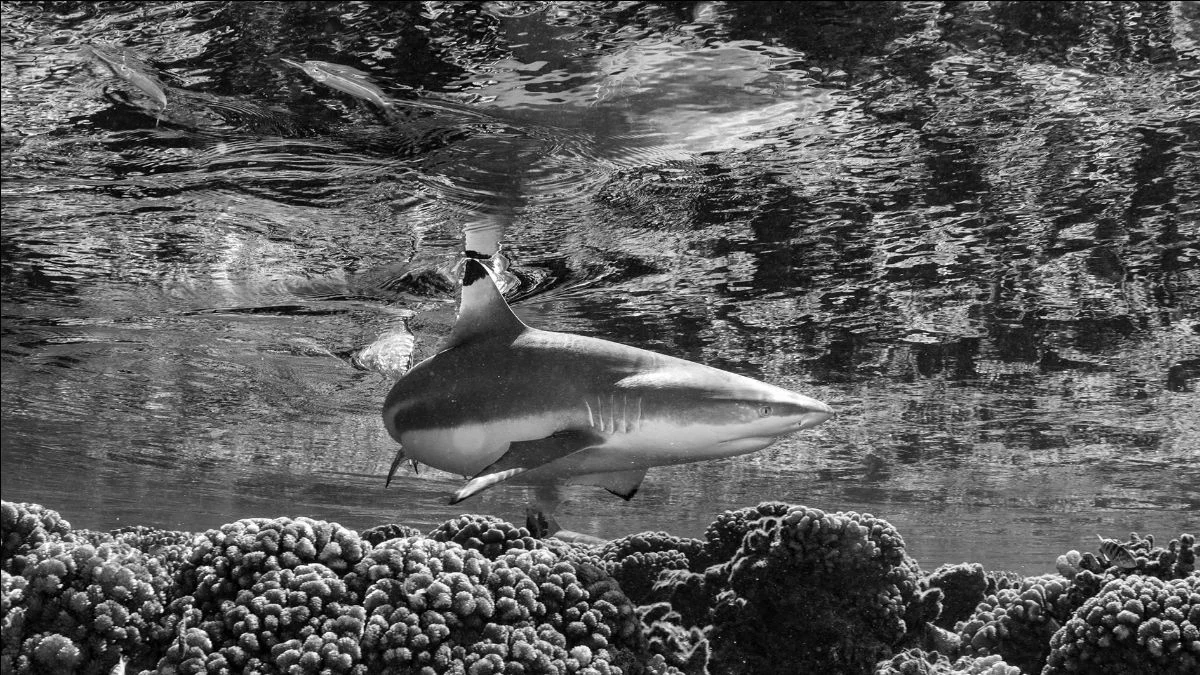
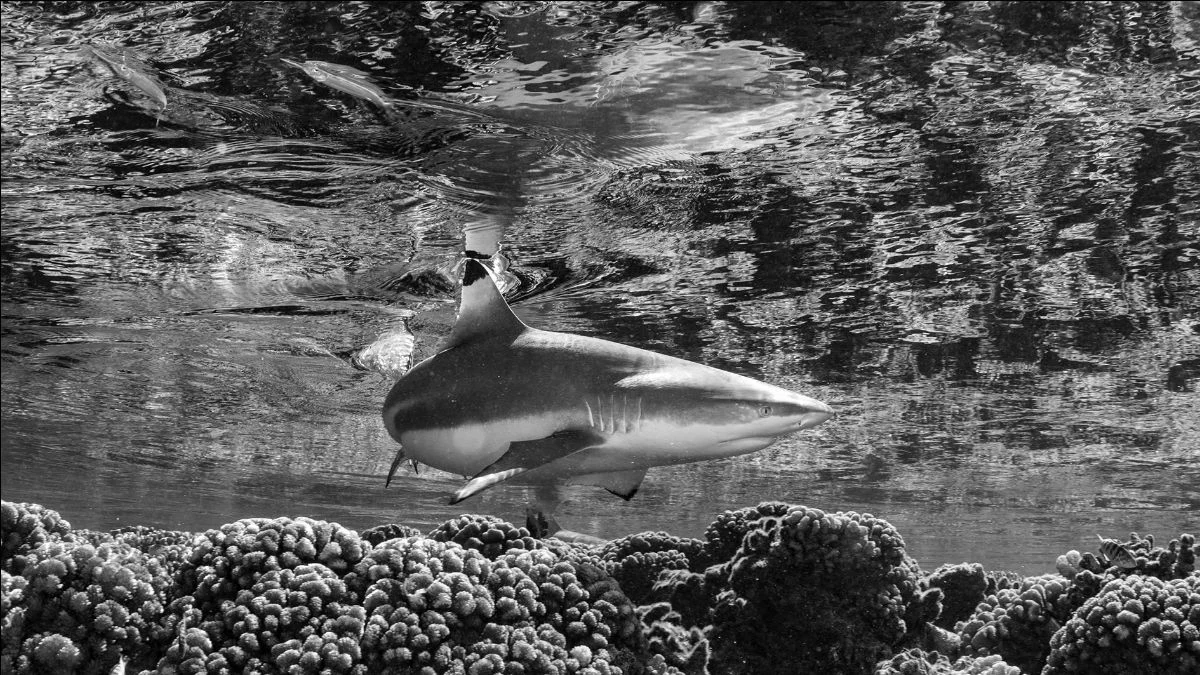
As the groupers gather to perpetuate their species, a formidable contingent of predators follows in their wake. Hundreds of sharks, a diverse array of species including grey reef sharks, blacktip reef sharks, and tiger sharks, descend upon the spawning grounds. These apex predators move with an almost synchronized purpose, resembling organized fleets, patrolling the coral heads and actively seeking out the abundant food source. Their presence is not merely opportunistic; it is an integral part of the natural cycle, a testament to the interconnectedness of the marine food web.
Our team had strategically positioned ourselves at the edge of the atoll, affording us an unobstructed view of this magnificent spectacle. As we descended along the dramatic drop-off at the channel’s mouth, the sheer number of groupers became apparent. Thousands of them were clustered around the coral formations, their camouflage artfully concealing them from the initial passes of the patrolling sharks. Each grouper appeared to have claimed its own coral head, their large eyes meticulously tracking the movements of the approaching predators. The underwater silence was periodically shattered by the resounding crunch of predation, followed by the chaotic swirling and thrashing of numerous sharks engaged in their hunt.
The Frenzy of Life and Predation
At approximately 100 feet below the surface, the culmination of the spawning ritual began. As female groupers ascended into the water column to release their precious cargo of eggs, the surrounding waters erupted in a breathtaking frenzy. Dozens of male groupers would immediately converge, releasing their milt to fertilize the eggs. In unison, thousands of groupers instinctively responded to this cue, racing to ensure the continuation of their lineage before the swift descent of the shark aggregations. It was a spectacular, primal display orchestrated by nature, a vivid illustration of the relentless cycle of life and death. The scene was simultaneously awe-inspiring and profoundly poignant, a fleeting moment that underscored the raw power of the natural world.

Ecological Equilibrium: The Role of Every Organism
The intricate processes observed in nature, particularly those involving predation and reproduction, can often appear chaotic and even violent from a human perspective, prompting questions about their ultimate purpose. However, it is crucial to recognize that these ecosystems have evolved over hundreds of millennia to achieve a precarious state of equilibrium. Every minute detail, from the subtle mottling of a grouper’s scales to the fate of each individual egg—whether fertilized or consumed by another organism—contributes to this delicate balance. Predators, including sharks, are not merely agents of destruction; they play a vital role in nutrient cycling, distributing essential elements across the reef and preventing the overpopulation of certain species.
Beyond Coexistence: Interdependence with Marine Life
The renowned marine biologist Eugenie Clark once wisely stated, "When you see a shark underwater, you should say, ‘How lucky I am to see this beautiful animal in his environment.’" This sentiment encapsulates a profound truth. There is no such thing as "learning to live with" sharks and other wildlife in the way we might think of adapting to human societal norms. Instead, we exist because of them. Their presence and the vital roles they have played in our oceans for millennia are fundamental to the health and stability of marine ecosystems, long before human intervention through fishing practices.
Conservation Imperatives: Safeguarding Fakarava’s Future
The breathtaking beauty, inherent drama, and ecological significance of events like the Fakarava grouper spawning underscore the urgent need for robust conservation efforts. By documenting and sharing these extraordinary natural phenomena, the hope is to inspire local communities and global stakeholders to champion the protection of these wild and vital ecosystems. The preservation of such areas is not merely an environmental concern; it is an investment in the future health of our planet’s oceans and the myriad life forms they sustain. Protecting these critical habitats ensures that future generations can witness and benefit from the intricate ecological processes that have sustained life for eons.

The health of the Fakarava atoll and its iconic spawning aggregations are directly linked to broader oceanic health. Studies have shown that areas with healthy apex predator populations, such as those with abundant sharks, exhibit greater resilience to environmental stressors and a more robust overall biodiversity. For instance, research published in Nature Ecology & Evolution has highlighted how the removal of sharks can lead to cascading effects throughout the food web, impacting fish populations and the structural integrity of coral reefs. The presence of sharks, therefore, is a strong indicator of a healthy, functioning marine ecosystem. The success of the grouper spawning event, attracting hundreds of sharks, is a powerful testament to the relative health of the Fakarava atoll’s marine environment, a status that requires diligent and ongoing protection.
The Fakarava Biosphere Reserve, a UNESCO World Heritage site, plays a crucial role in safeguarding this natural wonder. Established in 1977, the reserve encompasses a vast area of lagoon and surrounding coral reefs, with a primary objective of protecting its exceptional marine biodiversity. The annual grouper spawning is a key attraction that draws scientific interest and ecotourism, providing economic incentives for local communities to engage in conservation. However, the delicate balance is constantly under threat from various factors, including illegal fishing, pollution, and the impacts of climate change, such as ocean warming and acidification. Therefore, continuous monitoring, effective enforcement of regulations, and community engagement are paramount to ensure the long-term survival of this unique ecological event.
The significance of the Fakarava spawning event extends beyond its visual spectacle. It is a critical breeding aggregation for several species of grouper, some of which are commercially important and have faced overfishing in other parts of the world. Protecting these spawning grounds ensures the replenishment of fish stocks not only within the atoll but also potentially in surrounding marine areas, demonstrating the far-reaching benefits of effective marine protected areas. The study of these aggregations also provides invaluable insights into fish behavior, reproductive strategies, and the complex dynamics of marine food webs, contributing to our broader understanding of ocean science.
As the sun began to rise, illuminating the surface of the ocean, our dive concluded. The images of the swirling sharks and the frantic spawning of the groupers were etched into our minds. This experience served as a powerful reminder of the intricate web of life that sustains our planet and the profound responsibility we have to protect it.
With gratitude and hope for the future,
Paul Nicklen