For three decades, living on Vancouver Island, a region renowned for its high cougar population, photographer and writer Paul Nicklen had experienced only fleeting glimpses of these elusive felines. This profound respect for their stealth and the inherent difficulty in observing them, eloquently captured by John Vaillant’s quote, "The tiger will see you a hundred times before you see him once," fueled a lifelong ambition to document these apex predators in their natural habitat. This ambition culminated in a journey to Chilean Patagonia, a land of dramatic landscapes and a sanctuary for the famed pumas of the region.
The Genesis of an Expedition: Challenges and Arrival
The expedition to photograph the pumas of Chilean Patagonia was not without its initial hurdles. A significant setback occurred with the loss of Nicklen’s passport, necessitating an unexpected detour to a Brazilian embassy to resolve the issue before he could proceed to Chile. This unforeseen complication, while stressful, ultimately underscored the dedication required to pursue such ambitious photographic endeavors in remote and ecologically sensitive areas.
Upon finally arriving in Chile, Nicklen was based at a converted estancia on the periphery of Torres del Paine National Park. This historic ranch, still equipped with functional farming and livestock apparatus, provided a unique window into the region’s dual identity: a breathtaking natural wonderland and a working landscape. The increasing influx of tourists drawn by the iconic granite peaks of Torres del Paine has spurred a burgeoning ecotourism industry. This growth has, in turn, fostered a shift in perspective among some local landowners, who are increasingly choosing to coexist with the very wildlife that was once perceived as a threat to their livestock. The estancia’s staff, embodying the values of gaucho culture—honesty, diligence, and hospitality—demonstrated this evolving relationship with the natural world.
Into the Heart of Puma Territory: The Expertise of a Local Guide
The key to navigating the rugged terrain and understanding the behavior of the Patagonian pumas lay in the guidance of Rodrigo, a local expert with an intimate knowledge of the area and its feline inhabitants. Rodrigo, known for his profound connection to the pumas, led Nicklen deep into the heart of their domain. As the cultivated lands of the estancia gave way to the dramatic geological formations, the shimmering surfaces of snow-fed lakes, and the vast expanses of grassland, the imposing granite spires of the Andes mountains began to dominate the horizon. It was within this awe-inspiring landscape, nestled in the shadow of these colossal peaks, that Nicklen’s long-held dream began to materialize.
The Encounter: Petaka and Her Kittens
The first significant sighting was of Petaka, a female puma of almost legendary status within the region, accompanied by her two young kittens. Petaka’s reputation stemmed from her remarkable composure and apparent indifference to the presence of humans, a trait that has earned her reverence among visitors to Torres del Paine and its surroundings. This behavior is largely attributed to the conservation status of pumas in Chile. Unlike in neighboring Argentina, where hunting regulations may differ, pumas in Chile are a protected species, and hunting them is largely prohibited. This legal protection has, in some instances, allowed certain puma populations to habituate to human presence, leading to a reduction in their typical wariness. For Nicklen, witnessing this relaxed coexistence was a profound experience, a testament to the possibility of quiet, respectful observation of wild animals in their natural state. The opportunity to observe Petaka diligently caring for her offspring, the kittens playfully tumbling in the grass nearby, was an emotionally resonant moment, filling Nicklen with a sense of deep awe and gratitude.
The Unforeseen Convergence: A Blizzard and a Solitary Puma
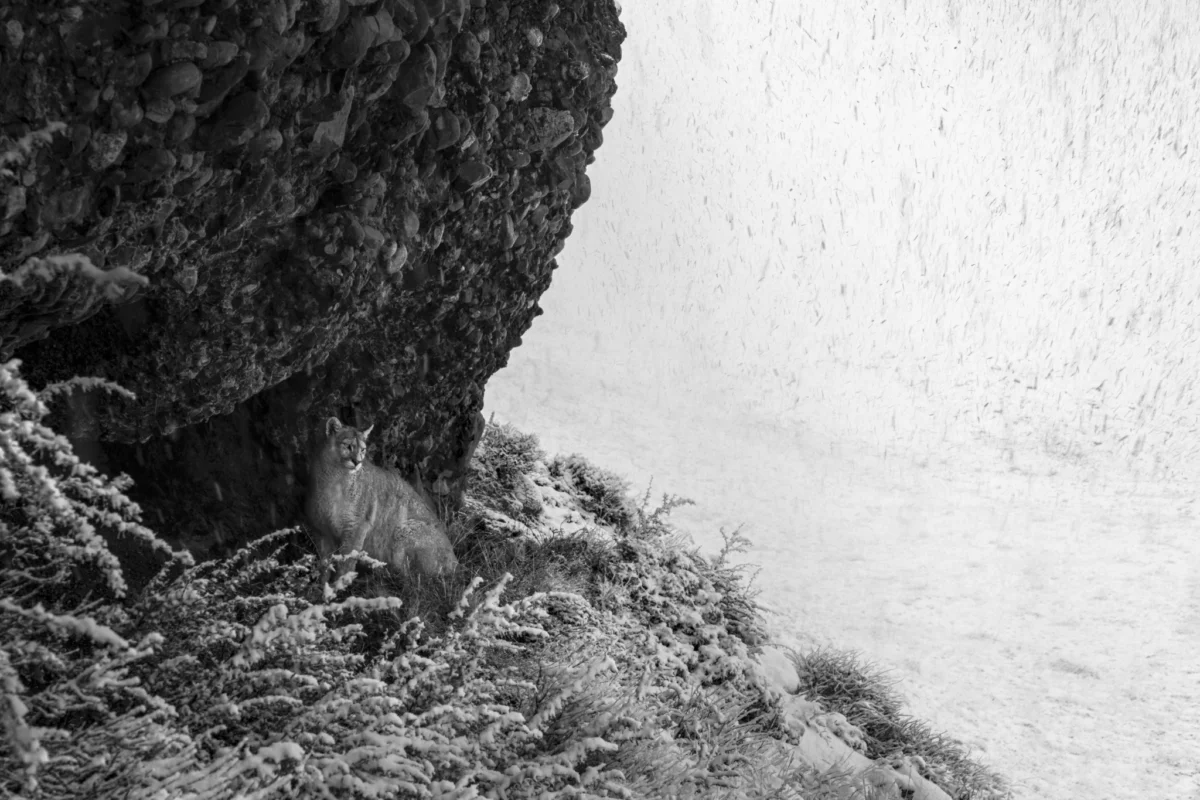
The serene encounter with Petaka and her family was soon interrupted by the capricious Patagonian weather. The skies, which had been clear, rapidly darkened as the wind intensified and the first snowflakes began to fall. The storm quickly escalated, enveloping the landscape in a thick blanket of white, muffling all sound and transforming the environment into a scene of stark, elemental beauty. Seeking refuge from the blizzard, Nicklen found shelter in a mountainside cave. It was within this temporary sanctuary, as the storm raged outside, that an unexpected and extraordinary event unfolded.
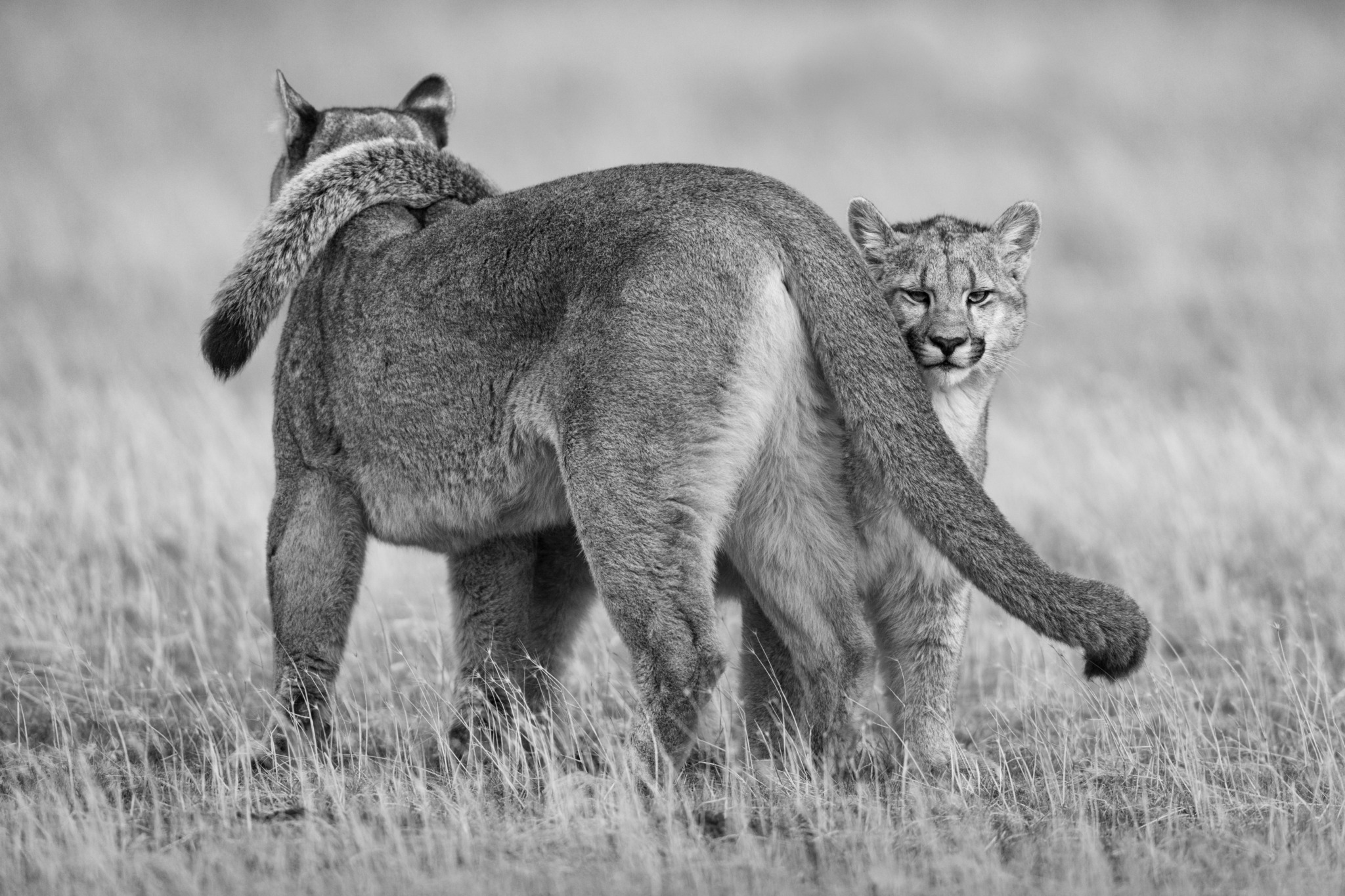
A large puma, emerging from the swirling snow, appeared and settled down just feet away from Nicklen, also seeking to escape the inclement weather. The photographer instinctively froze, his breath held, his camera steady despite the surge of adrenaline and excitement. For a prolonged period, the two unlikely companions shared the confined space in absolute silence, the only sounds the howling wind and the soft patter of snow against the cave’s entrance. The puma remained undisturbed by Nicklen’s presence, its gaze fixed on the external environment, a primal instinct for survival overriding any curiosity about the human observer. This profound stillness, this shared moment of vulnerability in the face of nature’s power, underscored the raw and untamed essence of the wild.
The Aftermath and the Profound Implication
As the blizzard finally abated and the storm clouds dispersed, revealing a landscape transformed by fresh snow, the puma quietly departed, melting back into the pristine canvas of the Patagonian wilderness. It was only after the cat had vanished that Nicklen allowed the overwhelming emotions of the experience to surface. This extraordinary convergence, a moment of shared refuge between predator and observer, served as a powerful reminder of the intricate and often surprising ways in which life persists and adapts.
The encounter highlighted a fundamental truth: when ecosystems are given the space to recover and thrive, humanity has the privilege of witnessing the unadulterated magnificence of the natural world. The experience in Patagonia, particularly the silent communion with a wild puma during a snowstorm, was described by Nicklen as an unparalleled gift. It represented a fleeting but deeply meaningful connection with a creature in one of the planet’s most breathtaking and wild environments.
Conservation and Coexistence: The Patagonian Model
The Patagonian region, and specifically areas like Torres del Paine National Park, serve as a critical case study in the successful integration of conservation efforts with human activity. The protection afforded to pumas in Chile has demonstrably contributed to their ability to coexist with a growing human presence. This approach, which prioritizes the preservation of natural habitats and the reduction of human-wildlife conflict, allows for the study and appreciation of these magnificent animals without jeopardizing their long-term survival.
Economic Impact of Ecotourism
The rise of ecotourism in Patagonia has brought significant economic benefits to the region. The influx of international visitors seeking to experience the unique landscapes and wildlife has created employment opportunities and stimulated local economies. However, this growth also necessitates careful management to ensure that tourism activities are sustainable and do not negatively impact the very ecosystems that attract visitors. The model exemplified by the estancia, where traditional land use is harmonized with conservation goals, offers a blueprint for responsible development.
The Role of Local Knowledge and Expertise
The success of expeditions like Nicklen’s is heavily reliant on the invaluable knowledge of local guides and experts such as Rodrigo. Their understanding of animal behavior, habitat, and the subtle nuances of the environment is crucial for safe and ethical wildlife observation. This reliance on local expertise underscores the importance of supporting and valuing indigenous knowledge in conservation efforts.
Broader Implications for Wildlife Photography and Conservation
Nicklen’s photographic work from Patagonia not only captures the beauty of the pumas but also serves as a powerful advocacy tool for conservation. By showcasing the resilience and inherent value of these predators, such images can inspire a broader public appreciation for wildlife and the need for protective measures. The story of the Patagonian pumas offers a message of hope: that with dedicated conservation efforts and a willingness to coexist, humanity can continue to share the planet with its most magnificent wild inhabitants. The quiet dignity of a puma resting in a cave during a blizzard, undisturbed by a human presence, is a potent symbol of this shared existence, a testament to the profound beauty that emerges when nature is allowed to simply be.