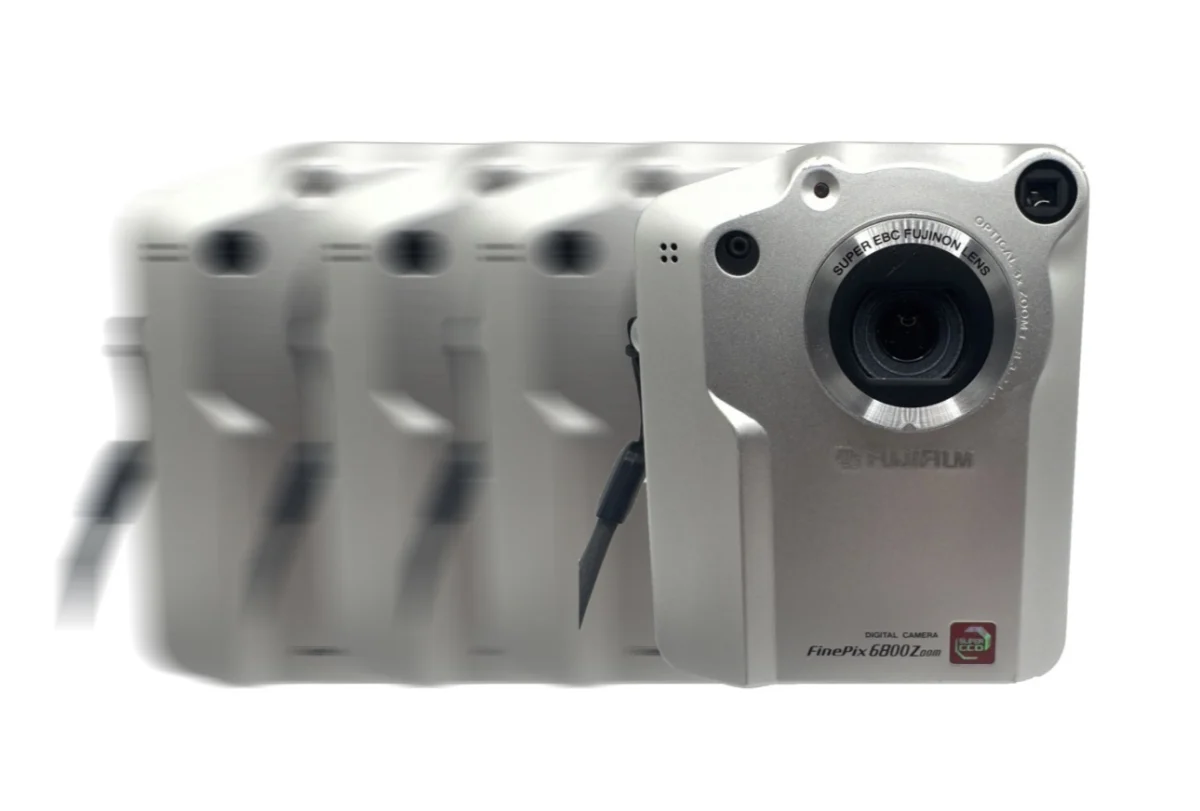
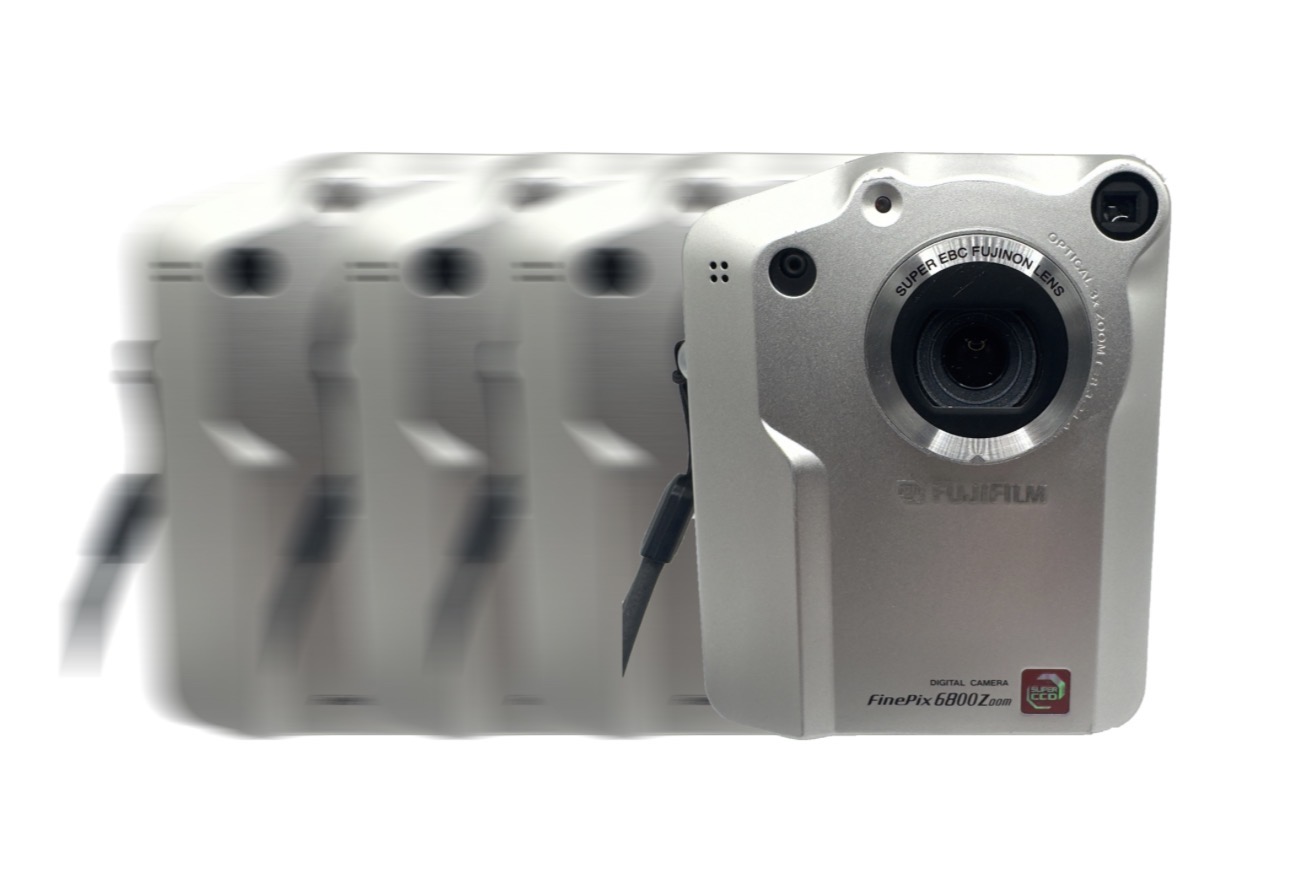
The evolution of digital photography is often charted through megapixel counts and sensor sizes, yet the aesthetic and ergonomic legacy of early 2000s hardware remains a critical chapter in industrial design history. Central to this narrative is the Fujifilm FinePix 6800z, a digital camera released in 2001 that represented a high-profile collaboration between Fujifilm and Porsche Design, the studio founded by Ferdinand Alexander Porsche. This partnership sought to merge high-performance imaging technology with the sleek, vertical orientation characteristic of premium European automotive design. Decades after its release, the 6800z remains a focal point for collectors and enthusiasts, serving as a case study in how form factor and sensor architecture—specifically the Super CCD—shaped the transition from analog to digital workflows.
Historical Context and the Porsche Design Collaboration
At the turn of the millennium, the digital camera market was characterized by rapid experimentation. Manufacturers were transitioning from bulky, plastic-heavy designs to more sophisticated, metallic, and compact enclosures. Fujifilm, seeking to differentiate itself from competitors like Sony and Canon, engaged Porsche Design to oversee the exterior architecture of its high-end FinePix line. The result was the 6800z, the successor to the 4800z, which featured a brushed magnesium-alloy body and a distinctive vertical stance.
The collaboration was part of a broader trend where 20th-century design icons influenced photographic equipment. Historical precedents include the Leica M series, the Contax RTS (designed by Porsche Design in the 1970s), and the Rolleiflex twin-lens reflex cameras. By aligning with Porsche, Fujifilm aimed to signal that digital cameras were no longer mere gadgets but precision instruments akin to luxury timepieces or sports cars. This design philosophy prioritized a "stand-up" configuration, which intended to improve one-handed operation and provide a unique silhouette in a market dominated by horizontal "point-and-shoot" rectangles.
Technical Specifications and Super CCD Architecture
The Fujifilm FinePix 6800z was built around the proprietary Super CCD (Charge-Coupled Device) sensor, a technology that departed from the traditional rectangular pixel grid. Fujifilm’s Super CCD utilized octagonal pixels arranged in a honeycomb pattern. According to technical documentation from the period, this layout allowed for a higher packing density and improved light sensitivity.
The 6800z featured a 3.3-megapixel Super CCD, which used sophisticated interpolation algorithms to produce a 6.0-megapixel output file (2832 x 2128 pixels). While interpolation remains a point of debate among purists, the 6800z was praised for its ability to render skin tones and vibrant colors, a hallmark of Fujifilm’s color science derived from its decades in film manufacturing.
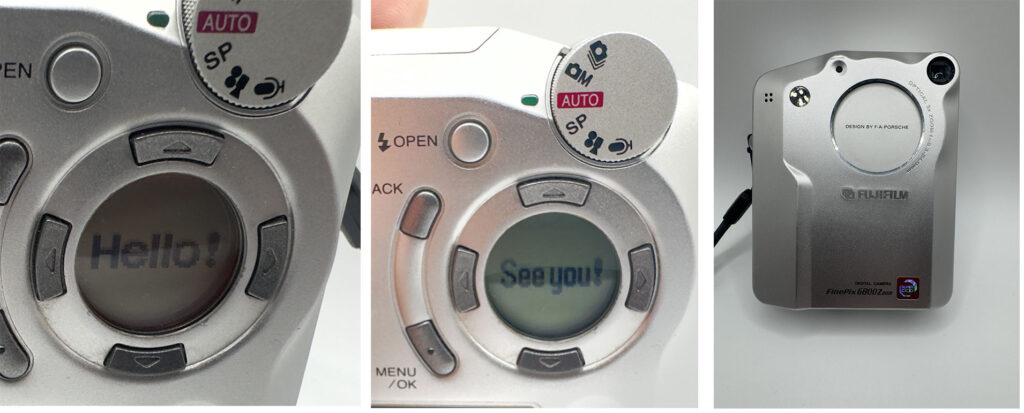
Key technical data for the 6800z includes:
- Sensor: 1/1.7-inch Super CCD (3.3 million effective pixels).
- Lens: 3x optical zoom (equivalent to 36–108mm on a 35mm frame).
- Aperture: f/2.8 to f/4.5.
- ISO Range: 100, 200, 400.
- Storage: SmartMedia cards (a now-obsolete flash memory format).
- Connectivity: A dedicated cradle (docking station) for USB transfer and charging, a forward-thinking feature for the year 2001.
Operational Analysis and User Experience
In contemporary field tests, such as those conducted by Michael Kaplan, a Senior Lecturer at The Ohio State University, the 6800z reveals both the brilliance and the limitations of early digital ergonomics. The camera’s "drive-ability" is often described as idiosyncratic. Despite the Porsche pedigree, the vertical grip can be unwieldy for modern users accustomed to the deep grips of mirrorless systems.
One of the most celebrated features of the 6800z is its mechanical lens cover and startup sequence. Upon activation, the camera displays a "Hello" greeting on its circular top-mounted LCD, and the 3x zoom lens extends with a distinctive mechanical whir. The shutdown sequence concludes with a "See You!" message. While these features add a layer of personality, the mechanical complexity of the lens door and zoom assembly has been noted as a potential failure point in aging units.

Furthermore, the 1.8-inch rear LCD monitor, while standard for its time, lacks the brightness and resolution required for critical focus in daylight. Users often rely on the optical "tunnel" viewfinder, which, despite having a limited field of view and parallax error at close distances, provides a tactile connection to the subject.
Case Study: Documenting the 2009 Hyundai Sonata
To evaluate the 6800z’s performance in a modern context, researchers and enthusiasts have applied the camera to automotive photography—a fitting tribute given its design origins. In a recent exercise, the camera was used to document a 2009 Hyundai Sonata Limited, a vehicle known for its 3.3-liter V6 engine and clean, sophisticated lines.
Color Reproduction and Dynamic Range
The 6800z’s Super CCD demonstrated a remarkable ability to handle the "Blue Metallic" finish of the Sonata. Even when subjected to strong sunlight, the sensor managed to capture the contrast between the deep blue paint and the vibrant green of the surrounding environment. The "Old-Man Edition" plaque—a humorous nod to 1970s American automotive trim traditions—was rendered with sufficient clarity to showcase the camera’s 6MP interpolated resolution.

Detail and Focus
In close-up shots of the Sonata’s custom wheels, the 1/1.7-inch sensor captured intricate textures, though a slight shift in focus toward the center of the frame was detected. This suggests that while the Super CCD excels at color, the optics of the early 2000s may exhibit softness at the edges when compared to modern aspherical lens elements.
Low-Light and Engine Bay Documentation
The camera’s "Black & White" scene mode was tested within the engine bay of the V6 Sonata. While lacking the dynamic range of a modern Leica Monochrom, the 6800z successfully captured the tonal variations of the engine components, including the subtle differences between the oil and transmission fluid dipsticks. This highlights the sensor’s ability to distinguish tonal gradations even in a monochromatic setting.
Reliability and the "CCD Death" Phenomenon
A significant hurdle for collectors of this era is the longevity of the sensors. The early 2000s saw a widespread industry issue often referred to as "CCD sensor death." This was particularly prevalent in Fujifilm’s F700 model and several Sony-manufactured sensors of the period. The failure was often attributed to the packaging of the CCD chip, where moisture could enter the sensor housing and cause internal corrosion, leading to distorted images or total blackouts.

The 6800z units that remain in "mint" condition are increasingly rare. Collectors advise that any functional unit should be treated as a delicate historical artifact. The reliance on SmartMedia cards also presents a challenge, as these cards are no longer manufactured and have a maximum capacity of 128MB, limiting the number of high-resolution images a user can take in a single session.
Market Trends and the "Digicam" Resurgence
In recent years, there has been a documented surge in interest in early digital cameras, driven largely by a younger generation of photographers seeking an alternative to the clinical perfection of smartphone imagery. This "digicam" trend has seen prices for CCD-based cameras rise on secondary markets like eBay and Reverb.
The Fujifilm FinePix 6800z occupies a unique niche in this market. It is valued not just for its "vintage" digital look—characterized by a specific type of grain and color saturation—but also as a piece of industrial art. The Porsche Design connection ensures that the 6800z remains desirable for those who appreciate the intersection of technology and luxury branding.

Broader Impact and Implications for Digital Heritage
The legacy of the 6800z extends beyond its technical specs. It represents a moment in time when the digital camera was finding its identity. The transition from film to digital was not merely a change in the recording medium but a complete overhaul of how humans interact with the act of capturing a moment.
For educators and professionals like Michael Kaplan, who has transitioned from a half-century of film photography to a digital-only workflow, the 6800z serves as a bridge between eras. It possesses the mechanical soul of an analog device—the clicking lens doors, the optical viewfinder, the physical dials—while housing the silicon heart of the digital revolution.
As we move further into the era of computational photography and artificial intelligence, the Fujifilm FinePix 6800z stands as a reminder of the importance of physical design. It proves that a camera can be more than a tool; it can be an expression of aesthetic intent. Whether viewed as a quirky relic or a masterpiece of Porsche Design, the 6800z continues to offer a distinct "point of view" in an increasingly uniform digital landscape. Its ability to turn a routine subject, like a 2009 Hyundai Sonata, into a study of light and form is a testament to the enduring power of the Super CCD and the vision of its designers.