Funeral photography, a practice that once held a prominent place in Victorian society, has largely receded into the shadows of modern times, often perceived as a taboo subject. However, photographer Duane Knight, proprietor of Your Legacy Photography, asserts that this genre is a vital, albeit often overlooked, avenue for individuals to process grief through the powerful medium of art. Knight’s research indicates a stark scarcity of dedicated funeral photographers globally, with his current count standing at a mere 50. Driven by a profound belief in the healing power of his craft, he has embarked on a mission to revitalize and expand this niche, actively educating fellow photographers on how to incorporate funeral photography into their professional portfolios.

The Evolution and Neglect of Funeral Photography
The practice of memorializing the deceased through photography has deep historical roots. In the Victorian era, post-mortem photography was relatively common, serving as one of the few ways families could preserve the image of a departed loved one, especially when formal portraiture was inaccessible or unaffordable. These photographs, though somber, provided tangible connections to those who had passed, offering comfort and a sense of continuity to grieving families. As photographic technology advanced and became more accessible, and as societal attitudes shifted, the practice of taking photographs at funerals gradually declined. The advent of digital photography and the ubiquity of personal cameras further complicated the landscape, leading to a general perception that such documentation was either inappropriate or unnecessary.
Knight’s personal journey into funeral photography was born from an unexpected realization. He, like many photographers, had received heartfelt testimonials from clients whose family members cherished portraits of deceased loved ones, often lamenting that these were the only quality photographs available for display at funerals. This common experience, however, rarely translated into an understanding of the profound benefit that documenting the funeral itself could offer. It was this gap in understanding that fueled Knight’s dedication to establishing funeral photography as a recognized and valuable service.

Providing Solace Through Visual Narratives
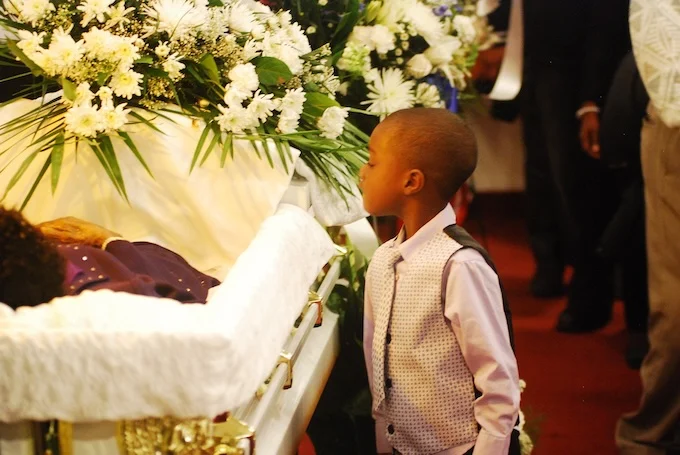
Knight’s extensive experience, spanning approximately a decade and resulting in the creation of over 150 "Legacy Funeral Albums," underscores the profound impact of his work. He observes that funerals often serve as rare occasions where extended family and friends, dispersed geographically, reconvene to honor a departed loved one. These gatherings, while emotionally charged, are frequently a blur of intense feelings, making it challenging for attendees to retain specific memories of who was present or the details of the day.
"Funerals, much like weddings, birthdays, and christenings, bring together a network of loved ones for a fleeting, precious period," Knight explains. "In the emotional intensity of grief, the tangible memories of who shared that space can become obscured. An album created from funeral photography serves not only as a memento of the departed but also as a comprehensive record of the community that gathered to celebrate their life." For those unable to attend due to distance or other circumstances, receiving a Legacy Funeral Album can bridge the gap, offering them a sense of inclusion and connection to the memorialization process. This visual documentation provides a crucial link to shared grief and collective remembrance, offering a form of solace that transcends the immediate emotional turmoil.

Navigating Cultural Perceptions and Taboos
Knight acknowledges that the acceptance of funeral photography is deeply intertwined with cultural norms and individual beliefs. "Funerals being photographed is definitely a cultural thing," he states. "Some cultures don’t want any photos, and to them, it’s taboo. In a group of ten people, you might get two or three who want funeral photography." This inherent cultural sensitivity is a critical aspect of his approach. He emphasizes that his mission is not to impose the practice but to ensure availability for those who desire it.
"My business, Your Legacy Photography, is dedicated to being present for those who wish for their loved one’s funeral to be documented," Knight asserts. His core philosophy is rooted in the preservation of memories. He firmly believes that "all families who want funeral photography should have the opportunity to get it." This commitment drives his efforts to destigmatize the practice and highlight its potential for healing and remembrance. The scarcity of photographers willing or equipped to handle such sensitive assignments means that for many families who might benefit, this option remains unavailable. Knight aims to change this by actively advocating for the practice and demystifying its execution.

The Educational Imperative: Training the Next Generation of Funeral Photographers
Recognizing the limited number of practitioners, Knight is actively engaged in educating and mentoring other photographers who are interested in this specialized field. He understands that funeral photography requires more than just technical skill; it demands a profound level of empathy, discretion, and sensitivity. Photographers must be adept at capturing poignant moments without being intrusive, understanding the delicate emotional landscape of a grieving family.
Knight has been a vocal presence at numerous photography conferences, including the prestigious WPPI (Wedding & Portrait Photographers International) Expo in Las Vegas. At these events, he endeavors to raise awareness about funeral photography as a legitimate and valuable genre and to share his expertise in teaching photographers the nuances of this practice. His presence at WPPI, a major hub for professional photographers, provides a significant platform to reach a broad audience and spark interest in a field that is currently underserved.

His distinctive approach to outreach is as memorable as the subject matter itself. Attendees at WPPI can easily identify Knight by his signature hat, emblazoned with the declaration "I Love Funeral Photography," and a vest that reads, "Ask Me about the Art of Funeral Photography." This bold, yet approachable, presentation serves to initiate conversations and break down potential barriers to discussing a sensitive topic. His aim is to demystify the process, address common misconceptions, and highlight the therapeutic benefits of professionally captured funeral imagery.
The Broader Implications of Memorialization Through Art
The implications of Knight’s mission extend beyond individual families and into the broader landscape of grief counseling and memorialization practices. As mental health awareness grows, so does the recognition of art therapy and creative expression as essential components of healing. Funeral photography, when approached with the sensitivity and skill that Knight advocates, can be seen as a form of art therapy. It provides a tangible, visual narrative that can aid in the complex process of coming to terms with loss.

The statistical prevalence of grief in society further emphasizes the potential need for such services. Studies indicate that a significant portion of the population experiences profound grief at various points in their lives. While traditional forms of memorialization, such as obituaries and memorial services, are important, they often lack the personal and immediate visual connection that photography can provide. A well-executed funeral photograph can capture the essence of a final farewell, the shared sorrow, and the collective support, offering a unique form of solace and remembrance.
Knight’s initiative to train more funeral photographers is not merely about expanding a niche market; it is about ensuring that individuals have access to a powerful tool for emotional processing during one of life’s most challenging periods. By increasing the number of skilled and empathetic professionals in this field, he hopes to make funeral photography a more accessible and accepted option for families seeking to document and memorialize their loved ones. His dedication to educating others, coupled with his personal commitment to the art form, positions him as a pioneer in revitalizing a practice that holds significant potential for healing and remembrance in the modern age.

For those interested in learning more about the art of funeral photography, Duane Knight’s website, YourLegacyPhotography.com, serves as a comprehensive resource. His Instagram account, @funeral.photos, showcases examples of his work and provides insights into his approach. Individuals are encouraged to reach out to him directly via his website’s contact page with feedback or any questions they may have regarding this unique and deeply meaningful photographic genre. Knight’s vision is to ensure that the art of preserving memories through funeral photography continues to evolve and serve those in need.