The strategic landscape of Eastern Europe has undergone a fundamental transformation as Ukraine accelerates its domestic production of First-Person View (FPV) drones, evolving from a makeshift tactical response into a sophisticated, multi-billion-dollar defense industry. Since the escalation of hostilities in early 2022, the Ukrainian defense sector has pivoted toward an asymmetric warfare model, prioritizing the rapid manufacture of low-cost, high-precision aerial systems. This industrial mobilization has not only bridged the gap in conventional artillery supplies but has also established Ukraine as a global laboratory for 21st-century robotic warfare. With a projected production target exceeding 4.5 million units by the end of 2025, the scale of this initiative reflects a permanent shift in military doctrine, where silicon and software are as critical as steel and gunpowder.
Historical Context and the Rise of the "Army of Drones"
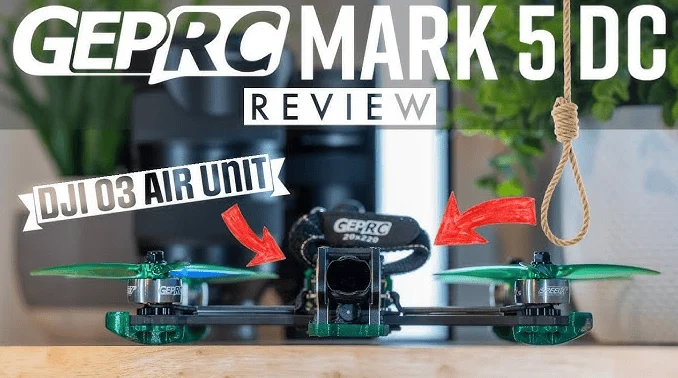
The trajectory of drone utilization in Ukraine began as a grassroots movement. In the early months of 2022, volunteer groups and hobbyists repurposed commercial quadcopters for reconnaissance. However, as the frontline stabilized into a grueling war of attrition, the limitations of off-the-shelf consumer drones became apparent, particularly their vulnerability to electronic warfare (EW) and their inability to carry significant payloads. This necessitated a rapid transition to FPV drones—specialized craft piloted via virtual reality goggles that provide a real-time, immersive feed, allowing for extreme maneuverability and precision.
In mid-2022, the Ukrainian government, in collaboration with the General Staff of the Armed Forces, launched the "Army of Drones" initiative. This program, spearheaded by the Ministry of Digital Transformation, sought to centralize the procurement, training, and maintenance of unmanned aerial vehicles (UAVs). By 2023, the focus shifted from procurement to domestic manufacturing. The government streamlined bureaucratic hurdles, removing import duties on drone components and simplifying the certification process for new military technology. This regulatory overhaul allowed hundreds of small-to-medium enterprises (SMEs) to emerge, transforming the Ukrainian hinterland into a decentralized network of drone workshops.
Strategic Financial Allocation and Production Targets
The scale of Ukraine’s commitment to unmanned systems is evidenced by its budgetary priorities. For the 2024-2025 fiscal period, the Ukrainian government has allocated more than $2.6 billion specifically for the acquisition and development of drones. This investment is part of a broader strategy to offset the numerical superiority of the Russian Federation’s conventional forces.
Recent data indicates that the industrial output is meeting these ambitious financial inputs. In February 2025, Ukrainian FPV drone strikes saw a 22% increase compared to the previous month, a surge attributed to the maturation of supply chains and the integration of automated assembly lines. The target for 2025—4.5 million FPV units—represents an unprecedented level of production in the history of aerial warfare. To achieve this, the Ministry of Strategic Industries has fostered partnerships between the state and over 200 private companies, ensuring that the production base remains resilient against targeted strikes by maintaining a geographically dispersed manufacturing footprint.
Technical Innovations and the Electronic Warfare "Cat and Mouse" Game
The effectiveness of Ukrainian FPV drones is not solely a result of quantity but of constant technical iteration. Modern FPV drones produced in Ukraine are designed to address specific battlefield challenges:
- Electronic Counter-Countermeasures (ECCM): As Russian forces deployed sophisticated EW complexes like the Pole-21 and Krasukha-4, Ukrainian engineers pivoted to frequency-hopping spread spectrum (FHSS) technology and the use of non-standard radio frequencies to maintain control links.
- AI Integration and Terminal Guidance: One of the most significant advancements in the 2024-2025 production cycle is the integration of low-cost Artificial Intelligence (AI) chips. These systems allow drones to "lock on" to a target during the final phase of flight, ensuring the strike is completed even if the operator loses the signal due to jamming or terrain interference.
- Night Operations: The introduction of thermal imaging cameras on FPV drones has eliminated the traditional sanctuary of darkness. Domestic producers have successfully integrated low-light and infrared sensors into disposable airframes, allowing for 24/7 harassment of enemy logistics and infantry.
- Payload Versatility: Ukrainian workshops have standardized the production of specialized munitions, ranging from anti-tank high-explosive (HEAT) warheads to thermobaric charges, tailored specifically for the weight and balance constraints of FPV platforms.
The Role of the Brave1 Defense Tech Cluster
Central to this industrial surge is the "Brave1" platform, a coordinated defense tech cluster designed to bridge the gap between frontline requirements and engineering solutions. Brave1 acts as an incubator, providing grants, testing grounds, and access to military feedback for local startups. Through this ecosystem, a drone design can move from a prototype to the battlefield in as little as three to four weeks.
The cluster has also addressed the critical issue of component dependency. Historically, many FPV components—such as flight controllers, motors, and carbon fiber frames—were sourced from China. However, given the geopolitical sensitivities and potential export restrictions, Brave1 has incentivized the "localization" of these parts. Ukrainian firms are now increasingly manufacturing their own brushless motors and injection-molded frames, reducing the vulnerability of the supply chain to external shocks.
Socio-Economic Impact and the Democratization of Defense
The boom in drone production has created a secondary effect on the Ukrainian economy. With thousands of engineers, assembly line workers, and software developers employed in the sector, a new "defense-tech" middle class is emerging. Furthermore, the "People’s FPV" project has seen thousands of Ukrainian civilians take online courses to assemble drones at home, which are then sent to centralized labs for quality control and military certification. This democratization of defense manufacturing has fostered a high degree of national resilience and collective participation in the security apparatus.
Official statements from the Ministry of Digital Transformation emphasize that this industrial base will be a cornerstone of Ukraine’s post-war economy. "We are not just building weapons for today; we are building a global hub for unmanned systems that will lead the world in the coming decades," a ministry spokesperson noted during a recent defense summit in Kyiv.
Challenges: Logistics, Cybersecurity, and Personnel
Despite the rapid growth, the Ukrainian FPV industry faces significant headwinds. The reliance on imported microchips remains a primary bottleneck, as global demand often outstrips supply. Additionally, the decentralized nature of production, while a strength against physical strikes, poses a challenge for quality control and standardization.
Cybersecurity is another critical front. As drones become more reliant on software and AI, the risk of Russian hacking or signal hijacking increases. This has led to a surge in demand for cybersecurity specialists within drone manufacturing firms to encrypt telemetry and control data. Finally, the "pilot gap" remains a concern; producing 4.5 million drones requires an equally massive effort to train thousands of operators capable of maneuvering these craft in high-stress, jammed environments.
Broader Implications for Global Military Strategy
The Ukrainian experience with FPV drones is being closely watched by defense ministries worldwide. The conflict has proven that a $500 drone can neutralize a $5 million main battle tank, challenging long-standing assumptions about the cost-effectiveness of heavy armor. NATO allies have responded by forming a "Drone Coalition," led by the United Kingdom and Latvia, to support Ukraine’s production while simultaneously learning from its battlefield data.
This shift suggests a future where "attrition by robotics" becomes a standard feature of peer-to-peer conflict. The data gathered from millions of Ukrainian FPV sorties is currently being used to refine Western doctrines regarding air defense, electronic warfare, and infantry tactics.
Future Outlook: Beyond the FPV
Looking toward 2026 and beyond, the Ukrainian defense sector is already eyeing the next evolution of unmanned systems. This includes "interceptor drones" designed to hunt and destroy enemy reconnaissance UAVs, as well as autonomous "swarm" technology where dozens of FPV drones can coordinate a synchronized strike with minimal human intervention.
The commitment to producing 4.5 million drones by 2025 is more than a production target; it is a declaration of strategic intent. By integrating the agility of a startup culture with the urgency of national survival, Ukraine has created a blueprint for modern industrial mobilization. As these systems continue to saturate the battlefield, the lessons learned in the workshops of Kyiv, Lviv, and Dnipro will likely dictate the rules of engagement for the rest of the 21st century.
Conclusion
The rapid escalation of FPV drone production in Ukraine represents a landmark moment in military history. Driven by necessity and fueled by a combination of state investment and private-sector innovation, the country has successfully weaponized the digital revolution. While challenges in the supply chain and electronic warfare persist, the sheer scale of production—backed by a $2.6 billion commitment—ensures that unmanned systems will remain the primary instrument of Ukrainian defense. This evolution does more than just alter the current conflict; it establishes a new paradigm for how nations must prepare for, and conduct, high-intensity warfare in an era defined by rapid technological disruption.