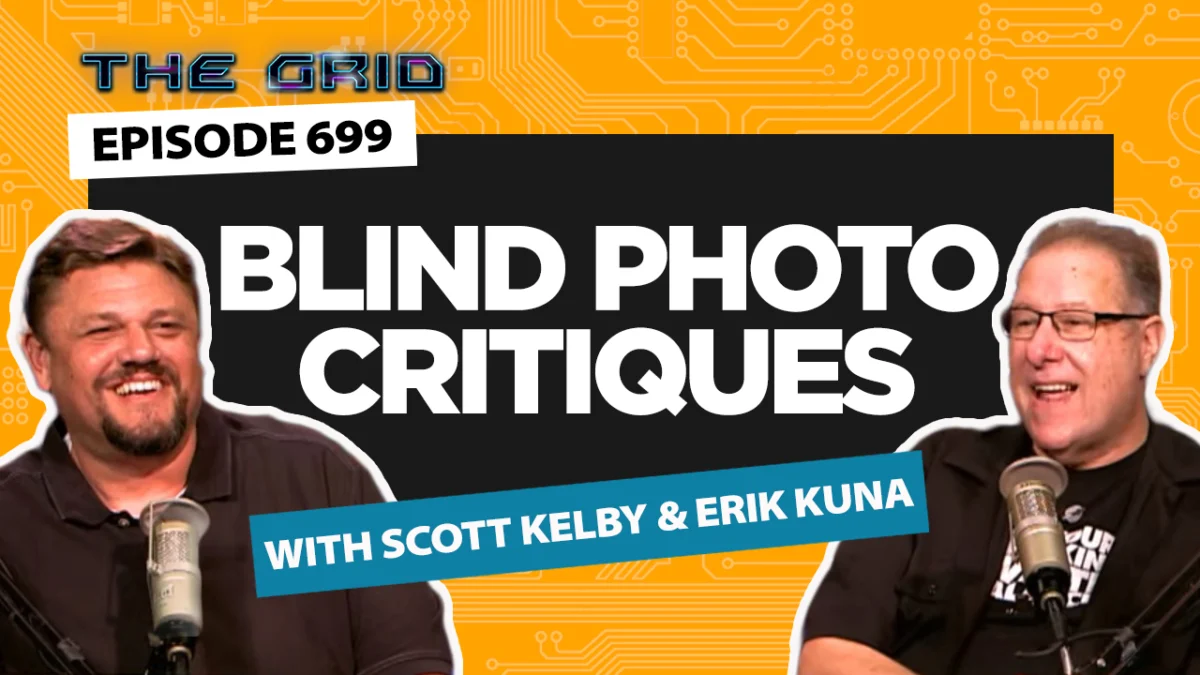
The latest installment of The Grid, episode 699, delivered a comprehensive and insightful session of its highly anticipated Blind Photo Critiques, featuring industry stalwarts Scott Kelby and Erik Kuna. This week’s broadcast, a cornerstone event for photographers seeking to refine their craft, presented an eclectic array of viewer-submitted images, spanning virtually every genre imaginable. From the precise timing required for fireworks displays and the dynamic action of air shows to the ethereal beauty of Milky Way photography, the intimacy of portraits, the grandeur of weddings, the expansive narratives of travel and architecture, and the technical challenges of underwater shots, the episode provided a rich tapestry for expert analysis and educational discourse.
The Enduring Legacy of The Grid and Blind Critiques
The Grid, a weekly online talk show, has firmly established itself as a vital resource within the global photography community. For nearly 700 episodes, it has served as a dynamic platform for photography news, industry updates, technical tutorials, and, crucially, live interactive sessions that bridge the gap between theoretical knowledge and practical application. Hosted by Scott Kelby, CEO of KelbyOne and editor-in-chief of Photoshop User magazine, alongside co-host Erik Kuna, the show has cultivated a loyal following of amateur and professional photographers eager to learn from the best.
The "Blind Photo Critiques" segment is a particularly celebrated feature, designed to foster objective evaluation. In this format, the identity of the photographer behind each submitted image is withheld from the critics until after their assessment. This methodology ensures that feedback is based solely on the visual merits and technical execution of the photograph itself, free from any potential biases associated with the photographer’s reputation or prior work. This commitment to impartiality not only enhances the credibility of the critique but also provides a more valuable learning experience for both the submitting artist and the broader audience, encouraging viewers to assess images critically based on universal photographic principles rather than subjective preferences.
Scott Kelby, a prolific author and educator with dozens of photography and Photoshop books to his name, has long advocated for a practical, accessible approach to photography education. His philosophy centers on demystifying complex concepts and empowering photographers with actionable techniques they can immediately apply. Erik Kuna, a respected photographer, educator, and co-host, often complements Kelby’s insights with his deep technical understanding and hands-on experience, particularly in areas like astrophotography and advanced image editing. Together, their synergy creates a balanced and highly informative critique environment.
A Spectrum of Photographic Challenges and Solutions
The diversity of images presented in episode 699 underscored the multifaceted nature of contemporary photography and the wide range of technical and artistic challenges photographers face. Critiques delved into specific considerations for each genre:
- Fireworks Photography: Discussions often revolved around shutter speed, aperture, ISO, and timing to capture the explosive beauty without overexposure or blur. The hosts likely emphasized the use of a tripod and bulb mode for long exposures to create light trails.
- Air Show Action: This genre demands fast shutter speeds to freeze motion, precise autofocus tracking, and anticipatory composition to capture aircraft in dynamic poses. The challenge lies in balancing sharpness with a sense of movement.
- Milky Way Photography: A technically demanding field, this requires careful management of high ISO settings, wide apertures, and specific lenses to gather enough light from faint celestial objects while minimizing noise. Composition with foreground elements was a likely point of emphasis, along with proper focus on stars.
- Portraits: The critiques explored elements such as lighting (natural and artificial), posing techniques to flatter subjects, expressions, and background management to ensure the subject remains the focal point.
- Weddings: This high-pressure genre requires a blend of documentary and portraiture skills, necessitating versatility in various lighting conditions, quick decision-making, and an understanding of storytelling to capture the narrative of the day.
- Travel and Architecture: These categories often involve considerations of perspective, leading lines, scale, and capturing the essence of a place or structure. The hosts might have discussed techniques for dealing with challenging light or busy environments.
- Underwater Shots: Perhaps the most technically specialized, this segment likely touched upon unique lighting challenges, equipment considerations (housings, strobes), and the complexities of color correction in aquatic environments.
Through this broad spectrum, Kelby and Kuna meticulously discussed camera settings, composition principles, effective posing strategies, the critical role of timing in capturing decisive moments, and various editing techniques within Adobe Camera Raw and Photoshop. The practical nature of their advice aims to provide viewers with tangible improvements for their own photographic endeavors, irrespective of their preferred genre.
Beyond the Technical: The Art of Storytelling and Composition
A recurring and paramount theme throughout the episode was the assertion that technical camera settings, while fundamental, are not the sole determinants of a memorable photograph. This message resonated as a guiding principle, emphasizing that the true artistry often lies in elements beyond mere exposure triangle mastery. The hosts repeatedly highlighted that the most significant difference between a good photograph and a truly compelling one often stems from:
- Directing Your Subject: In genres like portraits, weddings, or even some travel shots involving people, effective communication and direction are crucial. This involves not just telling a subject where to stand, but guiding their posture, expression, and gaze to evoke a desired mood or narrative. This skill transforms a passive snapshot into an active collaboration, imbuing the image with greater emotional depth and authenticity.
- Simplifying the Composition: Clutter and distraction can dilute the impact of an image. Kelby and Kuna likely demonstrated how simplifying the background, eliminating extraneous elements, and isolating the main subject can dramatically enhance clarity and focus. Principles such as the rule of thirds, leading lines, negative space, and framing become tools not just for aesthetic appeal but for directing the viewer’s eye and strengthening the message. A clean, uncluttered composition allows the primary subject or story to shine without competing for attention.
- Telling a Stronger Visual Story: Ultimately, a photograph’s power often lies in its ability to communicate. This goes beyond merely documenting a scene; it involves imbuing the image with narrative, emotion, or a sense of place. The hosts likely broke down how elements like light, shadow, color, gesture, and environmental context contribute to building a compelling story. A strong visual narrative engages the viewer, invites interpretation, and leaves a lasting impression, transforming a mere image into an experience.
This emphasis aligns with established photographic theory, which posits that while technical proficiency is the foundation, artistic expression and communication are the ultimate goals. A photograph that is technically perfect but lacks a story or strong composition often fails to resonate, whereas an image with minor technical flaws but a powerful narrative can be profoundly moving. This core tenet serves as an important reminder for photographers at all levels to look beyond their camera dials and engage with the deeper artistic principles that define impactful imagery.
Mastering the Digital Darkroom: Software and Innovation
The critiques extended into the realm of post-processing, underscoring the indispensable role of digital editing in modern photography workflows. Scott Kelby and Erik Kuna provided practical demonstrations of techniques within Adobe Camera Raw and Photoshop, two industry-standard applications.
A notable highlight was the demonstration of Generative Expand, a relatively new and powerful feature powered by Adobe’s Firefly generative AI. This tool allows photographers to intelligently expand the canvas of an image beyond its original boundaries, seamlessly filling in new content that matches the existing scene. This capability has profound implications for composition adjustments, allowing photographers to correct tight crops, change aspect ratios, or even add negative space for creative effect, all with remarkable speed and accuracy. The inclusion of Generative Expand in the critique signals KelbyOne’s commitment to staying at the forefront of technological advancements and educating its audience on how to ethically and effectively integrate AI tools into their creative processes. While offering immense creative freedom, its use also implicitly raises discussions about artistic intent and the distinction between capture and creation, topics frequently explored in professional photographic circles.
Another advanced technique showcased was a beautiful blue hour Milky Way blend. This likely involved combining multiple exposures—perhaps one for the foreground during the twilight "blue hour" to capture detail and ambient light, and another for the Milky Way itself taken later in the darker night sky. Blending these exposures requires meticulous masking, color grading, and luminosity adjustments in Photoshop to create a natural-looking composite that captures the best elements of both scenes, a testament to the power of advanced digital darkroom techniques.
The discussion of these tools and techniques reinforces that post-processing is not merely about "fixing" errors but is an integral part of the creative process, enabling photographers to refine their vision, enhance their storytelling, and produce images that transcend the capabilities of a single camera capture.
Community and Continued Learning: Workshops and Conferences
Beyond the critiques themselves, Scott Kelby took the opportunity to update viewers on several upcoming initiatives designed to further empower the photography community. These announcements underscore KelbyOne’s ongoing commitment to providing diverse learning opportunities and fostering professional development.
- Upcoming Workshops: KelbyOne regularly hosts a variety of workshops, both online and in-person, covering specialized topics. These immersive learning experiences offer a more intensive, hands-on approach compared to weekly shows, allowing participants to delve deep into specific genres or techniques under expert guidance. The value of such workshops lies in the direct interaction with instructors, personalized feedback, and the opportunity to practice new skills in a structured environment.
- New Astrophotography Tracker: Kelby’s update on testing a new astrophotography tracker is particularly relevant given the increasing popularity and technical demands of capturing celestial phenomena. An astrophotography tracker mechanically compensates for the Earth’s rotation, allowing for longer exposures without star trails, thus gathering more light and producing cleaner, more detailed images of the night sky. This announcement provides valuable insights into new gear that can significantly enhance image quality for enthusiasts of the genre.
- Upcoming Photographing People Conference: This specialized conference highlights the enduring demand for expertise in portraiture, fashion, and event photography. Such conferences typically feature multiple instructors, diverse sessions, and networking opportunities, providing a focused environment for attendees to hone their skills in capturing human subjects effectively. The emphasis on "people" photography acknowledges its vast market, from professional portrait artists and wedding photographers to aspiring social media content creators, and the unique challenges associated with directing and capturing compelling human interactions.
These updates serve as a vital link between the free educational content provided by The Grid and the more structured, in-depth learning experiences offered by KelbyOne. They demonstrate a comprehensive ecosystem for photographic education, catering to various learning styles and professional aspirations.
The Broader Impact on Photography Education
The regular broadcast of shows like The Grid, with its detailed blind critiques, contributes significantly to the democratization of photography education. By making expert analysis accessible to a global audience, KelbyOne helps to raise the overall standard of photographic excellence. Viewers are encouraged to develop a critical eye, not just for their own work but for photography in general, fostering a deeper understanding of what constitutes effective imagery.
The interactive nature, even when not directly participating, creates a sense of community. Photographers can learn from the mistakes and successes of others, apply the critique principles to their own portfolios, and stay abreast of new techniques and technological advancements. In an era where photographic tools are more accessible than ever, but quality guidance can be elusive, platforms like The Grid play a crucial role in providing authoritative, practical advice.
The episode’s core message—that storytelling and composition often trump technical settings—serves as a powerful philosophical anchor for photographers. It encourages them to think beyond gear and embrace the artistic, communicative potential of their craft. This nuanced understanding is essential for growth, pushing photographers from merely capturing images to creating art that resonates and endures.
For those seeking to elevate their photographic journey, watching the replay of this episode offers an invaluable opportunity. The practical insights and expert guidance provided by Scott Kelby and Erik Kuna are designed to be directly applicable, serving as a catalyst for photographers to critically assess their own work and implement strategies for continuous improvement. The wealth of information presented underscores the ongoing evolution of photography as both a technical skill and a profound artistic expression.