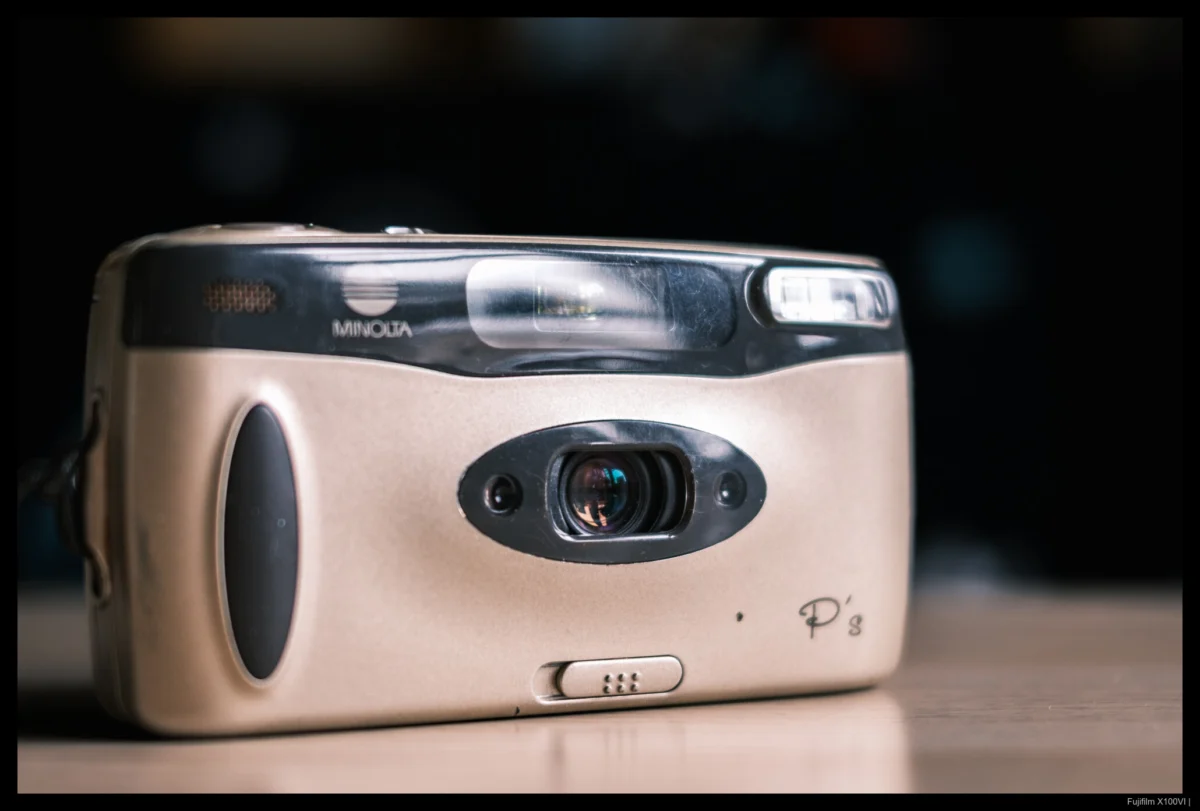
The Minolta P’s, a dedicated panoramic point-and-shoot camera released in 1991, represents a pivotal moment in the history of consumer imaging where manufacturers sought to provide specialized photographic experiences through simplified hardware. Known as the Freedom Vista in North America and the Riva Panorama in other global markets, this device challenged the conventional 3:2 aspect ratio of 135-format film by strictly enforcing a wide-angle, panoramic perspective. While modern digital sensors allow for effortless cropping and stitching, the Minolta P’s achieved its cinematic 2.71:1 aspect ratio through a permanent mechanical masking system, a design choice that remains a point of contention among film enthusiasts and technical purists today.

Technical Specifications and Design Philosophy
At the time of its release, the Minolta P’s was positioned as a lifestyle tool for travelers and hobbyists who desired the "sweeping vista" aesthetic without the complexity or cost of professional panoramic systems. The camera is constructed primarily of molded polycarbonate, weighing approximately 185 grams unloaded and 205 grams when prepared for operation with a CR123A battery and a standard 36-exposure roll of 135 film. Its dimensions—roughly 110mm in length, 25mm in width, and 60mm in height—allow it to maintain a pocketable profile, a necessity for the point-and-shoot market of the early 1990s.
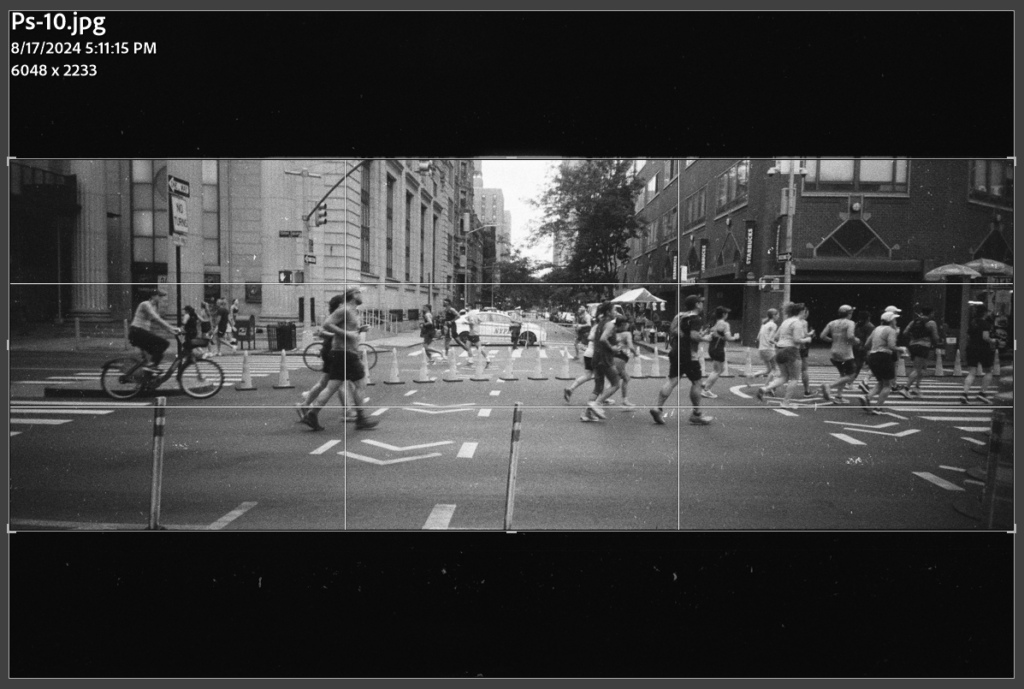
The core of the camera’s optical system is a fixed 24mm f/4.5 lens. In a standard 35mm camera, a 24mm focal length is considered ultra-wide; however, because the P’s utilizes an internal film gate to mask the top and bottom of the frame, the vertical field of view is significantly restricted. The resulting exposure measures approximately 36mm by 13.29mm. This specific ratio closely mirrors the 2.7:1 format later popularized by the professional-grade Fujifilm TX-1 and Hasselblad XPan systems, which arrived on the market seven years after the P’s.
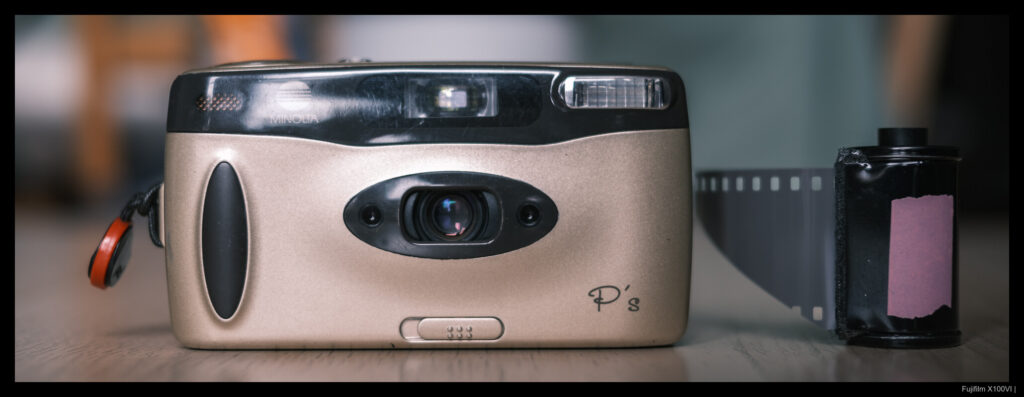
Historical Chronology of the Panoramic Trend
To understand the emergence of the Minolta P’s, one must examine the broader photographic landscape of the late 1980s and early 1990s. During this era, the industry saw a surge in "panoramic" modes across various consumer cameras. Most manufacturers implemented this as a switchable feature, allowing users to toggle between standard 35mm frames and a masked panoramic view on the same roll of film.
- 1987-1989: Major manufacturers begin introducing "Panorama" switches on high-end point-and-shoots. These systems were often criticized for having inadequate viewfinders that merely used lines to indicate the crop.
- 1991: Minolta releases the P’s (Freedom Vista). Unlike its competitors, Minolta removed the option to shoot standard frames entirely. By committing to a permanent mask, they were able to optimize the viewfinder specifically for the panoramic format.
- 1992-1995: The success of the "fake panorama" leads to the development of the Advanced Photo System (APS), which featured a "Panoramic" (P) mode as one of its three base formats.
- 1998: The Hasselblad XPan is released, providing a "true" panorama by exposing a 65mm wide frame, effectively ending the dominance of masked panoramic point-and-shoots in the enthusiast sector.
Industry analysts from the period suggest that Minolta’s decision to create a dedicated, non-switchable panoramic camera was a strategic attempt to capture the "intent" of the photographer. By forcing the user to see the world in a wide format, the camera acted as a compositional trainer, though it did so at the cost of nearly 50% of the film’s potential resolution.

Operational Constraints and User Interface
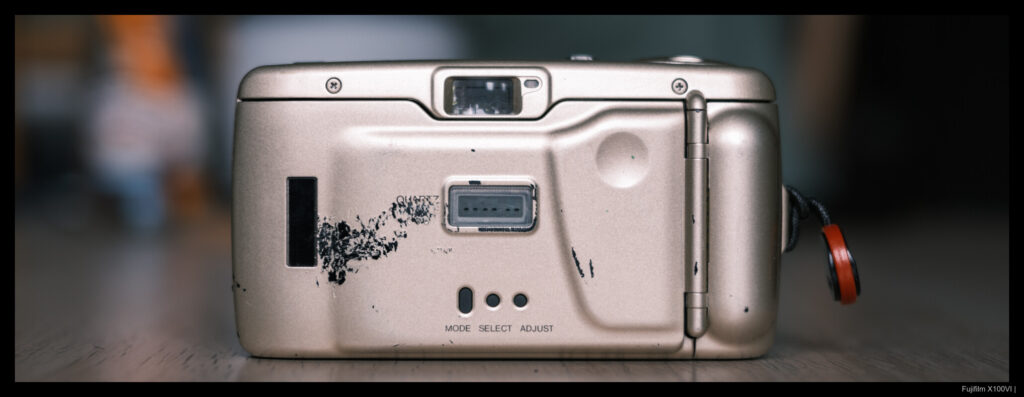
The Minolta P’s adheres to a minimalist control scheme typical of the "Freedom" line. It features fully programmed auto-exposure and an active infrared autofocus system. Film speed is determined via DX coding, though the camera is limited to recognizing only ISO 100 and 400. If a cassette lacks a DX code, the internal processor defaults to ISO 100, a limitation that necessitates careful film selection for users who prefer high-latitude professional stocks.

One of the most significant operational hurdles identified by long-term users is the integrated flash system. The camera is programmed to favor flash activation in a wide variety of lighting conditions. To prevent the flash from firing, the operator must manually depress and hold a small "flash suppress" button located on the top plate while simultaneously triggering the shutter. This ergonomic requirement often necessitates a two-handed grip, which can be counter-intuitive for a camera designed for spontaneous, one-handed street photography.

Furthermore, the physical durability of the P’s has proven to be a long-term concern. The silver and gray finishes applied to the polycarbonate bodies are notoriously prone to abrasion. Collectors frequently report "paint flecking" and finish loss, even when the cameras are stored in dedicated pouches.
The Viewfinder: A Competitive Advantage
Despite its budget-oriented construction, the Minolta P’s features a viewfinder that arguably outperforms many of its contemporary rivals. Because the camera does not need to accommodate a standard 3:2 frame, the optical finder is natively wide and bright. It utilizes a rangefinder-style "bright frame" system that shows the captured area along with a small portion of the surrounding environment.
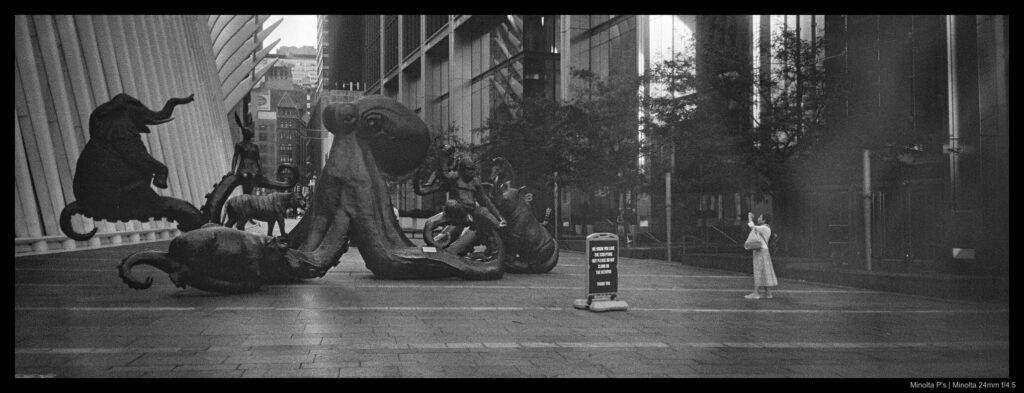
This design facilitates "predictive composition," allowing the photographer to see subjects before they enter the frame. For street photographers, this is a vital feature. The inclusion of horizontal leveling hashes within the finder also addresses one of the primary challenges of panoramic photography: the "tilted horizon" effect. Given the elongated nature of the 2.71:1 ratio, even a one-degree tilt is highly visible and can ruin the compositional balance of a landscape or architectural shot.
Comparative Data: Masked vs. True Panorama
The debate regarding the "validity" of the Minolta P’s often centers on its use of masking. To provide a factual basis for this comparison, the following data highlights the differences between the P’s and professional panoramic systems:

-
Minolta P’s (Masked 35mm):

- Negative Size: 36mm x 13.3mm
- Total Surface Area: ~478.8 mm²
- Exposures per Roll: 36 (Standard)
- Lens Requirement: Standard 35mm image circle.
-
Hasselblad XPan (True Panoramic):

- Negative Size: 65mm x 24mm
- Total Surface Area: ~1,560 mm²
- Exposures per Roll: 20-21
- Lens Requirement: Specialized lenses with large image circles.
While the XPan offers over three times the negative area, it also carries a secondary market price tag that is often 20 to 30 times higher than that of a Minolta P’s. For many contemporary film photographers, the P’s represents a "low-stakes" entry point into wide-format experimentation.
Broader Impact on the Film Photography Resurgence
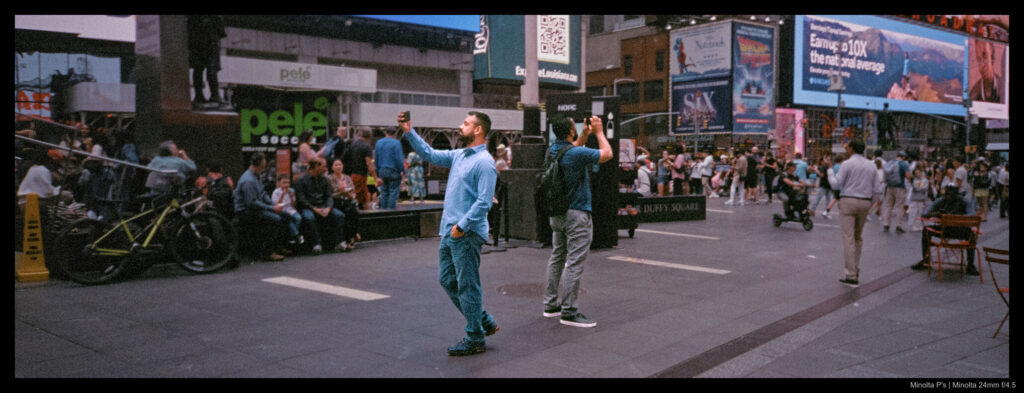
In the current "analog revival" of the 2020s, niche cameras like the Minolta P’s have seen a significant increase in demand. This is driven in part by the "cinematic" aesthetic popular on social media platforms such as Instagram and Pinterest. The 2.71:1 aspect ratio provides a look that is immediately distinguishable from the standard smartphone output.
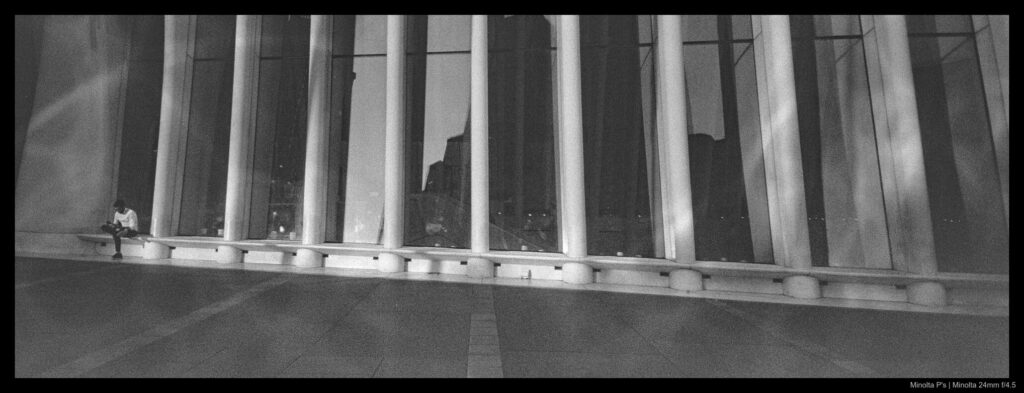
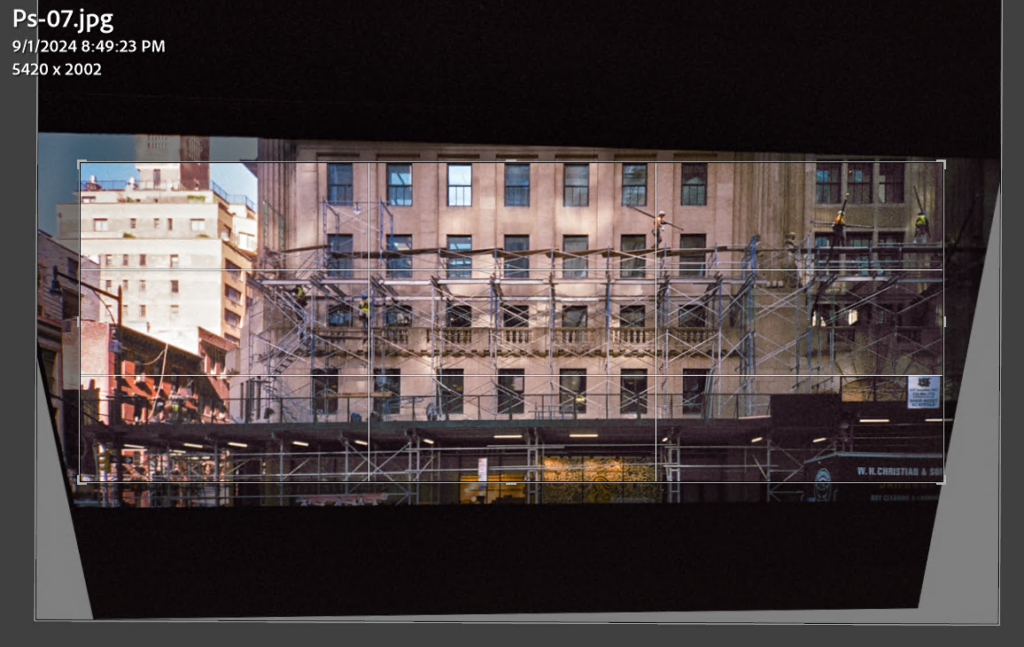
However, the use of the P’s presents a unique challenge for modern lab workflows. Standard automated scanners are programmed to look for 36x24mm frames. Because the P’s leaves large black bars at the top and bottom of the negative, many consumer-grade scanners fail to detect the frame boundaries correctly. This often requires photographers to invest in manual scanning hardware, such as the Epson V600 or dedicated Plustek units, to properly extract the panoramic image without unwanted cropping.
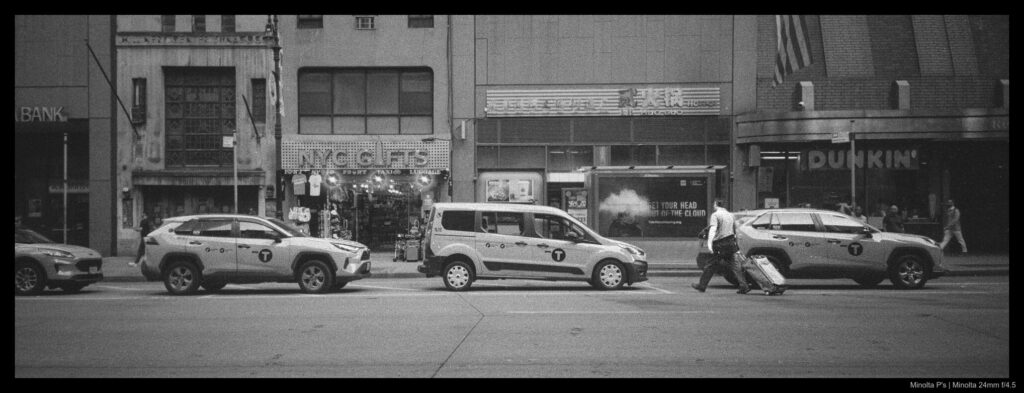
Fact-Based Analysis of Implications
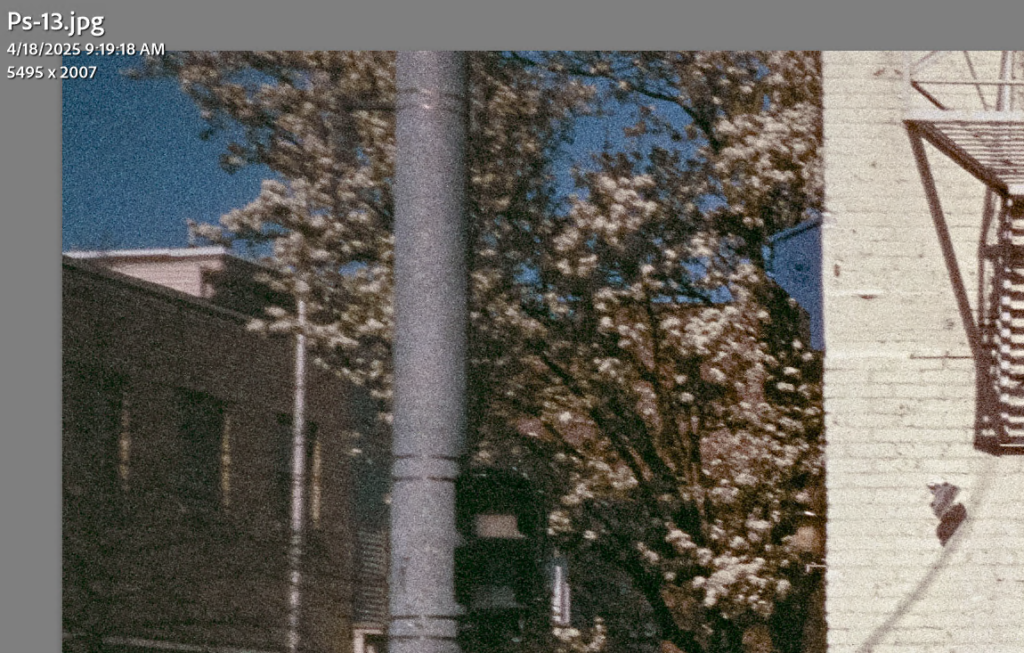
The legacy of the Minolta P’s is one of compromise and specialized intent. From a technical standpoint, the camera is inefficient; it consumes a full frame of film while utilizing less than half of the silver halide crystals for the final image. This results in increased grain and reduced sharpness when compared to a standard 35mm shot that is cropped later in post-production.
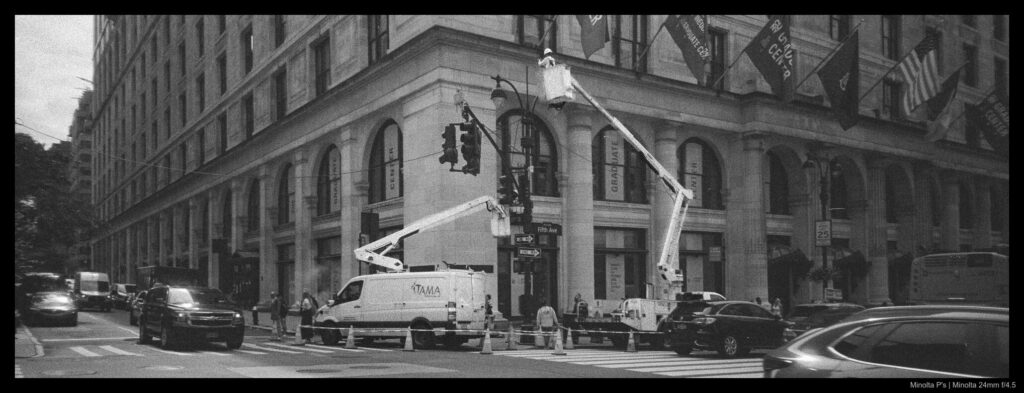
Nevertheless, the psychological impact of the dedicated panoramic viewfinder cannot be dismissed. Journalistic analysis of user behavior suggests that photographers are more likely to seek out leading lines, horizontal symmetries, and expansive subjects when using a dedicated tool rather than a multi-purpose one.
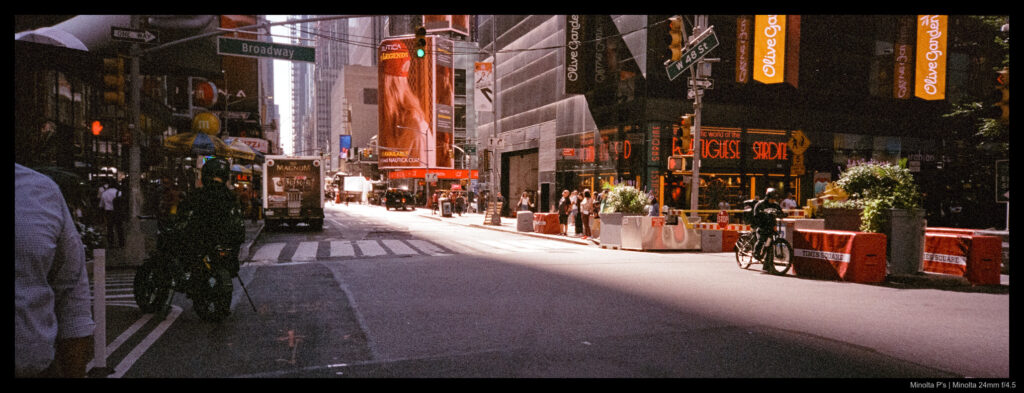
In conclusion, the Minolta P’s remains a fascinating artifact of 1990s design philosophy. It serves as a reminder that the user experience—specifically how a photographer perceives a scene through the glass—can be just as influential as the raw technical specifications of the sensor or film. While it may be a "fake" panorama in the eyes of engineers, for the artists who use it, the P’s offers a unique, affordable, and highly disciplined way to document the world in a wide-screen format. As the price of professional film equipment continues to climb, the Minolta P’s stands as a resilient and accessible alternative for those wishing to explore the horizons of analog photography.