The close of 2025 brings with it a fresh wave of comprehensive market analysis from Lensrentals, offering invaluable insights into the purchasing habits of photography and videography professionals and enthusiasts. Following their eagerly anticipated annual report on rental trends—a benchmark for understanding burgeoning market interest and equipment deployment—the company has now unveiled its 2025 purchase data. This parallel dataset provides a critical counterpoint, illustrating which pieces of gear customers deem essential enough to own outright, often after an initial rental period. This deeper dive reveals not only persistent brand loyalties and the enduring appeal of certain workhorse equipment but also a significant surge in demand for specialized production tools, particularly in the realm of wireless transmission.
Lensrentals, primarily renowned for its extensive inventory and "try-before-you-buy" model, has become a de facto barometer for the imaging industry. Its unique position, facilitating both short-term equipment access and a direct path to ownership through programs like "The Keeper," allows it to track a distinct segment of the market—customers who have thoroughly vetted gear in real-world scenarios before committing to a purchase. The Keeper program, an innovative initiative, allows renters who fall in love with a piece of equipment to purchase that exact item, often with a significant portion or even the entirety of their rental cost applied towards the purchase price, subject to specific terms and conditions. This mechanism provides a robust indicator of long-term satisfaction and perceived value, extending beyond mere curiosity or project-specific necessity.
Understanding the Purchase Landscape: Beyond the Rental Cycle
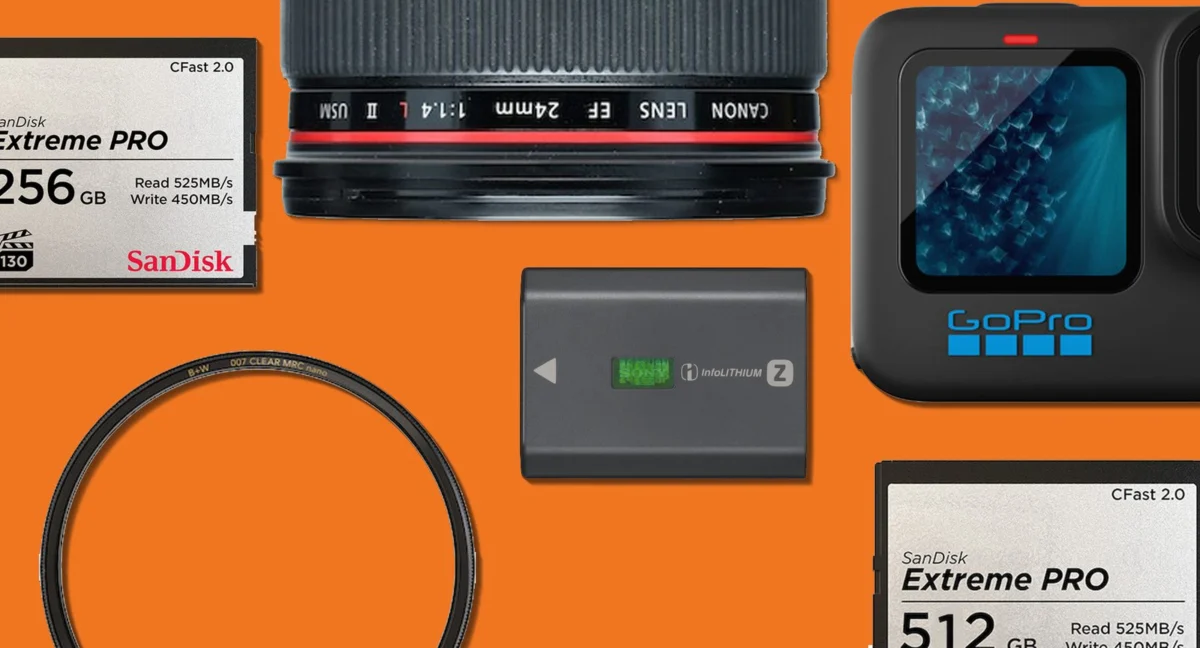
While rental data often highlights cutting-edge releases and specialized equipment for transient projects, purchase data typically reflects foundational tools, trusted accessories, and strategic investments. The 2025 figures underscore this distinction, with a significant portion of purchases comprising essential complementary products rather than primary cameras or lenses. Memory cards, specifically CFast cards, camera batteries, and UV filters, dominated the list of most common purchases by quantity. This trend is logical: these items are consumables or vital accessories that often experience wear and tear, require backups, or are simply non-negotiable for professional operation. Their relatively lower individual cost compared to primary camera bodies or high-end lenses also makes them more amenable to direct purchase, ensuring immediate availability and reliability for ongoing projects. The consistent demand for such peripherals also speaks to the professional mindset of Lensrentals’ clientele, who prioritize a complete, reliable kit for their endeavors.
Diving deeper into higher-value acquisitions, a standout item in 2025 was the Canon EF 24-70mm f/2.8L II lens. Its prominence on the purchase list is not surprising given its consistent ranking among the most rented lenses. What makes its purchase volume particularly noteworthy, however, is the evolving market landscape. With Canon aggressively pushing its mirrorless RF-mount system, the EF lens lineup, while still exceptionally capable, represents a previous generation of technology. This transition has inadvertently created a robust secondary market for EF glass, positioning lenses like the 24-70mm f/2.8L II as exceptional bargains for photographers and videographers seeking professional-grade optics without the premium price tag of their RF counterparts. Its reputation as a versatile "workhorse" lens, indispensable for a wide range of applications from portraiture to event coverage, further solidifies its appeal, making it a sound investment for those operating within or adapting to the EF ecosystem via adapters.
Brand Market Share Dynamics: A Revenue-Based Perspective
Examining the brand market share by revenue for purchases in 2025 reveals both continuity and notable shifts when compared to previous years and to rental trends. The data provides a robust picture of consumer confidence and investment across key manufacturers.
| Brand | 2023 Market Share | 2024 Market Share | 2025 Market Share |
|---|---|---|---|
| Canon | 28.43% | 22.99% | 23.55% |
| Sony | 28.83% | 21.60% | 16.60% |
| DJI | 7.22% | 10.04% | 9.95% |
| Nikon | 3.93% | 4.69% | 4.90% |
| Blackmagic | 2.41% | 2.58% | 3.43% |
| Leica | 1.63% | 2.39% | 3.25% |
| Fuji | 1.29% | 2.80% | 3.24% |
| Aputure | 2.38% | 2.33% | 3.01% |
| SmallHD | 1.58% | 2.32% | 2.83% |
| Panasonic | 2.05% | 2.20% | 2.76% |
| Sigma | 3.09% | 2.50% | 2.42% |
| Teradek | 1.02% | 0.92% | 2.83% |
Canon’s Enduring Dominance: For 2025, Canon solidified its position as the leading purchase brand, capturing 23.55% of the market share by revenue. This consistent leadership mirrors its strong performance in the rental market and underscores the enduring trust and loyalty photographers and videographers place in Canon’s ecosystem. Despite significant industry shifts towards mirrorless technology and fierce competition, Canon’s comprehensive range of cameras, lenses, and accessories, combined with a strong legacy of professional reliability, continues to drive outright purchases. The slight rebound from 2024’s 22.99% suggests a stable, if not slightly reinvigorated, purchasing base.
Sony’s Notable Decline: In contrast, Sony experienced a significant dip, falling from 21.60% in 2024 to 16.60% in 2025, a 5% decrease. This shift is particularly striking given Sony’s aggressive innovation in the mirrorless segment over the past decade. Several factors could contribute to this. The market might be reaching a saturation point for new Sony users, or existing users might be holding onto their current gear longer due to the incremental nature of recent upgrades. Intense competition from rejuvenated mirrorless offerings from Canon and Nikon could also be drawing some potential buyers away. Furthermore, Sony’s higher price points for cutting-edge mirrorless bodies and native lenses might encourage more users to rent for specific projects rather than commit to a full purchase, especially when considering the rapid pace of technological evolution.
DJI’s Surprising Ascent: Perhaps the most intriguing development is DJI’s emergence as the third-most-popular customer purchase brand, securing 9.95% of the market share. This places DJI ahead of traditional camera and lens manufacturers like Nikon, Fujifilm, and Panasonic. DJI’s success highlights the growing integration of drone technology, gimbals, and action cameras into professional workflows. Unlike traditional camera systems that often require extensive lens investments, DJI products are typically self-contained units (e.g., drones with integrated cameras, standalone gimbals) that fulfill specific creative needs. Their utility in capturing dynamic aerial footage or stabilized ground shots has made them indispensable tools, leading to direct purchases as professionals build out their specialized kit. The slight dip from 10.04% in 2024 is marginal and does not diminish the overall upward trend over the past few years (from 7.22% in 2023), underscoring DJI’s firm foothold in the broader imaging and videography market.
Nikon and Other Brands: Nikon, while still behind the top three, showed consistent growth, moving from 4.69% in 2024 to 4.90% in 2025. This modest but steady increase likely reflects the growing adoption and positive reception of its Z-mount mirrorless system. Other brands like Blackmagic (from 2.58% to 3.43%), Leica (from 2.39% to 3.25%), Fujifilm (from 2.80% to 3.24%), Aputure (from 2.33% to 3.01%), and SmallHD (from 2.32% to 2.83%) all demonstrated healthy growth. Blackmagic’s surge points to its continued appeal among indie filmmakers and those seeking high-quality cinema cameras at competitive price points. Fujifilm’s unique aesthetic and strong community continue to drive purchases, while Aputure and SmallHD’s gains highlight the increasing investment in professional lighting and monitoring solutions, which are critical components of modern video production. Panasonic maintained a stable presence, while Sigma, a third-party lens manufacturer known for its excellent value, saw a slight decline from 2.50% to 2.42%.
The Rise of Wireless: New Product Purchases in 2025
Beyond the overall brand landscape, the data also highlights significant trends in purchases of gear introduced to Lensrentals’ inventory in 2025. Topping this list was the Teradek 6G V Antenna. This finding is particularly indicative of a broader industry shift, reinforcing a trend identified in previous analyses: the increasing mainstream adoption of fast wireless transfer technologies on film and video sets.
The Teradek 6G V Antenna’s top position, following closely behind the Teradek Wireless Antenna for Bolt 500/1000 which ranked second among all purchases, underscores a fundamental evolution in production workflows. Wireless video transmission systems, such as those offered by Teradek, enable directors, cinematographers, focus pullers, and other crew members to monitor footage remotely, free from the constraints of cables. This significantly enhances efficiency, mobility, and collaboration on set. In an industry constantly striving for faster, more flexible, and safer production environments, investing in robust wireless infrastructure has become a priority. The ability to instantly review takes, make real-time adjustments, and share feeds across multiple screens without tangled cables not only streamlines operations but also improves the overall quality and speed of decision-making during shoots.
This trend is not isolated; it reflects a broader move towards digital integration and remote capabilities in professional imaging. From remote camera control systems to cloud-based collaboration platforms, the industry is embracing technologies that facilitate seamless data flow and distributed workflows. The demand for reliable wireless antennas signals that professionals are not just renting these critical tools for specific projects but are increasingly integrating them as permanent fixtures in their owned kits, recognizing their indispensable role in contemporary production.
Broader Implications and Future Outlook
The 2025 purchase data from Lensrentals offers a multi-faceted view of the photography and videography market. Canon’s sustained leadership, even as its EF-mount system transitions, speaks to its brand strength and the continued value of its established optics. Sony’s dip, while noteworthy, could prompt strategic re-evaluations regarding pricing, product differentiation, or ecosystem development. DJI’s robust performance clearly indicates the expanding definition of "imaging gear," where specialized tools like drones and gimbals are becoming as foundational as traditional cameras.
More broadly, the consistent demand for complementary products highlights the ongoing investment in the complete production ecosystem, emphasizing reliability and efficiency. The significant uptake of wireless transmission technologies, epitomized by Teradek’s strong showing, forecasts a future where seamless connectivity and remote operation are not luxuries but standard operational necessities on professional sets. Manufacturers across the board will likely continue to innovate in these areas, focusing not just on primary imaging devices but also on the accessories and infrastructure that support modern content creation.
For consumers, this data validates the strategic approach of leveraging rental services to thoroughly test gear before committing to a purchase. The "Keeper" program exemplifies a consumer-centric model that empowers informed decision-making in a rapidly evolving technological landscape. As the industry moves forward, such transparent data sharing remains crucial for all stakeholders—from manufacturers planning future product lines to professionals making their next investment. The insights gleaned from Lensrentals’ 2025 purchase data illuminate not just what was bought, but also the underlying motivations and emergent trends shaping the vibrant world of professional imaging.