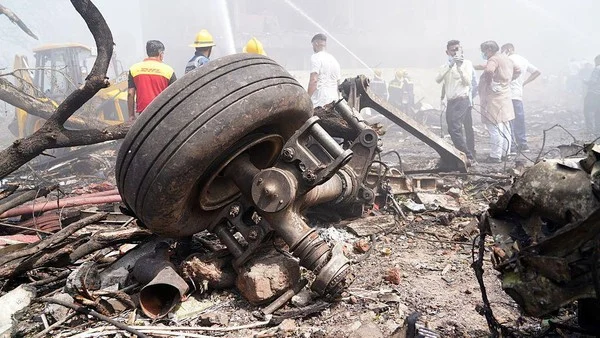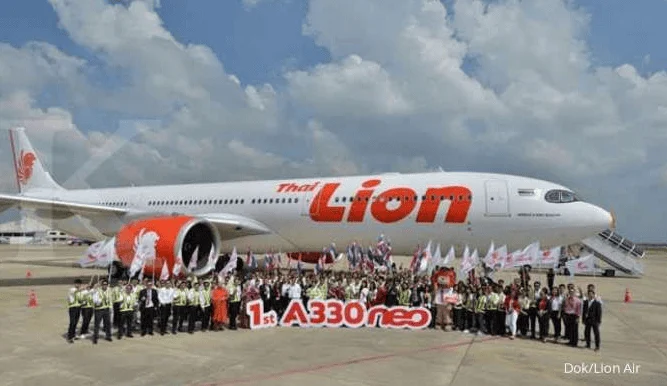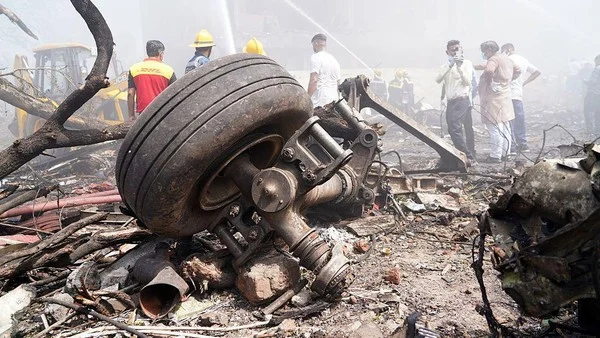
The global aviation community remains in a state of profound shock following the catastrophic loss of Air India Flight AI-171, a Boeing 787 Dreamliner that crashed on June 12, 2025, during its final approach to Sardar Vallabhbhai Patel International Airport in Ahmedabad, India. The flight, which originated from London Heathrow, was carrying 245 souls, including 233 passengers and 12 crew members. In what has been described as a localized miracle amidst an overwhelming tragedy, only one individual survived the impact and is currently in critical condition at a specialized trauma center. As the recovery phase transitions into a formal inquiry, international investigators have successfully retrieved the aircraft’s "black boxes"—the Flight Data Recorder (FDR) and the Cockpit Voice Recorder (CVR)—marking a pivotal turning point in the quest to understand the mechanics of this disaster.
Chronology of the Final Minutes
Air India Flight AI-171 was a scheduled long-haul service that had proceeded without incident for the majority of its nine-hour duration. According to preliminary radar data provided by Air Traffic Control (ATC), the Boeing 787-8 entered Indian airspace under routine conditions, maintaining its assigned cruise altitude before beginning its descent into the state of Gujarat.
The weather at Ahmedabad at the time of the incident was reported as "marginal," with seasonal pre-monsoon winds and localized turbulence, though visibility remained within acceptable limits for a standard instrument landing system (ILS) approach. At approximately 11:14 PM local time, as the aircraft was configured for landing and descending through 3,000 feet, ATC recorded a final, truncated transmission from the cockpit. Eyewitnesses on the ground reported seeing the aircraft struggle with its pitch before it disappeared behind a line of trees and structures, followed by a massive fireball. The wreckage was found scattered across a three-kilometer radius near the airport perimeter, suggesting a high-energy impact.
The Technical Significance of the Black Box Analysis
The retrieval of the Flight Data Recorder and the Cockpit Voice Recorder is the most critical development in the investigation led by the Aircraft Accident Investigation Bureau (AAIB) of India. Despite the colloquial term "black box," these devices are painted in high-visibility international orange to facilitate recovery in debris fields.
The FDR is designed to record at least 88 different parameters, including airspeed, altitude, vertical acceleration, and engine performance. Most importantly for this specific case, the FDR tracks the position of flight control surfaces, such as the flaps, slats, and stabilizers. If the aircraft suffered a mechanical failure in its flight control system, the FDR will provide a millisecond-by-millisecond account of how the hardware responded to pilot inputs.
Simultaneously, the CVR captures all audio within the cockpit, including conversations between the captain and first officer, radio transmissions, and ambient sounds like engine noise or automated system alarms. Investigators will be listening for the "GPWS" (Ground Proximity Warning System) alerts or any "master caution" chimes that would indicate the crew was battling a specific system failure in the moments before the crash.
International Cooperation and Investigation Protocols
Under the guidelines established by Annex 13 of the Chicago Convention on International Civil Aviation, the investigation is being led by India’s Ministry of Civil Aviation. However, because the aircraft was manufactured in the United States, the National Transportation Safety Board (NTSB) has dispatched a team of technical advisors to New Delhi. This team includes experts from Boeing, the aircraft’s manufacturer, and General Electric, the engine manufacturer.
The data extraction process is currently underway at a high-tech laboratory in New Delhi. If the memory modules have sustained significant thermal or structural damage, they may be transported to the NTSB’s specialized labs in Washington, D.C., for advanced data recovery. Officials have emphasized that while the public is eager for answers, the process of synchronizing the audio from the CVR with the data from the FDR is a meticulous task that can take weeks to complete.
Preliminary Focus: The Flap System Theory
While the AAIB has cautioned against premature speculation, early technical assessments have focused on a potential malfunction of the aircraft’s flap system. Flaps are movable panels on the trailing edge of the wings that increase lift and drag, allowing an aircraft to fly at the lower speeds required for a safe landing.

If the flaps fail to deploy symmetrically—a condition known as an "asymmetric flap" situation—the aircraft can become difficult to control, potentially rolling or pitching unexpectedly. Furthermore, a total failure of the flap system at a low altitude leaves the flight crew with very little time to compensate for the loss of lift. The investigation will scrutinize the Boeing 787’s fly-by-wire system to determine if a software glitch or a mechanical jam prevented the flaps from reaching their commanded position.
Boeing 787 Dreamliner Safety Record Under Scrutiny
The Boeing 787 Dreamliner has been a workhorse of global aviation since its debut, praised for its fuel efficiency and carbon-composite fuselage. However, the AI-171 crash has inevitably brought the aircraft’s safety record back into the spotlight. In its early years, the 787 faced grounding orders due to lithium-ion battery fires, and more recently, the FAA and international regulators have monitored Boeing’s manufacturing processes following "quality escapes" in their production lines.
Aviation analysts suggest that if the investigation reveals a systemic flaw in the 787’s wing or control architecture, it could lead to a global Airworthiness Directive (AD), requiring hundreds of aircraft to undergo immediate inspections. For Boeing, which is still navigating the reputational fallout from previous crises involving other models, the stakes of the AI-171 investigation could not be higher.
Impact on Air India and the Indian Aviation Market
For Air India, a carrier currently undergoing a massive transformation under the ownership of the Tata Group, this tragedy is a devastating blow. The airline had recently placed one of the largest aircraft orders in history as part of its "Vihaan.AI" five-year roadmap to reclaim its status as a world-class premium carrier.
In a statement, the CEO of Air India expressed "unfathomable grief" and pledged full transparency and support for the families of the victims. The airline has established a dedicated family assistance center and is working with international insurers to streamline the compensation process. However, the long-term impact on consumer confidence in the "New Air India" remains to be seen. The Indian government has also announced a comprehensive safety audit of all long-haul carriers operating within the country to ensure that maintenance protocols are being strictly followed.
Global Implications for Aviation Safety
The crash of AI-171 is the deadliest aviation accident involving a Boeing 787 to date. As such, the findings of the black box analysis will likely lead to changes in pilot training and simulator protocols worldwide. If the crash was caused by a rare "corner case" of system failure that the pilots were not trained to handle, the industry will have to rewrite its training manuals.
Furthermore, the incident has reignited debates regarding the "sole survivor" phenomenon. Psychologists and aviation safety experts are monitoring the recovery of the lone survivor, whose testimony—once they are medically stable—could provide a human perspective that even the black boxes cannot capture.
The Path Toward a Final Report
The AAIB is expected to release a preliminary report within 30 days, which will outline the factual findings gathered so far without assigning blame. The final report, which will include the "probable cause" and safety recommendations, could take 12 to 18 months to finalize.
For now, the focus remains on the New Delhi laboratory where the digital voices of AI-171 are being brought back to life. These recordings hold the truth of what happened in the dark skies over Ahmedabad. As the investigation continues, the aviation world waits with bated breath, hoping that the lessons learned from this tragedy will ensure that such a loss of life never occurs again. The memory of the 244 victims serves as a somber reminder of the unforgiving nature of flight and the perpetual need for vigilance in the pursuit of safety.