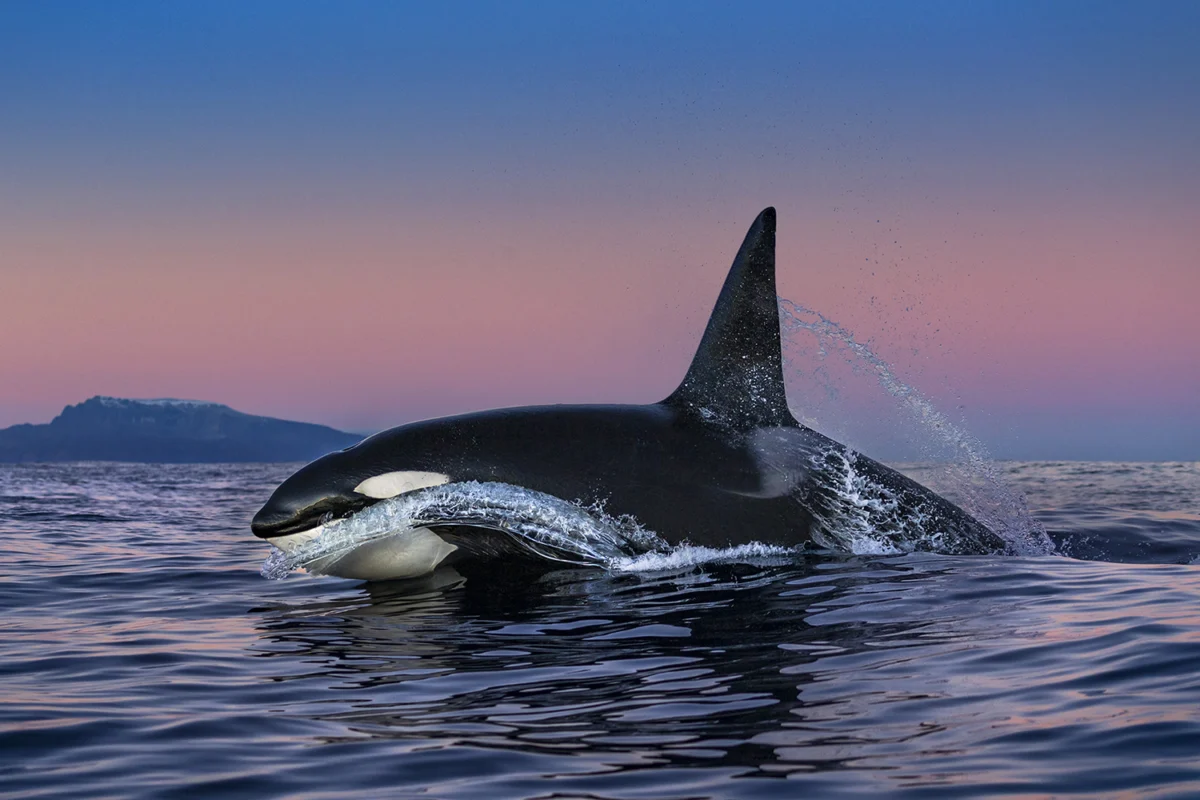
The humbling spectacle of a 12,000-pound dolphin, an orca, exploding from the frigid waters of Norway is a moment of profound natural grandeur that photographer Paul Nicklen describes as almost impossibly exquisite. Such encounters, unpredictable and fleeting, underscore the raw power and elusive beauty of marine life. For weeks, Nicklen and his team had been engaged in a challenging pursuit, navigating the dim, often tempestuous conditions of the Norwegian Arctic in search of these apex predators. The days were characterized by a stark twilight, with the sun barely gracing the horizon, casting a brief pink glow around midday that quickly surrendered to prolonged darkness. The biting cold and moody skies amplified the drama, with the occasional sighting of a black fin slicing through the choppy seas serving as the only confirmation of their quarry.
A Weeks-Long Quest Culminates in a Feeding Frenzy
The arduous search, marked by more misses than hits, reached a pivotal moment one frigid morning. As the team trailed a pod of orcas in the distance, an initial sense of quietude prevailed. The group appeared dispersed, with the imposing presence of several large males discernible, yet no immediate signs of heightened activity. This observation was particularly noteworthy, as orcas inhabiting the waters off Norway exhibit different behaviors compared to their counterparts in British Columbia, Canada. While BC orcas are renowned for their frequent and spectacular breaches, Norwegian orcas are far less prone to such aerial displays, making any energetic display a rare and significant event.
Suddenly, an unseen trigger ignited the pod into a frenzy of activity. Though still at a distance, the shift was undeniable. The orcas were agitated, engaged in what appeared to be a feeding frenzy. This sudden eruption of energy instantly galvanized the observers. The team’s senses sharpened, their focus intensifying as they accelerated their vessel to match the pod’s speed, maintaining a careful distance. Navigating at approximately 20 knots, they strove to keep pace with the unparalleled athletic performance unfolding before them. Against all odds, the typically challenging conditions relented; the sea grew calm, the water amenable to their pursuit. This confluence of favorable circumstances provided a precious window for documentation.
Capturing the Uncapturable: Technical and Environmental Challenges
As the orcas engaged in their exhilarating display, Nicklen readied his camera, acutely aware of the technical hurdles presented by the low-light environment. The prevailing light conditions were perpetually challenging, demanding a rapid and precise calculation of camera settings. The paramount concern was achieving a shutter speed fast enough to freeze the explosive action, preventing motion blur that could render the photographs unusable. Fortunately, on this particular morning, the sky offered a fleeting grace. A delicate pink hue, tinged with orange, painted the horizon, with the majestic Norwegian mountains forming a dramatic backdrop.
It was within this ethereal light that one particularly massive male orca began to porpoise with astonishing speed and power. The photographer described the scene as if explosions of water streamed from the animal’s body with each powerful leap. The sheer scale of the animal – an estimated 12,000 pounds, 25 feet in length, boasting a six-foot dorsal fin and pectoral fins akin to car hoods – made the visual capture an immense undertaking. Nicklen recounted the difficulty of even aligning his single-lens reflex camera to encompass the entire spectacle, so dynamic was the orca’s movement. The rapid firing of his camera, at ten frames per second, meant that for crucial moments, he was effectively "blind," unable to see the frame as the camera’s mirror lifted and the shutter operated. This inherent uncertainty cast a shadow of doubt over whether the perfect shot had been achieved.

The Aftermath: A Moment of Revelation and Gratitude
Following the intense, albeit brief, period of action, a sense of quiet reflection settled over the team. Nicklen found a moment of calm in the back of the boat, a profound sense of anticipation for the images he might have captured. In the past, the low light and extreme speed would have fueled anxiety about the sharpness and clarity of his photographs. However, on this occasion, a crucial element of synchronicity was present. Goran, the boat’s captain, had expertly navigated and paced their vessel, ensuring they remained in optimal position.
Upon reviewing the images on his camera’s LCD screen, Nicklen experienced a moment of profound relief and exhilaration. The "whole package was there," he noted, describing the scene as "beautiful." The water droplets splashing from the orca’s eye, cascading down its body, the nuanced light, the prevailing mood, and the striking colors—all coalesced into a composition that exceeded his expectations. He had initially doubted his ability to capture such fine detail, particularly the sharpness of the orca’s eye, given the circumstances. Yet, as he scrolled through the images, he was met with a complete absence of the anticipated flaws. The image was sharp, the details precise, and the narrative of the moment perfectly preserved.
These moments, Nicklen posits, are the "gifts of nature." They represent the extraordinary ability to translate the fleeting beauty of the natural world into a tangible form through the lens of a camera. It is in these instances of "clarity and epiphany" that one realizes the capture of a "perfect little bottle of light and time that will live on forever."
Background and Context: Orcas in Norwegian Waters
The specific encounter took place in the northern Norwegian waters, a region known for its dramatic fjords and rich marine biodiversity. This area serves as a critical feeding ground for several pods of orcas, particularly during the winter months. These orcas are often observed engaging in cooperative hunting strategies, targeting herring shoals that migrate into the fjords to spawn. The distinct behavioral patterns observed in Norwegian orcas, such as their less frequent breaching compared to Pacific populations, are a subject of ongoing scientific interest. Researchers hypothesize that these differences may be linked to variations in prey availability, hunting techniques, and the specific environmental pressures of the Arctic ecosystem.
Timeline of the Encounter (Inferred):
- Weeks Prior: The photographic expedition begins, involving extensive searching for orca pods in challenging Arctic conditions.
- Several Days Before: Difficulties are encountered in locating and observing orcas, with days characterized by poor weather and limited sightings.
- The Morning of the Encounter: The team identifies a distant pod of orcas. Initial observations suggest a calm state.
- The Triggering Event: An unknown stimulus prompts a sudden shift in the orcas’ behavior, initiating a feeding frenzy.
- The Pursuit: Nicklen and his team accelerate their boat to match the orcas’ speed, maintaining a safe distance.
- The Photographic Opportunity: Favorable conditions—calm waters and a unique sky—emerge, allowing for an extended period of observation and photography.
- The Climax: A large male orca engages in powerful porpoising, creating a spectacular visual display.
- Post-Encounter Review: Nicklen reviews his photographs, confirming the successful capture of a remarkably sharp and evocative image.
Supporting Data and Ecological Significance
The orcas observed in Norway are primarily part of the "M-complex" ecotype, known for their reliance on herring as a primary food source. These herring populations undergo significant seasonal migrations, congregating in large numbers within the Norwegian fjords, particularly during the winter months. This predictable aggregation provides a reliable food source for the orcas, leading to concentrated sightings in these areas during this period.

Studies on orca populations in the North Atlantic indicate that while breaching is less common than in other regions, Norwegian orcas do exhibit other forms of communicative and behavioral displays. Spyhopping, where an orca raises its head vertically out of the water to observe its surroundings, is a frequently documented behavior. The energy expended during a feeding frenzy, as described in the article, is substantial and crucial for the orcas’ survival, especially during the colder months. The average lifespan of male orcas is estimated to be around 30 years, while females can live up to 50-80 years. Their immense size, as detailed by Nicklen, is indicative of their apex predator status and their capacity to consume large quantities of prey.
Analysis of Implications
The successful capture of such a dynamic and rare photographic moment highlights the importance of dedicated wildlife photography and videography in raising public awareness and fostering appreciation for marine ecosystems. Images like Nicklen’s "Dawn Patrol" serve as powerful educational tools, illustrating the behavior, majesty, and ecological significance of species like the orca.
The challenges described—low light, harsh weather, and the unpredictable nature of wildlife—underscore the dedication and skill required for successful wildlife documentation. Furthermore, the event implicitly points to the delicate balance of these Arctic environments. The health of herring populations, the impact of climate change on migratory patterns, and the presence of human activities such as shipping and fishing are all factors that can influence the behavior and survival of these orca populations. Conservation efforts that focus on protecting critical feeding grounds and mitigating human impacts are therefore vital to ensuring the continued presence of these magnificent creatures in Norwegian waters. The photographic evidence captured by Nicklen contributes to a broader scientific and public understanding of these animals, indirectly supporting conservation initiatives. The ability to freeze a fleeting moment of intense natural action provides irrefutable evidence of the power and beauty of the natural world, serving as a poignant reminder of what is at stake in protecting these vital marine habitats.
This encounter, a testament to patience, skill, and a touch of serendipity, serves as a potent reminder of the awe-inspiring spectacles that await those who venture into the wild, equipped with the knowledge and tools to witness and document them. The resulting images are not merely photographs but windows into a world of raw power, intricate behavior, and profound natural beauty, offering a lasting legacy of these extraordinary marine mammals.