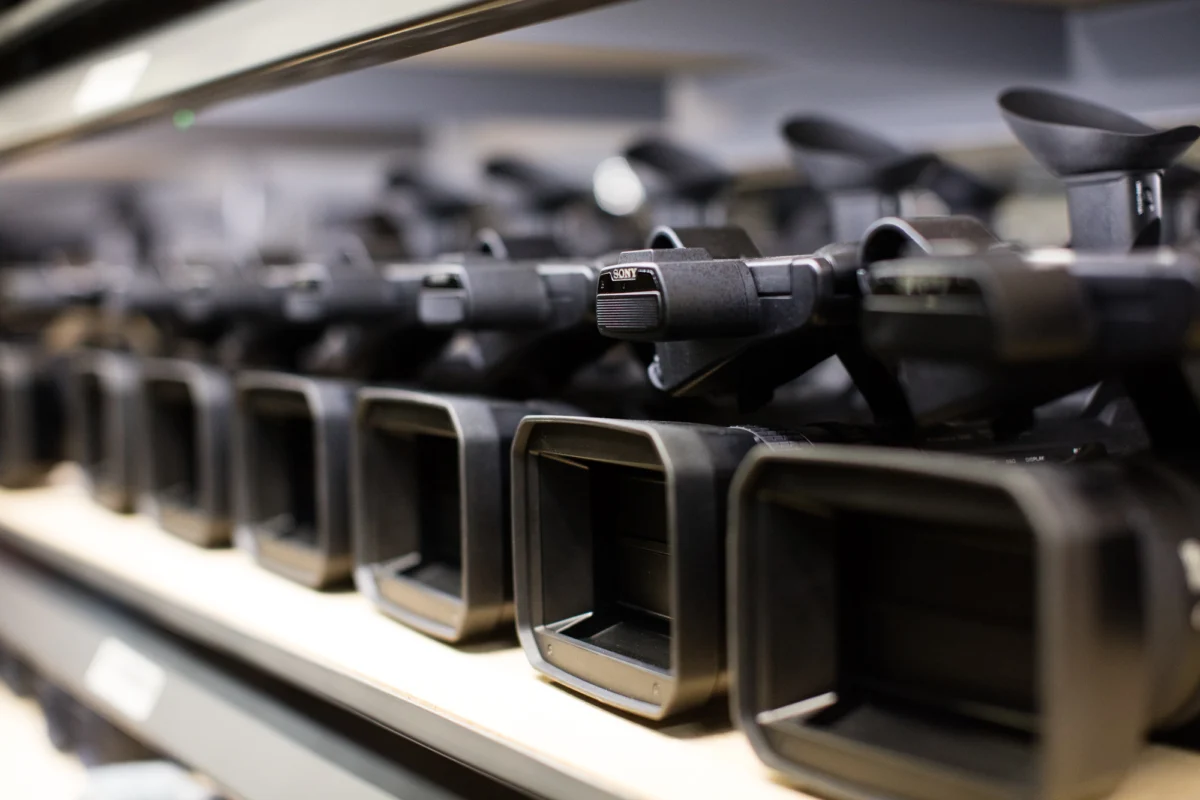
For over a century, the art of motion pictures has evolved through countless technological innovations, offering filmmakers an expansive toolkit for visual storytelling. However, this vast array of equipment, ranging from vintage Super 8mm cameras to cutting-edge digital cinema systems, can lead to significant inconsistencies in output quality if left unregulated. In an era dominated by high-definition displays and immersive viewing experiences, footage captured without adherence to modern technical benchmarks risks appearing substandard, diminishing the audience’s engagement across diverse platforms. Recognizing this critical need for uniformity and elevated quality, global streaming giant Netflix has established a comprehensive set of seven capture standards that cameras must satisfy to earn the coveted "Netflix Approved" designation. This initiative aims to define a clear industry baseline for image quality, ensuring that all original productions featured on its platform, and ideally inspiring broader industry adoption, meet a consistently high technical threshold. While such prescriptive guidelines may draw criticism from proponents of unfettered creative expression or independent filmmakers operating on constrained budgets, the underlying intent is unequivocally geared towards enhancing the viewer experience—no one, after all, desires to consume content filmed in a resolution akin to 480p on a modern 4K television. This deep dive explores these seven foundational requirements, detailing their technical significance and broader implications for contemporary film and television production.
The Genesis of Standards: Why Netflix Stepped In
The landscape of content distribution has undergone a radical transformation over the past two decades, shifting from traditional broadcast and physical media to digital streaming. This paradigm shift, spearheaded by platforms like Netflix, brought with it an unprecedented volume of content and a global audience with increasingly sophisticated expectations for visual fidelity. In the early days of streaming, content acquisition often involved a wide range of source qualities, leading to an inconsistent viewing experience. As Netflix transitioned from merely licensing existing content to heavily investing in and producing its own original programming, the need for stringent quality control became paramount.
First formally outlined around 2017-2018, Netflix’s technical specifications for original productions were a direct response to the fragmented nature of digital cinematography. Unlike the relatively standardized environments of traditional broadcast (e.g., specific HD delivery formats) or theatrical release, digital production had blossomed with a multitude of camera systems, recording formats, and post-production workflows. While this diversity fostered innovation, it also posed challenges for a platform aiming to deliver a premium, uniform experience to millions of subscribers worldwide. By setting clear technical benchmarks, Netflix sought to not only elevate the aesthetic quality of its library but also streamline the complex processes of post-production, archiving, and global distribution. These standards serve as a practical guide for filmmakers and production houses, ensuring that creative visions are realized within a framework that guarantees technical excellence on screen.
I. Resolution: The Foundation of Visual Detail
The first and arguably most intuitive requirement set by Netflix concerns resolution: a "minimum of 3840 photosite capture width (Spherical)." For content shot with standard spherical lenses and intended for a 16:9 aspect ratio, this translates directly to 3840 x 2160 pixels, universally recognized as Ultra High Definition (UHD) 4K. This resolution benchmark is not merely a number; it represents a significant leap from the previous industry standard of 1920×1080 (Full HD), offering four times the pixel count and consequently, vastly superior detail and clarity on modern displays.
The adoption of UHD 4K as a baseline reflects its widespread acceptance as an industry standard for over half a decade, with most professional and even prosumer cameras now comfortably meeting or exceeding this specification. The benefits of capturing in 4K are manifold: it provides greater detail for close-ups, allows for reframing or cropping in post-production without significant loss of quality for HD deliverables, and future-proofs content for evolving display technologies.
However, the resolution requirement becomes more nuanced when discussing anamorphic capture. Anamorphic lenses "squeeze" a wider image onto a standard sensor, which is then "desqueezed" in post-production to achieve a cinematic widescreen aspect ratio (e.g., 2.39:1). Because this process involves stretching the image horizontally, anamorphic projects necessitate a higher horizontal resolution at the point of capture to maintain pixel density and image clarity post-desqueeze. Therefore, not all cameras capable of standard 4K spherical capture are approved for anamorphic work. Netflix provides a dedicated list of cameras specifically validated for anamorphic productions, underscoring the platform’s meticulous attention to detail in preserving the intended visual integrity of diverse cinematic approaches. The implication for filmmakers is clear: choose your tools carefully, understanding that creative choices like anamorphic lenses come with specific technical prerequisites.
II. Codec: Preserving Image Data Integrity
Beyond raw pixel count, how that visual information is encoded and stored is equally critical. Netflix’s codec requirements specify either "Lightly compressed or uncompressed RAW" or an "intra-frame based codec with 4:2:2 chroma sub-sampling or greater." These standards are designed to ensure that the captured footage retains sufficient color information, tonal gradation, and dynamic range for professional color grading and visual effects work, which are integral to modern high-end productions.
RAW Formats: RAW data represents the purest form of digital image capture, directly recording the unprocessed information from the camera sensor. "True" uncompressed RAW offers the maximum flexibility in post-production, allowing for extensive manipulation of exposure, white balance, and color. However, the immense file sizes associated with uncompressed RAW can be impractical for large-scale productions. To mitigate this, most camera manufacturers offer various forms of "Compressed RAW" (e.g., REDCODE RAW, Canon Cinema RAW Light, ProRes RAW). These proprietary formats employ intelligent compression algorithms that significantly reduce file sizes while largely preserving the high-end flexibility and quality associated with uncompressed RAW workflows. Filmmakers opting for RAW gain unparalleled control over the final look of their images.
Intra-Frame Codecs with Chroma Subsampling: The second option caters to workflows that prioritize efficiency while still demanding professional-grade color fidelity. An intra-frame-based codec compresses each frame independently, ensuring that artifacts from one frame do not propagate to subsequent frames. The crucial component here is "4:2:2 chroma subsampling or greater." Chroma subsampling is a technique where color information (chroma) is sampled at a lower resolution than luminance (brightness) information, leveraging the fact that the human eye is more sensitive to changes in brightness than color.
- 4:2:0: Commonly found in consumer formats, samples color at half the horizontal and half the vertical resolution of luminance, discarding a significant amount of color data.
- 4:2:2: Samples color at half the horizontal resolution but full vertical resolution, retaining twice as much color information as 4:2:0. This level is considered essential for professional color grading, green screen compositing, and visual effects, as it minimizes color artifacts and allows for more robust manipulation.
- 4:4:4: Samples color at the same resolution as luminance, preserving all color information and offering the highest quality, often used for high-end VFX and archiving.
By mandating 4:2:2 or higher, Netflix ensures that productions have ample color data for nuanced grading and complex post-production tasks, directly contributing to the rich visual quality expected by viewers.
III. Bit Depth: The Spectrum of Color
Closely related to codec and chroma subsampling is bit depth, which defines the number of bits used to represent the color information for each pixel. Netflix requires a "Bit depth: 10-bit or greater." This specification dictates the breadth of colors and tonal variations a camera can capture.
- 8-bit color (common in consumer-grade video) uses 8 bits per color channel (red, green, blue), resulting in 256 shades per channel, totaling approximately 16.7 million colors (256 x 256 x 256). While seemingly large, this can lead to "banding" or "posterization" in areas of subtle gradient, such as skies or dimly lit walls, where smooth transitions are broken into visible steps.
- 10-bit color utilizes 10 bits per channel, yielding 1,024 shades per channel. This exponentially expands the total color palette to over 1.07 billion colors (1024 x 1024 x 1024). The sheer volume of available colors dramatically reduces the likelihood of banding, allowing for smoother gradients and more accurate color reproduction.
Crucially, 10-bit color depth is a fundamental requirement for High Dynamic Range (HDR) content. HDR delivers a significantly wider range of brightness and contrast compared to Standard Dynamic Range (SDR), making scenes appear more lifelike and impactful. Without at least 10-bit color, the benefits of HDR—richer colors, higher peak brightness, and deeper shadows—cannot be fully realized. Netflix’s mandate for 10-bit ensures that productions are inherently capable of delivering a premium HDR experience, a cornerstone of its current and future content strategy.
IV. Data Rate: The Flow of Information
The "Data Rate: Minimum 240Mbps at 24FPS" requirement might seem straightforward, but it underpins all other technical specifications. Data rate refers to the volume of data recorded per second. If a production meets the minimum resolution, codec, and bit depth requirements, it will almost invariably be recording at or above this 240 megabits per second (Mbps) threshold for 24 frames per second (FPS) footage.
This standard acts as a quality control measure, ensuring that even with sophisticated compression, enough information is being written to the storage media to avoid unwanted artifacts. A low data rate, even with high resolution and bit depth, would necessitate aggressive compression, leading to a loss of detail, introduction of blockiness, or other visual distortions. For instance, a 4K 10-bit 4:2:2 signal at 24fps requires a substantial amount of data. Meeting a 240Mbps minimum guarantees that the camera system and recording media are robust enough to capture and preserve the high-quality image information defined by the other Netflix standards. This indirectly influences the choice of recording media (e.g., fast SSDs or CFast cards) and the overall stability of the camera system.
V. Color Space & Transfer Function: Capturing Reality’s Full Spectrum
These two interconnected requirements are critical for preserving the maximum amount of image data and dynamic range from the moment of capture. Netflix specifies "Scene-referred Color Space (S.Gamut3, ALEXA Wide Gamut, REDWideGamut etc.)" and "Scene-referred Transfer Function (Slog3, Log C, Log3G10, VLog etc.)."
Scene-referred Color Space: A color space defines the range of colors a camera can capture and reproduce. A "scene-referred" color space (also known as a wide-gamut color space) is designed to encompass the entire spectrum of colors that a camera sensor can record, often exceeding what standard display technologies can show. Examples like ARRI’s ALEXA Wide Gamut, RED’s REDWideGamutRGB, and Sony’s S.Gamut3 are proprietary color spaces optimized to capture the broadest possible range of hues and saturations. The goal is to avoid clipping or compressing color information at the point of capture, providing maximum flexibility for colorists in post-production to precisely shape the final look and ensure accurate reproduction on various display types, especially HDR monitors.
Scene-referred Transfer Function (Log Gamma): A transfer function describes how light intensity (luminance) from the scene is mapped to digital values. A "scene-referred" transfer function, commonly referred to as "log gamma" (e.g., Sony S-Log3, ARRI Log C, RED Log3G10, Panasonic V-Log), is engineered to compress the wide dynamic range of a real-world scene into a digital file without losing highlight or shadow detail. Unlike standard "display-referred" gamma curves (like Rec. 709) which are designed to look good on a standard monitor, log footage appears flat and desaturated straight out of the camera. This "flat" look is intentional; it preserves a much greater dynamic range (the difference between the brightest and darkest parts of a scene) than a standard gamma curve would allow. In post-production, a colorist applies a Look Up Table (LUT) or manually grades the log footage to "stretch" the compressed dynamic range back out, optimizing it for the target display (SDR or HDR) and achieving the desired cinematic aesthetic. By mandating scene-referred color spaces and transfer functions, Netflix ensures that productions capture the fullest possible visual information, offering unparalleled flexibility in color grading and ensuring optimal HDR delivery.
VI. Timecode: Precision in Synchronization
The final technical requirement, "System is capable of jamming to an external source" and "Timecode should be written as metadata," addresses the often-overlooked but crucial aspect of production workflow and organization. Timecode is a sequence of numerical codes generated at regular intervals to identify individual frames of video or audio.
External Jamming: "Jamming to an external source" refers to the ability of a camera’s internal timecode generator to synchronize precisely with an external master clock, such as a dedicated timecode generator (e.g., Tentacle Sync) or a sound recorder. In multi-camera shoots, or productions involving separate audio recording (double-system sound), perfectly synchronized timecode is indispensable. Jamming ensures that all recording devices—cameras, audio recorders, and sometimes even smart slates—share the exact same time reference. This vastly simplifies the post-production process, making it quick and easy for editors to synchronize video and audio tracks, preventing costly and time-consuming manual alignment issues.

Metadata Integration: Writing timecode as metadata means that this critical synchronization information is embedded directly within the video file, rather than being a separate, easily lost piece of data. This ensures the timecode travels with the footage throughout the entire post-production pipeline, from ingest to editing, color grading, and final mastering.
While Netflix acknowledges it can be "less strict about this for non-fiction documentary projects," where run-and-gun shooting might make external timecode synchronization challenging, the overall emphasis on proper timecoding underscores its importance for professional, organized workflows. For narrative features, television series, and any project with multiple cameras and external audio, accurate timecode is a non-negotiable tool for efficiency and precision. For cameras lacking internal timecode capabilities, external generators like Tentacle Sync provide a viable solution, integrating seamlessly into existing setups.
Industry Impact and Future Outlook
Netflix’s camera approval standards have profoundly influenced the global production landscape. By explicitly detailing technical requirements, the streaming giant has not only elevated the quality floor for its vast content library but also spurred innovation among camera manufacturers. Companies like ARRI, Sony, RED, Canon, Panasonic, Blackmagic Design, and even DJI (with its Inspire 3 Zenmuse X9-8K Air) now prominently feature "Netflix Approved" status in their marketing, recognizing it as a significant selling point for professional filmmakers. The provided list of approved cameras for 2026, featuring a wide array of high-end cinema cameras and professional hybrids, demonstrates the continuous evolution and expansion of compatible equipment.
These standards, while sometimes perceived as restrictive by those championing unbridled artistic freedom or working with limited resources, ultimately serve as a roadmap for achieving technical excellence. They push the industry towards higher resolutions, more robust color science, and streamlined workflows, benefiting not only Netflix but also other major streaming platforms (many of which have adopted similar, if not identical, requirements) and the broader film and television ecosystem. The focus on 4K, 10-bit color, wide-gamut color spaces, and log capture ensures that content is future-proofed for evolving display technologies like 8K and beyond, and optimized for immersive HDR experiences.
For independent filmmakers, these guidelines can present a challenge, necessitating investment in higher-end equipment or reliance on rental houses. However, they also democratize access to high-quality production knowledge, providing clear benchmarks for aspiring professionals. The consistent quality delivered through these standards ultimately enhances the viewing experience for audiences worldwide, solidifying Netflix’s reputation as a purveyor of premium content. As technology continues to advance, these standards will undoubtedly evolve, perhaps embracing even higher resolutions, more sophisticated compression techniques, or new forms of immersive capture. What remains constant is the underlying objective: to ensure that the visual stories presented on screen meet the highest possible technical and artistic benchmarks, engaging viewers with unparalleled clarity and fidelity.