Waking before dawn aboard the SeaLegacy 1, the familiar routine of preparing for the day’s dive took on an extra layer of anticipation during the Pacific crossing from Mexico to Tahiti. This particular morning, however, the air crackled with a palpable excitement. The crew and I were poised for what promised to be the most anticipated dive of the expedition: the annual grouper spawning event at the Fakarava atoll. Under the ethereal glow of a full moon illuminating a star-dusted sky, we donned our masks and descended into the inky blackness, the silence of the deep soon to be shattered by nature’s grand theater.
A World Teeming with Life and a Feast for Predators
Fakarava, a UNESCO Biosphere Reserve located approximately 700 nautical miles north of Papeete, French Polynesia, is renowned for its pristine turquoise lagoons, idyllic beaches, and coral reefs that pulse with an extraordinary diversity of marine life. For most of the year, this vibrant ecosystem thrives in a delicate balance, with countless species of fish, seabirds, sharks, sea turtles, and majestic manta rays patrolling the reefs in relative peace. However, as the warmer months arrive, a profound shift occurs: thousands of resident groupers begin to congregate, signaling the commencement of their critical annual spawning ritual.
This congregation is not a random event. The groupers, with females laden with eggs and males poised to fertilize them, migrate towards the mouth of the channel that connects the atoll’s vast lagoon to the open ocean. This strategic area, spanning roughly 10 by 30 nautical miles, becomes the focal point of an ancient biological imperative. The tidal rhythm of the region plays a crucial role; every six hours, the deep, nutrient-rich waters of the ocean surge into the lagoon, followed by a six-hour outward flow. This natural ebb and flow not only helps to disperse vital nutrients into the sea but also creates the perfect conditions for the widespread distribution of the groupers’ eggs. When the tide reaches its zenith around the full moon, the stage is set for an explosive celebration of life, a scene that draws an astonishing array of oceanic predators.

The Gathering Storm: Sharks Converge on a Natural Buffet
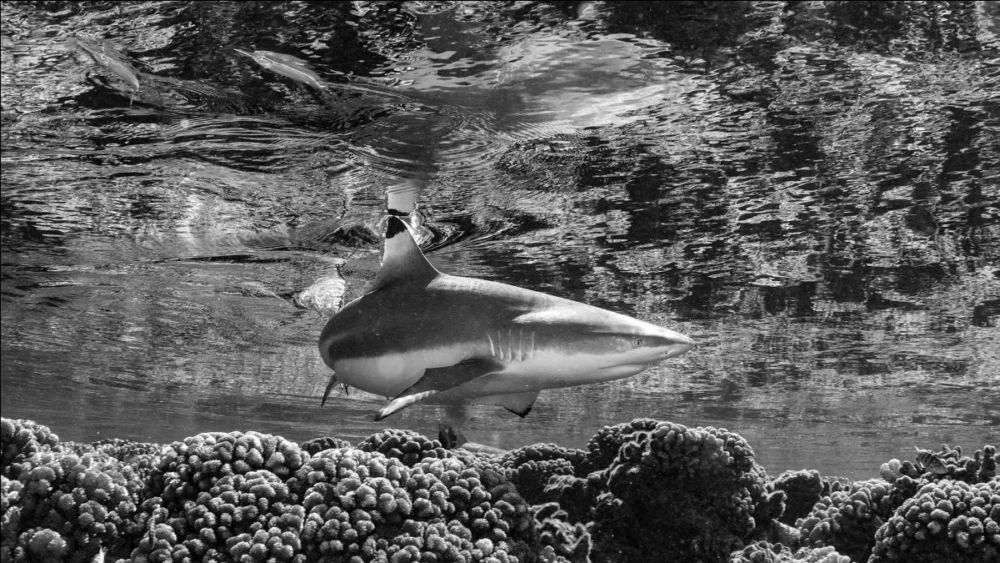
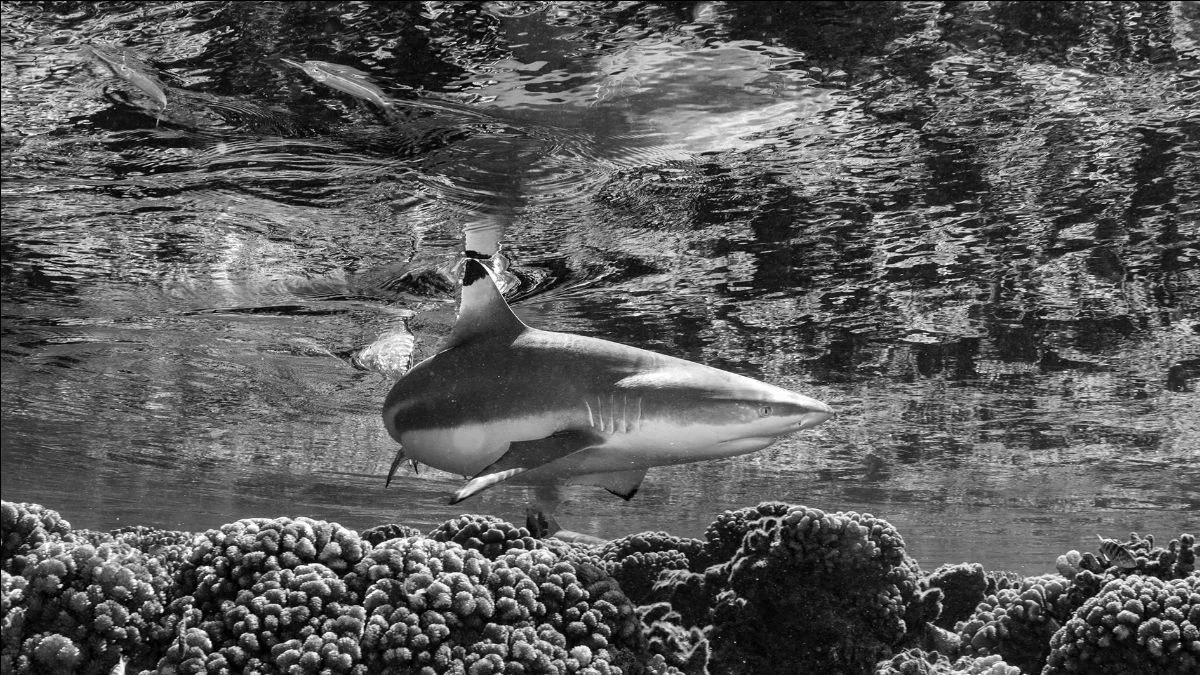
Following closely in the wake of the aggregating groupers is a formidable assembly of sharks. Hundreds, sometimes thousands, of these apex predators converge on the channel, moving with a predatory grace that has been honed over millennia. They are drawn by the promise of an abundant, albeit temporary, food source, transforming the usually serene waters into a dynamic hunting ground. This influx of sharks is not merely opportunistic; it is an integral part of the Fakarava atoll’s ecological equilibrium.
Our team had strategically positioned ourselves at the edge of the atoll, seeking the clearest vantage point to observe this extraordinary natural phenomenon. As we descended along the sheer drop-off at the channel’s mouth, the underwater world began to reveal its secrets. Thousands of groupers were already in position, clustered around coral heads. Their stillness was a testament to their instinctual understanding of camouflage, a passive defense against the circling predators. Their large eyes, like silent sentinels, tracked the movements of the patrolling sharks. The profound silence of the depths was periodically punctuated by the jarring sound of a predator’s strike, followed by the chaotic thrashing of hundreds of sharks as they capitalized on the opportunity.
The Climax of Life: Spawning Amidst the Predator Frenzy
At approximately 100 feet below the surface, the apex of the spawning event began. The females, releasing their precious cargo of eggs, initiated a cascade of biological activity. The surrounding waters erupted in a frenzy as males swarmed, their milt clouding the water, fertilizing the eggs. This synchronized release, triggered by the collective cue of thousands of groupers, created a breathtaking spectacle. The scene was a poignant blend of life’s perpetuation and the raw reality of survival. In the blink of an eye, the cycle of reproduction was underway, a primal urge playing out against the backdrop of imminent predation.
The visual intensity of this event is unparalleled. As a female grouper ascended in the current to release another cloud of eggs, dozens of males would follow, their reproductive efforts unfolding in a chaotic yet purposeful dance. The swift descent of hundreds of sharks, capitalizing on this concentrated opportunity, added a dramatic layer to the natural drama. It was a powerful illustration of the interconnectedness of marine life, where reproduction and survival are inextricably linked.

The Delicate Balance: Understanding Ecosystem Equilibrium
The vibrant and sometimes violent cycles observed in nature can often be perplexing to human observers, leading to questions about their underlying purpose. However, these seemingly chaotic events are the result of eons of evolutionary refinement, leading to a precarious state of equilibrium within an ecosystem. Every minute detail, from the intricate camouflage patterns on a grouper’s scales to the fate of each fertilized or unfertilized egg, plays a crucial role in maintaining this balance.
Predators, often perceived as mere agents of destruction, are in fact vital components of this intricate system. Sharks, for instance, contribute to the health of the reef by distributing nutrients across vast areas, acting as mobile regulators of the marine environment. Their presence is not a threat to the ecosystem but rather a sign of its vitality. As renowned marine biologist Eugenie Clark aptly stated, "When you see a shark underwater, you should say, ‘How lucky I am to see this beautiful animal in his environment.’" This perspective underscores the importance of appreciating these creatures for their intrinsic ecological value.
A Call to Conservation: Preserving Vital Marine Ecosystems
The profound realization that emerges from witnessing events like the Fakarava grouper spawning is that humanity does not simply "learn to live" with sharks and other wildlife. Rather, our very existence is intrinsically linked to the health and functioning of these natural systems. The oceans have sustained life for millennia, long before human intervention in the form of extensive fishing practices.
The photographs captured by photographers like Paul Nicklen, documenting the raw beauty, dramatic intensity, and inherent wonder of these natural spectacles, serve as a powerful tool for conservation. The goal of showcasing these vital ecosystems, such as the Fakarava atoll, is to foster a deeper understanding and inspire local and global efforts to protect these wild and indispensable environments for future generations. The continued health of these marine realms is not merely an environmental concern but a fundamental necessity for the planet’s overall well-being.

Data and Implications: The Significance of Healthy Shark Populations
The presence of large aggregations of sharks, as observed during the Fakarava spawning event, is a direct indicator of a healthy and balanced marine ecosystem. Scientific research consistently highlights the critical role of apex predators in maintaining biodiversity and ecosystem stability. For instance, studies on coral reef ecosystems have demonstrated that the removal of sharks can lead to cascading effects, including an increase in mesopredators, a decline in herbivorous fish populations, and ultimately, a degradation of coral health.
The Fakarava atoll, by virtue of its designation as a UNESCO Biosphere Reserve, is subject to specific conservation measures aimed at protecting its unique biodiversity. However, the broader implications of such events extend globally. The health of large-scale spawning aggregations and the apex predators that participate in them are often threatened by factors such as overfishing, habitat destruction, and climate change. The economic benefits derived from healthy marine ecosystems, including tourism and sustainable fisheries, are substantial. For example, the global value of marine tourism is estimated to be in the hundreds of billions of dollars annually, with wildlife viewing, including shark diving, playing a significant role.
Furthermore, the scientific understanding gained from observing these natural phenomena can inform policy decisions and conservation strategies. The annual spawning of species like the Napoleon wrasse (Cheilinus undulatus), a species often targeted by commercial fishing and sometimes found in these spawning aggregations, is crucial for the species’ long-term survival. Protecting these spawning sites and the migratory routes of the fish and their predators is paramount.
The continued presence of hundreds of sharks during the Fakarava grouper spawning is not just a visual marvel; it is a biological imperative and a testament to the resilience of nature when given the opportunity to thrive. The challenge now lies in ensuring that these vital ecosystems, and the incredible creatures within them, are afforded the protection they so desperately need and unequivocally deserve. The future of our oceans, and indeed our own, depends on it.