For three decades, the author lived amidst the world’s densest cougar population on Vancouver Island, encountering only fleeting glimpses of these elusive felines. This profound yearning for a more intimate connection with nature’s apex predators fueled a deep-seated anticipation for an opportunity to photograph the renowned pumas of Chilean Patagonia. The journey, fraught with initial logistical hurdles including a lost passport and an urgent visit to a Brazilian embassy, ultimately culminated in an immersive experience within one of the planet’s most dramatic and ecologically significant landscapes.
Arrival and Immersion in the Patagonian Estancia
Upon finally reaching Chile, the photographer was welcomed at a converted estancia on the fringes of Torres del Paine National Park. This traditional Patagonian ranch, still equipped with functional farming and livestock apparatus, served as a poignant reminder of the region’s heritage. The burgeoning ecotourism industry, driven by the allure of the park’s pristine peaks, has reshaped the local economy and ethos. The estancia’s owners exemplify this shift, having transitioned from viewing wildlife as a threat to livestock to coexisting harmoniously with the very animals that roam their lands. This commitment to conservation is mirrored by the estancia’s staff, whose vibrant local culture, steeped in the values of honesty, hard work, and generosity, reflects the enduring spirit of the gaucho.
The Quest for the Puma: Following an Expert’s Lead
The expedition gained momentum under the guidance of Rodrigo, a highly respected local guide and recognized puma expert. His intimate knowledge of the area’s feline inhabitants, whom he seemed to know as if they were personal acquaintances, proved invaluable. Rodrigo led the photographer deep into prime puma territory, where the ordered landscape of cultivated fields gradually yielded to the raw, untamed beauty of striking rock formations, glacial lakes fed by snowmelt, and vast expanses of grassland, known as pampas. As the trek progressed, the majestic granite spires of the Andes Mountains rose in increasing grandeur, providing a breathtaking backdrop to the pursuit.
It was in the formidable shadow of these colossal peaks that the first significant encounter occurred: a female puma, affectionately known as Petaka, accompanied by her two young kittens. This matriarch is a figure of near-celebrity status among those who frequent the mountains of Torres del Paine and its environs, distinguished by her serene demeanor and an almost uncanny indifference to human presence.
The Protected Predator: Pumas in Chilean Patagonia
Unlike in neighboring Argentina, where pumas have historically faced greater hunting pressure, the species is afforded protected status in Chile. This conservation effort has led to a remarkable adaptation in some of the local puma populations, enabling them to navigate their environment and coexist with increasing human activity without exhibiting fear or aggression. This phenomenon allows for moments of profound connection, where humans can observe these magnificent creatures in their natural state, undisturbed and at ease. The photographer expressed profound contentment in witnessing such quiet hours unfold in the company of a wild animal exhibiting such calm and natural grace.
A Mother’s Devotion: Observing Petaka and Her Offspring
The privilege of observing Petaka as she tended to her kittens was a deeply moving experience. The photographer recounted sitting nearby, silently captivated as the playful cubs tumbled and frolicked in the grass, their youthful energy a stark contrast to their mother’s watchful presence. This intimate glimpse into the maternal bonds of these powerful predators underscored the intricate tapestry of life within the Patagonian ecosystem.
The Unforeseen Encounter: A Blizzard and a Silent Companion
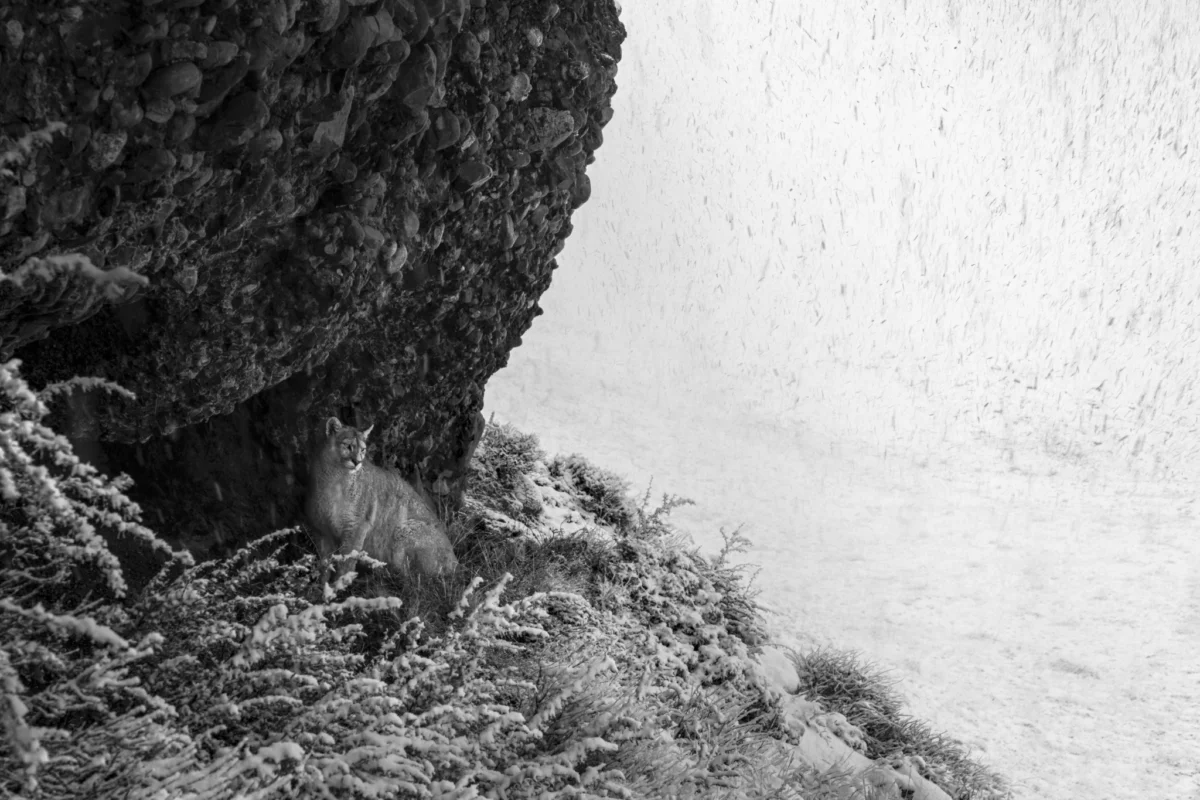
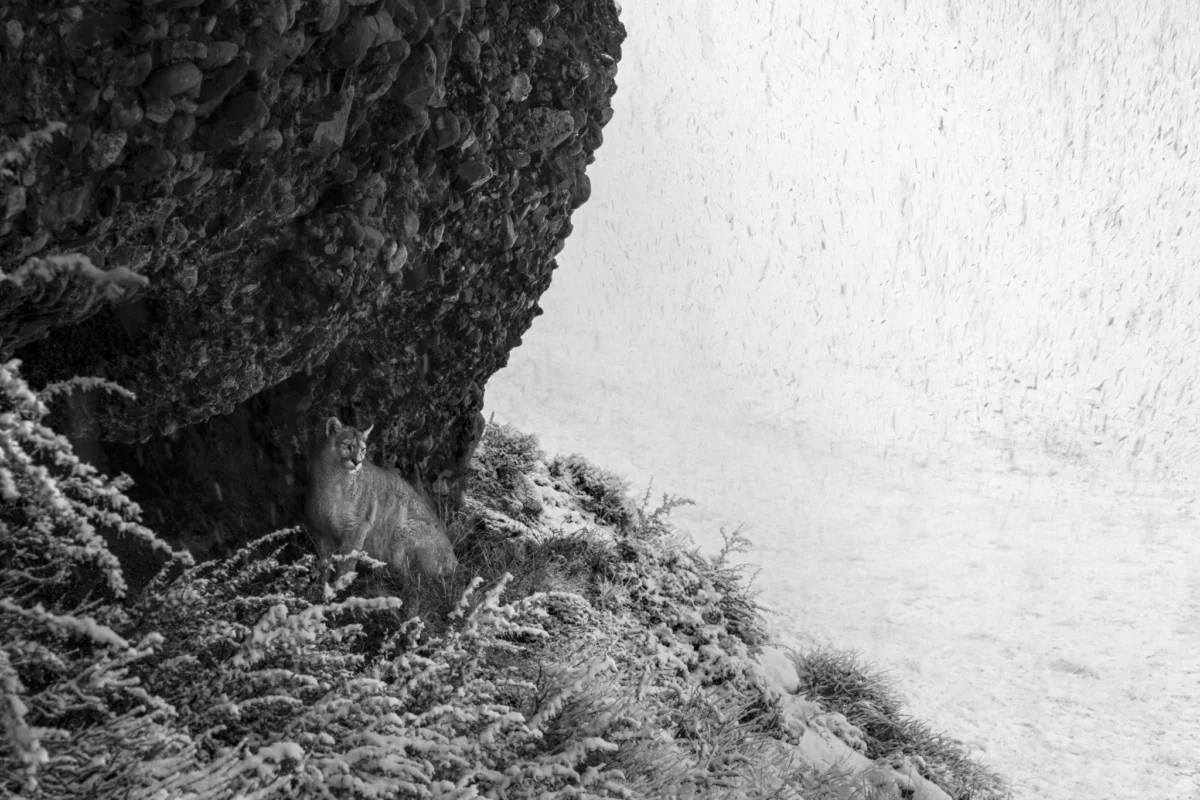
Shortly after these initial encounters and gaining a deeper understanding of the resident pumas, the notoriously unpredictable Patagonian weather took a dramatic turn. Fierce winds swept through the region, ushering in the first hesitant flakes of snow, which soon escalated into a full-blown blizzard. The storm enveloped the landscape, muffling all sound and drawing the world into a close, intimate embrace. Seeking refuge from the tempest, the photographer found shelter within the protective embrace of mountainside caves.
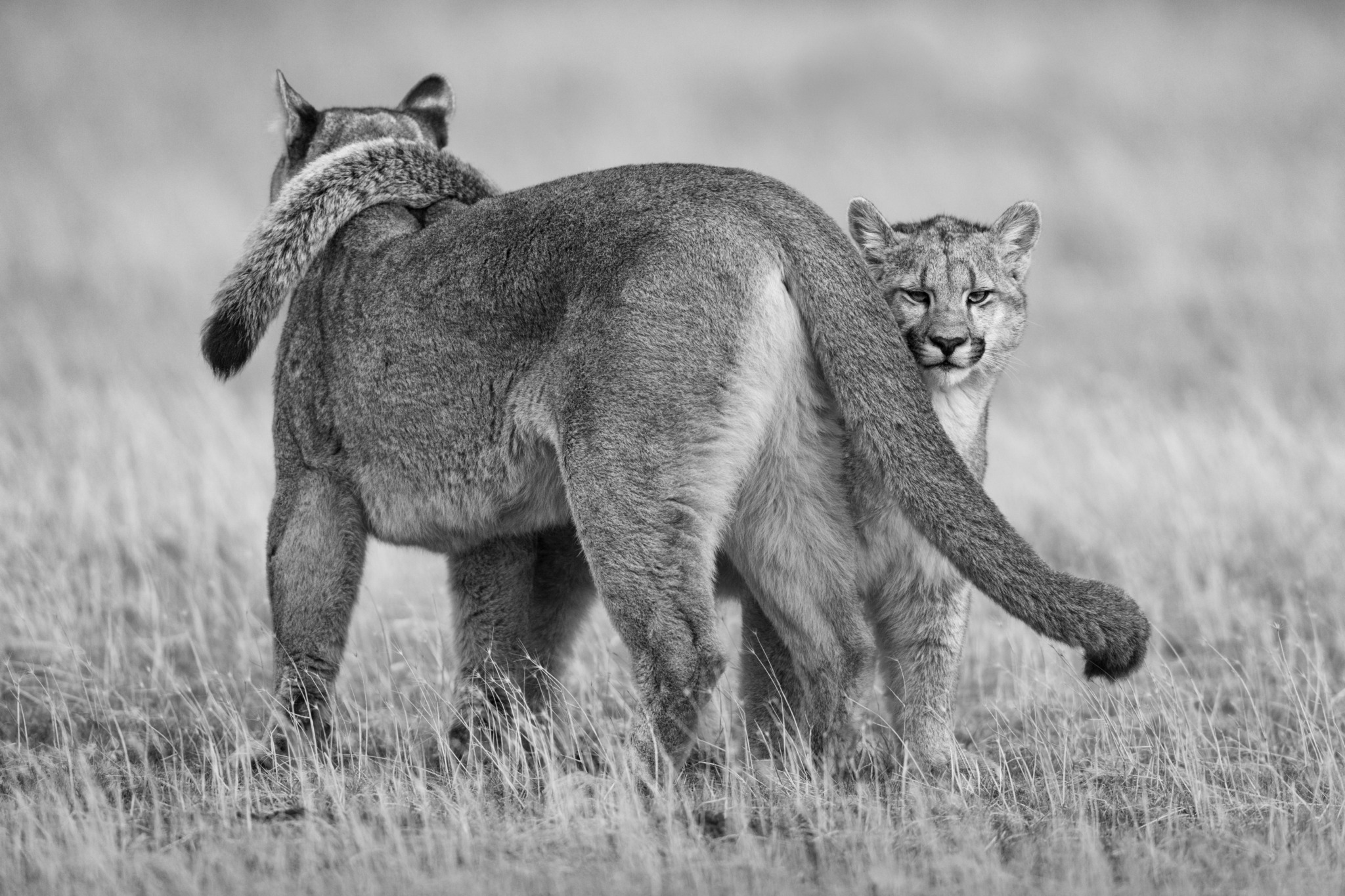
It was within this isolated sanctuary that an extraordinary event unfolded. A large puma emerged from the swirling snow, seemingly out of nowhere, and settled within mere feet of the photographer. Instinctively, breath was held, and the camera lens remained steady, though the surge of adrenaline and awe was palpable.
For an extended period, an unspoken truce existed between human and wild cat. They shared the silent confines of the cave, two unlikely companions weathering the storm. The puma, utterly unperturbed by its human observer, maintained its vigil, its keen eyes scanning the snow-laden landscape. It was only when the blizzard finally abated and the world began to emerge from its white shroud that the puma silently departed, melting back into the freshly painted canvas of snow-covered terrain. The release of pent-up emotion, a testament to the profound impact of this shared solitude, was overwhelming.
Reflections on Nature’s Unfettered Grandeur
This unexpected communion served as a powerful reminder of the profound beauty and resilience of the natural world when granted the space to thrive. The photographer articulated that when humanity allows nature the opportunity to recover and flourish, it becomes a witness to the full, unadulterated spectrum of life on Earth—a raw, wild, and awe-inspiring spectacle that transcends human imagination. The fleeting moment of shared existence with a wild animal, set against the backdrop of one of the planet’s most magnificent ecosystems, was described as an immeasurable gift. The experience fostered a deep sense of gratitude and renewed hope for the future of conservation efforts.
The Ecological Significance of Patagonian Puma Populations
The puma (Puma concolor), also known as the cougar or mountain lion, is the second-largest big cat in the Americas, renowned for its adaptability and wide distribution. In Patagonia, these apex predators play a crucial role in maintaining the health and balance of the ecosystem. By preying on guanacos, a native camelid species, pumas help regulate their populations, preventing overgrazing and promoting the diversity of plant life. This grazing management, in turn, supports a wider array of herbivore species and the overall biodiversity of the grasslands.
The increase in ecotourism in regions like Torres del Paine National Park, while presenting potential challenges, also offers significant conservation benefits. It generates revenue that can be reinvested into park management, anti-poaching efforts, and scientific research. Furthermore, well-managed tourism can foster a greater appreciation for wildlife and the importance of conservation among visitors, acting as an indirect form of advocacy. The shift in attitude observed among estancia owners, moving from predator control to coexistence, reflects a broader, positive trend in conservation ethics.
Conservation Challenges and Future Outlook
Despite the protected status of pumas in Chile, challenges persist. Habitat fragmentation due to agricultural expansion and infrastructure development can lead to increased human-wildlife conflict. While the pumas in Torres del Paine have adapted to human presence, other populations may not be as habituated, leading to potential issues such as livestock predation, which can result in retaliatory killings.
The success of conservation initiatives in Patagonia hinges on continued collaboration between park authorities, local communities, landowners, and conservation organizations. Robust monitoring programs to track puma populations, understand their movements, and assess their health are essential. Educational outreach to local communities about the ecological importance of pumas and methods for mitigating human-wildlife conflict can further strengthen conservation efforts.
The photographer’s narrative, while personal, highlights a universal truth: the profound impact of experiencing wild nature in its purest form. It underscores the critical importance of preserving these wild spaces, not just for the survival of iconic species like the Patagonian puma, but for the enrichment of the human spirit and the perpetuation of a healthy planet for future generations. The continued existence of such majestic creatures in their natural habitat serves as a powerful testament to the efficacy of dedicated conservation and the enduring allure of the wild.