In an era where motion pictures have evolved significantly over more than a century, the sheer diversity of filmmaking equipment available presents both unparalleled creative freedom and potential technical chaos. While artistic expression remains paramount, and filmmakers should theoretically be able to shoot their next masterpiece on anything from a Super 8mm camera to a cutting-edge digital cinema rig, the absence of industry-wide technical standards can lead to footage that fails to translate effectively across the myriad of modern televisions and screens. To address this growing challenge and maintain a consistent, high-quality viewing experience for its vast global audience, Netflix has established a comprehensive set of seven distinct camera capture standards that productions must adhere to in order to be considered "Netflix Approved."
The introduction of these stringent technical requirements by Netflix marks a pivotal moment in the evolution of digital filmmaking, reflecting the streaming giant’s commitment to delivering a premium visual experience. Initially a disruptor in content distribution, Netflix rapidly transitioned into a powerhouse of original content production, beginning notably with "House of Cards" in 2013. This shift brought with it the imperative to not just distribute, but also to produce content that meets, and often exceeds, the escalating expectations of a global subscriber base equipped with increasingly sophisticated display technologies like 4K HDR televisions. The primary intention behind these standards is to set a benchmark for image quality across all productions showcased on the platform, ensuring that every frame viewers consume, regardless of the series or film, meets a professional-grade technical threshold. While these guidelines have occasionally drawn criticism from independent filmmakers or those pursuing highly specific, unconventional stylistic choices, often with tighter budgets, the underlying goal is unequivocally well-meaning: to eliminate the jarring experience of watching content filmed at resolutions as low as 480p on a high-definition screen.
These seven requirements are not arbitrary technical hurdles but carefully considered specifications designed to preserve image fidelity, enable robust post-production workflows, and ultimately enhance the viewer’s experience. They represent a blend of essential capture parameters that together define the baseline for cinematic quality in the streaming age. Understanding these pillars is crucial for any filmmaker or production company aspiring to collaborate with Netflix, or indeed, to produce content that stands up to contemporary broadcast and streaming demands.
The Genesis of Standards: Why Netflix Stepped In
The landscape of film and television production underwent a dramatic transformation with the advent of digital cameras. What was once a relatively standardized world dominated by film stock and established broadcast formats splintered into a multitude of digital acquisition formats, resolutions, and compression schemes. This "Wild West" era of early digital content, while fostering innovation, also created inconsistencies. As Netflix scaled its operations, moving from a mere content aggregator to one of the world’s most prolific content creators, the need for uniformity and quality control became paramount.
The driving force behind Netflix’s initiatives was multifaceted. Firstly, with hundreds of millions of subscribers globally, delivering a consistent viewing experience across diverse internet speeds and playback devices (from mobile phones to high-end home theaters) became a significant technical challenge. Secondly, as the market became saturated with streaming services, content quality emerged as a key differentiator. Netflix understood that its brand promise hinged not just on compelling storytelling but also on superior technical execution. By mandating a minimum quality bar, Netflix aimed to future-proof its library, ensuring that today’s productions would still look impressive on tomorrow’s even more advanced displays. The rapid consumer adoption of 4K and High Dynamic Range (HDR) televisions further accelerated this need, making it essential for content to be captured in a way that could fully leverage these display capabilities, moving beyond the traditional HD broadcast standards.
The Seven Pillars of "Netflix Approved" Cinematography
Each of Netflix’s seven requirements plays a critical role in establishing the baseline for visual excellence.
1. Resolution: The Foundation of Detail
The first and arguably most fundamental requirement is a minimum of 3840 photosite capture width (Spherical). For productions utilizing standard spherical lenses, this directly translates to a resolution of 3840 x 2160 pixels, universally recognized as Ultra High Definition (UHD) 4K. While many contemporary productions opt for even higher resolutions like 6K or 8K to allow for reframing, digital stabilization, or future-proofing, 4K serves as the mandatory floor for Netflix approval. This specification ensures a high level of detail and clarity, critical for large-screen viewing and enhancing the immersive experience. Given that UHD 4K has been an established industry standard for over half a decade, most professional and even many prosumer-grade cameras manufactured today readily meet this baseline.
However, the rules diverge significantly for anamorphic productions. Anamorphic lenses optically "squeeze" a wider field of view onto the camera sensor, which is then "desqueezed" in post-production to achieve a cinematic widescreen aspect ratio (e.g., 2.39:1). Because this process involves stretching the image horizontally, anamorphic projects necessitate a higher horizontal resolution at the capture stage to maintain sufficient image clarity post-desqueeze. For instance, if a standard 4K sensor (3840 photosites wide) were used with a 2x anamorphic squeeze, the effective horizontal resolution after desqueeze would be halved to 1920 pixels, which is below Netflix’s minimum quality threshold. Consequently, not all 4K cameras are deemed suitable for anamorphic work. Netflix provides specific guidance and a curated list of cameras approved for anamorphic capture, reflecting the nuanced technical demands of this specialized format.
2. Codec: Preserving Image Data Fidelity
Netflix’s codec requirements are designed to ensure that the captured image data retains sufficient information for professional-grade color grading and visual effects. The standards specify either "lightly compressed or uncompressed RAW" or an "intra-frame based codec with 4:2:2 chroma subsampling or greater."
RAW formats capture the unprocessed data directly from the camera sensor, offering maximum flexibility in post-production for adjusting exposure, white balance, and color. While "true" uncompressed RAW produces immense file sizes that can be impractical for storage and workflow, many manufacturers offer proprietary compressed RAW formats (e.g., REDCODE, Canon Cinema RAW Light, ProRes RAW). These formats cleverly compress the RAW data while preserving the essential benefits of a RAW workflow, making them more manageable without significant loss of image quality. The flexibility afforded by RAW footage is invaluable for achieving specific looks and correcting issues that might arise during production.
The alternative, an intra-frame-based codec with 4:2:2 chroma subsampling or higher, focuses on color information. Intra-frame compression means each frame is compressed independently, preventing artifacts from propagating across frames. Chroma subsampling refers to the method of encoding color information relative to luminance (brightness) information. In a 4:2:2 scheme, for every four pixels of luminance information, there are two pixels of chroma (color) information for each of the two color difference channels. This level of color sampling is crucial for professional color grading, as it preserves a rich palette of color data and smooth tonal gradations. Lower subsampling rates, such as 4:2:0 (common in consumer video), discard more color information, which can lead to visible artifacts, particularly when pushing colors in post-production. These codec standards are non-negotiable for maintaining the visual integrity necessary for high-end productions.
3. Bit Depth: The Spectrum of Color
Complementing the codec requirements, Netflix mandates a color bit depth of 10-bit or higher. Bit depth dictates the number of distinct tonal values available for each color channel (red, green, blue) per pixel. An 8-bit color depth, common in consumer displays, allows for 256 shades per channel, totaling approximately 16.7 million colors. In contrast, 10-bit color depth provides 1,024 shades per channel, resulting in over 1.07 billion possible colors.
The jump from 8-bit to 10-bit is visually significant. It dramatically reduces the risk of "banding," a phenomenon where smooth color gradients (such as a clear sky, a subtle skin tone, or a dark shadow) appear as distinct, stair-stepped bands rather than a continuous transition. This is particularly vital for content destined for High Dynamic Range (HDR) displays, which demand a much wider range of brightness and color information to render their vibrant images effectively. 10-bit color is generally considered the minimum for true HDR production, ensuring richer colors, higher peak brightness, and greater contrast without introducing visual artifacts.
4. Data Rate: The Uncompressed Flow of Information
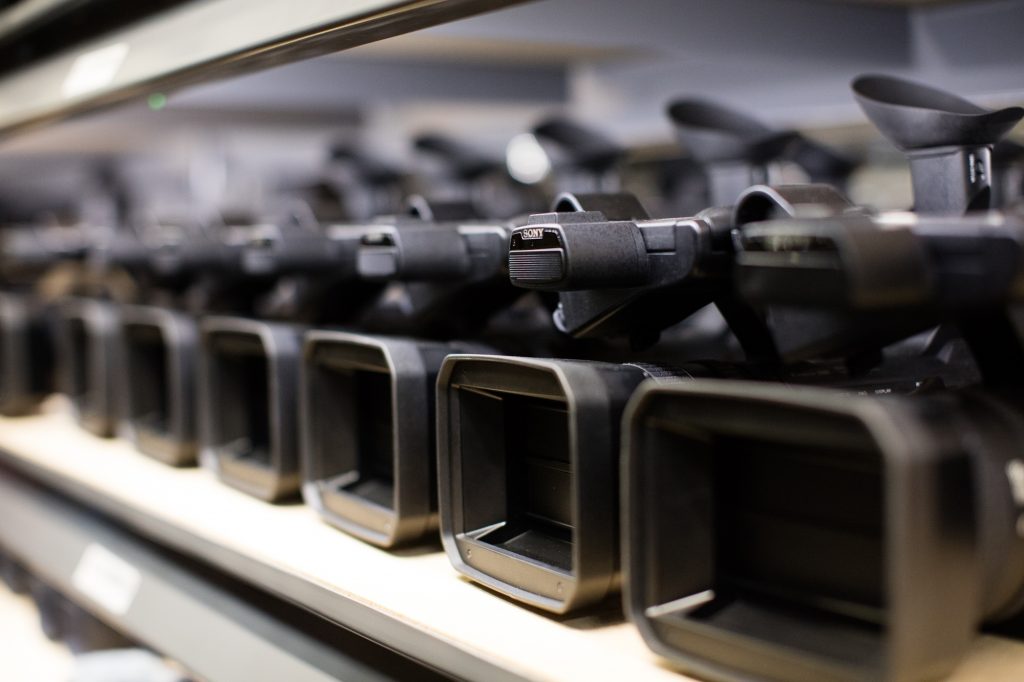
The data rate requirement specifies a minimum of 240 Megabits per second (Mbps) at 24 frames per second (FPS). This standard is often met organically if a production adheres to the resolution and codec requirements. A higher data rate directly correlates with less compression and, therefore, greater image fidelity.
While resolution defines the number of pixels and bit depth defines the color richness, the data rate ensures that the information contained within those pixels and color values is not excessively compressed. Overly compressed footage, even if captured at 4K and 10-bit, can exhibit "macroblocking" or other compression artifacts that detract from the image quality. The 240Mbps baseline ensures that sufficient data bandwidth is allocated to preserve the fine details, textures, and subtle gradations captured by the camera, making the footage robust enough for complex post-production work and visually pristine for the end viewer. This standard also implicitly impacts production logistics, requiring robust storage solutions capable of handling large file sizes.
5. Color Space & Transfer Function: Capturing Reality’s Full Spectrum
These two interconnected requirements are crucial for capturing the broadest possible dynamic range and color information directly from the scene. Netflix specifies "Scene-referred Color Space" (e.g., S.Gamut3, ALEXA Wide Gamut, REDWideGamut) and "Scene-referred Transfer Function" (e.g., Slog3, Log C, Log3G10, VLog).
A "scene-referred" approach means that the camera records the light as it genuinely appeared in the scene, rather than optimizing it for a specific display (which would be "display-referred"). This preserves the maximum amount of light and color information captured by the sensor. Different camera manufacturers have developed their own wide-gamut color spaces to capture colors beyond what standard display technologies can reproduce, ensuring that no color information is lost during acquisition.
Similarly, "scene-referred transfer functions" (often called "Log" gamma curves) are designed to compress the vast dynamic range of a modern digital cinema camera sensor into a file format that can be recorded. Unlike standard video gamma curves, Log curves retain significantly more detail in both the highlights and shadows, providing a "flat" image that is ideal for color grading. This flat image acts as a digital negative, allowing colorists to manipulate the footage extensively in post-production without losing critical detail or introducing clipping. By preserving this immense dynamic range and color volume, filmmakers gain unparalleled flexibility to create specific looks and ensure the footage can be mastered for various deliverables, including HDR.
6. Timecode: The Backbone of Synchronization
The final technical requirement focuses on workflow efficiency and organization: the camera system must be "capable of jamming to an an external source," and "timecode should be written as metadata." Timecode is an electronic signal that assigns a unique address to each frame of video or audio, acting as a digital clock and organizational tool.
In multi-camera shoots, or productions involving separate audio recorders, precise synchronization is paramount. "Jamming to an external source" refers to the ability of cameras and audio recorders to synchronize their internal clocks with a master timecode generator, ensuring that all devices record with identical time references. This critical function streamlines the post-production process immensely, making it far easier to sync footage and audio accurately, especially in complex scenes with multiple takes and angles. Without proper timecode, editors would spend countless hours manually aligning clips, a process prone to errors and delays.
Netflix emphasizes that timecode should be written as metadata, meaning it’s embedded within the video file itself, making it easily accessible for editing and archiving. While Netflix acknowledges some leniency for non-fiction documentary projects where capturing spontaneous moments might sometimes take precedence over perfect timecode synchronization, for scripted narratives and large-scale productions, robust timecoding is an indispensable tool for maintaining an organized and efficient workflow. Many mid-range cameras might not have built-in timecode generators, but external devices like Tentacle Sync can be used to add this functionality.

Industry Impact and Reactions
Netflix’s camera approval standards have sent ripple effects throughout the global film and television production industry.
For Filmmakers: The reaction from the creative community has been mixed. On one hand, many cinematographers and directors appreciate the push for higher technical quality. These standards ensure that their work will be presented in the best possible light, fully leveraging modern display technologies. For productions aiming for a high-end, cinematic aesthetic, these requirements align with best practices. However, some independent filmmakers and those with a strong desire for specific artistic looks (such as the grainy texture of Super 16mm film or older digital formats) perceive these standards as restrictive. While Netflix occasionally grants waivers for unique artistic endeavors, such exceptions are rare and require compelling justification and often specific post-production workflows to bring the footage up to a deliverable standard. The financial implications are also significant; meeting these standards often necessitates investing in or renting professional-grade equipment, which can be a barrier for lower-budget projects.
For Camera Manufacturers: The "Netflix Approved" badge has become a highly coveted marketing tool. Camera manufacturers are actively designing and updating their models to meet these stringent requirements, pushing innovation in sensor technology, internal recording capabilities, and codec implementations. This competition benefits the entire industry, driving the development of more capable and feature-rich cameras.
For Rental Houses and Post-Production Facilities: These standards directly influence equipment inventories at rental houses, ensuring they stock a sufficient supply of approved cameras and accessories. Post-production facilities have also adapted their workflows to handle the larger file sizes and specific color science requirements, further professionalizing the industry.
The Future of Content Quality
Netflix’s pioneering approach to content standards extends beyond mere technical specifications; it represents a commitment to future-proofing its vast content library. As display technologies continue to evolve, with the potential for higher resolutions, wider color gamuts, and more advanced HDR implementations, capturing content with robust data ensures that today’s productions can be re-mastered or delivered in formats that remain visually compelling for years to come.
These standards also contribute to a broader industry shift, elevating the general expectation for visual quality across all streaming platforms and traditional broadcast. While the debate between technical excellence and unbridled creative freedom will undoubtedly continue, Netflix’s influence has undeniably pushed the boundaries of what is considered acceptable for premium content. By establishing a clear, albeit rigorous, technical baseline, Netflix has cemented its role not just as a content provider, but as a significant arbiter of cinematic quality in the digital age. The result is a more consistent, immersive, and visually stunning experience for viewers worldwide, solidifying the platform’s reputation for delivering top-tier entertainment.