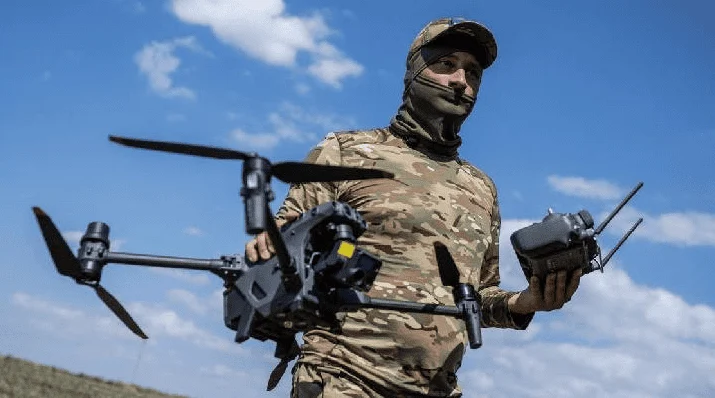
The rapid acceleration of FPV (First-Person View) drone production in Ukraine represents a fundamental shift in the landscape of modern military engagement, transitioning from a desperate battlefield improvisation to a highly organized, billion-dollar industrial sector. Since the escalation of the conflict in 2022, the Ukrainian defense apparatus has undergone a radical transformation, driven by the necessity to offset conventional disadvantages through technological innovation. What began as a grassroots movement of hobbyists and volunteers assembling off-the-shelf components has matured into a sophisticated network of state-supported manufacturers, research hubs, and specialized military units. As of early 2025, the Ukrainian government has signaled its intent to solidify this lead by allocating unprecedented financial resources and setting ambitious production targets that aim to redefine the concept of tactical airpower.
The Industrialization of Tactical Airpower
The scale of Ukraine’s commitment to unmanned aerial systems is best reflected in its fiscal planning and production milestones. For the 2025 fiscal year, the Ukrainian government has earmarked more than $2.6 billion specifically for the procurement and development of drones, with a significant portion of these funds dedicated to the FPV category. This investment is designed to support an audacious production goal: the manufacture of over 4.5 million FPV units within a single calendar year. To put this into perspective, the rate of production required to meet this target exceeds the monthly output of many traditional munitions factories in the West, highlighting a shift toward high-volume, low-cost precision weaponry.
This industrial surge is not merely about quantity; it is about the localization of the supply chain. In the early stages of the conflict, Ukraine was heavily dependent on imported components, many of which were sourced from civilian markets in Asia. However, the 2024-2025 period has seen a concerted effort to produce frames, flight controllers, motors, and communication modules domestically. This move toward technological sovereignty is intended to mitigate the risks of international supply chain disruptions and to ensure that the hardware can be rapidly iterated based on real-time feedback from the front lines.
Chronology of the Drone Revolution (2022–2025)
The trajectory of FPV drone usage in Ukraine can be categorized into four distinct phases:
- The Emergence of Commercial Adaptation (Early 2022): In the immediate aftermath of the invasion, Ukrainian forces utilized standard commercial drones for reconnaissance and "grenade dropping" missions. While effective for scouting, these systems lacked the speed and maneuverability required for high-intensity strike missions.
- The FPV Prototype Phase (Late 2022 – Early 2023): Specialized units began experimenting with racing drones—fast, agile aircraft piloted via goggles that provide a first-person perspective. By strapping improvised explosives to these frames, operators created a low-cost, highly accurate kamikaze tool capable of flying into open hatches or under the protective cages of armored vehicles.
- The Institutionalization of the "Army of Drones" (2023–2024): The Ministry of Digital Transformation, led by Mykhailo Fedorov, launched the "Army of Drones" initiative. This program streamlined the bureaucracy required for defense contracts, provided training for thousands of pilots, and created the Brave1 defense-tech cluster to act as an incubator for startups.
- Mass Industrialization and AI Integration (2025 and Beyond): The current phase is characterized by the mass production of millions of units and the integration of autonomous terminal guidance. This allows drones to lock onto targets using machine vision, rendering them immune to electronic warfare (EW) interference in the final seconds of their flight.
Strategic Advantages on the Modern Battlefield
The dominance of FPV drones in the Ukrainian theater is attributed to three primary factors: precision, cost-efficiency, and psychological impact. Unlike traditional artillery, which relies on statistical probability to hit a target, an FPV drone is a guided munition that can be steered into the most vulnerable part of an enemy asset. Data from February 2025 indicates that Ukrainian FPV strikes increased by 22% compared to the previous month, a statistic that correlates directly with the increased availability of locally produced hardware.
From an economic standpoint, the "attrition ratio" favored by FPV drones is staggering. A standard FPV unit, including its explosive payload, costs between $400 and $600 to produce. In contrast, the main battle tanks and electronic warfare systems they frequently destroy can cost between $2 million and $10 million. This asymmetry allows a technologically savvy force to deplete the enemy’s high-value resources at a fraction of the cost. Furthermore, the constant presence of FPV drones creates a "transparent battlefield" where movement is nearly impossible without detection, forcing a total reorganization of tactical maneuvers and logistics.
Key Players and the Ecosystem of Innovation
The Ukrainian drone ecosystem is a hybrid of state enterprises and private startups. Several key entities have emerged as leaders in this space:
- The Ministry of Digital Transformation: Acting as the primary coordinator, the Ministry has removed import duties on drone components and simplified the certification process from months to days.
- Brave1 Platform: This state-led initiative serves as a bridge between the military’s needs and the private sector’s capabilities. It provides grants and testing grounds for new technologies, such as "mother-ship" drones that carry smaller FPVs deeper into enemy territory.
- Local Private Manufacturers: Dozens of small-to-medium enterprises have scaled their operations, moving from small workshops to large-scale assembly lines. These companies are now competing for government contracts, driving down prices and increasing technological standards.
Challenges: Electronic Warfare and Supply Chain Security
Despite the impressive growth, the Ukrainian drone industry faces significant headwinds. The most prominent challenge is the rapid evolution of Russian Electronic Warfare (EW). As drones become more prevalent, the electromagnetic spectrum becomes a primary battleground. Russian forces have deployed extensive jamming systems designed to sever the link between the pilot and the drone. In response, Ukrainian engineers are developing "frequency-hopping" radios and AI-driven autonomous flight systems that do not require a constant manual link.
Another critical challenge is the security of the supply chain. While Ukraine has increased domestic production, certain high-end components—such as microchips and specialized optics—still rely on global markets. Ensuring a steady flow of these parts in the face of potential export restrictions or enemy sabotage remains a top priority for the Ukrainian Ministry of Defense. Additionally, the physical security of production facilities is a constant concern, leading many manufacturers to adopt a decentralized "micro-factory" model, where production is spread across hundreds of small, hidden locations to prevent a single strike from crippling the industry.
Broader Implications for Global Defense
The Ukrainian experience with FPV drones is being closely monitored by defense ministries worldwide. Military analysts suggest that the "Ukrainian Model" of rapid, decentralized technological iteration will likely influence future NATO doctrines. Traditional defense procurement, which often takes years or decades to field new systems, is being challenged by the agility of the drone sector.
Furthermore, the success of these systems is driving a new arms race in counter-drone technology. Nations are now investing heavily in directed-energy weapons (lasers), high-powered microwave systems, and "hard-kill" interceptors to protect their assets from the type of low-cost aerial threats seen in Ukraine. The conflict has proven that in the 21st century, air superiority is no longer solely the domain of expensive fighter jets; it can be contested by a swarm of $500 drones piloted from a basement miles away.
Future Outlook: AI and the Autonomous Frontier
Looking toward the remainder of 2025 and into 2026, the focus of Ukrainian production is expected to shift toward full autonomy. The goal is to move beyond the "one pilot, one drone" model toward "swarm" tactics, where a single operator can oversee a dozen drones that communicate with each other to coordinate strikes. By integrating Artificial Intelligence at the "edge" (on the drone itself), these systems will be able to identify and prioritize targets without human intervention, significantly increasing their lethality and resistance to jamming.
The Ukrainian government’s strategy is clear: by turning the country into a global hub for drone innovation, they are not only defending their territory but also building a new pillar for their national economy. Post-conflict, the expertise gained in FPV production and operation is expected to position Ukraine as a leading exporter of defense technology, providing a high-tech foundation for the country’s eventual reconstruction.
Conclusion
The surge in FPV drone production in Ukraine is a testament to the power of necessity-driven innovation. By bridging the gap between civilian technology and military application, Ukraine has created a formidable new class of weaponry that has fundamentally altered the dynamics of land warfare. While challenges in electronic warfare and logistics persist, the sheer scale of the 2025 production targets—4.5 million units—suggests that the drone will remain the centerpiece of the Ukrainian defense strategy. This evolution does more than just impact the current conflict; it sets a new global standard for how wars will be fought, won, and funded in the digital age. Through a combination of state support, private sector ingenuity, and battlefield feedback, Ukraine has established itself as an unlikely but undeniable leader in the future of autonomous and semi-autonomous combat.