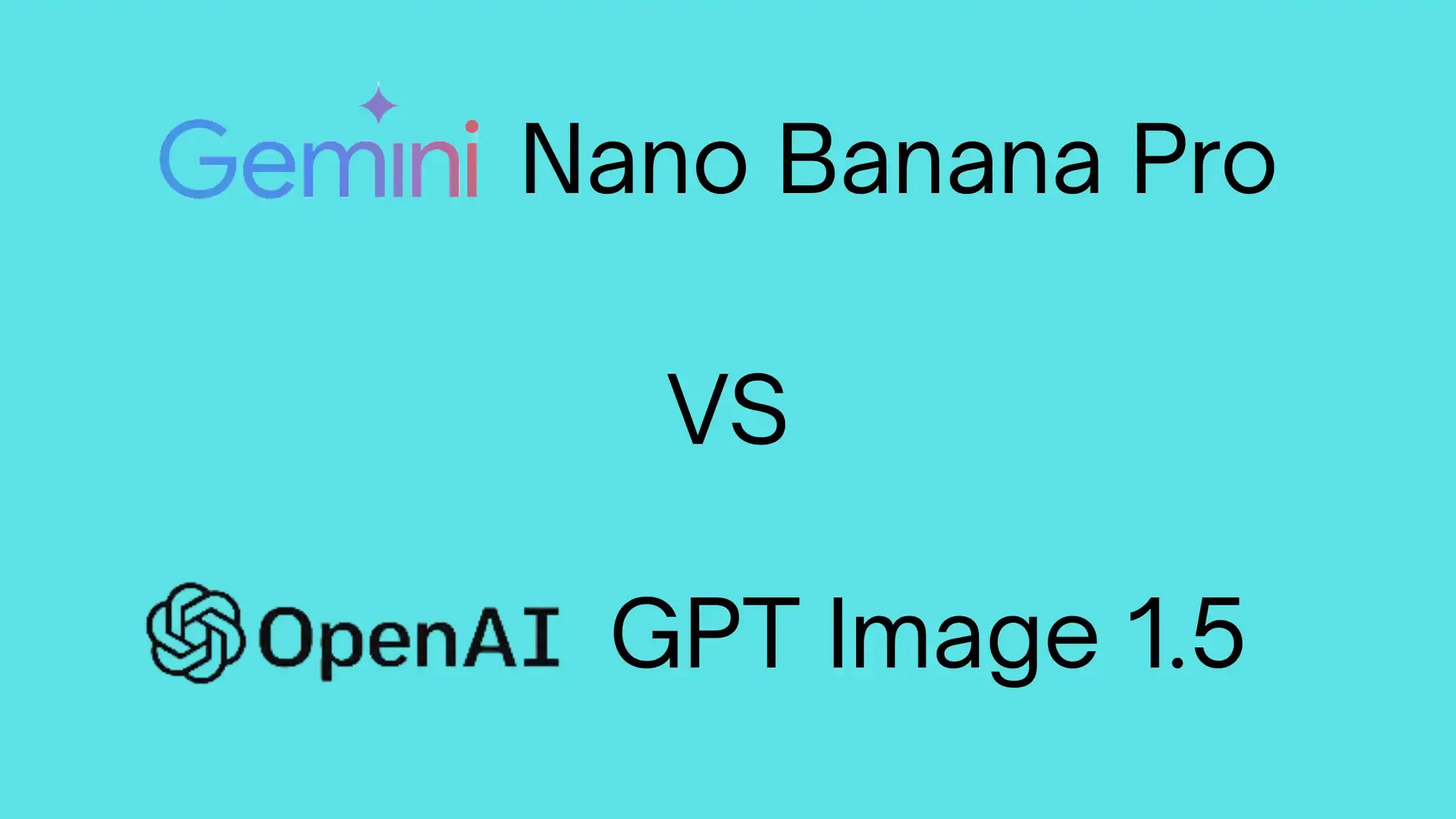
The landscape of digital creativity underwent a seismic shift in the closing months of 2025 as Google and OpenAI unveiled their most advanced image generation models to date. This head-to-head competition, featuring Google’s Nano Banana Pro and OpenAI’s GPT Image 1.5, represents more than a simple iterative update; it marks the transition of generative artificial intelligence from a novelty tool into a cornerstone of professional enterprise workflows. As the year concludes, the industry is witnessing an aggressive race for dominance, with each tech giant staking a claim on different segments of the creative market.
A Strategic Timeline of the 2025 AI Expansion
The rivalry intensified throughout the second half of 2025, a year characterized by the rapid maturation of multimodal AI. The chronology of these releases highlights a calculated "chess match" between Mountain View and San Francisco. In late November 2025, Google introduced Nano Banana Pro as a specialized tier within the Gemini ecosystem. This release was specifically positioned to address the criticisms leveled against earlier iterations regarding photorealism and commercial safety.
Less than three weeks later, in mid-December, OpenAI responded with the surprise launch of GPT Image 1.5. This release was strategically timed to capture the attention of the general public and casual creators during the holiday season. While Google’s launch targeted the professional design and stock photography sectors, OpenAI focused on the massive installed base of ChatGPT users, emphasizing accessibility and conversational intelligence. Industry analysts suggest that this rapid-fire release schedule has forced smaller competitors to recalibrate their 2026 roadmaps, as the "Big Two" have effectively raised the barrier to entry for high-fidelity image generation.
Nano Banana Pro: The Professional Standard for Photorealism
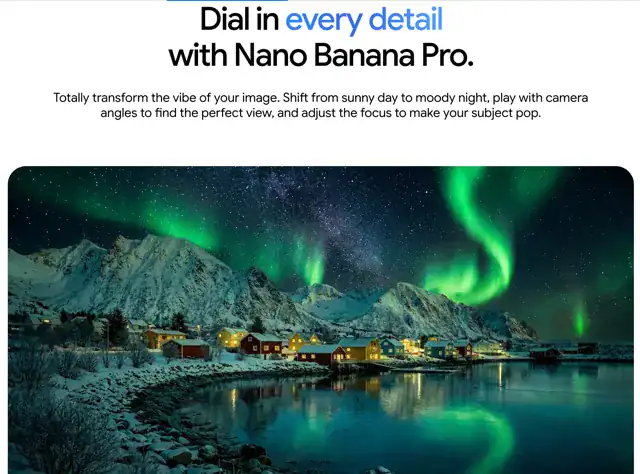
Google’s Nano Banana Pro has emerged as the preferred choice for professional creators who require high-fidelity, commercially viable outputs. The model’s primary strength lies in its ability to produce "stock-like" imagery—visuals that possess the lighting, composition, and anatomical accuracy of professional photography. For years, AI image generators struggled with "uncanny valley" effects, particularly in the rendering of human hands, eyes, and complex skin textures. Nano Banana Pro appears to have solved many of these legacy issues through a refined training methodology that prioritizes anatomical consistency.
One of the most significant technical breakthroughs in Nano Banana Pro is its granular editing interface. Unlike traditional generators that often require a complete re-roll of the image to change a minor detail, Nano Banana Pro allows for "localized iteration." A user can select a specific element—such as a model’s clothing or a background object—and modify it through text prompts without disturbing the rest of the composition. This "non-destructive" workflow mimics professional photo editing software, making it a powerful asset for marketing agencies that need to maintain brand consistency across various assets.
Early feedback from the professional design community suggests that Nano Banana Pro is successfully reducing "bias noise" and quality concerns. By utilizing a curated dataset that emphasizes commercial aesthetics, Google has created a tool that feels less like a playground and more like a production-ready engine. The interface, while accessible, is tailored for "intentional" users—those who arrive with a specific vision and require the tools to execute it with surgical precision.
GPT Image 1.5: Speed and Conversational Creativity
OpenAI’s GPT Image 1.5 takes a fundamentally different approach, prioritizing the user experience and the "creative spark." Integrated directly into the ChatGPT interface, the model leverages natural language processing to act as a collaborative partner rather than just a tool. The most notable improvement in version 1.5 is its generation speed. Benchmarks indicate that GPT Image 1.5 can produce high-resolution drafts approximately 20% faster than its predecessor and slightly faster than Google’s flagship model.

The "creative flare" of GPT Image 1.5 is frequently cited by users as its greatest asset. While it may occasionally stray from strict photorealism, it excels at conceptual art, surrealism, and stylized illustrations. For social media managers, content creators, and hobbyists, the ability to "talk" an image into existence through a natural dialogue is a significant advantage. The model understands nuance and metaphor in a way that feels intuitive, often providing creative interpretations that users hadn’t initially considered.
However, this reliance on conversational AI presents challenges for professional workflows. Early adopters have noted that GPT Image 1.5 still struggles with "global regeneration." When asked to change a small detail, the model often reconstructs the entire image, leading to a loss of the original composition. Furthermore, issues with background consistency and complex lighting physics remain more prevalent in OpenAI’s model compared to Google’s latest offering. Despite these hurdles, the sheer speed and ease of use make GPT Image 1.5 a formidable contender for the "everyday" AI market.
Comparative Analysis: Technical Performance and Data Metrics
To understand the stakes of this race, one must look at the underlying performance metrics that define these two models. Market research conducted in December 2025 suggests a clear divide in user demographics. A survey of 1,200 digital creative professionals revealed that 68% preferred Nano Banana Pro for client-facing work, citing "predictability of output" as the deciding factor. Conversely, 74% of independent content creators preferred GPT Image 1.5 for its "rapid ideation capabilities."
| Feature | Nano Banana Pro (Google) | GPT Image 1.5 (OpenAI) |
|---|---|---|
| Primary Strength | Photorealism & Localized Editing | Speed & Conceptual Creativity |
| Interface | Professional Image Editor UI | Conversational Chat (Multimodal) |
| Consistency | High (Maintains details across edits) | Moderate (Frequent global changes) |
| Ideal Use Case | Stock Photography & Advertising | Social Media & Prototyping |
| Human Anatomy | Industry-leading accuracy | Improved, but occasional artifacts |
The data indicates that the "AI arms race" is no longer about who can generate an image, but who can generate the correct image with the least amount of friction. Google’s focus on the "prosumer" and enterprise levels suggests a strategy aimed at capturing the lucrative licensing and advertising markets. OpenAI’s strategy appears focused on ubiquity, ensuring that GPT Image 1.5 remains the "default" tool for the hundreds of millions of users already embedded in the ChatGPT ecosystem.

Industry Implications and Official Responses
The arrival of these two powerhouses has sent ripples through the stock photography and intellectual property sectors. Major stock agencies, including Getty Images and Shutterstock, have already begun integrating these models into their platforms, albeit with strict guardrails. A spokesperson for a leading creative guild noted, "The precision of Nano Banana Pro is a double-edged sword. While it empowers creators, it also places unprecedented pressure on traditional photographers to offer something the AI cannot—authentic human experience."
Legal experts are also closely monitoring how both companies handle training data and copyright. Google has emphasized that Nano Banana Pro was trained on a "commercially responsible" dataset, implying a level of legal indemnity for its enterprise users. OpenAI has continued to champion a "fair use" doctrine while introducing more robust "opt-out" mechanisms for living artists. The resolution of these legal debates in 2026 will likely determine which model becomes the global standard for corporate use.
The Broader Impact on the Creative Economy
As 2025 draws to a close, the competition between Nano Banana Pro and GPT Image 1.5 is fundamentally altering the creative economy. The barrier to entry for high-quality visual production has been virtually eliminated, shifting the value from "technical execution" to "creative direction." For the individual creator, this means that the ability to prompt, iterate, and curate is now more valuable than the ability to operate a camera or complex editing software.
The "race to dominate" is also accelerating the development of specialized hardware. Tech analysts predict that the demand for the processing power required to run these models will lead to a new generation of "AI-first" workstations and mobile devices in 2026. Both Google and OpenAI are expected to expand their offerings into video and 3D generation, using the architecture established by these image models as a foundation.
In conclusion, the rivalry between Nano Banana Pro and GPT Image 1.5 is a win for the end-user. The existence of two highly competent, yet philosophically different, tools ensures that the market remains competitive and innovative. Whether a user prioritizes the surgical photorealism of Google or the rapid, conversational creativity of OpenAI, the tools available at the end of 2025 have effectively moved the "horizon of the possible" several miles further than anyone could have predicted at the start of the year. The race continues, and the true winner is the democratization of high-end visual storytelling.