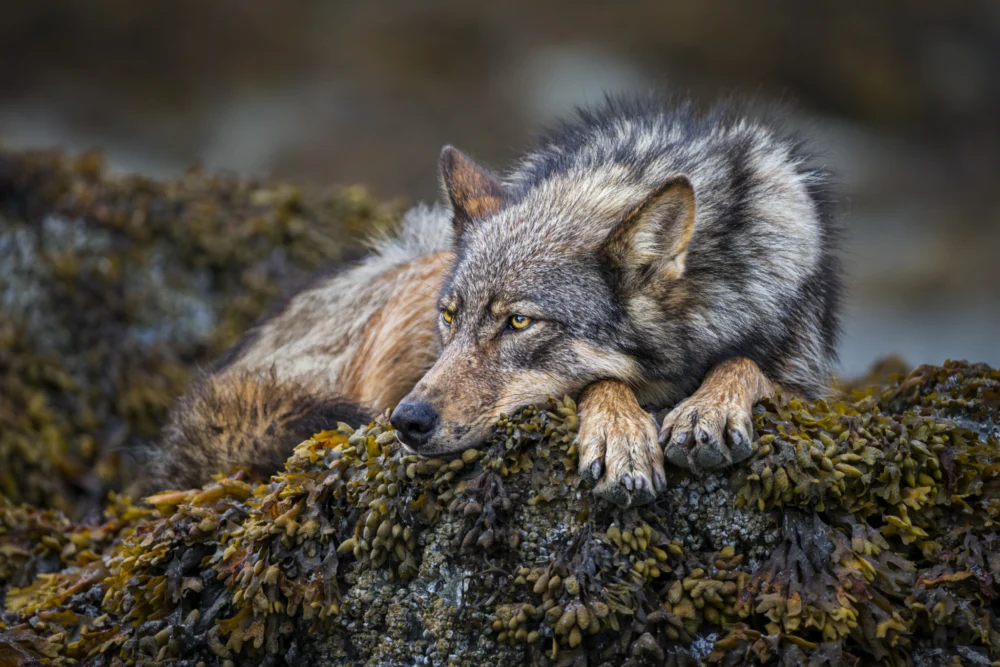
Thirty years ago, a solo expedition into the vast Canadian wilderness, specifically the aptly named Barren Grounds, located just 300 miles north of the Arctic Circle, marked the beginning of a profound, personal journey. For three months, an individual traversed over 600 miles on foot and navigated more than 2,000 miles by canoe through this remote and challenging landscape. The initial objective was ostensibly to test personal limits and affirm self-reliance, but a significant outward goal was the photography of tundra wolves. After weeks of persistent searching without success, a significant sighting occurred: what initially appeared to be a flat, greyish rock nestled among lupine flora revealed itself to be a lone wolf. This moment of quiet observation, involving a patient crawl for nearly an hour, brought the observer to within 20 yards of the animal, ultimately glimpsing its tawny eyes, perked ears, and silver face through the tangled willows.
This initial solitary encounter was the first of many subsequent interactions with wolves, including what the author describes as the honor of lounging within feet of a relaxed pack. Each of these experiences is characterized as an intensive lesson in patience and the gradual earning of trust. Wolves are inherently cautious and shy creatures, rarely approaching humans. The rarity of wolf attacks on humans is statistically significant, with only a handful recorded across North America over the past century. Despite this empirical reality, the archetype of the "big bad wolf" remains deeply entrenched in fictional narratives, cinematic portrayals, and enduring folklore. This persistent portrayal, as noted, taps into a human fascination with fear.
While contemporary society generally acknowledges that wolves do not impersonate grandmothers to deceive children or possess the power to blow down houses, an underlying, ingrained fear often persists. This apprehension is frequently attributed, at least in part, to childhood stories and ancient legends. Fairy tales such as Little Red Riding Hood, though seemingly innocuous, can contribute to a pre-existing bias. In the current context of plummeting biodiversity across the continent, this ingrained narrative of the wolf as a villain can unfortunately morph into a convenient scapegoat for complex ecological problems.
When populations of prey animals, such as deer, experience a decline, wolves are frequently and swiftly identified as the primary culprits. This tendency to assign blame to predators overlooks a crucial historical and ecological perspective: wolves have inhabited North America for an estimated 30,000 to 50,000 years, predating the arrival of humans by a considerable margin. Their presence and role in the ecosystem are ancient and integral.
Ecological Impact Versus Human Footprint
The ecological devastation wrought by human activities, including widespread road construction, deforestation, extensive mining operations, and aggressive drilling practices, has inflicted demonstrably greater harm on wildlife populations than wolves ever have. Nevertheless, a prevalent belief persists that the solution to ecological restoration lies in attempts to control and eradicate certain species, particularly predators.
This mindset manifests in the continued implementation of government-sanctioned wolf culls, often presented as necessary methods of wildlife "management." Simultaneously, corporate entities actively pursue resource extraction through oil dredging and copper mining, further impacting natural habitats. A stark example of this approach is the Canadian government’s taxpayer-funded initiative to exterminate approximately 4,000 wolves in British Columbia alone. This strategy highlights a fundamental disconnect: until humanity is prepared to hold itself accountable for the true extent of damage inflicted upon landscapes, the cycle of destructive environmental practices is likely to perpetuate.
Shifting Perceptions and the Path to Ecological Harmony
The author’s intention in sharing observations of animals like wolves is to foster a deeper understanding and appreciation for their intrinsic value and ecological significance. To continue villainizing predators that have played a vital role in maintaining ecosystem balance for millennia will only deepen a destructive cycle. Every species, regardless of the fear or misunderstanding it may engender, contributes to the intricate beauty and functionality of our planet.
A critical first step toward confronting the truth and mending humanity’s fractured relationship with nature involves shifting focus from scapegoating to addressing the broader, systemic threats that truly endanger our planet. These systemic threats encompass habitat destruction, climate change, pollution, and unsustainable resource extraction – factors that have far-reaching and devastating consequences for all life.
Historical Context and Scientific Understanding of Wolf Populations
The narrative surrounding wolves has evolved significantly over time, influenced by cultural beliefs, economic pressures, and scientific advancements. In the early days of European colonization in North America, wolves were widely perceived as a threat to livestock and human safety, leading to organized eradication campaigns. These campaigns were often state-sponsored and highly effective, drastically reducing wolf populations across much of the continent by the early 20th century.
For example, by the 1930s, wolves had been extirpated from the contiguous United States, with the exception of a small population in Minnesota. The ecological consequences of this absence were profound. Without apex predators, prey populations, such as deer, often boomed, leading to overgrazing, habitat degradation, and subsequent declines in other species. This ecological imbalance eventually prompted a re-evaluation of wolf management policies.
The reintroduction of wolves into Yellowstone National Park in the mid-1990s serves as a pivotal case study. This initiative, met with initial controversy, has since been hailed as a resounding ecological success. Scientific studies have documented a cascade of positive effects: a reduction in elk populations led to the recovery of willow and aspen stands, which in turn benefited beavers, songbirds, and even altered the course of rivers through bank stabilization. This demonstrates the critical role wolves play as keystone species in maintaining ecosystem health and biodiversity.
Data and Evidence: Quantifying the Wolf’s Role
Contrary to popular belief, extensive scientific research underscores the minimal threat posed by wolves to human populations. Data from organizations like the U.S. Fish and Wildlife Service and Parks Canada consistently show that documented attacks on humans by wolves are exceedingly rare. In North America, the probability of being injured or killed by a wolf is statistically lower than many other everyday risks.
Furthermore, studies on wolf diet reveal that their primary food sources are wild ungulates like deer, elk, and moose. While they may occasionally prey on livestock, especially in areas where their natural prey base has been depleted by human activity or habitat loss, this constitutes a relatively small percentage of their overall diet. Efforts to mitigate livestock predation often involve non-lethal methods such as guard animals, fencing, and deterrents, which are proving increasingly effective.
The economic arguments used to justify wolf culling are also being challenged by ecological economics. The presence of healthy predator populations can contribute to ecosystem services that have significant economic value, such as maintaining healthy game populations for hunting and tourism, and contributing to the overall health and resilience of natural landscapes that support various industries. The cost of losing these ecosystem services due to predator removal can far outweigh the perceived economic benefits of such actions.
Regulatory Frameworks and International Perspectives
Globally, approaches to wolf management vary significantly. Some countries, like Canada and parts of the United States, continue to permit hunting and culling under specific regulations, often citing concerns about livestock depredation or the management of large ungulate populations. However, there is a growing international trend towards more conservation-oriented approaches, driven by a greater scientific understanding of wolves’ ecological importance and ethical considerations.
The European Union, for instance, has designated wolves as a protected species under its Habitats Directive, requiring member states to implement measures for their conservation. This reflects a broader shift in perspective, recognizing that apex predators are not merely pests to be eradicated but essential components of healthy ecosystems. The ongoing debate in many regions highlights the tension between traditional views and emerging ecological science, with conservation groups and scientists advocating for a more holistic approach to wildlife management.
The Broader Implications: A Call for Accountability and a New Relationship with Nature
The persistence of the "big bad wolf" narrative serves as a potent metaphor for humanity’s broader relationship with the natural world. It reflects a tendency to fear and demonize that which we do not fully understand, and to seek simple, often destructive, solutions to complex ecological challenges. The continued justification of wolf culls, while industrial activities continue to degrade vast tracts of land, points to a fundamental misdiagnosis of the root causes of ecological decline.
The implications of this mindset are profound. By failing to acknowledge our own species’ significant impact on the environment, we perpetuate a cycle of destruction that jeopardizes biodiversity and the stability of the planet’s ecosystems. The future of wolf populations, and indeed countless other species, hinges on a paradigm shift – one that moves from a human-centric view of dominion to one of interconnectedness and stewardship.
As Robin Wall Kimmerer eloquently stated, "As we learn to listen to the land, we discover that we are not separate from it; we are part of it." This profound realization is essential for navigating the current ecological crisis. It calls for a re-evaluation of our long-held myths, a commitment to evidence-based conservation, and a willingness to foster a more respectful and harmonious coexistence with the wild world. The story of the wolf, often told through the lens of fear, has the potential to be retold as a testament to resilience, ecological wisdom, and the enduring beauty of a truly wild planet.