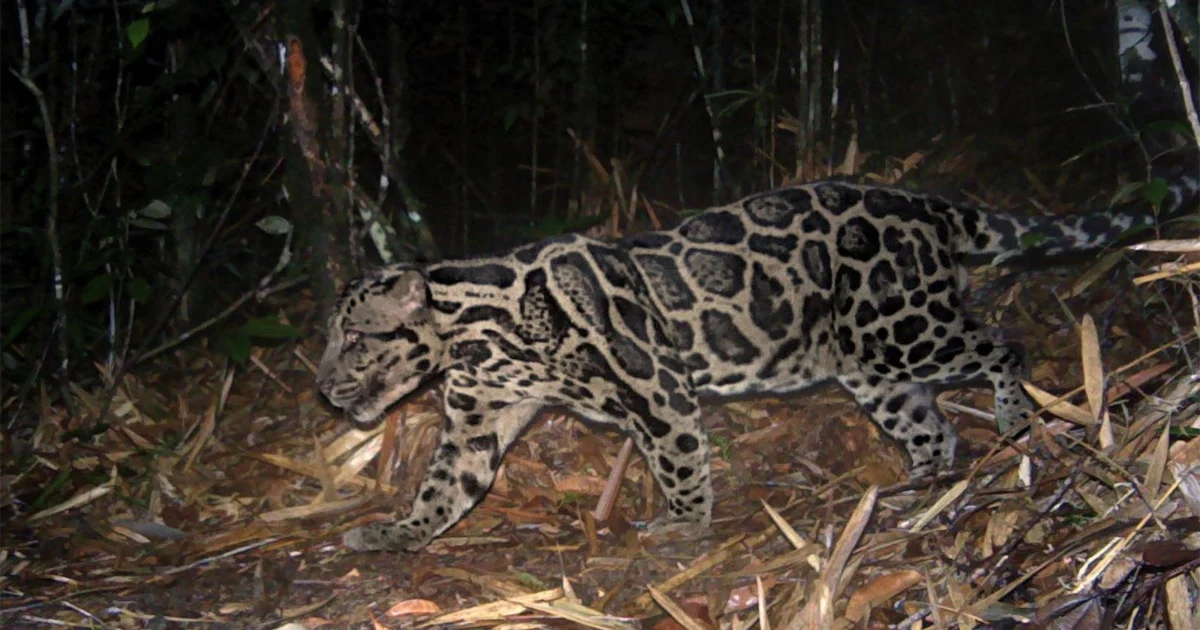
A groundbreaking long-term research initiative utilizing remote camera technology in the dense forests of Sabah, Malaysian Borneo, has yielded unprecedented data on the Sunda clouded leopard ( Neofelis diardi ), including the record-breaking observation of an individual female for over six and a half years. This extensive study, spanning more than 15 years, provides critical insights into the lives of one of Earth’s most mysterious and elusive wild cats, shedding light on their longevity, movement patterns, and the challenges inherent in monitoring their populations, particularly females. The findings underscore the indispensable role of advanced photographic surveillance in modern conservation science and highlight the urgent need for tailored protection strategies for this vulnerable species.
The Enigmatic Sunda Clouded Leopard: A Bridge Between Big and Small Cats
The Sunda clouded leopard is a truly remarkable creature, recognized as a distinct species only in 2006. Found exclusively on the islands of Sumatra and Borneo, it holds a unique phylogenetic position, often described as a "special link" between the major pantherine big cats (like lions, tigers, and jaguars) and the smaller wild cat species. Physically, it is distinguished by its stunning coat, adorned with irregular, dark, cloud-like markings that provide exceptional camouflage within its forest habitat. These markings, along with its relatively short legs, broad paws, and exceptionally long, thick tail (which can be as long as its body), aid in its arboreal lifestyle, making it an agile climber. Adults typically weigh between 12 to 25 kilograms, making them the largest felids on Borneo and Sumatra. Their distinctive dental structure, featuring unusually long canine teeth relative to their skull size, suggests a specialized predatory adaptation, though their exact diet is varied and includes primates, deer, wild pigs, and various smaller mammals and birds.
The species is classified as ‘Vulnerable’ by the International Union for Conservation of Nature (IUCN) Red List, primarily due to rapid habitat loss and fragmentation driven by deforestation for agriculture, particularly palm oil plantations, logging, and infrastructure development. Poaching for their pelts and body parts, though less prevalent than for some other big cats, also poses a significant threat. Their naturally low population densities and secretive nature make accurate population assessments incredibly challenging, further complicating conservation efforts. Understanding their life history, including lifespan and reproductive success, is paramount for developing effective strategies to ensure their long-term survival.
Remote Cameras: Unlocking the Secrets of the Wild
Remote cameras, often referred to as camera traps, have revolutionized wildlife research and monitoring over the past two decades. These sophisticated devices, typically equipped with passive infrared (PIR) sensors, are triggered by changes in heat and motion, automatically capturing photographs or video footage of animals as they pass by. For nocturnal and elusive species like the Sunda clouded leopard, which are rarely observed directly by humans, camera traps are an unparalleled tool. They offer a non-invasive method to collect data on species presence, activity patterns, population density, and individual identification, without disturbing the animals or their habitat.
In the case of felids like the Sunda clouded leopard, each individual possesses a unique pattern of spots or rosettes, akin to a human fingerprint. This allows researchers to identify and track specific animals over time, providing invaluable demographic data. The advantages extend beyond individual identification; camera traps can operate continuously for weeks or months, enduring harsh environmental conditions, and capturing data across vast, remote landscapes that would be impossible to survey manually. This technology has been instrumental in discovering new species, rediscovering ‘lost’ species, and providing the baseline data necessary for conservation planning worldwide.
A Decades-Long Endeavor: The Sabah Study
The extraordinary study, detailed in a recent peer-reviewed publication in Biotropica and further discussed by Panthera, represents a monumental collaborative effort. It involved scientists from the Leibniz Institute for Zoo and Wildlife Research (IZW), the Sabah Forestry Department, and the global wild cat conservation organization Panthera. The research spanned an impressive 15 and a half years, from 2007 to 2023, making it one of the longest continuous camera-trap studies focused on a single wild cat species.
The study was conducted across the biodiverse forests of Sabah, located on the northern tip of Malaysian Borneo. Specifically, the research focused on landscapes such as the Dermakot and Tangkulap Forest Reserves, areas that have experienced varying degrees of logging and human activity. This diverse environmental context allowed researchers to assess how clouded leopards navigate and persist within both pristine and human-altered habitats. Over the course of the study, 13 distinct camera-trap surveys were deployed, each involving a network of remote cameras strategically placed along animal trails, patrol paths, and natural corridors. These surveys meticulously captured thousands of images, which were then painstakingly analyzed to identify individual Sunda clouded leopards based on their unique pelt patterns. The sheer volume of data collected over such an extended period provided an unparalleled opportunity to delve deep into the life histories of these cryptic cats.
Unveiling Lifespans and Movement: Key Discoveries
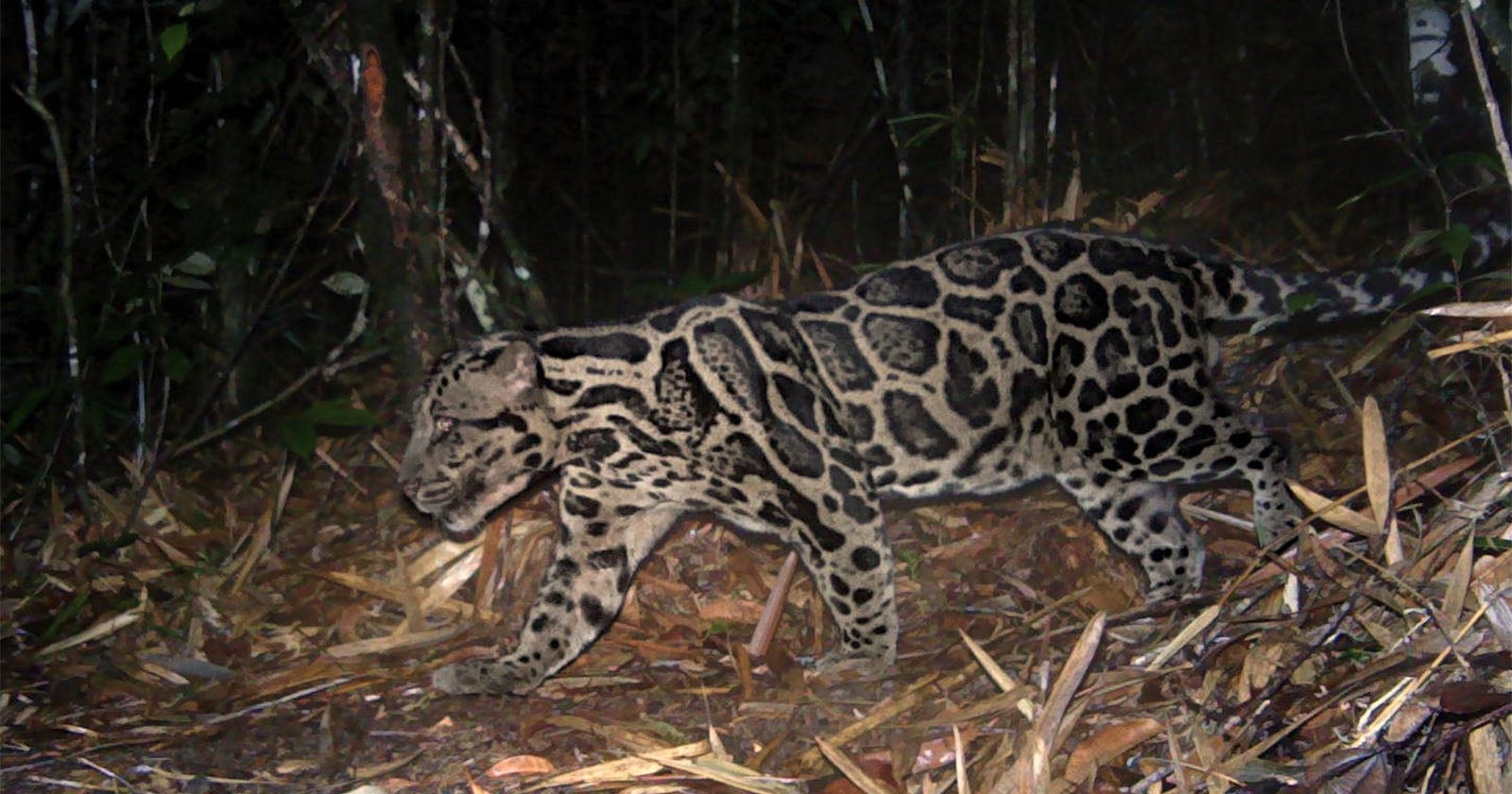
One of the most significant achievements of this long-term monitoring effort was the identification of numerous individual Sunda clouded leopards and the establishment of new records for their minimum residence times in the wild. Prior to this study, the longest recorded residence time for a Sunda clouded leopard was 5.92 years, held by a male. This new research has shattered that record, with a female individual being observed on camera traps for an astonishing 6.51 years. This finding is particularly noteworthy given the general difficulty in tracking females.
Beyond this individual record, the study also identified the oldest wild Sunda clouded leopard ever recorded. This female, estimated to be approximately 8.5 years old at the time of her last detection, represents a significant data point for understanding the species’ natural lifespan. Lifespan is a crucial demographic parameter in biological research, influencing population dynamics, reproductive rates, and overall species viability. For a species facing significant environmental pressures, understanding how long individuals can survive in the wild provides vital information for conservation management.
The expansive temporal and spatial scope of the study also yielded critical insights into the movement ecology of these cats. Researchers were able to track individuals moving between different forest preserves, with some leopards traversing distances of nearly 40 kilometers (approximately 25 miles). Such movements highlight the importance of maintaining habitat connectivity and establishing wildlife corridors between protected areas. Fragmentation of forests can isolate populations, making them more vulnerable to genetic bottlenecks and local extinctions. The ability of these leopards to move across landscapes, even those impacted by human activity, underscores their resilience but also points to the necessity of a broader, landscape-level approach to conservation that extends beyond isolated protected zones.
Addressing the "Female Blind Spot" in Research
A persistent challenge in wild cat research, particularly for elusive species, has been the disproportionate detection rates between males and females. The Sunda clouded leopard study vividly illustrated this "female blind spot." As Panthera explains, female clouded leopards are detected approximately 68 percent less often by camera traps compared to their male counterparts. This disparity is largely attributed to behavioral differences; females tend to spend more time in the forest canopy, an adaptation that might serve to protect cubs from ground predators or to exploit arboreal prey. Ground-level camera traps, while effective for many species, may therefore systematically underrepresent the presence and activities of females.
This under-detection carries significant implications for population assessments and conservation planning. Thye Lim Tee, Project Coordinator at Panthera Malaysia, emphasized this concern: "The under-detection of females in the Dermakot-Tangkulap landscape could prevent us from accurately tracking the population’s breeding success." Accurate estimates of female numbers and reproductive output are fundamental for calculating population growth rates and understanding the health and viability of a population. If conservation efforts are based on data that significantly underestimates the female component, they risk being misdirected or insufficient. Tee further suggested that this lack of female detections should prompt researchers to "explore the forest interior more thoroughly, rather than assuming they simply aren’t present," advocating for a more nuanced and adaptive approach to camera trap placement and survey design, potentially incorporating canopy-level cameras or other innovative techniques.
Expert Perspectives and Broader Implications for Conservation
The findings from this landmark study have been met with enthusiasm within the conservation community, underscoring the value of sustained, long-term research. Wai-Ming Wong, Director of Small Cat Conservation Science at Panthera, articulated the profound impact of such efforts: "Long-term, large-scale monitoring allows us to move beyond snapshots and truly understand how wild cat populations persist over time. Without it, we risk missing the very dynamics that determine their survival." This perspective highlights that short-term, episodic studies, while useful, often fail to capture the subtle, cyclical, or infrequent events that are critical to a species’ ecology and long-term viability. The endurance of this particular female clouded leopard, navigating a landscape profoundly altered by human activity, serves as a powerful testament to the species’ adaptability. "Her persistence is a reminder of what these cats are capable of, and what becomes possible when we give them the science and habitat they need to survive," Panthera eloquently stated in their blog post.
The implications of this study extend beyond the Sunda clouded leopard. It provides a robust methodology and a compelling case for similar long-term monitoring programs for other elusive and endangered species globally. The data on lifespan, movement, and the specific challenges of female detection will directly inform conservation strategies in Borneo and Sumatra. This includes advocating for stricter enforcement against illegal logging and poaching, promoting sustainable land-use practices, and establishing protected corridors to facilitate gene flow between fragmented populations. The Sabah Forestry Department’s involvement also signals a critical commitment from local governmental bodies to scientific research as a foundation for effective forest management and wildlife protection.
Future research will undoubtedly build upon these findings, perhaps focusing on genetic studies to understand population connectivity, dietary analysis to refine ecological roles, and more targeted camera trap deployments to overcome the female detection bias. The long-term insights gleaned from this exceptional study offer a beacon of hope and a clear directive: continued scientific vigilance, coupled with concerted conservation action, is essential to secure a future for the enigmatic Sunda clouded leopard and the rich biodiversity of Borneo’s forests.
Image credits: Panthera, Sabah Forestry Department, Leibniz Institute for Zoo and Wildlife Research. Referenced study, ‘Estimating Sunda Clouded Leopard Lifespans From Minimum Residence Times via Long-Term Photo-Tracking,’ was published in Biotropica.