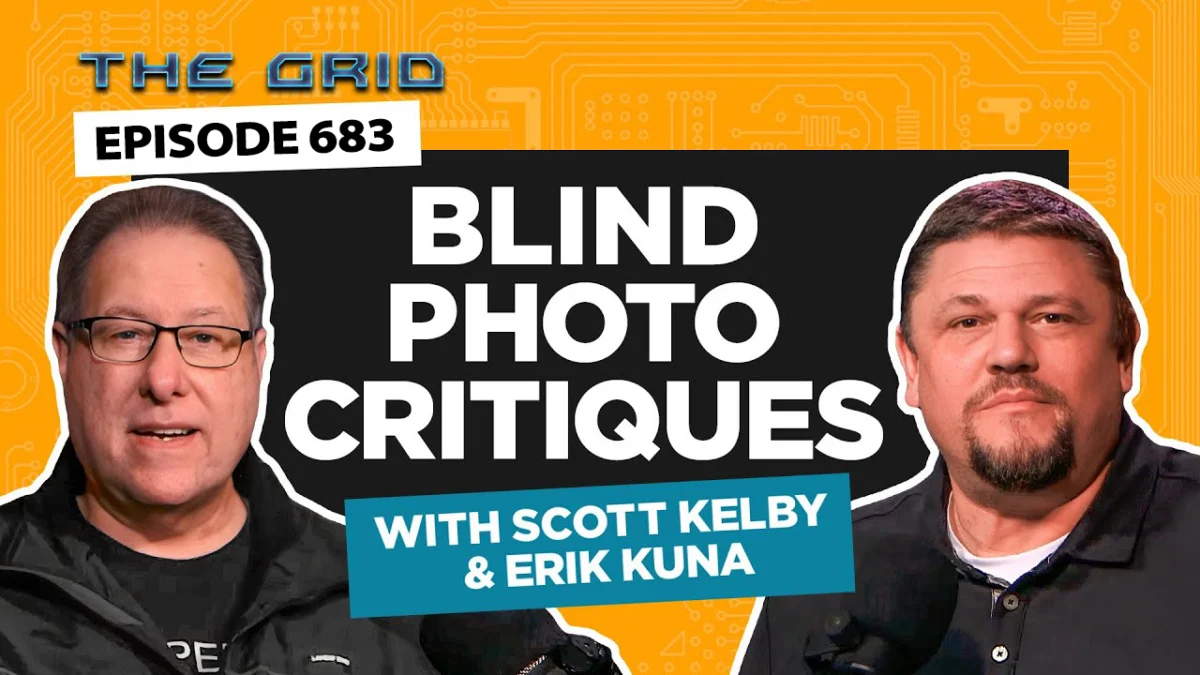
This week, the widely acclaimed photography talk show The Grid, produced by KelbyOne, delivered its 708th episode featuring co-hosts Scott Kelby and Erik Kuna in another installment of their popular "Blind Photo Critiques." The episode, which aired recently, provided an in-depth analysis of a diverse range of photographic genres, including landscapes, astrophotography, portraits, wildlife, travel, and street photography. Through their constructive evaluations, Kelby and Kuna offered viewers a masterclass not only in the technical application of Adobe Lightroom but also in the fundamental principles of visual storytelling and composition that elevate an image from merely good to truly compelling. The session underscored the significant impact that thoughtful post-processing and a clear artistic vision can have on a photograph’s overall strength and impact, offering practical insights for photographers at all skill levels.
The Art and Pedagogy of Blind Photo Critiques
The "Blind Photo Critique" format, a staple of The Grid, is a pedagogical approach designed to foster objective evaluation and learning. In this setup, photographs submitted by the audience are reviewed by the expert hosts without any prior knowledge of the photographer’s identity, equipment used, or intentions. This anonymity ensures that the critique focuses solely on the visual merits and demerits of the image itself, eliminating potential biases related to reputation or personal connection. This method is highly valued in educational circles as it encourages honest, unvarnished feedback, allowing both the submitting photographer and the broader audience to learn from a purely objective assessment of composition, lighting, subject matter, and technical execution.
During the episode, Kelby and Kuna meticulously dissected each submitted image, highlighting its strengths while constructively addressing areas for improvement. Their critiques were characterized by a balance of technical advice, particularly regarding post-processing, and foundational photographic wisdom. The hosts consistently demonstrated how minor adjustments and strategic decisions in the editing phase could dramatically alter the viewer’s perception and engagement with a photograph. This blend of practical application and theoretical understanding is a hallmark of KelbyOne’s educational philosophy, aiming to equip photographers with both the tools and the conceptual framework necessary for artistic growth. The range of genres reviewed — from the grand vistas of landscapes and the intricate details of astrophotography to the emotive depths of portraits and the dynamic energy of street photography — ensured that the lessons resonated with a broad spectrum of photographic interests.
KelbyOne: A Hub for Photography Education
KelbyOne stands as a leading online educational platform for photographers, designers, and creatives, renowned for its high-quality tutorials and comprehensive courses. Founded by Scott Kelby, a towering figure in the photography and Photoshop communities, KelbyOne has evolved from its roots as the National Association of Photoshop Professionals (NAPP) into a global resource. The platform’s mission is to make professional-grade photography and design education accessible to everyone, regardless of their location or prior experience. Subscribers gain access to an extensive library of courses, taught by industry experts, covering everything from fundamental camera settings to advanced editing techniques, business strategies, and specialized genres.
Scott Kelby himself is a prolific author, educator, and photographer, recognized globally for his accessible teaching style and numerous best-selling books, including The Digital Photography Book series. His influence on the digital photography landscape is immense, having demystified complex concepts for millions of aspiring and professional photographers alike. Erik Kuna, co-host of The Grid and a prominent educator on KelbyOne, brings his own wealth of expertise, particularly in astrophotography, landscape, and travel photography. His technical acumen and clear instructional style complement Kelby’s broad experience, creating a dynamic and informative co-hosting duo. Together, they embody the spirit of continuous learning and practical application that KelbyOne champions. The Grid itself has become a cultural touchstone within the photography community since its inception, providing weekly insights, news, and educational content, fostering a sense of community among its global viewership. The show’s longevity and popularity are a testament to its consistent delivery of valuable, actionable advice in an engaging format.
Mastering Lightroom: Precision in Post-Processing
A significant portion of the critique session was dedicated to the nuanced application of Adobe Lightroom, underscoring its indispensable role in contemporary digital photography workflows. Lightroom, a powerful suite of tools for photo organization, editing, and sharing, has become the industry standard for many photographers. Scott Kelby, a long-time advocate and expert user of the software, provided detailed demonstrations on how specific tools could be leveraged to refine images.
One of the primary areas of focus was masking, a feature that allows photographers to apply adjustments to specific areas of an image without affecting others. Kelby meticulously showed how masking, combined with gradients (linear and radial), can effectively direct the viewer’s eye. For instance, by subtly darkening edges or brightening a central subject, photographers can create visual pathways that guide the audience through the frame, enhancing focus and narrative. This technique is particularly vital in landscapes and environmental portraits where multiple elements might compete for attention. The discussion also delved into some of Lightroom’s "lesser-known" masking tools. While not explicitly named in the brief, these likely refer to advanced features such as Luminance Range Masking (applying adjustments based on brightness values), Color Range Masking (based on specific color hues), or the more recent AI-powered Select Subject and Select Sky masks, which offer unprecedented precision and efficiency in isolating complex areas. The ability to target adjustments with such granularity allows for sophisticated enhancements that were once tedious or impossible.
Furthermore, Kelby demonstrated techniques for bringing a washed-out image back to life. This common photographic challenge often stems from overexposure, flat lighting, or incorrect camera settings. His approach likely involved adjusting the image’s dynamic range by recovering highlights, deepening shadows, and enhancing contrast to restore depth and vibrancy. These adjustments are crucial for retaining detail in both the brightest and darkest parts of a photograph, ensuring a rich and balanced tonal range.
Another critical skill showcased was the use of color adjustments to create a warmer, golden-hour look. The "golden hour," the period shortly after sunrise or before sunset, is highly coveted by photographers for its soft, warm, and flattering light. Even if a photo wasn’t taken during this magical time, Lightroom offers powerful tools to emulate its aesthetic. This typically involves adjusting the white balance (shifting towards warmer Kelvin temperatures), enhancing the yellows and oranges, and potentially using split toning to introduce warm hues into the highlights and cooler tones into the shadows, creating a sophisticated and evocative mood. The subtle manipulation of color can profoundly impact the emotional resonance of an image, transforming an ordinary scene into something extraordinary.
These demonstrations highlighted that Lightroom is not just a tool for correction but a powerful creative instrument. The ability to non-destructively apply these adjustments means photographers can experiment freely, iterating on their vision until the image perfectly aligns with their artistic intent. The episode served as a practical guide for maximizing Lightroom’s potential, moving beyond basic adjustments to advanced, targeted enhancements that fundamentally reshape a photograph’s visual impact.
The Unifying Principle: Clarity of Subject and Composition
While the technical demonstrations of Lightroom were invaluable, Scott Kelby and Erik Kuna repeatedly emphasized a more profound, overarching lesson that transcended any specific software feature: the paramount importance of knowing exactly what your subject is and eliminating anything that competes for its attention. This principle lies at the heart of effective visual communication and is arguably the most critical element in transforming a good photograph into a much stronger one.
A photograph, at its core, is a story told visually. For that story to be clear and impactful, the viewer’s eye must be drawn directly to the intended subject without distraction. Competing elements, whether they are bright colors, strong lines, or extraneous objects in the background, can dilute the message and confuse the viewer. The hosts’ consistent emphasis underscores that technical proficiency with a camera or editing software is secondary to a clear artistic vision. Without a well-defined subject and a clean composition, even the most technically perfect image can fall flat.
Sometimes, the solution to eliminating distractions involves the precise application of editing tools, as demonstrated with masking and light adjustments. For example, selectively darkening a busy background or desaturating distracting elements can guide the eye back to the main subject. However, Kelby and Kuna frequently highlighted that the best solution is often much simpler and more fundamental: a better crop. Cropping is not merely about resizing an image; it is a powerful compositional tool that allows a photographer to refine the frame, eliminate unwanted elements, and strengthen the relationship between the subject and its surroundings. A strategic crop can dramatically improve an image’s balance, impact, and narrative clarity, often achieving more profound results than extensive post-processing. It forces the photographer to consider the boundaries of their frame and what truly needs to be included or excluded to tell the most compelling story.
This foundational lesson speaks to the essence of photographic intentionality. It encourages photographers to think critically about every element within their frame, asking whether it contributes to or detracts from the central message. It’s a reminder that photography is as much about what you choose to exclude as what you choose to include. By consistently returning to this principle, Kelby and Kuna reinforced that technical mastery of tools like Lightroom serves the greater purpose of artistic expression and clear communication.
The Broader Landscape of Photography Education and Community
The success of The Grid and the consistent demand for its "Blind Photo Critiques" reflect a significant trend in the photography world: the increasing importance of online education and community engagement. In an era where digital cameras and powerful editing software are widely accessible, the differentiator for photographers often lies in their skill, artistic vision, and ability to continually learn and adapt. Platforms like KelbyOne play a crucial role in democratizing this education, breaking down geographical and financial barriers that once limited access to top-tier instruction.
The interactive nature of shows like The Grid, where audience members submit their work and participate in live discussions, fosters a vibrant global community. This sense of belonging and shared learning is invaluable for photographers who might otherwise feel isolated in their creative pursuits. It provides opportunities for peer learning, mentorship (even if indirect), and exposure to diverse perspectives and photographic styles. The consistent production of high-quality educational content also ensures that photographers can keep pace with the rapid advancements in camera technology, software updates (such as new AI features in Lightroom), and evolving photographic trends.
The implications of such accessible, expert-led critiques are far-reaching. For aspiring professionals, they offer a pathway to hone their craft and understand the standards expected in the industry. For enthusiasts, they provide the inspiration and guidance needed to elevate their hobby into a more serious pursuit. Ultimately, episodes like "Blind Photo Critiques" contribute to a more skilled, discerning, and creatively vibrant photography community worldwide, proving that continuous learning and constructive feedback are cornerstones of artistic development. The episode serves as a powerful reminder that even small, intentional editing decisions, guided by a clear understanding of fundamental photographic principles, can profoundly transform a good photograph into a much stronger, more impactful piece of art. The full replay of The Grid episode 708 is available for viewing below, offering a comprehensive resource for photographers seeking to refine both their technical skills and their artistic vision.