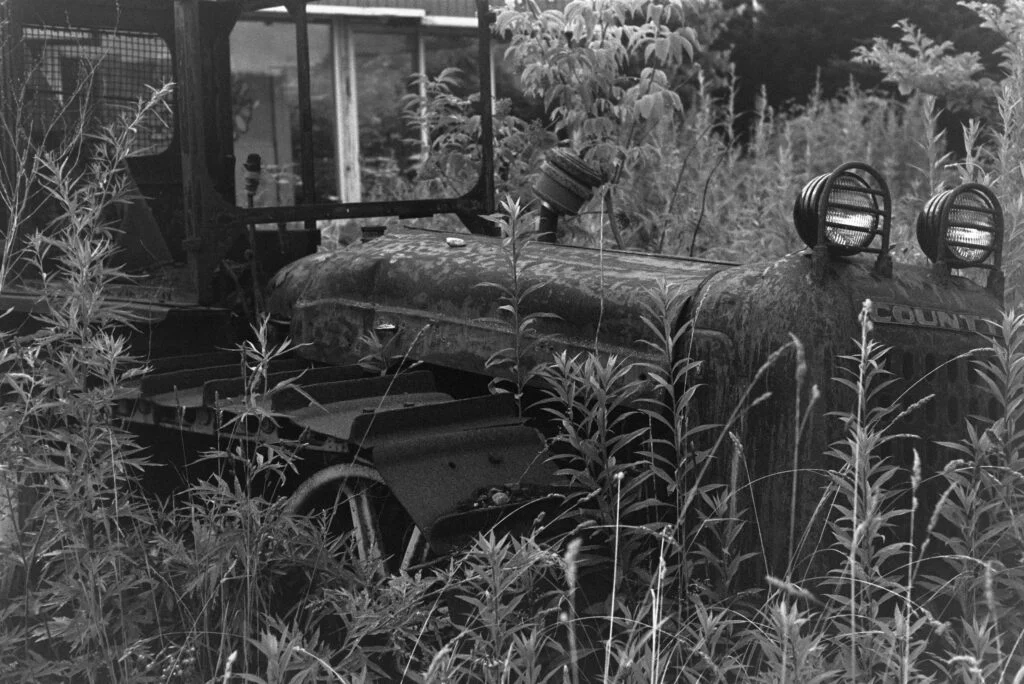
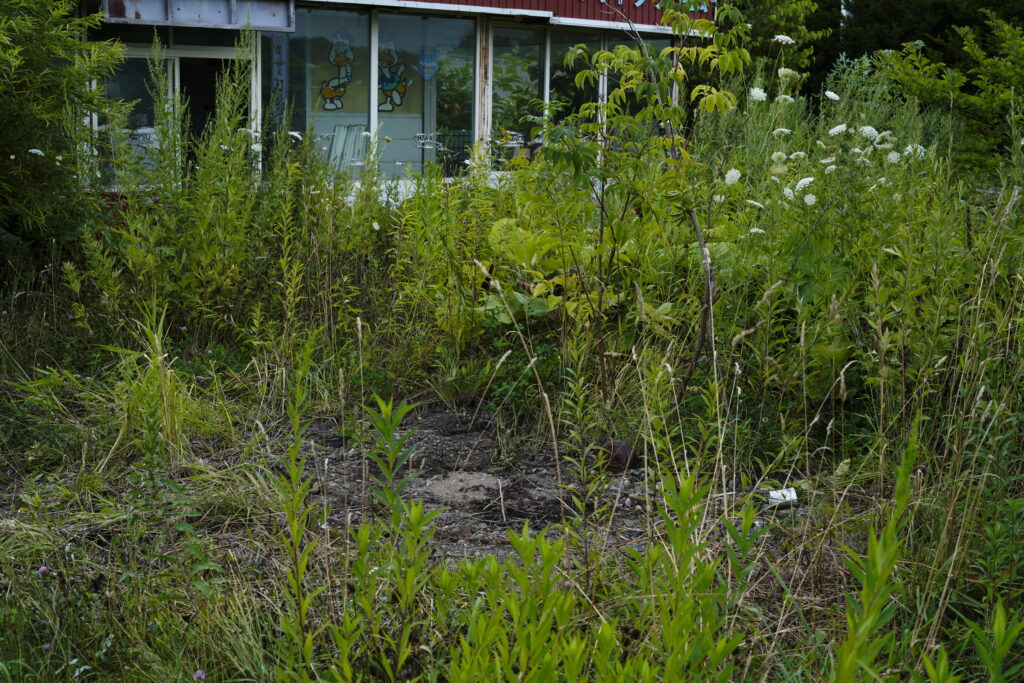
The recent removal of a vintage County-brand tracked bulldozer from a long-standing rural location has highlighted a growing concern among cultural historians and documentary photographers regarding the ephemeral nature of industrial relics. For years, the vehicle, owned by an individual identified as Fukuhara-san, served as a local landmark, characterized by its deteriorating yellow paint and the slow encroachment of surrounding vegetation. Its sudden disappearance in late August 2026 serves as a case study for the necessity of comprehensive documentation that extends beyond mere visual representation to include historical context and narrative data.
The Legacy of County Commercial Cars Ltd
To understand the significance of the "County" tractor, one must examine the history of its manufacturer. County Commercial Cars Ltd, based in Fleet, Hampshire, was a specialist engineering firm that gained international acclaim for its conversions of Ford tractors. Founded in 1929, the company initially focused on adding third axles to trucks before pivoting to the agricultural and industrial sectors.
By the mid-20th century, County became synonymous with high-traction four-wheel-drive systems and crawler units. Their machines were often utilized in challenging terrains where standard tractors failed, including forestry, heavy construction, and large-scale agricultural projects. The specific model observed in this case—a tracked bulldozer or "crawler"—represented a pinnacle of mid-century mechanical resilience. These units were designed for longevity, featuring robust diesel engines and heavy-duty undercarriages capable of withstanding decades of environmental exposure. According to mechanical records, even when these machines appear externally dilapidated, their low-revving, high-torque engines often remain functional, as was reportedly the case with the Fukuhara-san unit.
A Chronology of Decay and Disappearance
The timeline of the vehicle’s residence in its final location spans several decades, during which it transitioned from a functional piece of equipment to a stationary object of interest. Observations from local residents and photographers indicate a steady progression of natural reclamation.
- Active Service Period (Pre-1990s): The vehicle was utilized for local land management and agricultural tasks, benefitting from its tracked design to navigate seasonal mud and snow.
- The Era of Stasis (2000–2020): Following its retirement from active use, the tractor was parked near a high-traffic thoroughfare. During this period, it became a fixture of the landscape.
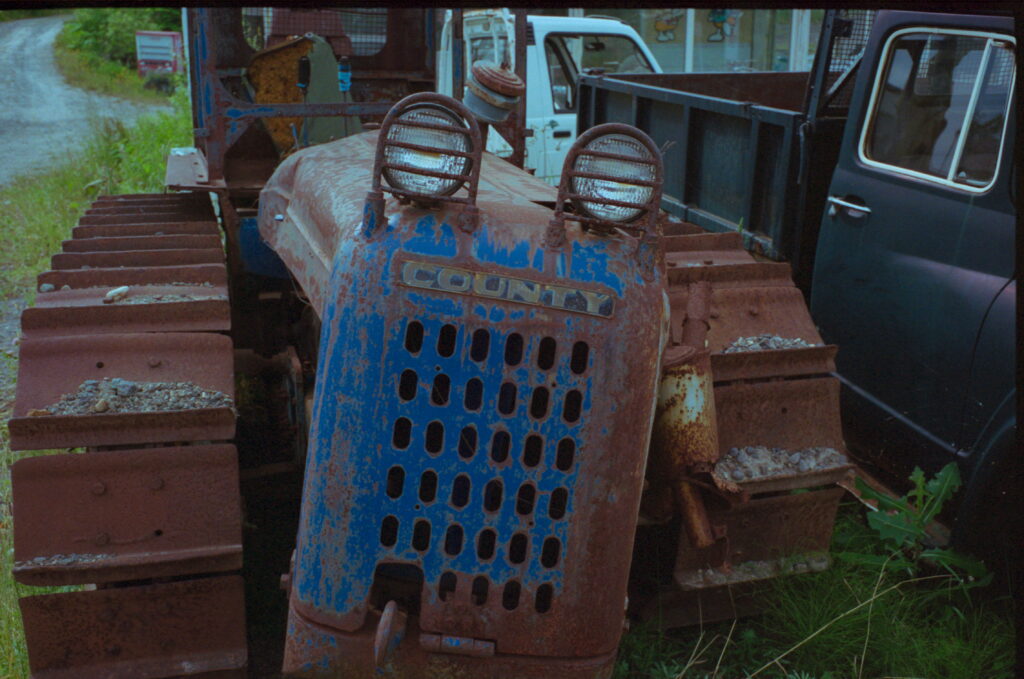
- Documentary Observation (2021–2026): Photographers began capturing the vehicle’s "patina"—the aesthetic result of oxidation and peeling paint. In 2021, high-resolution color film studies (Kodak Portra 400) documented the early stages of significant rust expansion.
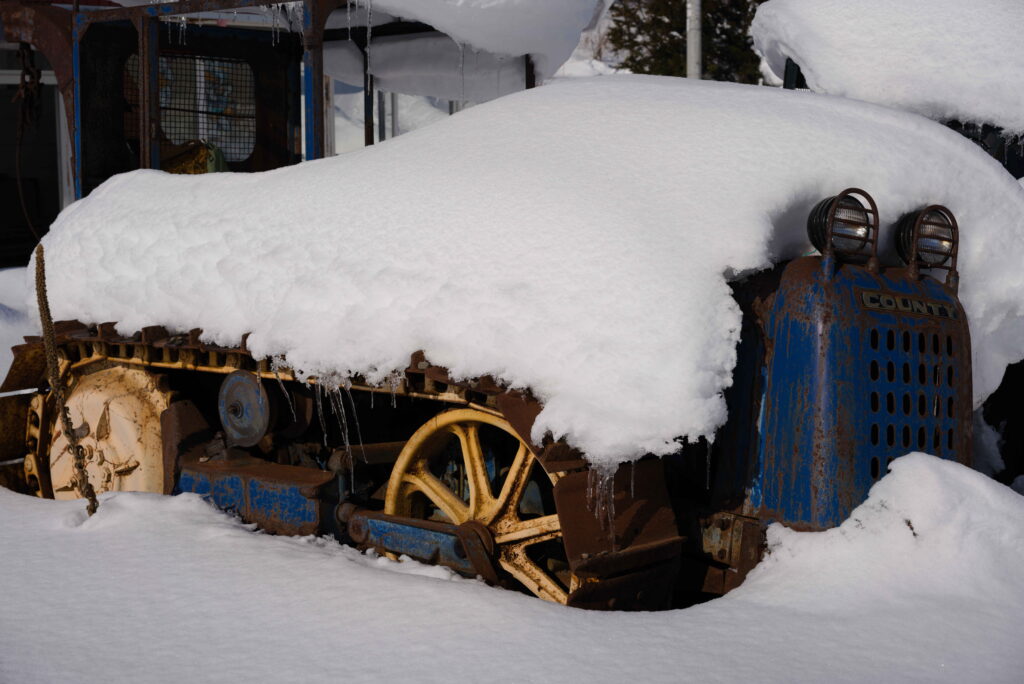
- The Final Winter (2025–2026): The tractor survived a harsh winter, documented under a heavy blanket of snow, which further accelerated the degradation of its structural integrity.
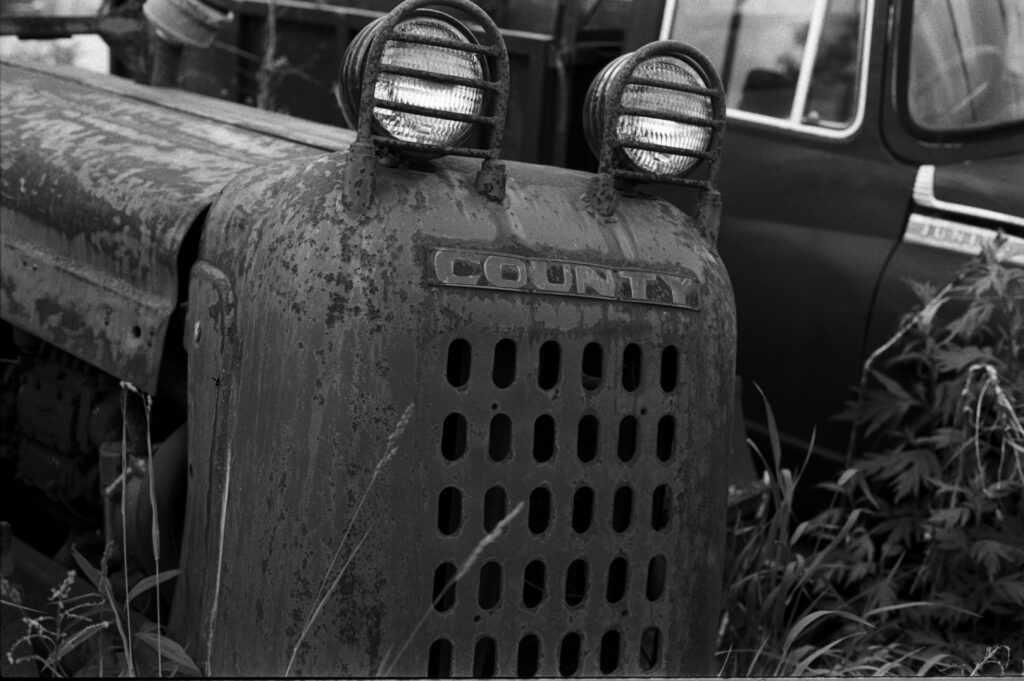
- The Final Documentation (August 2026): A final series of black-and-white photographs were taken using an ME Super camera and Ilford SFX film, just weeks before the site was cleared.
- Removal (Late August 2026): The vehicle was removed from the site, presumably for scrap reclamation or private restoration, leaving the space it occupied for decades vacant.
The Role of Analog Photography in Industrial Preservation
The documentation of the County tractor was largely conducted using analog film, a choice that carries specific technical and archival implications. In the field of industrial archaeology, the use of silver-halide film is often preferred for its long-term stability and unique rendering of textures.
The use of Kodak Portra 400 in the early stages of the tractor’s "retirement" allowed for a precise recording of the color shifts in the rusting metal. As the vehicle aged, the transition to black-and-white stocks, such as Ilford SFX, emphasized the mechanical form and the contrast between the rigid steel and the organic growth of weeds. However, the photographer’s reflection on these efforts suggests that visual data alone is insufficient. While the film provides a high-resolution record of the object’s physical state, it fails to capture the "human data"—the reasons for its placement, its specific service history, and the socio-economic factors that led to its eventual removal.
Economic and Social Factors in Rural Deaccessioning
The removal of such machinery is rarely an isolated event. Across rural regions globally, there is an increasing trend toward "cleaning up" what is often perceived as industrial waste. Several factors contribute to this phenomenon:
- Scrap Metal Market Fluctuations: As the price of steel and iron fluctuates, abandoned machinery becomes a financial asset. A single County crawler can contain several tons of high-grade steel, making it a target for industrial recyclers.
- Land Development and Liability: In many jurisdictions, aging machinery is viewed as a liability or a violation of local ordinances regarding "unlicensed junkyards." Property owners may be pressured by local councils to clear sites to improve "visual amenity."
- The Passing of a Generation: Often, these machines remain in place as long as the original owner is alive. When land passes to heirs or is sold, the emotional connection to the equipment is severed, leading to its disposal.
In the case of the Fukuhara-san tractor, the owner’s pride in the engine’s functionality suggests a lingering respect for the machine’s utility. The removal of the unit signals a definitive end to that era of mechanical history for the local community.
Broader Implications for Documentary Practice
The disappearance of the County tractor serves as a poignant reminder of the "Joni Mitchell effect"—the realization of an object’s value only after it has been removed from the environment. For the journalistic and photographic communities, this event underscores a shift toward a more holistic "documentary" approach.
Experts in the field argue that a photograph should be the starting point of a record, not the end. To provide a complete historical account, documentation should ideally include:
- Oral Histories: Interviews with owners or operators to determine the machine’s provenance.
- Technical Specifications: Recording serial numbers, engine types, and modifications.
- Environmental Context: Documenting the relationship between the object and the changing landscape over time.
By failing to gather these details, the history of the County tractor remains incomplete. While the images exist, the narrative of why it sat for decades and where it has gone remains speculative. This gap in the record represents a loss of local industrial heritage.
Fact-Based Analysis: The Value of "Unusual" Objects
In a broader sociological context, objects like the County tractor act as "anchors" in a rapidly changing world. They provide a sense of continuity and a tangible link to the industrial past. When these objects are removed without a proper documentary "biography," the collective memory of the community is eroded.
Data from heritage preservation societies suggest that for every ten industrial relics lost to the scrap heap, only one is adequately documented. This represents a significant deficit in the global archive of the 20th-century industrial age. The case of the County tractor highlights the need for photographers to act as amateur historians, filling in the "how, why, and when" to ensure that when the physical object is gone, a meaningful story remains.
Conclusion
The departure of the County tracked tractor marks the end of a visual era for its former location. While the owner, Fukuhara-san, may have seen it as a piece of equipment that simply "ran," to the observer and the historian, it was a symbol of mechanical resilience and the passage of time. Its removal serves as a call to action for documentary photographers to look beyond the aesthetic appeal of decay and to engage with the deeper history of the subjects they record. In the absence of the machine, only the photographs remain—a thousand words that, without further context, still leave much of the story untold. Moving forward, the preservation of industrial history will depend not just on the shutter speed and the film stock, but on the diligence of the storyteller in capturing the life behind the lens.