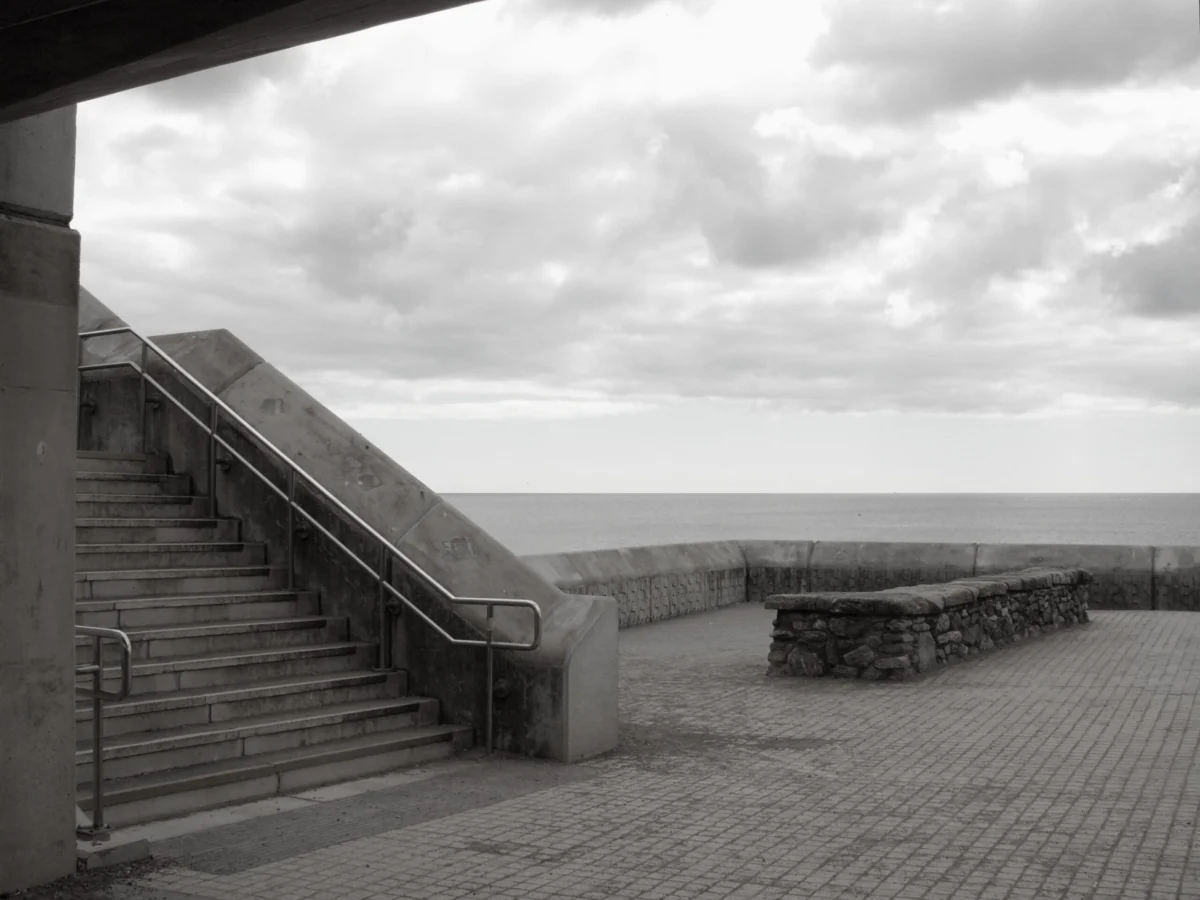
On February 27, 2026, a technical field evaluation was conducted in New York City to assess the performance characteristics of two historically significant Leica 50mm lenses. The study, colloquially termed the Goldilocks Challenge, sought to identify the ideal balance between vintage character and modern precision for street-level portraiture. Utilizing two identical Leica M3 rangefinder bodies, the test compared a 1957 Leitz Summarit f/1.5 against a 21st-century Leica Summilux-M 50mm f/1.4 ASPH. The evaluation occurred during a period of unseasonably warm weather in Manhattan, providing a high density of subjects in public spaces, specifically within the vicinity of Washington Square Park.

Technical Parameters and Equipment Overview
The Leica M3, introduced in 1954 and produced until 1966, served as the primary testing platform for this evaluation. Known for its high-magnification viewfinder (0.91x), the M3 is widely considered the premier body for 50mm lenses, offering a life-size viewing experience that facilitates precise focusing—a critical requirement when shooting at wide apertures like f/1.4 or f/1.5.

The lenses selected represent two distinct eras of optical engineering. The Leitz Summarit 50mm f/1.5, a descendant of the Schneider Xenon design, was manufactured between 1949 and 1960. It is characterized by its seven-element construction and is known for producing a distinct "Leica Glow," a result of spherical aberration and lower contrast coatings typical of the mid-20th century. Conversely, the Leica Summilux-M 50mm f/1.4 ASPH represents the pinnacle of modern optical design. Featuring aspherical surfaces and a floating element system, it is engineered to maintain extreme sharpness and contrast from its maximum aperture through the entire focus range.

The test utilized two primary film stocks: Svema Foto 100 and Ilford Delta 100. Svema 100, a traditional grain film, was used for initial baseline shots, while Ilford Delta 100, a tabular-grain (T-grain) emulsion, served as the primary medium for the side-by-side comparison. Delta 100 was chosen for its fine grain and high resolving power, which allows for a detailed analysis of lens micro-contrast and edge-to-edge sharpness.

Chronology of the Evaluation
The field test commenced in the mid-afternoon of Friday, February 27. The solar angle provided strong, direct light, which gradually transitioned into the softer, warmer tones of "golden hour" as the session progressed.

14:30 – Baseline Testing (Svema Foto 100)
The initial phase involved exhausting a remaining half-roll of Svema Foto 100 in the primary Leica M3. During this period, the photographer established a rapport with initial subjects, including Emily, an urban planner specializing in affordable housing, and Zack, a podcast producer for Vox Media. These interactions served to calibrate the "five-minute film friendship" technique—a method used to put subjects at ease while the photographer manually adjusts focus and exposure. The Svema 100 demonstrated high contrast in the bright afternoon sun, though it highlighted the Summarit’s tendency toward softer rendering of pale skin tones.

15:45 – The Goldilocks Challenge Initiation (Ilford Delta 100)
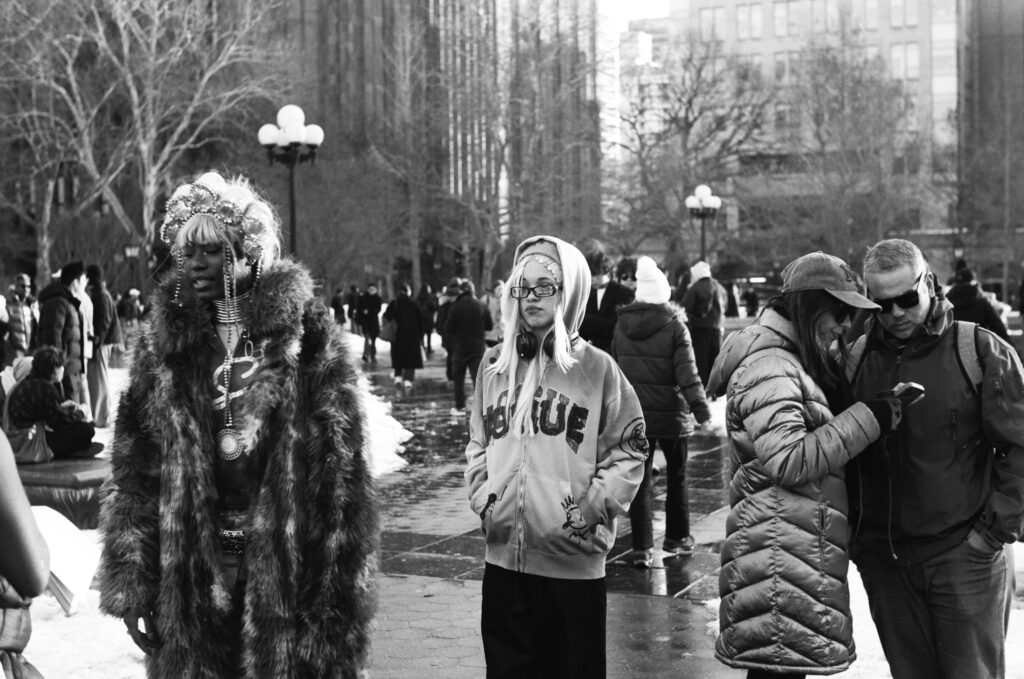
Both Leica M3 bodies were loaded with Ilford Delta 100. One camera was fitted with the 1957 Summarit, the other with the modern Summilux ASPH. The first subject for the direct comparison was a performance artist identified as "Sire" or "Siri." Standing before the Washington Square Arch, Siri provided a high-contrast subject due to an elaborate curler-based headdress and a statuesque posture.
16:30 – Comparative Performance in Variable Light
As the sun descended, the test moved toward capturing street musicians and fellow photographers. This phase allowed for an analysis of how each lens handled the increasing complexity of shadows and the transition from mid-range apertures (f/5.6) to wider settings (f/2.8 and below). Subjects included Will, an acoustic guitarist, and a student photographer known as "Coolcreeperg1."

17:15 – Low-Light and Bokeh Analysis
The final phase of the day focused on the wide-open performance of the lenses. Interaction with Tibi, a large-format photographer operating a Linhof 4×5 with a Polaroid back, provided a technical subject with intricate mechanical details. The evaluation concluded as the light failed, pushing the lenses to their maximum apertures of f/1.4 and f/1.5.

Comparative Data and Optical Findings
The results from the lab scans revealed significant divergence in how the two lenses interpreted the same scenes.

Resolution and Micro-Contrast
The Summilux 50mm f/1.4 ASPH demonstrated superior resolution across all tested apertures. In the "cowboy" shot of Siri (framed from mid-thigh up), the Summilux captured microscopic details in the texture of the clothing and the sandstone of the Washington Square Arch. The contrast was notably higher, creating a "3D pop" effect where the subject appeared distinctly separated from the background.

The 1957 Summarit, while less sharp in a clinical sense, offered a smoother transition between tonal grades. In portraits of subjects with darker skin tones, such as the musician Will, the Summarit preserved more detail in the shadows and mid-tones. Observers noted that while the Summilux pushed darker tones toward absolute black, the Summarit maintained a more nuanced "silvery" gray scale, typical of vintage optics.

Aperture Performance and Bokeh
At mid-range apertures (f/5.6 to f/8), the differences between the lenses were minimized, though the Summilux remained approximately a "micro-stop" brighter in appearance due to its superior light transmission and contrast.
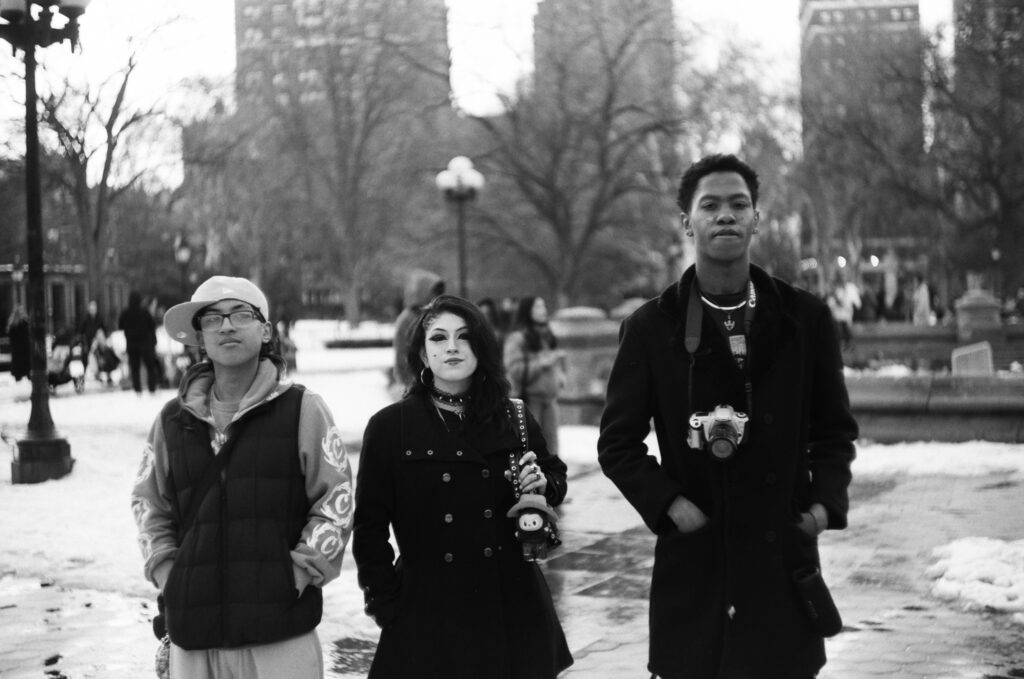
The most dramatic differences emerged at apertures wider than f/2.8. The Summarit began to exhibit its characteristic "swirly" bokeh and a slight softening of the image periphery. This "Leica Glow" provided a poetic, timeless quality to the portraits, making them appear as though they could have been taken decades earlier. In contrast, the Summilux maintained clinical sharpness even at f/1.4, with a "calmer" and more uniform background blur (bokeh) that lacked the optical aberrations of the older lens.

Social Context and Participant Reactions
The evaluation highlighted the sociological aspect of street photography in the "screen era." The presence of vintage film equipment acted as a social catalyst, facilitating connections between the photographer and strangers.

Subject reactions were overwhelmingly positive. Will, the musician, expressed gratitude for the attention and later engaged with the results via social media, illustrating the bridge between analog capture and digital sharing. The encounter with Sire/Siri was particularly noteworthy; her "Backwards Walk" event—a publicized performance art piece—continued regardless of the photographer’s presence, yet the resulting images captured a synergy between the artist’s "happening" and the photographer’s documentation.

Tibi, the large-format photographer, represented the professional community’s perspective. His use of a Linhof 4×5 in a public park underscored a broader trend observed in 2026: a resurgence of interest in tangible, slow-process photography as a counter-movement to the ubiquity of AI-generated and instant digital imagery.

Analysis of Implications
The "Goldilocks Challenge" suggests that the "perfect" lens is not a matter of technical perfection, but of intentional application.

- The Modern Standard: The Summilux 50mm f/1.4 ASPH is the clear choice for photographers requiring reliability, high contrast, and the ability to shoot wide-open in low light without sacrificing detail. It is a "modern workhorse" that excels in commercial-grade street portraiture.
- The Aesthetic Alternative: The 1957 Summarit f/1.5 remains a viable tool for those seeking a specific "vintage vibe." Its lower contrast and unique aberrations offer a "poetic" rendering that modern lenses are often designed to eliminate.
- Film Stock Synergy: The choice of film significantly impacts the lens’s perceived performance. The evaluation noted that Svema 100’s high contrast may overwhelm vintage lenses in direct sun, whereas Ilford Delta 100’s T-grain structure provides a neutral canvas that allows the specific characteristics of the glass to shine.
The results of Day One indicate that while the Summilux is technically superior from f/2.8 to f/1.4, the Summarit holds a distinct advantage for photographers aiming for a "lost film" aesthetic. As the challenge moves into its second day—comparing the Summitar and the Summicron—the focus will shift to whether the mid-century "Goldilocks" sweet spot lies in the evolution of these legendary 50mm optics. This field test reaffirms that in the mid-2020s, the value of street photography lies as much in the real-time social connection as it does in the final silver-halide print.