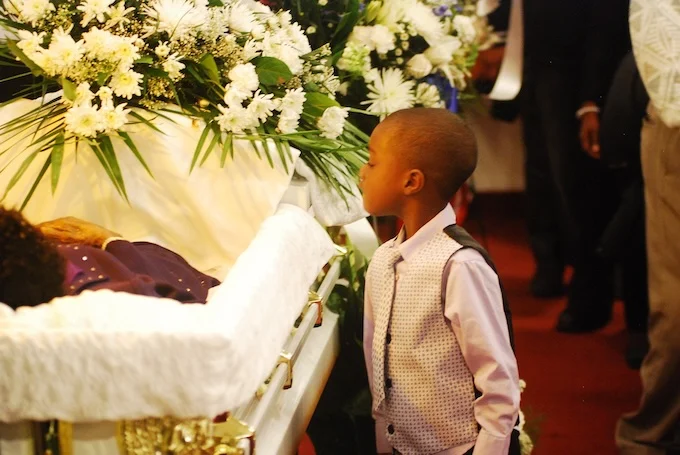
Funeral photography, a genre that once held a prominent place in Victorian society before fading into modern-day taboo, is experiencing a quiet resurgence as a vital tool for processing grief. Photographer Duane Knight of Your Legacy Photography is at the forefront of this movement, advocating for the practice as an artistic medium that facilitates healing. Knight estimates that fewer than 50 funeral photographers are currently active worldwide, a stark contrast to its historical prevalence. He is actively working to change this landscape by educating fellow photographers on how to incorporate this sensitive yet essential service into their offerings.
Remembrances of Those We Love: Capturing Fleeting Moments
Many photographers have encountered clients or their families who express profound gratitude for portraits of loved ones who have since passed away, often noting these images were the only suitable ones available for display at funeral services. However, the potential for photography to actively aid in the grieving process during the funeral itself is a less explored, yet equally significant, aspect. Duane Knight, who has created approximately 150 "Legacy Funeral Albums" over the past decade, highlights the unique emotional environment of funerals.

"Families often travel from across the country, and sometimes from around the globe, to come together and celebrate the life of a departed loved one," Knight explains. "Yet, in the whirlwind of emotions, it’s not uncommon for those closest to the deceased to struggle to recall who was present. The intensity of grief can make retaining the details of the day incredibly challenging." He draws a parallel between funerals and other significant life events like weddings, birthdays, and christenings, all of which serve as temporary convergences for extended family and friends. A carefully curated funeral album, Knight posits, becomes an invaluable keepsake, a memento not only of the departed but also of the collective presence of those who gathered to mourn and remember. For individuals unable to attend, receiving such an album can serve as a crucial link, fostering a sense of inclusion and connection to the shared experience of loss and remembrance.
The historical context of funeral photography provides a fascinating backdrop to its modern-day perception. During the Victorian era, particularly in the mid-to-late 19th century, death was a more visible and integrated part of daily life. With advancements in photographic technology making cameras more accessible, memorial photography, including post-mortem portraits, became a common practice. This was often driven by the desire to preserve a final image of a loved one, especially in an era where infant mortality and disease claimed many lives prematurely. These photographs served as tangible connections to the departed, offering solace and a means of remembrance for grieving families. The advent of the snapshot and the increasing focus on celebrating life rather than dwelling on death in the 20th century, coupled with evolving cultural sensibilities and privacy concerns, gradually pushed funeral photography to the fringes of societal acceptance.
Taboo or Treasured Memories: Navigating Cultural Perceptions
Knight acknowledges the deeply ingrained cultural nuances surrounding funeral photography. "The acceptance of photographing funerals is undeniably a cultural phenomenon," he states. "In some cultures, the idea is met with resistance, viewed as taboo. Within any given group of ten individuals, you might find two or three who are receptive to the concept." Despite these varying perspectives, Knight, through Your Legacy Photography, is committed to providing this service to those who desire it. His core philosophy is rooted in the preservation of memories, asserting with conviction that "all families who want funeral photography should have the opportunity to get it."

This dedication stems from a deep understanding of the finality that death represents and the desire to offer a tangible, artistic record of a life and its final farewell. While some may view it as intrusive, Knight sees it as an act of profound empathy and a means of offering comfort through documentation. The very act of documenting a funeral can be an act of validation for the grief being experienced, assuring families that their loss is witnessed and remembered.
Funeral Photography Education: Cultivating a New Generation of Practitioners
In his mission to broaden the availability and understanding of funeral photography, Knight is actively engaged in educating other photographers. He has become a visible presence at numerous photography conferences, including the prestigious WPPI (Wedding & Portrait Photוגרפיה) Expo in Las Vegas. His goal is to demystify the genre, share his expertise, and encourage photographers to consider adding this sensitive yet rewarding specialization to their portfolios.
Knight’s approach to teaching funeral photography emphasizes sensitivity, discretion, and a deep respect for the solemnity of the occasion. He advocates for a style that is unobtrusive, focusing on capturing candid moments of connection, quiet reflection, and the tangible expressions of love and support exchanged between attendees. This often involves understanding family dynamics, respecting religious or cultural customs, and anticipating key moments without being intrusive. He teaches photographers to be observers, to anticipate the flow of the service, and to capture the subtle gestures and interactions that often hold the most emotional weight.

His visibility at events like WPPI is marked by distinctive attire designed to spark conversation: a hat emblazoned with "I Love Funeral Photography" and a vest that reads "Ask Me about the Art of Funeral Photography." This bold approach is not intended to be provocative but rather to serve as an icebreaker, inviting dialogue and addressing potential misconceptions. By openly discussing his work, Knight aims to normalize the conversation around funeral photography and highlight its therapeutic benefits.
The implications of Knight’s educational efforts extend beyond individual photographers. As more professionals become trained and comfortable in this niche, the availability of compassionate and skilled funeral photographers will increase. This could lead to a gradual shift in societal perception, moving away from outright taboo towards a more nuanced understanding of its value. The accessibility of such services could provide a much-needed avenue for memorialization for a wider range of individuals and families, particularly those who may not have previously considered it an option or who face cultural barriers.
The broader impact of this movement could also influence how grief is understood and supported within communities. By validating the need for tangible remembrance, funeral photography can contribute to a culture that acknowledges and supports the grieving process more openly. It offers a way to bridge the gap between the immediate aftermath of loss and the long-term process of healing, providing a visual anchor for memories that might otherwise fade.

A Legacy of Remembrance: The Broader Implications
The resurgence of funeral photography, championed by individuals like Duane Knight, speaks to a deeper human need for remembrance and connection, even in the face of profound loss. While the Victorian era may have approached it with a different cultural context, the underlying sentiment—to capture and hold onto the essence of a loved one—remains constant. Modern funeral photography, however, has evolved to focus not just on the deceased but on the living’s collective experience of grief and support.
The limited number of active funeral photographers worldwide suggests a significant unmet need. This scarcity can lead to families being unable to access this service, or worse, settling for inadequate or inappropriate photographic documentation during an incredibly vulnerable time. Knight’s mission to educate and expand the field is therefore not merely about promoting a photography niche, but about providing a valuable service that can contribute to emotional well-being.
The analysis of this trend suggests that as society becomes more open to discussing mental health and emotional well-being, the arts are increasingly recognized as therapeutic modalities. Funeral photography, when practiced with sensitivity and artistry, can be viewed as a form of art therapy, offering a unique way for individuals to externalize and process their emotions. The creation of a physical album, a tangible collection of images, can provide a sense of continuity and connection, helping to ground families during a period of immense upheaval.

Furthermore, the increasing prevalence of digital media and social platforms has also subtly shifted how memories are preserved. However, in the context of profound grief, the curated, intentional nature of a professional funeral album offers a different kind of solace – one that is deliberate, respectful, and designed for enduring personal reflection rather than ephemeral online sharing.
Duane Knight’s dedication to this field, his proactive approach to education, and his distinctive public persona are all instrumental in challenging established norms. By making himself visible and approachable, he invites conversations that can lead to greater understanding and acceptance. The art of funeral photography, therefore, is not just about capturing images; it is about facilitating a crucial step in the journey of healing, ensuring that memories are not lost to the passage of time or the fog of grief, but are instead preserved, cherished, and transformed into a lasting legacy.
For those interested in learning more about this practice or seeking its services, Duane Knight’s website, YourLegacyPhotography.com, his Instagram account @funeral.photos, and his contact information are readily available. His presence at future events like WPPI in Las Vegas promises continued advocacy and education, paving the way for funeral photography to reclaim its place not as a taboo, but as a treasured and vital component of remembrance and healing.