The recently concluded 2026 FIFA World Cup, hosted across 16 cities in the United States, Canada, and Mexico, captivated billions not only with its expanded format and thrilling matches but also with an unprecedented integration of cutting-edge technology. This tournament, marking the first time 48 teams competed for football’s ultimate prize, served as a global showcase for innovations designed to bring fans closer to the action than ever before, fundamentally redefining the sports broadcasting experience. From dynamic aerial perspectives to the intimate viewpoint of referees and cinematic close-ups, the technological advancements implemented by Host Broadcast Services (HBS) and FIFA transformed the event into a visually spectacular and analytically rich spectacle.
A New Standard for Fan Engagement
The 2026 World Cup, with its increased number of matches (104, up from 64 in 2022) and host cities, presented significant logistical and technological challenges. FIFA and HBS responded by deploying a sophisticated array of cameras, data analytics tools, and broadcast infrastructure, aiming to leverage technological innovation to enhance both the viewing experience and the integrity of the game. The overarching goal was to provide minute-by-minute updates and insights, offering fans a deeper understanding and appreciation of the sport.
Evolution of Aerial Perspectives: The Advanced Spidercam Network
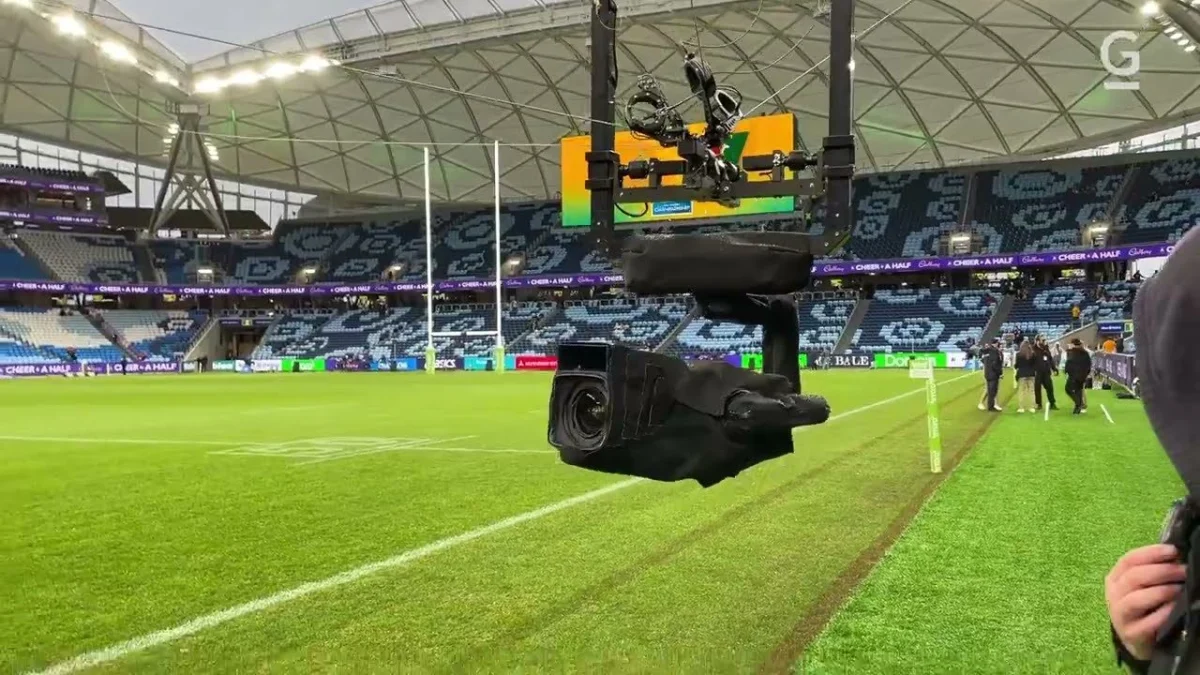
Among the most visually striking innovations was the significantly enhanced deployment of Spidercam systems. While aerial cable cameras have been a staple in major sporting events for years, their integration at the 2026 World Cup reached new heights of sophistication and real-time utility. These high-tech, stabilized camera rigs, suspended by a network of motorized Kevlar cables, offered sweeping, three-dimensional views of the pitch, previously reserved for pre-match ceremonies or post-goal celebrations.
For the 2026 tournament, safety and player distraction concerns were mitigated by advanced software zoning, ensuring the rigs maintained a strict safe altitude and trajectory above the field of play. This allowed Spidercams to be actively integrated into live play, capturing tactical angles of unfolding attacks and defensive formations from perspectives previously impossible. A particularly groundbreaking application was their deployment during penalty shootouts, where cameras dynamically positioned themselves behind or slightly above the kicker, capturing the intense psychological tension, the goalkeeper’s precise movements, and the ball’s trajectory with unprecedented intimacy. This marked a significant departure from previous tournaments, where such active in-play use was largely restricted.
Host Broadcast Services (HBS), the company responsible for producing the international television and radio feeds of the World Cup, introduced multiple cablecam systems per venue following successful trials at the 2025 Club World Cup Final. Beyond the traditional 4-point Spidercam moving in three-dimensional space, select marquee stadiums featured secondary, high-speed point-to-point cable cameras running parallel to the touchline. This multi-camera aerial setup enabled simultaneous, multi-angle tracking of fast-break counters, providing broadcast directors with an expanded toolkit for dynamic storytelling.
These next-generation rigs were outfitted with ultra-lightweight 4K HDR broadcast cameras, paired with real-time augmented reality (AR) graphics tracking. This allowed live statistics, player speeds, and tactical grids to be overlaid seamlessly onto the aerial feed with virtually no latency, transforming raw footage into an information-rich visual experience. The result was a viewing experience that blurred the lines between traditional sports broadcasting and high-budget cinematic production, offering the tactical clarity often associated with video games alongside the high-stakes drama of a blockbuster film.
Referee’s Eye View: The Revolutionary RefCam

Perhaps the most talked-about innovation of the 2026 World Cup was the official global deployment of the RefCam. This small, high-definition camera, mounted directly onto each referee’s headset, provided viewers with a literal, immersive point-of-view perspective of the match. Developed jointly by FIFA’s football technology team and its refereeing department, with advanced AI stabilization provided by partners such as Lenovo, this body camera delivered footage unlike anything fans had previously witnessed.
The RefCam plunged viewers directly into the heart of the action, showcasing the blistering speed at which players close space, the chaotic nature of a crowded penalty box scramble, and the intense, split-second decision-making inherent in officiating. This technology had undergone rigorous testing, notably at the 2025 Club World Cup and in various domestic leagues, including the Premier League, where Australian referee Jarred Gillett first wore one in 2024. Its official global deployment across all 104 matches of the 2026 tournament represented a significant leap, offering an unparalleled insight into the demands and challenges faced by match officials.
A FIFA spokesperson noted the RefCam’s success: "The RefCam isn’t just a gimmick; it’s a window into the referee’s world. It helps fans understand the speed, the angles, and the split-second nature of decisions, fostering greater empathy and reducing speculation. The real-time AI stabilization was crucial to ensure a smooth, watchable feed, even with the dynamic movements of the referee." This technology not only enhanced fan engagement but also served as a valuable tool for referee training and post-match analysis.
Cinematic Storytelling: The Rise of Cine Cameras in Live Broadcast
Building on trends observed since the 2022 World Cup in Qatar, FIFA further integrated high-end cinema cameras into its live broadcasts for the 2026 tournament. These are the same sophisticated cameras and lenses utilized by crews for Hollywood movies, television dramas, and high-budget music videos, offering a visual aesthetic traditionally distinct from standard sports broadcasting.
The primary advantage of these cinematic cameras lies in their ability to deliver a super-shallow depth of field and superior dynamic range, capabilities that conventional broadcast cameras struggle to match. This allows for breathtaking, artistic shots: a player’s face rendered with razor-sharp focus against a beautifully blurred background, dramatic close-ups of coaches reacting intensely on the sideline, or the raw emotion of fans captured with exquisite detail. For the 2026 World Cup, these rigs became a permanent fixture at every match, capturing pre-game tunnel walks, emotional fan reactions, and moody, character-driven close-ups that elevated the storytelling beyond mere match coverage.
The deployment of professional-grade cinema cameras, such as the RED Komodo-X 6K paired with high-performance lenses like the Canon RF 24-105mm f/2.8L, transformed the viewing experience into a blockbuster event. This strategic choice underscored FIFA’s commitment to blending the raw energy of live sport with the polished artistry of cinematic production, aiming to engage a broader audience with a more visually compelling narrative.
Enhancing Fairness and Insight: Semi-Automated Offside Technology and Sensor Balls
Beyond visual enhancements, the 2026 World Cup also saw the continued refinement and expanded application of technologies aimed at improving officiating accuracy and providing deeper statistical insights. Semi-Automated Offside Technology (SAOT), first introduced at the 2022 World Cup, matured significantly. This system utilizes 12 dedicated tracking cameras mounted beneath the stadium roof, which track 29 data points on each player’s body 50 times per second. This detailed data allows computer systems to reconstruct plays in a 3D space, providing near-immediate visual feedback on offside decisions.
The official match ball for the 2026 World Cup was also a marvel of engineering, equipped with an Inertial Measurement Unit (IMU) sensor. This sensor, positioned inside the ball, sends real-time data to the video operation room 500 times per second, accurately detecting the precise moment the ball is kicked. When combined with the player tracking data from SAOT, this system offers unparalleled precision in determining offside infringements. Decisions that previously took minutes for VAR to assess could now be presented to the referee within seconds, significantly streamlining the review process.
Moreover, the data generated by SAOT and the sensor-laden ball enabled more interactive play deductions and replay options for broadcasters, featuring 3D visualizations that offered fans clearer insight into complex decisions. This real-time data also allowed for the display of advanced statistics, such as ball speed, player movement patterns, and distance covered, appearing in near real-time on broadcasts, further enriching the fan experience. Dr. Johannes Holzmüller, FIFA’s Director of Football Technology & Innovation, highlighted the impact: "SAOT has proven its value in accelerating decision-making and ensuring accuracy. For 2026, we’ve refined the algorithms and integrated it even more seamlessly, giving both officials and fans greater confidence in the game’s fairness."
Behind the Scenes: The Arsenal of Production Gear
Bringing the technological spectacle of the World Cup to life required an immense logistical effort and a vast array of high-performance production equipment. While the specifics of every vendor contract remain proprietary, the scale of deployment offers a glimpse into the demands of such a global event. For instance, the collaboration between FIFA, US Soccer, and various technology partners involved the deployment of specialized gear.
High-end cinematic cameras, such as the RED Komodo-X 6K, were paired with versatile lenses like the Canon RF 24-105mm f/2.8L IS USM Z, chosen for their optical quality and suitability for dynamic live environments. On the production side, the ingestion and management of the massive data streams generated by 4K HDR cameras, RefCams, and SAOT systems necessitated robust infrastructure. BlackMagic Design HyperDeck Studio 4K Pro systems were utilized for recording and playback, capable of handling high-resolution video feeds efficiently. The extensive cabling infrastructure, critical for transmitting uncompressed video and data across vast stadiums, relied on high-quality solutions like Belden 12G-SDI BNC cables, some extending up to 150 feet to connect various camera positions and control rooms. Complementary equipment, ranging from professional camera cages and robust tripods to an army of Micro-V Mount batteries, ensured that every piece of technology was powered and supported throughout the demanding tournament schedule. This comprehensive hardware deployment underscored the intricate planning required to deliver a seamless, high-definition broadcast.
Implications and the Future of Sports Broadcasting
The technological leap showcased at the 2026 FIFA World Cup carries significant implications for the future of sports broadcasting and fan engagement. The enhanced immersion, driven by Spidercams and RefCams, offers viewers unparalleled perspectives, fostering a deeper connection to the game and its protagonists. The integration of cine cameras elevates the aesthetic quality, transforming matches into visually stunning narratives. Meanwhile, advancements in officiating technology like SAOT and sensor balls contribute to greater transparency and accuracy, potentially reducing controversial decisions and enhancing the sport’s integrity.
However, the rapid influx of technology into live sports is not without its debates. While many fans and pundits laud the advancements for providing more data, interesting statistics, and previously impossible camera angles, a segment of purists express concerns. They argue that excessive technology could detract from the "purity" and organic flow of the sport, potentially over-analyzing moments that were once left to human interpretation and the unpredictable nature of the game.
Despite these differing viewpoints, the trajectory is clear: technology will continue to find its way into all major sporting events. Future advancements are likely to push the boundaries even further, offering increasingly sophisticated insights, personalized viewing experiences, and even more immersive angles. The 2026 World Cup has set a new benchmark, demonstrating that technology, when thoughtfully integrated, can enrich the beautiful game without compromising its inherent drama and passion, paving the way for an even more connected and engaging future for sports fans worldwide.