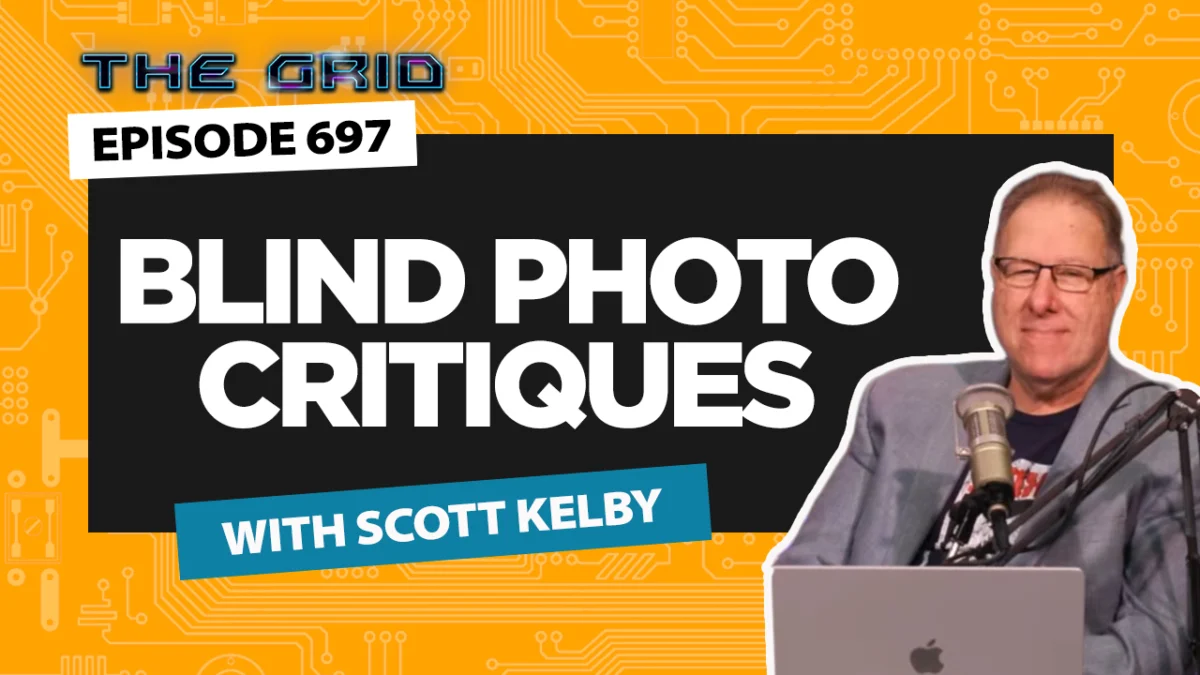
This week, The Grid, a cornerstone program in the digital photography education landscape, presented its 697th episode, featuring renowned photographer, author, and educator Scott Kelby at the helm for another installment of his highly anticipated Blind Photo Critiques. The session offered an insightful and comprehensive review of an extensive array of viewer-submitted images, traversing nearly every conceivable photographic genre. From the nuanced expressions captured in creative portraits to the grandeur of astrophotography, the episode served as a practical masterclass, demonstrating not only the principles of effective visual storytelling but also the transformative power of modern digital editing tools.
The Enduring Appeal of Blind Photo Critiques
The Grid, broadcast globally, has established itself as a vital resource for photographers seeking to refine their craft. The "Blind Photo Critiques" segment, a perennial favorite, distinguishes itself by presenting images to Kelby without any accompanying metadata or information about the photographer. This methodology ensures an objective, unbiased assessment focused solely on the visual merits and technical execution of the photograph itself. This impartiality is crucial, fostering an environment where learning transcends personal bias, allowing viewers to appreciate the universal principles of strong photography, regardless of the creator’s reputation or equipment. For aspiring and seasoned photographers alike, observing Kelby’s analytical process—identifying strengths, pinpointing areas for improvement, and suggesting actionable edits—provides a powerful pedagogical tool that mirrors real-world feedback often sought in workshops or portfolio reviews. The segment underscores the program’s commitment to practical, accessible education, a hallmark of KelbyOne, the educational platform co-founded by Kelby.
A Panoramic View of Photographic Disciplines
The diversity of submissions for this episode underscored the expansive reach and varied interests within the global photography community. Kelby meticulously dissected images from a broad spectrum of genres, each presenting unique challenges and opportunities. Creative portraits, for instance, were evaluated not just for technical sharpness and lighting, but for their ability to convey emotion and personality, exploring elements like pose, expression, and background harmony. Travel photography entries prompted discussions on storytelling, capturing the essence of a place, and navigating challenging lighting conditions often encountered on location. Automotive detail shots highlighted the importance of composition, reflections, and rendering textures, a specialized niche that demands precision. Street scenes provided a canvas for analyzing candid moments, decisive timing, and the interplay of light and shadow in urban environments. Wildlife photography showcased the patience and technical skill required to capture fleeting moments in nature, with critiques focusing on animal behavior, environmental context, and tack-sharp focus. Macro photography pushed the boundaries of detail, exploring depth of field, lighting small subjects, and revealing hidden worlds. Underwater photography, a technically demanding genre, prompted discussions on light refraction, color correction, and environmental considerations. Finally, astrophotography, the most technically complex, involved assessments of long exposures, noise reduction, and the intricate processing required to unveil celestial wonders. This comprehensive review provided a holistic understanding of photographic principles applicable across diverse visual landscapes.
Advanced Digital Editing: A Toolkit for Perfection
A significant portion of the critique segment was dedicated to practical demonstrations of digital editing techniques using industry-standard software: Adobe Lightroom, Camera Raw, and Photoshop. Kelby’s expertise in these applications is well-documented through his numerous best-selling books and workshops, and he effectively translated complex processes into digestible, actionable steps.
One crucial demonstration involved the People Masking tool within Lightroom, a feature that leverages artificial intelligence to intelligently select individual subjects or specific body parts within a portrait. Kelby illustrated its power in recovering overexposed skin, a common pitfall in portraiture, especially in bright conditions. By isolating the skin tones, photographers can precisely reduce highlights, adjust exposure, and refine color balance without affecting other elements of the image. This technique is invaluable for achieving a natural, flattering rendition of subjects, ensuring that skin tones appear smooth and well-exposed, a fundamental aspect of professional portrait work.
Another creative technique showcased was simulating the look of a long exposure with Motion Blur in Photoshop. Traditionally, long exposures are achieved in-camera by using slow shutter speeds, often requiring neutral density filters and a tripod to blur moving elements like water, clouds, or traffic, creating a serene or dynamic effect. Kelby demonstrated how Photoshop’s motion blur filter, when applied judiciously and masked selectively, can replicate this aesthetic, offering a post-production solution for images where a long exposure wasn’t feasible during capture. While acknowledging that in-camera long exposures often yield superior results, this digital alternative provides a powerful tool for artistic interpretation and salvaging shots that might otherwise lack impact.
The discussion then moved to the increasingly prevalent role of generative AI in photography with demonstrations of Generative Expand and Generative Fill. Generative Expand, a feature leveraging Adobe Firefly’s AI capabilities, allows photographers to intelligently extend the canvas of an image, seamlessly filling in new content that matches the existing scene. Kelby showed how this could be used to correct awkward cropping, change aspect ratios for different platforms, or simply create more breathing room around a subject, effectively giving photographers more compositional flexibility after the shot has been taken.
Perhaps the most engaging segment involved Generative Fill, a tool that allows users to add or remove elements from an image simply by typing a text prompt. Kelby’s demonstration highlighted its immense potential—from removing distracting objects with remarkable precision to introducing new elements into a scene. However, with characteristic candor, he also addressed the nascent nature of this technology, observing that the results were "let’s just say not always successful." This frank assessment provided a valuable counterpoint to the widespread hype surrounding AI, reminding viewers that while powerful, these tools are still evolving and require careful human guidance and critical evaluation. It underscored the importance of photographers retaining their artistic vision and discernment, even when leveraging advanced algorithms. The implications of Generative Fill extend beyond simple edits, touching upon questions of photographic authenticity and the blurring lines between captured reality and digital fabrication, topics that continue to be debated within the photographic community.
Beyond the Critiques: Educational Initiatives and Industry Insights
Beyond the technical critiques, Kelby provided updates on several key initiatives, reinforcing his commitment to ongoing photographic education. He shared details on upcoming travel photography workshops through scottkelbyworkshops.com, programs that offer immersive learning experiences in captivating locations, allowing participants to hone their skills under expert guidance in real-world settings. These workshops are a cornerstone of practical photographic development, providing hands-on instruction that complements online learning.
He also discussed his new publication, "The iPhone Photography Book, 2nd Edition," published by Rocky Nook. The release of a second edition for an iPhone photography book highlights the significant and growing role of mobile devices in contemporary photography. As smartphone cameras continue to advance, offering unprecedented quality and convenience, dedicated resources like Kelby’s book become essential for users looking to maximize their mobile imaging capabilities, transforming casual snapshots into compelling photographs. This reflects a broader industry trend where mobile photography is no longer just a casual pursuit but a serious medium for artistic expression and professional work.
Furthermore, Kelby offered a preview of the upcoming Photographing People Conference (kelbyonelive.com), an event dedicated to the nuanced art and technical skills required for capturing compelling images of individuals. Conferences like these serve as vital hubs for community building, knowledge exchange, and skill refinement, bringing together experts and enthusiasts to explore specific genres in depth. Such specialized events provide invaluable networking opportunities and access to the latest techniques and trends in a focused environment.
Despite facing technical issues that kept him off camera, co-host Erik Kuna remained an integral part of the episode, joining the conversation from California via the live chat. His active participation, adding comments and insights throughout the show, underscored the collaborative spirit of The Grid and the dedication of its team to deliver engaging content, even when encountering unforeseen technical challenges. Kuna’s continued involvement highlights the dynamic, interactive nature of live online broadcasts, where audience and co-hosts contribute to the flow of information.
Implications for the Modern Photographer
This particular episode of The Grid served as more than just a critique session; it was a microcosm of the current state of photography, blending traditional principles with cutting-edge digital innovation. The emphasis on real-world critiques and practical editing demonstrations provides an invaluable learning model, illustrating how theoretical concepts translate into tangible improvements. For photographers navigating an increasingly complex landscape of technology and artistic expression, such resources are indispensable. The integration of AI tools like Generative Expand and Generative Fill signals a paradigm shift in post-processing, offering unprecedented creative control but also demanding a new level of critical thinking and ethical consideration from photographers. While these tools democratize advanced techniques, Kelby’s candid feedback on their current limitations reminds the community that human artistic vision and discernment remain paramount. The show’s enduring popularity and the breadth of topics covered underscore the continuous need for education, community, and expert guidance in the ever-evolving world of photography. This episode, packed with actionable insights, reinforces the notion that lifelong learning is not merely an option but a necessity for anyone serious about mastering the art and science of photography.