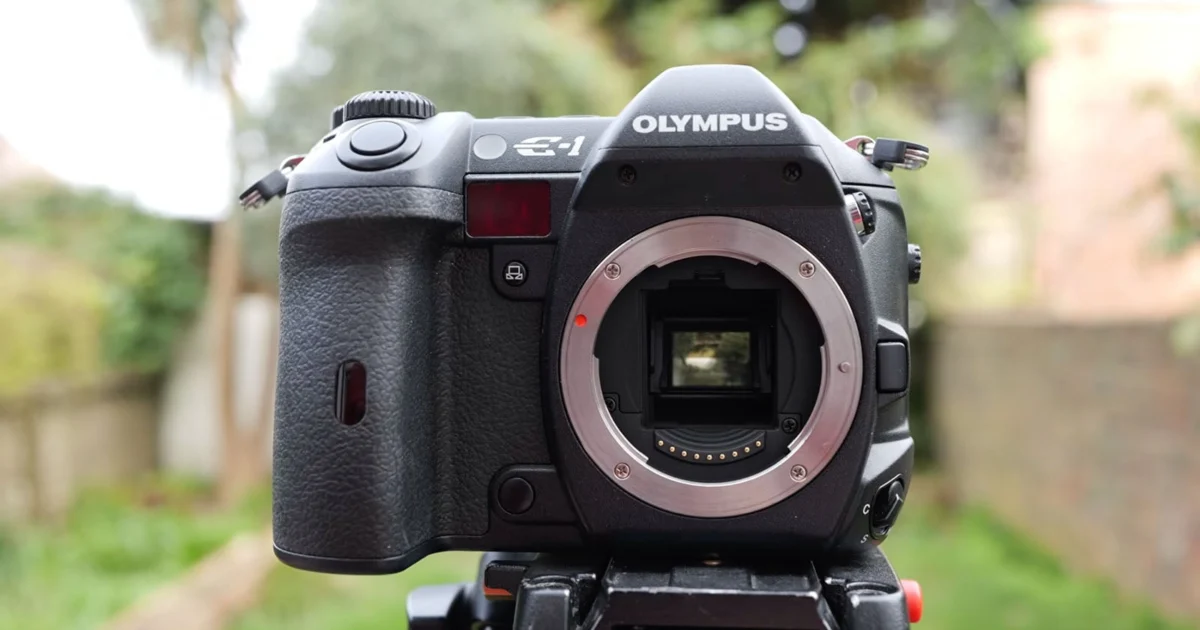
Nearly twenty-three years after its initial launch, the Olympus E-1, a seminal digital single-lens reflex (DSLR) camera, is once again drawing attention, courtesy of a retrospective by acclaimed photography expert Gordon Laing of Cameralabs. Laing’s recent review on his "Dino Bytes" YouTube channel provides a contemporary perspective on this historical camera, which stood as a testament to a unique vision for digital photography: the Four Thirds system. While most photographers are intimately familiar with the subsequent Micro Four Thirds standard, its DSLR predecessor, developed by Olympus and Eastman Kodak five years prior, represents a crucial, albeit short-lived, chapter in the evolution of digital imaging. The E-1’s re-examination underscores its groundbreaking design principles and its enduring, if sometimes overlooked, legacy in an industry continually driven by innovation and technological shifts.
A Bold Vision for Digital: The Birth of Four Thirds
The early 2000s marked a pivotal transition for photography, as digital technology rapidly began to supplant traditional film. During this period, major camera manufacturers like Canon and Nikon, while actively embracing digital SLRs, primarily adapted their existing 35mm film lens mounts and optical designs for digital sensors. This approach, while facilitating a smoother transition for existing users and lens inventories, often resulted in compromises, such as varying "crop factors" and lenses not fully optimized for digital sensor characteristics. It was against this backdrop that Olympus and Eastman Kodak embarked on a radically different path, conceiving a new DSLR format designed exclusively for digital capture from the ground up.
The Olympus-Kodak Alliance and a New Standard
The collaboration between Olympus, a company with a rich heritage in optics and camera design, and Eastman Kodak, an undisputed pioneer in photographic film and digital sensor technology, was announced in 2002. Their joint endeavor aimed to establish an open digital SLR standard that addressed the unique requirements of digital imaging. This "Four Thirds System" was not merely a new camera model but a comprehensive platform encompassing sensor size, lens mount specifications, and communication protocols, intended to offer an optimized and cohesive digital experience. The fundamental premise was to shed the constraints of 35mm film dimensions and design a system where every component, from the sensor to the lens mount and the optics, was purpose-built for the digital era.
Defining a Digital Standard: The Four Thirds Philosophy
The core innovation of the Four Thirds system lay in its sensor size and aspect ratio. Measuring approximately 18 x 13.5 millimeters, the sensor adopted a 4:3 aspect ratio, which was more aligned with early digital displays and print sizes compared to the 3:2 ratio of 35mm film. This seemingly minor detail had profound implications for lens design, allowing for smaller image circles and, consequently, more compact and lighter lenses. Unlike competitors who were adapting film-era mounts, the Four Thirds mount boasted a shorter flange distance and a wider diameter relative to its sensor size, offering greater flexibility for optical engineers to design lenses with superior edge-to-edge sharpness and reduced aberrations specifically for digital sensors. This "digital-first" philosophy was a direct challenge to the incumbent manufacturers and represented a significant conceptual leap in camera design.
The Olympus E-1: Engineering a Pioneer
The culmination of this ambitious project was the Olympus E-1, unveiled in late 2003. It wasn’t just another DSLR; it was a statement camera, embodying the full ethos of the Four Thirds system. Priced at over $2,000 at launch—an equivalent of roughly $4,000 in today’s economy, accounting for inflation—it was positioned as a professional-grade tool.
Groundbreaking Design Philosophy
The E-1’s significance stemmed from its status as the very first digital SLR to feature a lens mount and sensor format engineered solely for digital capture. This meant Olympus did not have to compromise on lens design by attempting to cover a 35mm film frame that was no longer relevant. The system prioritized compactness without sacrificing optical quality, leading to a camera body and a suite of lenses that were notably smaller and lighter than their professional APS-C or full-frame counterparts at the time. This emphasis on a streamlined, integrated system foreshadowed the trends that would dominate mirrorless camera design years later.
Technical Specifications and Innovations
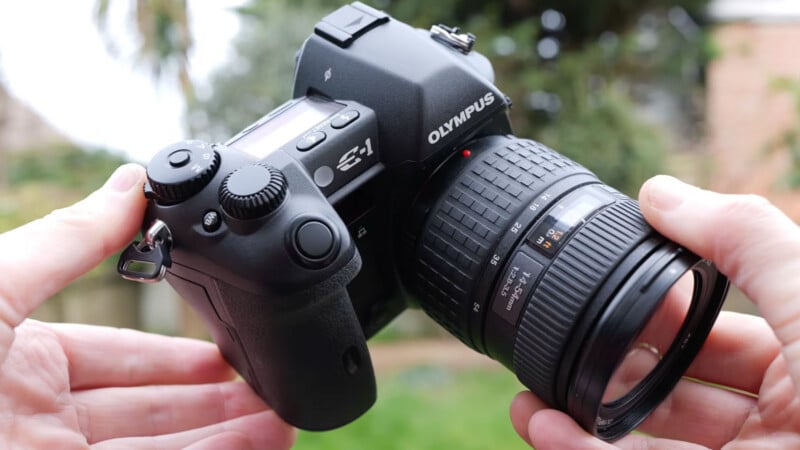
At its heart, the Olympus E-1 featured a 5-megapixel (MP) Kodak-designed CCD sensor. While 5MP might seem modest by today’s standards, it was highly competitive in 2003, especially given the sensor’s inherent image quality characteristics. CCD sensors of that era were often praised for their vibrant color rendition and pleasing tonal qualities, albeit sometimes at the expense of high ISO performance compared to later CMOS sensors. The E-1’s robust build quality was immediately apparent; constructed from a magnesium alloy chassis and featuring extensive weather sealing, it was designed to withstand the rigors of professional use. This "tank-like" durability is a key reason why many E-1 units remain in excellent working condition today, as noted by Laing.
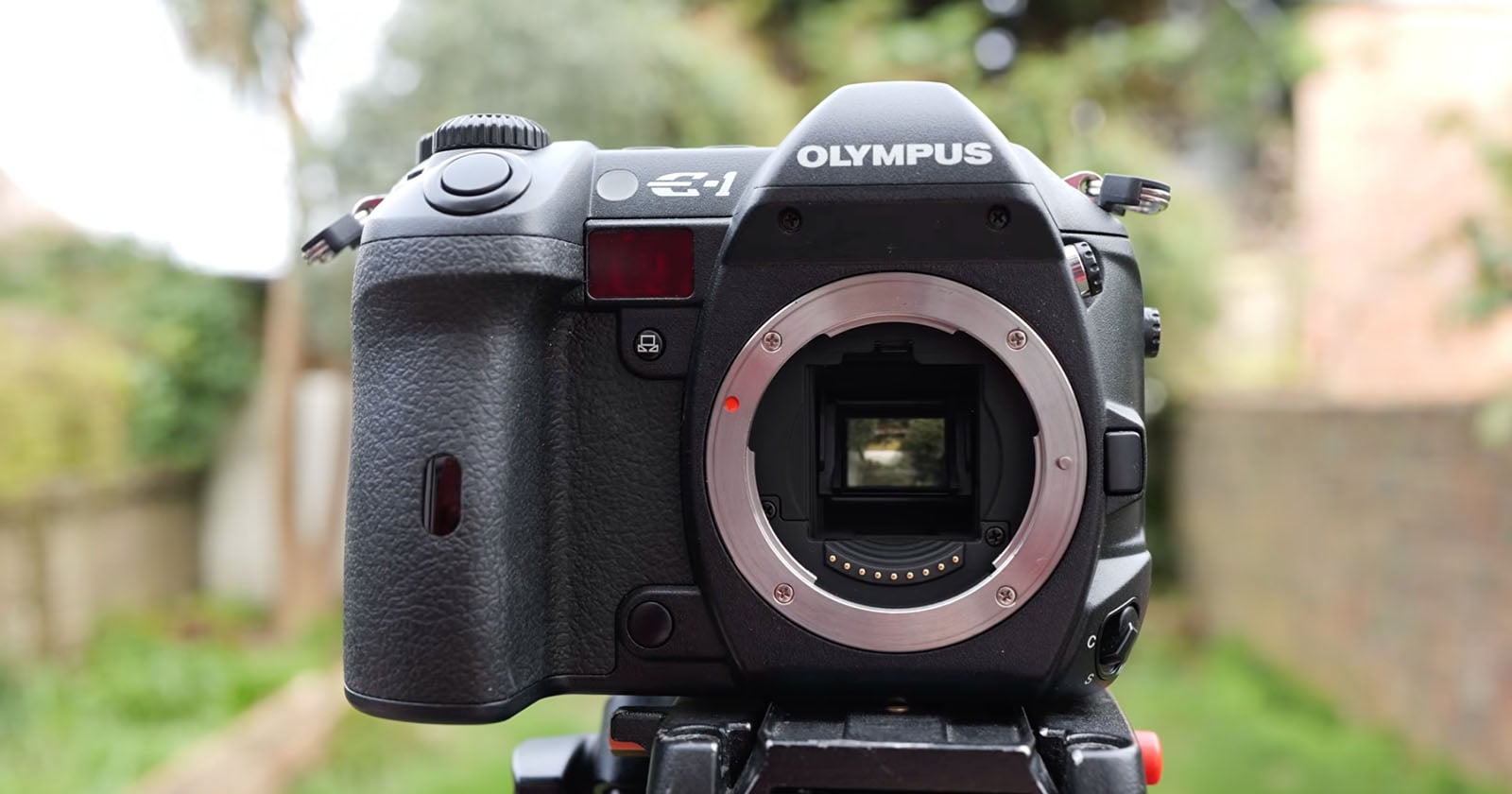
Perhaps one of the most significant, yet often overlooked, innovations introduced with the E-1 was the Supersonic Wave Filter (SSWF) dust reduction system. This pioneering technology, which vibrated a transparent filter in front of the sensor at ultrasonic speeds, effectively dislodged dust particles, a common and persistent problem for interchangeable-lens digital cameras. The SSWF was a game-changer, addressing a major pain point for photographers and subsequently becoming a standard feature across many DSLR and mirrorless systems from various manufacturers. This single innovation alone cemented the E-1’s place as a truly forward-thinking device.
Other features included a professional control layout with dedicated buttons and dials, a bright optical viewfinder, and a sophisticated metering system. While its rear LCD was small by modern standards and lacked live view (a feature that would arrive in the Four Thirds system with the E-330 in 2006), its overall package was geared towards serious photographers seeking a reliable and innovative digital tool.
Market Reception and Pricing
Despite its technological prowess and innovative design, the E-1 faced an uphill battle. The entrenched market dominance of Canon and Nikon, coupled with their extensive lens ecosystems, made it challenging for a new system to gain widespread adoption, especially at a premium price point. While lauded by many reviewers for its build quality, image quality (within its resolution limits), and groundbreaking features like dust reduction, its 5MP resolution and comparatively slower autofocus system (by professional standards of the time) meant it struggled to capture a significant share of the professional market.
The Four Thirds System: Expansion and Evolution
Following the E-1’s ambitious debut, the Four Thirds system saw a period of expansion and refinement, as Olympus and its partners sought to build out the ecosystem.
A Growing Ecosystem
Over the next few years, Olympus released several other Four Thirds cameras catering to different segments of the market:
- Olympus E-300 (2004): A more compact and affordable entry-level DSLR, known for its unique "porro-prism" optical viewfinder design.
- Olympus E-500 (2005): A conventional pentamirror DSLR, further expanding the consumer-oriented offerings.
- Olympus E-330 (2006): A truly revolutionary camera, it was the world’s first DSLR to feature a "Live View" function, allowing users to compose shots directly on the LCD screen—a precursor to mirrorless camera functionality.
- Olympus E-400 (2006): As highlighted by Laing, this model was particularly notable. It was the last Four Thirds camera to feature a CCD image sensor, preserving the distinctive color rendition of that technology. Critically, it was also exceptionally compact and lightweight, often regarded as one of the smallest DSLRs ever made. Its unique blend of features and form factor has made it a sought-after camera by digital photography enthusiasts even today.
- Olympus E-3 (2007): A professional-grade successor to the E-1, boasting improved autofocus, resolution (10MP), and advanced weather sealing, attempting to compete more directly with Canon and Nikon’s high-end offerings.
Beyond Olympus, other manufacturers also embraced the open Four Thirds standard. Panasonic released its first Four Thirds DSLR, the Lumix DMC-L1, in 2006, followed by the Leica Digilux 3, which shared much of the L1’s internal architecture but featured Leica’s distinct aesthetic and lens. Sigma also produced Four Thirds lenses, demonstrating the system’s collaborative spirit.
Key System Advantages
The Four Thirds system consistently delivered on its promise of compact cameras and lenses. Its 2x crop factor (relative to 35mm full-frame) meant that a 50mm lens on a Four Thirds camera provided the field of view equivalent to a 100mm lens on a full-frame camera, making it appealing for telephoto applications where smaller, lighter lenses were a significant advantage. The purpose-built digital lens designs often exhibited excellent sharpness and minimal distortion, benefiting from the optimized optical path.
The Rise of Mirrorless: Micro Four Thirds and the Sunset of its Predecessor
Despite its innovations and a dedicated user base, the Four Thirds system’s lifespan as a primary DSLR standard proved relatively brief. The broader industry was on the cusp of another monumental shift: the advent of mirrorless interchangeable lens cameras.
An Inevitable Evolution
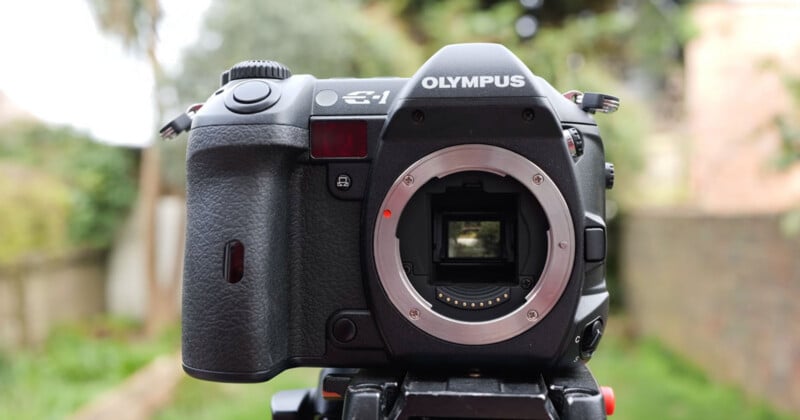
In 2008, Olympus and Panasonic jointly announced the Micro Four Thirds (M43) system. This new standard built directly upon the Four Thirds legacy, retaining the same sensor size and aspect ratio, but crucially, it eliminated the reflex mirror and optical viewfinder assembly. This radical change allowed for significantly smaller camera bodies and even more compact lenses, paving the way for a new generation of cameras that were lighter, more portable, and better suited for video recording and electronic viewfinders. The first Micro Four Thirds cameras, such as the Panasonic Lumix DMC-G1, began appearing in 2009, quickly demonstrating the viability and advantages of the mirrorless concept.
The emergence of Micro Four Thirds directly cannibalized the market for its DSLR predecessor. The benefits of mirrorless—smaller size, often faster and more accurate autofocus for video, and increasingly sophisticated electronic viewfinders—proved irresistible to a growing segment of photographers. While Four Thirds lenses could be adapted to Micro Four Thirds bodies with an adapter, the native M43 lenses were designed to leverage the shorter flange distance, offering superior integration and performance.
The Final Chapters: E-5 and Lens Discontinuation
The final Four Thirds camera, the Olympus E-5, arrived in 2010. While a highly capable and robust professional DSLR, featuring a 12.3MP Live MOS sensor and advanced features, it was clear by this point that the future lay with mirrorless. The E-5 represented a valiant last stand for the Four Thirds DSLR, but the industry’s momentum had shifted irrevocably.
Over the subsequent years, new Four Thirds cameras ceased production, and the focus of both Olympus and Panasonic shifted entirely to the burgeoning Micro Four Thirds ecosystem. While new cameras were no longer being made, Olympus continued to offer and support its range of Four Thirds lenses for a considerable time, acknowledging the investment of its loyal user base. However, in 2017, Olympus officially discontinued its Four Thirds lenses, marking the definitive end of the system’s active commercial life. In total, fewer than 20 Four Thirds camera models were ever released, primarily by Olympus, with contributions from Panasonic and Leica.
The E-1 in Retrospect: A Vintage Experience
Gordon Laing’s recent exploration of the Olympus E-1 provides a valuable contemporary assessment of this vintage digital camera. His experience highlights both the enduring qualities and the limitations of early digital technology when viewed through a modern lens.
Performance in the Modern Era
Laing notes that the E-1’s 5-megapixel Four Thirds sensor, while competitive for its time, undeniably shows its age today. The relatively low resolution means that any significant cropping of images can quickly reveal pixelation and a lack of detail. Furthermore, its performance in challenging lighting conditions, particularly in dim environments, can be a struggle, exhibiting higher noise levels and a more limited dynamic range compared to contemporary sensors. These are common characteristics of early digital cameras, which had not yet benefited from the rapid advancements in sensor sensitivity and noise reduction algorithms.
Nonetheless, Laing’s review also underscores that in the right hands and under optimal conditions, the well-built E-1 is still capable of producing excellent photographs. Its distinctive CCD sensor can render colors with a unique "look" that many photographers find appealing, a quality often romanticized in the current trend of appreciating vintage digital cameras. The tactile experience of its robust controls and the satisfying click of its shutter further contribute to its charm as a photographic tool. For a few hundred dollars today—a mere fraction of its original price—it offers a unique entry point into digital photography history.
The Appeal of Vintage Digital
The resurgence of interest in vintage digital cameras like the E-1 is a growing phenomenon. Enthusiasts are drawn to these older models not necessarily for their cutting-edge performance, but for their historical significance, their unique aesthetic outputs, and the satisfaction of working with cameras that embody a different era of technological development. The E-1, with its professional build and pioneering spirit, fits perfectly into this niche, offering a tangible connection to the early days of the digital SLR revolution.
Enduring Influence: Four Thirds’ Contribution to Photography
Despite its relatively short commercial lifespan, the Four Thirds system, and particularly the Olympus E-1, left an indelible mark on the photographic landscape.
Paving the Way for Mirrorless
The most significant legacy of Four Thirds is undoubtedly its direct influence on the mirrorless revolution. By designing a system specifically for digital, Olympus and Kodak demonstrated the advantages of a smaller sensor and a purpose-built lens mount. The Four Thirds philosophy of compactness, optimized optics, and integrated system design provided the foundational principles that Micro Four Thirds—and indeed, many other mirrorless systems that followed—would adopt and refine. The concept of eliminating the mirror box to achieve a smaller form factor was a logical next step from the Four Thirds blueprint, and the success of M43 stands as a testament to the foresight of its predecessor.
A Testament to Innovation
The Four Thirds system also introduced crucial technological innovations that became industry standards. The Supersonic Wave Filter dust reduction system, first seen in the E-1, was a monumental step forward in camera maintenance and user experience. Its open standard approach, while not leading to widespread adoption by all manufacturers, fostered collaboration and demonstrated a commitment to advancing digital photography beyond proprietary systems.
The challenges faced by Four Thirds—namely, competing with established giants and the rapid evolution of digital technology—highlight the immense difficulty of launching a new camera system. Yet, its innovations, particularly the "digital-first" design and the introduction of critical features like live view and dust reduction, proved to be visionary.
Conclusion
The Olympus E-1, and the Four Thirds system it inaugurated, represents a fascinating and pivotal moment in photographic history. While ultimately supplanted by the mirrorless paradigm, its bold vision for a digital-native camera system, its robust engineering, and its pioneering innovations like the Supersonic Wave Filter have left an undeniable legacy. Gordon Laing’s re-evaluation serves as a timely reminder of this camera’s historical importance and its continued appeal to those who appreciate the foundational steps in digital imaging. The E-1 was more than just a camera; it was a blueprint for the future, a testament to the relentless pursuit of technological advancement that continues to shape the world of photography today. Its story is a compelling narrative of innovation, ambition, and the ever-evolving nature of imaging technology.