
Every photographer, regardless of experience, eventually confronts the challenge of an image that is technically sound—correctly exposed, sharply focused, and well-composed—yet lacks a certain evocative quality, appearing visually flat or unfinished. This pervasive issue highlights a critical aspect of post-processing: the nuanced application of finishing touches. It is in this realm that sophisticated tools distinguish a merely good photograph from a truly stunning one. Skylum’s Luminar Neo, a prominent player in the AI-powered photo editing landscape, addresses this common predicament with its Color Harmony feature, an often-underestimated yet profoundly powerful component designed to infuse images with missing vibrancy and depth. Located within the Professional Tools section, Color Harmony offers photographers a precise suite of controls for refining tone, contrast, and overall color balance, transforming raw captures into compelling visual narratives.
The Evolution of Color Control in Digital Photography
The journey from rudimentary digital darkrooms to today’s highly intelligent photo editing suites has been marked by a continuous quest for more intuitive yet powerful color manipulation tools. Early digital editing software often relied on global adjustments that, while effective for basic corrections, frequently led to compromises across different tonal ranges. The demand for granular control, mirroring the precision achievable in traditional darkroom techniques like dodging and burning, spurred the development of more advanced features. The advent of non-destructive editing and layered adjustments provided significant leaps, but the complexity often remained a barrier for many.
Luminar Neo, introduced by Skylum, represents a newer generation of software that seeks to democratize professional-grade editing through AI assistance and streamlined interfaces. Color Harmony, integrated into Luminar Neo, reflects this philosophy by offering advanced color grading capabilities without overwhelming the user with overly technical parameters. Its inclusion underscores a broader industry trend towards providing accessible tools that allow photographers to achieve highly specific aesthetic outcomes efficiently. Data from industry analysis firms suggests that the global market for photo editing software is projected to grow significantly, driven by a rising demand for tools that offer both creative freedom and operational efficiency, particularly among hobbyists and semi-professionals who desire professional results without extensive training in complex software.

Unpacking Color Harmony: A Suite of Nuanced Controls
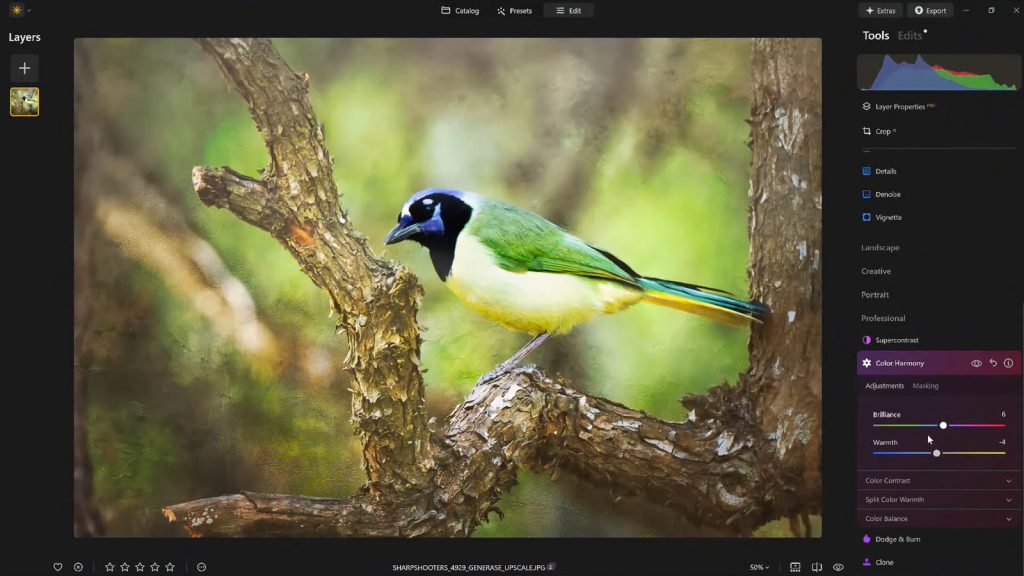
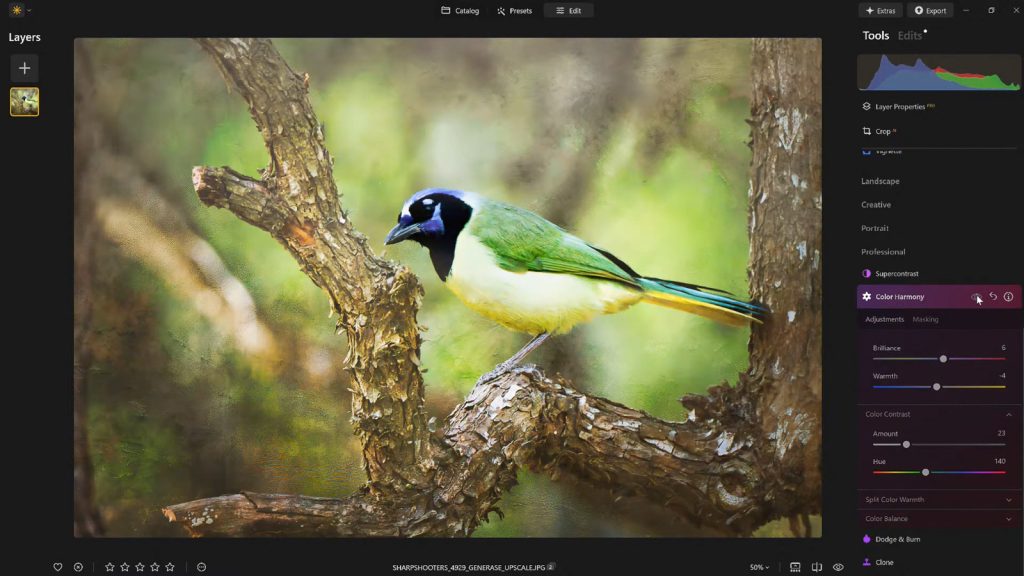
Color Harmony is not engineered for radical, transformative edits; rather, its strength lies in facilitating subtle, interactive adjustments that govern how colors coexist and resonate within an image. The tool comprises several distinct sliders: Brilliance, Warmth, Color Contrast, Split Warmth, and Color Balance. Each element works synergistically to guide the viewer’s gaze, accentuate the primary subject, and forge a cohesive atmosphere that aligns with the scene’s inherent mood and lighting conditions. This modular approach allows photographers to selectively refine specific aspects of an image’s color profile, moving beyond the limitations of broad, saturation-based corrections.
Brilliance and Warmth: The Foundation of Emotional Tone
The journey through Color Harmony often commences with Brilliance. This slider offers a refined alternative to conventional saturation adjustments. While saturation globally intensifies all colors, Brilliance intelligently boosts or reduces the vibrance of colors, primarily by affecting their perceived luminosity, without introducing the harshness or artificiality that over-saturation can cause. A slight increase in Brilliance can imbue colors with a richer, more profound tone, enhancing natural detail and texture. Conversely, over-application can push an image into an unnatural, cartoonish aesthetic. The optimal use of Brilliance typically involves delicate, incremental adjustments, prioritizing a natural yet enhanced appearance.
Following Brilliance, the Warmth slider provides control over the image’s overall color temperature. Shifting the slider to the right introduces a golden, sun-kissed glow, ideal for replicating the mood of a sunrise or sunset. Moving it to the left imparts a cooler, more serene feel, often suitable for overcast days, winter landscapes, or creating a specific dramatic effect. The skillful application of Warmth is paramount to aligning the image’s visual temperature with its emotional resonance. For instance, subtle warmth can imbue a landscape with a sense of inviting depth and atmosphere, while a cooler tone might evoke tranquility or melancholy. The key is to match the warmth or coolness to the desired narrative and existing ambient light, ensuring the adjustment feels organic rather than imposed.

Advanced Controls: Color Contrast and Split Warmth for Depth and Separation
Moving deeper into the Color Harmony tool reveals more specialized controls, such as Color Contrast and Split Warmth, designed for sophisticated manipulation of color relationships. Color Contrast functions by increasing the visual separation between different color ranges, particularly accentuating the distinction between hues present in highlights and shadows. When applied judiciously, this feature significantly enhances depth and allows specific elements within the image to pop, without the risk of over-processing or introducing unwanted artifacts. It operates on the principle that contrasting colors create visual tension, thereby drawing the eye and adding a three-dimensional quality to an otherwise two-dimensional medium. This is particularly effective in landscape photography, where it can differentiate distant mountains from the sky, or in portraits, where it can help separate the subject from the background.
Split Warmth offers an even more granular level of control, allowing photographers to independently adjust the warm and cool tones within an image. This capability is invaluable in complex lighting scenarios, such as mixed lighting conditions where both incandescent and fluorescent sources are present, or in creating distinct color separations within layered compositions. For example, a photographer might use Split Warmth to introduce subtle warmth into the midtones to make skin tones more pleasing, while simultaneously adding a touch of cool to the shadows to enhance depth and mood. While not universally necessary for every image, Split Warmth becomes an indispensable tool for advanced color graders who require precise command over the chromatic balance, enabling them to sculpt the image’s emotional temperature with unparalleled accuracy. Its power lies in its ability to create harmonious or intentionally dissonant color relationships, depending on the artistic vision.
Color Balance: The Pinnacle of Tonal Color Grading
At the apex of Color Harmony’s capabilities lies Color Balance, a feature that provides independent control over the color tones across shadows, midtones, and highlights. This level of segmentation is akin to professional color grading techniques employed in cinema and high-end commercial photography, offering unparalleled precision in shaping the overall atmosphere of an image. By shifting the midtones slightly towards warmer or cooler hues, for example, a landscape can be made to feel more inviting or a portrait can achieve a perfectly neutral and natural appearance. This targeted approach ensures that adjustments are localized to specific tonal ranges, preventing unintended color shifts in other parts of the image.

The ability to manipulate color balance in shadows can add richness and depth, while adjustments in highlights can fine-tune the perception of light and clarity. For instance, introducing a subtle blue tint into the shadows can evoke a sense of coolness or mystery, whereas adding a touch of yellow in the highlights might simulate the glow of an early morning sun. Mastering Color Balance transforms it from a mere correction tool into a potent creative instrument, enabling photographers to impart a consistent color grade across an entire photo series, thereby establishing a cohesive visual style or brand identity. This advanced control empowers artists to dictate the emotional tenor of their work with exacting precision, making it a cornerstone for those serious about their craft.
The Strategic Application of Vignettes for Enhanced Focus
Once the intricate color adjustments are meticulously completed, another powerful yet subtle tool often comes into play: the vignette. A vignette serves as a sophisticated compositional device, designed to gently steer the viewer’s attention towards the primary subject. By delicately darkening the edges of the frame and simultaneously introducing a touch of "Inner Light" in the center, the composition naturally draws the eye inward. This technique effectively creates a visual spotlight, enhancing focus and emphasis without resorting to heavy masking or complex local adjustments.
Historically, vignetting was an optical aberration in lenses, but it has been embraced as an artistic effect for centuries, notably in painting and early photography. In the digital age, it offers a controllable means to manipulate visual hierarchy. When executed thoughtfully, vignetting enhances the narrative of an image without overtly drawing attention to itself. It acts as a quiet but profoundly effective method of directing the viewer’s experience, creating a sense of intimacy, drama, or enclosure around the central theme. The subtlety is key; an overly aggressive vignette can distract rather than enhance, making precise control over its intensity, feathering, and center point crucial for optimal results.
Streamlining Workflow: The Power of Presets
In the dynamic world of digital photography, consistency and efficiency are paramount, especially for professionals managing large volumes of images. After dedicating time and effort to "dial in" a perfect look using Color Harmony and other tools, saving the resultant settings as a custom preset becomes an invaluable practice. This workflow not only guarantees a consistent editing style across a series of images but also preserves the ability to revisit and refine that specific aesthetic at any future point. Reapplying a saved preset to the same image—or to others captured under similar conditions—provides an immediate, high-quality baseline for subsequent edits, significantly accelerating the post-processing workflow.
Furthermore, the strategic use of presets offers a critical advantage in combating "editor’s fatigue." It is a common experience for photographers to meticulously edit an image, only to discover after a break that certain adjustments might have been pushed too far. With a saved preset, the original effect can be reapplied at a reduced strength—for instance, 70-80%—allowing for a fresh perspective and enabling nuanced corrections. This iterative refinement process maintains the core aesthetic while mitigating any potential over-editing. This approach not only enhances creative control but also instills a greater sense of confidence in the final output, reinforcing the importance of a structured and reproducible editing methodology. Skylum’s commitment to user-friendly workflows is evident in how seamlessly presets can be created and managed within Luminar Neo, empowering photographers to develop their unique visual signatures efficiently.
The Broader Impact and Implications for Photographers
The integration of advanced yet accessible tools like Color Harmony within platforms like Luminar Neo carries significant implications for the broader photography community. Historically, sophisticated color grading techniques were often confined to high-end professionals with extensive knowledge of complex software and color theory. By packaging these capabilities into an intuitive interface, Skylum democratizes advanced image refinement. This allows a wider spectrum of photographers—from aspiring enthusiasts to seasoned semi-professionals—to achieve results previously requiring specialized expertise or significant time investment.
This trend toward AI-assisted, user-friendly advanced editing tools is reshaping the educational landscape for photographers. While fundamental principles of light, composition, and color theory remain essential, the technical barriers to executing complex post-processing visions are diminishing. This shift empowers photographers to focus more on their creative vision and storytelling, knowing that the tools are available to translate that vision into reality efficiently. Industry experts suggest that the continued development of such intelligent features will further blur the lines between amateur and professional output, elevating the overall quality of photographic content across various platforms.
Conclusion: The Art of the Invisible Touch
What truly elevates a compelling image beyond mere technical proficiency is frequently not a dramatic, overt alteration, but rather a collection of carefully considered, subtle enhancements. Luminar Neo’s Color Harmony, when combined with judicious vignetting and a thoughtful, iterative editing approach, epitomizes this philosophy. These tools collectively add layers of depth, inject emotion, and foster visual cohesion, transforming a functional photograph into a piece of art that resonates with the viewer.
For photographers who aspire to impart a professional polish to their work without succumbing to the pitfalls of overprocessing, the finishing tools embedded within Luminar Neo offer an exquisite balance of precise control and expansive creative freedom. They represent a significant advancement in making sophisticated color grading accessible, enabling artists to perfect their visual narratives with an "invisible touch" that speaks volumes. Skylum continues to position Luminar Neo as a robust solution for modern photographers, evidenced by features designed to enhance both creative expression and workflow efficiency. As an added benefit for those ready to explore these capabilities, a 10% discount on Luminar Neo is available using the code NATURETTL at checkout, encouraging a broader adoption of these powerful editing solutions.
About the Author: Vanelli
Vanelli, a distinguished figure in the photography and education sectors, currently serves as the Director of Education at Skylum. Based in Florida, his diverse career trajectory notably includes transitioning from a Triple Crown Karate champion to a revered educator in visual arts. With an extensive skill set, Vanelli is instrumental in developing comprehensive educational content and courses focused on photo editing, guiding numerous industry leaders in the process. He is a highly sought-after speaker, regularly delivering engaging presentations on photography at major conferences worldwide. Vanelli’s significant contributions to the field are also evident through his insightful articles, impactful educational videos, and his role as host of the widely acclaimed Luminar Coffee Break show, all of which underscore his profound influence on contemporary digital photography practices.