The Technological Evolution of the GEPRC MARK Series
The journey toward the GEPRC MARK5 DC HD O3 FPV is rooted in the rapid evolution of the FPV (First-Person View) industry over the last decade. Historically, pilots were forced to choose between lightweight analog systems, which offered low latency but poor image quality, and heavy "cinewhoop" or "five-inch" builds that carried secondary action cameras like GoPros. The introduction of the DJI Digital FPV system in 2019 began to bridge this gap, but it was the 2022 release of the DJI O3 Air Unit that truly revolutionized the sector.
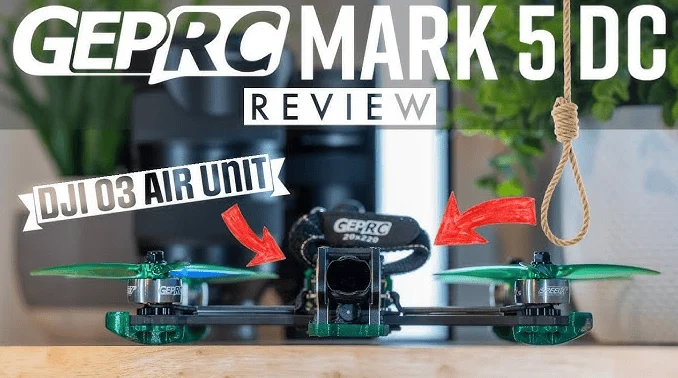
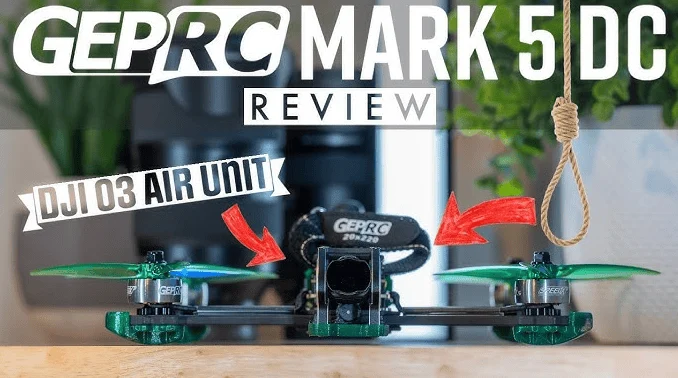
GEPRC, a manufacturer known for high-precision engineering, responded to this technological shift by iterating on its MARK series. The MARK4 was a staple for freestyle enthusiasts, known for its durability. However, with the MARK5, the company introduced a more modular and reinforced structure. The "DC" or DeadCat variant was developed specifically for those who demanded "clean" footage—ensuring that the high-definition lens of the O3 unit remains unobstructed by the spinning propellers during aggressive maneuvers or wide-angle captures.
Engineering Excellence: The DeadCat Frame and Structural Integrity
At the heart of the GEPRC MARK5 DC HD O3 FPV is its frame, constructed from high-strength 3K carbon fiber. The frame design utilizes a 5mm arm thickness, providing the necessary rigidity to handle the high-torque demands of modern brushless motors while remaining resilient against the inevitable high-velocity impacts associated with freestyle flight.
The DeadCat (DC) geometry is the defining feature of this model. Unlike a traditional "X" or "Squashed X" frame where the motors are equidistant from the center, the DC configuration pushes the front arms outward and backward. This adjustment ensures that even at the widest 155-degree field of view provided by the O3 camera, the propellers do not enter the frame. This structural choice is critical for professional media production, as it eliminates the need for post-production cropping, thereby preserving the full 4K resolution and sensor data.
Furthermore, the frame incorporates a unique aluminum alloy side plate design. These 7075-T6 aircraft-grade aluminum components serve a dual purpose: they protect the sensitive DJI O3 camera from lateral impacts and act as a heat sink, facilitating better thermal management for the internal electronics during prolonged flights.
The DJI O3 Air Unit: A Paradigm Shift in Onboard Imaging
The integration of the DJI O3 Air Unit is the primary catalyst for the MARK5’s market dominance. This system functions as both the pilot’s primary flight link and the high-resolution recording device. Equipped with a 1/1.7-inch CMOS sensor, the O3 unit is capable of recording 4K video at 60 frames per second (fps) with a maximum bitrate of 50Mbps.
For cinematographers, the inclusion of the D-Cinelike color profile is a vital feature. It allows for a wider dynamic range and greater flexibility during the color-grading process in post-production. Additionally, the unit supports DJI’s RockSteady electronic image stabilization (EIS), which works in tandem with the drone’s flight controller data to produce buttery-smooth footage that mimics the stability of a handheld gimbal, even while the drone is performing 360-degree flips or power loops.
The transmission system utilized is DJI’s O3+, which offers a significant upgrade in link stability. With a maximum range of up to 10 kilometers (under FCC regulations) and a low-latency 1080p/100fps live feed, the pilot can navigate complex environments—such as abandoned buildings or dense forests—with a level of visual clarity that was previously impossible.
Propulsion and Flight Control Dynamics
To maintain the performance expected of a 5-inch freestyle drone, GEPRC has outfitted the MARK5 with the SPEEDX2 2107.5 motors, typically rated at 1960KV for 6S battery configurations. These motors are engineered for efficiency and explosive power. The 1960KV rating is optimized for 22.2V (6S) LiPo batteries, providing a high power-to-weight ratio that allows the drone to recover quickly from dives and maintain high speeds in straight-line sprints.
The electronic "brain" of the aircraft is the GEP-F722-45A AIO (All-in-One) flight controller. By integrating the F722 processor with a 45A BLHeli_32 ESC (Electronic Speed Controller), GEPRC has reduced the overall weight and simplified the internal wiring. The F722 chip provides ample processing power to run the latest Betaflight firmware features, including bi-directional DShot and advanced PID tuning, which are essential for achieving the "locked-in" flight feel that professional pilots demand.
Industry Analysis: Impact on the Professional Media Landscape
The emergence of drones like the GEPRC MARK5 DC HD O3 has fundamentally altered the economics of aerial cinematography. Previously, capturing high-speed, close-proximity FPV footage required a specialized team and expensive, custom-built rigs capable of carrying a RED or Arri camera. While those high-end rigs still have their place, the MARK5 allows smaller production houses and independent creators to achieve "Hollywood-style" shots at a fraction of the cost.
Industry analysts have noted a surge in the use of 5-inch FPV drones in commercial advertisements, music videos, and automotive journalism. The ability of the MARK5 to transition from a slow, sweeping cinematic shot to a high-speed chase within the same flight battery makes it an incredibly versatile tool. The "Ready-to-Fly" (RTF) and "Bind-and-Fly" (BNF) nature of the GEPRC offering also means that the barrier to entry is lower; pilots can spend less time soldering and more time honing their flight skills.
Operational Protocols and Maintenance
Despite its advanced features, the GEPRC MARK5 DC HD O3 FPV requires a disciplined approach to operation. Experts recommend the use of 6S LiPo batteries with capacities ranging from 1300mAh to 1500mAh. This range provides an optimal balance between flight time—typically 5 to 8 minutes depending on throttle management—and agility.
Thermal management is another critical consideration. The DJI O3 Air Unit generates significant heat, especially when recording at 4K 60fps while the drone is stationary. GEPRC has addressed this with the aforementioned aluminum plates, but pilots are advised to minimize "ground time" once the unit is powered on to prevent thermal throttling or emergency shutdowns.
For maintenance, the modularity of the MARK5 frame is a significant advantage. The "independent arm" design allows for a single arm to be replaced in the event of a break without necessitating a complete teardown of the electronics. This feature is highly valued by freestyle pilots who frequently push their equipment to the limit in "bando" (abandoned building) environments.
Chronology of Market Reception and Updates
Since its initial debut, the GEPRC MARK5 series has undergone several subtle refinements. Early adopters noted the need for better vibration isolation for the O3 camera, which led to the development of improved TPU (Thermoplastic Polyurethane) mounts that decouple the camera from the frame’s high-frequency vibrations.
In mid-2023, GEPRC expanded the compatibility of the MARK5 to include various receiver protocols, such as TBS Crossfire and ELRS (ExpressLRS), acknowledging the FPV community’s shift toward long-range and high-refresh-rate radio links. This move ensured that the drone could be integrated into almost any existing pilot ecosystem.
Future Implications and Concluding Summary
The GEPRC MARK5 DC HD O3 FPV is more than just a consumer product; it is a testament to the maturation of the FPV industry. As digital transmission continues to improve and flight controllers become more intelligent, the line between "toy" drones and professional cinema tools continues to blur.
Looking forward, the success of the MARK5 suggests a trend toward even greater integration. We can expect future iterations to feature even more compact electronics, perhaps incorporating AI-assisted obstacle avoidance or enhanced autonomous "return-to-home" features that do not compromise the manual control freestyle pilots cherish.
In conclusion, the GEPRC MARK5 DC HD O3 FPV stands as a definitive achievement in drone engineering. By combining the "clean" visual field of the DeadCat frame, the industrial-grade durability of 3K carbon fiber, and the cutting-edge optics of the DJI O3 system, it provides an unparalleled platform for modern aerial storytelling. For the professional videographer, it is a reliable workhorse; for the freestyle enthusiast, it is a high-performance instrument of expression. As the FPV landscape continues to evolve, the MARK5 remains a pivotal reference point for what a modern, high-definition FPV drone should be.