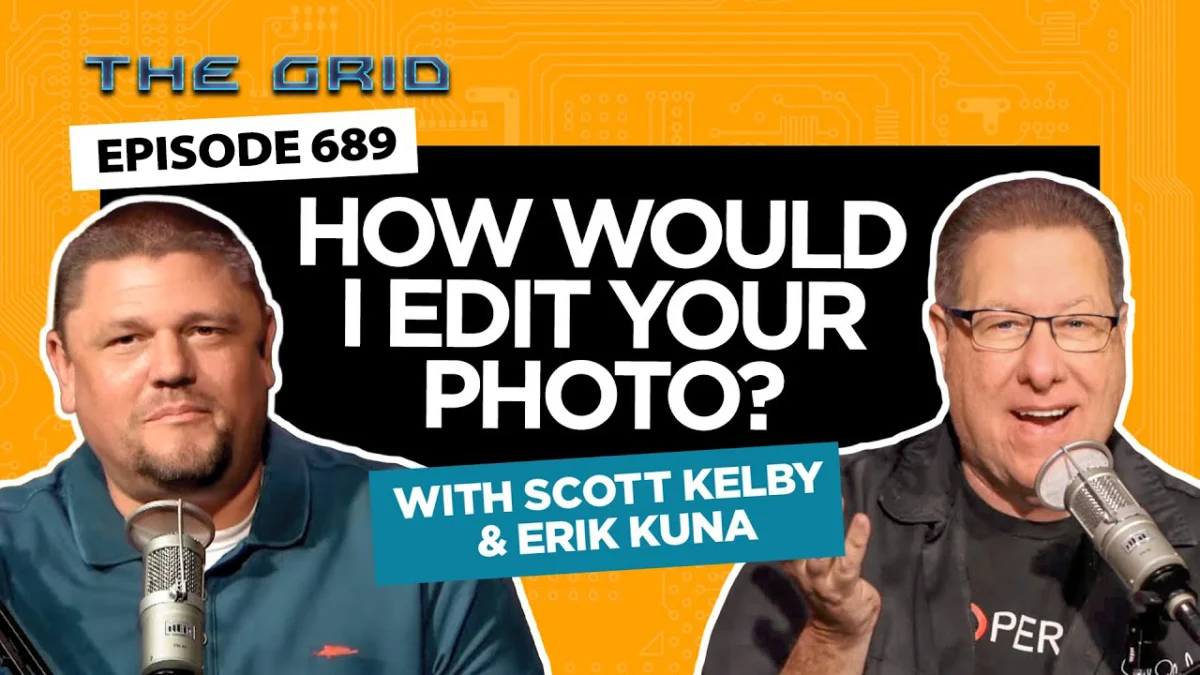
The latest installment of The Grid, episode 689, featured acclaimed photographers Scott Kelby and Erik Kuna diving into their highly anticipated "How Would I Edit Your Photo?" segment, meticulously dissecting and enhancing a diverse array of viewer-submitted images. This recurring fan-favorite format provides a unique educational opportunity, offering a window into the professional workflows of two industry veterans as they demonstrate precise techniques for improving composition, correcting perspective, refining color, and imparting a polished, "finished" quality to photographs using industry-standard software including Adobe Lightroom, Camera Raw, and Photoshop.
The Enduring Appeal of The Grid and Its Educational Mandate
The Grid, a cornerstone of online photography education, has consistently delivered weekly insights into the evolving world of digital imaging for well over a decade. Hosted by Scott Kelby, CEO of KelbyOne, a leading online training platform for photographers, and co-hosted by Erik Kuna, an accomplished photographer and educator, the show has cultivated a dedicated global audience. Its longevity, evidenced by its nearing 700 episodes, speaks to its consistent ability to blend technical instruction with industry commentary and community engagement. The program’s core mission revolves around demystifying complex photographic concepts and editing techniques, making them accessible to photographers of all skill levels, from aspiring enthusiasts to seasoned professionals.
The "How Would I Edit Your Photo?" segment stands out as a particularly popular feature due to its direct relevance and interactive nature. Unlike theoretical tutorials, this format presents real-world photographic challenges submitted by viewers, allowing Kelby and Kuna to demonstrate practical problem-solving in real-time. This approach offers invaluable insights into the decision-making process behind professional photo editing, illustrating not just what to do, but why certain adjustments are made and the strategic considerations involved in achieving a specific artistic or technical outcome. The segment underscores the show’s commitment to actionable education, providing viewers with tangible techniques they can immediately apply to their own work.
Pre-Editing Dialogues and Community Engagement
Before the deep dive into the technical editing demonstrations, the episode followed The Grid‘s characteristic blend of informative discussion and lighthearted banter. Scott Kelby initiated the segment with an unexpectedly enthusiastic endorsement of Chili’s spicy chicken sandwich, a moment that, while seemingly tangential, serves to humanize the hosts and foster a relaxed, approachable atmosphere. These personal anecdotes are a hallmark of The Grid, contributing to the show’s strong community feel and building rapport with its audience. This balance between serious technical content and relatable human elements is a key factor in the program’s enduring appeal, creating an environment where learning feels engaging and enjoyable.
Following this, Kelby offered a tantalizing preview of upcoming photographic content, teasing a series of shots from a recent trip to Switzerland. Such teasers are a strategic element, designed to maintain viewer interest and highlight the hosts’ ongoing photographic endeavors, often leading to future instructional content inspired by their experiences. This not only showcases their active participation in the craft but also provides a glimpse into potential future topics that might be covered on The Grid or through KelbyOne courses.
Crucially, Kelby also utilized this pre-editing segment to remind viewers about the impending start of the annual Lightroom Conference, scheduled to commence the following week. The Lightroom Conference is a premier online educational event, organized by KelbyOne, that gathers a host of top industry experts to provide in-depth training on Adobe Lightroom and related photographic workflows. This announcement serves as a timely reminder of broader educational opportunities available to the photography community, reinforcing KelbyOne’s position as a central hub for professional development and continuous learning. The conference typically attracts thousands of participants globally, offering a concentrated dose of specialized training that complements the weekly insights provided by The Grid. Its mention within the show strategically links the free, weekly content to more comprehensive, paid educational resources, creating a clear pathway for dedicated learners.
Dissecting the Edits: A Masterclass in Photographic Refinement
The core of episode 689 lay in the detailed, step-by-step editing demonstrations. Kelby and Kuna meticulously worked through four distinct images, each presenting its own unique set of challenges and educational opportunities. The selection of diverse image types is intentional, ensuring a broad spectrum of techniques is covered, applicable to various photographic genres.
-
The Moody Badlands Landscape: The first image presented a landscape shot from the Badlands, characterized by its inherently dramatic and often challenging lighting conditions. Landscapes, particularly those with vast tonal ranges like the Badlands, frequently require careful management of highlights and shadows to preserve detail across the entire scene. Kelby and Kuna likely focused on techniques for enhancing the inherent mood, perhaps by deepening skies, accentuating geological textures, and carefully balancing exposure to create a compelling sense of depth and atmosphere. This could involve leveraging Lightroom’s global adjustments for exposure, contrast, and white balance, followed by targeted local adjustments using masks or brushes to refine specific areas such as the sky or foreground. The use of Camera Raw would be integral for initial raw file processing, extracting maximum detail before more refined adjustments in Lightroom or Photoshop.
-
Tricky Interior Perspective Correction: The second submission involved an interior photograph that exhibited common perspective distortions, a frequent issue in architectural and interior photography, especially when shooting with wide-angle lenses in confined spaces. Converging verticals and leaning lines can detract significantly from the professionalism of an image. The hosts would have demonstrated the precise application of Lightroom’s Transform panel or Photoshop’s Adaptive Wide Angle filter and Perspective Warp tool to correct these distortions, ensuring walls and pillars appear straight and true. This segment provided crucial insights into maintaining geometric accuracy, a fundamental aspect of high-quality architectural imaging, and highlighted the power of these tools in rectifying optical imperfections. The nuanced application of these tools, balancing correction with natural appearance, is a skill often honed through expert guidance.
-
Refining a Gritty Athlete Portrait: The third image was a gritty portrait of an athlete, a genre that often demands a balance between raw intensity and polished presentation. The challenge here would have been to enhance the athletic power and determination conveyed by the subject without over-processing or losing the authentic "grit." This likely involved meticulous adjustments to contrast, clarity, and texture to emphasize muscle definition and the athlete’s resolve, while simultaneously using local adjustments to refine skin tones and remove distractions without smoothing away character. Techniques for sharpening specific areas, managing skin imperfections while preserving texture, and selectively enhancing shadows and highlights to sculpt the face would have been demonstrated. Photoshop’s robust retouching tools would be paramount here for fine-tuning details that Lightroom might not handle with the same precision.
-
Polishing a Warm Outdoor Portrait with a Dog: The final image featured a warm outdoor portrait incorporating a dog, a scenario that introduces unique challenges, particularly concerning animal subjects and natural light management. This edit likely focused on enhancing the warmth and emotional connection of the scene. The hosts would have addressed optimizing skin tones, ensuring the dog’s fur retained detail and natural color, and harmonizing the overall color palette to reinforce the warm ambiance. Techniques for selective sharpening on the dog’s eyes and fur, enhancing natural light, and using color grading tools to achieve a consistent, inviting aesthetic would have been key. Managing the dynamic range in outdoor settings, particularly when balancing a subject against a brighter background, is a common task where both Lightroom’s and Photoshop’s capabilities shine.
Throughout these demonstrations, Kelby and Kuna consistently shared practical techniques for improving overall composition, even in post-production through cropping or subtle content-aware adjustments in Photoshop. They emphasized the critical role of perspective correction in creating professional-looking images, meticulously guided viewers on dialing in color for accuracy and artistic effect, and shared invaluable tips for applying those final "finishing touches" that elevate an image from good to exceptional. The interplay between Lightroom for broad, non-destructive edits and Photoshop for intricate, pixel-level manipulation was a recurring theme, illustrating a comprehensive professional workflow.
The Broader Impact and Educational Philosophy
The episode’s structure, moving from lighthearted discussion to intensive technical training, encapsulates the educational philosophy underpinning The Grid and KelbyOne. It emphasizes that learning photography should be an accessible and enjoyable journey, where complex concepts are broken down into manageable, actionable steps. The "How Would I Edit Your Photo?" segment, in particular, serves as a powerful testament to this approach by providing concrete examples of improvement.
The educational value extends beyond the specific techniques demonstrated. By showcasing expert decision-making, the hosts implicitly teach critical thinking in the editing process. Viewers learn not just how to use a slider or tool, but when and why to use it, fostering a deeper understanding of photographic aesthetics and technical execution. The emphasis on making images "feel more finished" speaks to the ultimate goal of professional post-processing: to create a cohesive, impactful visual narrative that captures and holds the viewer’s attention.
The interactive element, where viewers submit their own work, fosters a sense of community and direct engagement that is rare in online education. It transforms passive viewing into active participation, making the learning experience more personal and relevant. The availability of replays further amplifies the educational impact, allowing viewers to revisit specific segments, pause, and follow along with the edits at their own pace, reinforcing the learning process. This multi-modal approach to education ensures that the content reaches a wide audience effectively, catering to different learning styles and schedules.
Looking Ahead: The Photography Education Landscape
The consistent delivery of high-quality educational content by The Grid, coupled with events like the upcoming Lightroom Conference, solidifies KelbyOne’s position as a vital resource in the global photography community. In an era where photographic technology and software evolve rapidly, continuous learning is paramount for photographers to stay competitive and creatively inspired. Programs like The Grid serve as a critical bridge, disseminating the latest techniques, software updates, and industry best practices in an engaging and accessible format.
The success of segments like "How Would I Edit Your Photo?" reflects a sustained demand within the photography community for practical, application-oriented training. As digital cameras become more sophisticated and editing software gains increasingly powerful capabilities, the ability to effectively process and refine images has become as crucial as the initial act of capturing them. Kelby and Kuna’s commitment to showcasing real-world solutions underscores the evolving nature of photographic craftsmanship, where post-processing is not merely a corrective measure but an integral part of the artistic expression. This commitment ensures that The Grid remains a relevant and invaluable resource for photographers seeking to elevate their skills and achieve their creative visions.