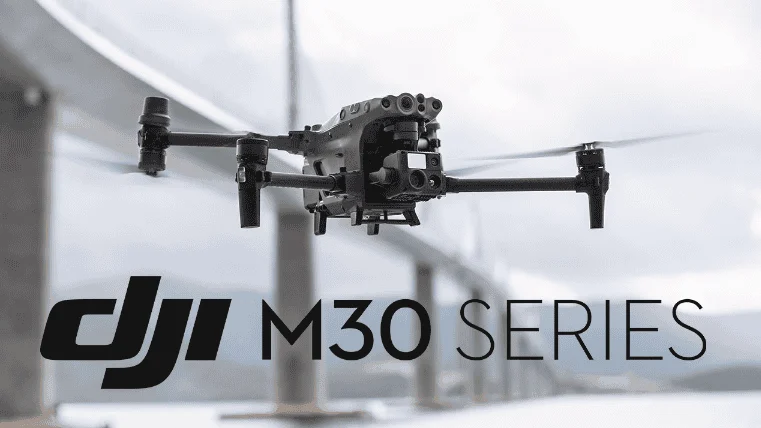
The integration of advanced safety recovery systems has fundamentally transformed the operational envelope of industrial unmanned aerial vehicles, specifically allowing the DJI Matrice 30 (M30) series to operate safely over human assemblies. This development is primarily driven by the collaboration between DJI and Aerial Vehicle Safety Solutions Inc. (AVSS), whose PRS-M30 parachute system provides the necessary safety redundancies required by global aviation authorities. In the rapidly evolving landscape of commercial drone technology, the ability to fly over crowds is not merely a technical milestone but a regulatory necessity for public safety, urban inspection, and emergency response sectors. By mitigating the risks associated with hardware failure or environmental interference, the DJI M30, equipped with a certified parachute system, establishes a new benchmark for aerial reliability in densely populated environments.
The Evolution of Operational Safety in Industrial Drones
For years, the commercial drone industry was constrained by stringent regulations that prohibited flight over people due to the potential kinetic energy of a falling aircraft. The DJI M30 series, which sits as a mid-sized powerhouse between the portable Mavic 3 Enterprise and the heavy-lift Matrice 300 RTK, was designed to bridge the gap between portability and high-end industrial performance. However, even with its sophisticated internal redundancies, the risk of a "fly-away" or total power loss remained a barrier to full urban integration.
The introduction of the AVSS PRS-M30 system addresses these concerns by providing an independent safety layer. This system includes an electronic module to detect flight anomalies, a flight termination system (FTS) to stop the rotors instantly, and a spring-loaded parachute to slow the descent. This combination ensures that in the event of a critical failure, the drone’s impact energy is reduced to levels that meet or exceed international safety standards, such as those set by the Federal Aviation Administration (FAA) in the United States and the European Union Aviation Safety Agency (EASA).
Technical Specifications of the DJI M30 Series
To understand why the M30 is particularly suited for crowd-overflight when paired with a parachute, one must examine its core technical architecture. The M30 is built with a ruggedized frame and features that prioritize environmental resilience.
- Multi-Sensor Payload: The M30 series features a stabilized gimbal housing a 48 MP 1/2" CMOS zoom camera, a 12 MP wide camera, and a laser rangefinder capable of measuring distances up to 1,200 meters. The M30T variant adds a 640×512 radiometric thermal camera, making it indispensable for nighttime crowd monitoring and search and rescue (SAR) missions.
- Omnidirectional Obstacle Sensing: The aircraft utilizes dual-vision and ToF (Time-of-Flight) sensors on all six sides, providing a 360-degree safety net. This is critical when navigating the complex verticalities of urban environments where power lines, signage, and buildings present constant hazards.
- Environmental Durability: With an IP55 rating, the M30 can operate in heavy rain and wind speeds of up to 15 meters per second. Its operating temperature range of -20°C to 50°C ensures that it remains functional in extreme climates, a necessity for year-round public safety operations.
- Signal Redundancy: The OcuSync 3 Enterprise system provides triple-channel 1080p video transmission and seamless swapping between input feeds, ensuring that the pilot maintains situational awareness even in areas with high electromagnetic interference.
The PRS-M30 Parachute: A Closer Look at the Mechanism
The AVSS PRS-M30 is not a passive accessory but an integrated safety solution that communicates directly with the drone’s flight controller. The system is designed to meet the ASTM F3322-18 standard, which is the international benchmark for small UAS parachutes. This standard requires the system to pass 45 successful deployment tests in various failure scenarios, including motor failure and manual deployment.
The PRS-M30 works through a three-stage process. First, the onboard sensors detect an unrecoverable flight attitude or a sudden loss of power. Second, the Flight Termination System (FTS) immediately cuts power to the motors to prevent the parachute lines from becoming entangled in the spinning propellers. Third, the parachute is deployed via a high-energy spring mechanism, allowing for a rapid canopy opening even at low altitudes. This entire sequence happens in milliseconds, significantly reducing the potential for injury to persons on the ground.
Regulatory Context and the Path to Compliance
The ability to fly over crowds is governed by specific regulatory frameworks that categorize drones based on their weight and the risk they pose to the public. In the United States, the FAA’s Part 107 rules for "Operations Over People" (OOP) categorize drones into four groups. For a drone as heavy as the DJI M30 (which weighs approximately 3.7 kg to 4 kg depending on the battery configuration), it typically falls into Category 2 or 3.
To operate under these categories, the manufacturer or operator must demonstrate that the aircraft will not cause injury above a certain severity threshold. A parachute system is the most effective way to meet these kinetic energy requirements. By integrating the AVSS system, operators can apply for waivers or operate under specific "Means of Compliance" that would otherwise be impossible for an aircraft of this mass. This regulatory bridge is what allows municipal police departments and private security firms to legally monitor festivals, protests, and sporting events from the air.
Applications in Public Safety and Emergency Response
The most immediate beneficiaries of the M30’s ability to fly over crowds are public safety agencies. In the past, law enforcement had to maintain a safe distance from large gatherings, often limiting the effectiveness of their aerial surveillance.
- Crowd Management: During large-scale public events, the M30 can provide real-time telemetry on crowd density and movement patterns. If a bottleneck occurs or a medical emergency is detected within a crowd, the drone can hover directly overhead to guide ground units, knowing the parachute system provides a fail-safe.
- Search and Rescue (SAR): In urban search scenarios where a missing person might be located in a park or plaza filled with people, the M30T’s thermal camera can identify heat signatures. The parachute integration allows the pilot to follow a lead directly over populated areas without violating safety protocols.
- Firefighting: Fire departments use the M30 to identify hot spots in burning structures. Often, these structures are located in dense neighborhoods where bystanders gather. The ability to fly over these onlookers safely allows the incident commander to focus on the fire rather than worrying about the flight path’s liability.
Impact on Infrastructure Inspection and Urban Planning
Beyond public safety, the DJI M30’s safe over-crowd capability is a boon for industrial inspections. Inspecting bridges, high-rise facades, or telecommunications towers often involves flying near sidewalks or busy streets.
In a traditional setup, operators would have to cordon off large areas of the ground to ensure safety, causing significant logistical disruption. With the PRS-M30, these "ground hazard zones" can be significantly reduced. This efficiency translates to lower costs for utility companies and faster inspection timelines for critical infrastructure. Urban planners also benefit, as they can use the M30 to capture high-resolution photogrammetry of busy intersections or construction sites during peak hours, providing more accurate data on how people interact with the built environment.
Chronology of Technical Advancement
The journey to the M30’s current status began with the DJI Matrice 200 series, which was the first major attempt at a rugged industrial drone. While capable, the M200 lacked the sophisticated obstacle avoidance and integrated safety systems found in modern iterations.
- 2017-2019: The M200 and M210 series established the demand for weather-resistant industrial drones but faced challenges with reliability and battery consistency.
- 2020: The launch of the Matrice 300 RTK introduced "Aviation-Grade" safety standards to the drone world, including redundant sensors and batteries.
- 2022: The DJI M30 was launched, condensing the power of the M300 into a foldable, more deployable frame.
- 2023-2024: Third-party innovators like AVSS perfected parachute systems specifically for the M30’s unique weight distribution and flight dynamics.
- Present: The integration of these systems has led to widespread regulatory acceptance, allowing for routine operations over people in jurisdictions across North America and Europe.
Economic and Operational Implications
The shift toward safer drone operations has a measurable economic impact. For many companies, the liability insurance required for drone operations is a major overhead cost. Demonstrating the use of certified parachute systems can lead to lower insurance premiums and a higher likelihood of contract wins, especially for government tenders.
Operationally, the M30 reduces the need for large flight crews. Its compatibility with the DJI Dock allows for "drone-in-a-box" solutions, where the aircraft can be deployed remotely. When a parachute is added to a docked M30, the safety of autonomous or semi-autonomous flights in urban areas is greatly enhanced, paving the way for the future of automated urban monitoring.
Conclusion and Future Outlook
The DJI M30’s ability to fly over crowds, facilitated by the AVSS PRS-M30 parachute system, represents the maturation of the drone industry. It signifies a move away from the "experimental" phase of drone flight into a period of professional, standardized, and safe integration into the airspace.
As urban environments become smarter and more connected, the role of the industrial drone will only expand. The M30, with its balance of high-end imaging, weatherproofing, and now, validated safety recovery systems, stands as a versatile tool for the modern age. For operators, the message is clear: the technology to operate safely in the most challenging environments is no longer a future concept—it is a current reality. By prioritizing safety through parachute integration, the industry ensures that the benefits of aerial data collection do not come at the expense of public security.