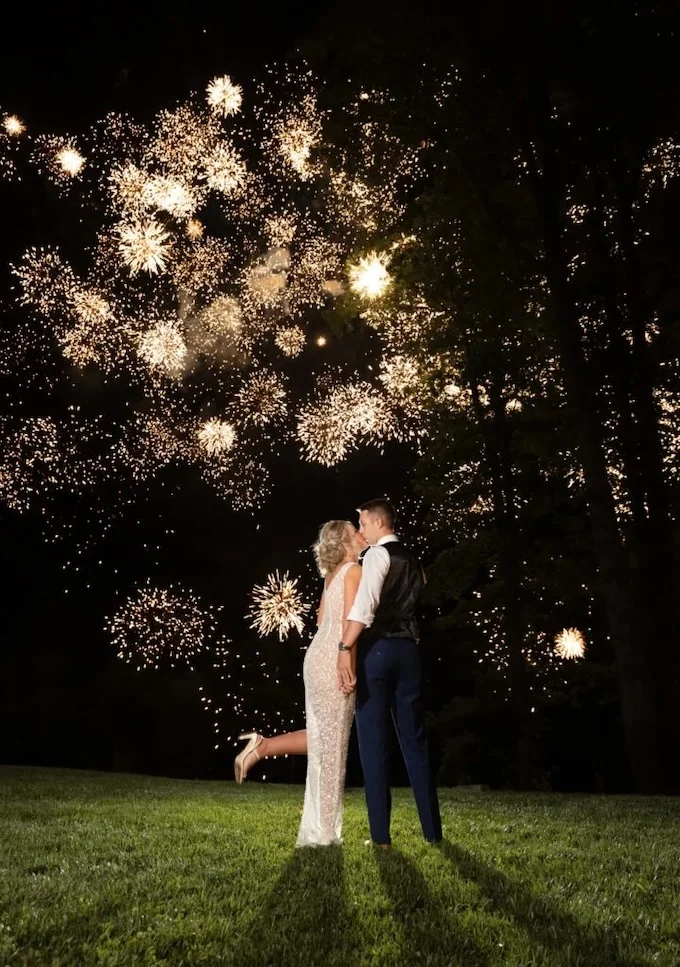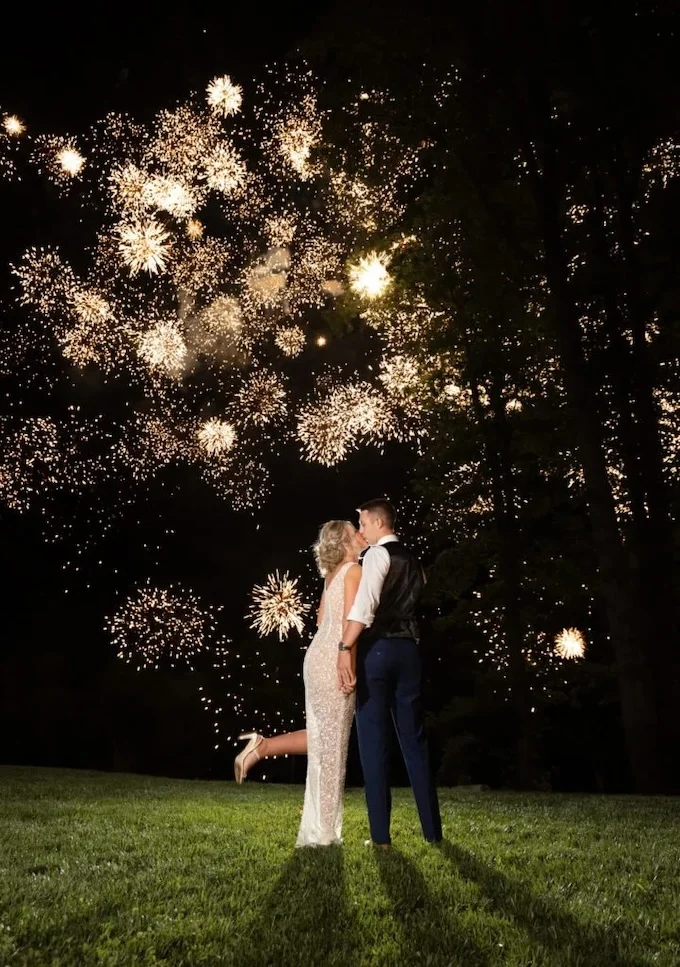
Fireworks are no longer confined to the Fourth of July. Their dazzling spectacle now illuminates theme park nights, electrifies sporting events, and, perhaps most surprisingly, adds a breathtaking element to wedding celebrations. For photographers, fireworks present a unique and exhilarating opportunity to craft truly epic couples portraits, offering a vibrant and dynamic backdrop that elevates traditional romantic imagery. This guide delves into the essential techniques and considerations for capturing these fleeting moments, transforming a potentially challenging lighting scenario into an unforgettable photographic masterpiece.

The ephemeral nature of fireworks, often lasting a mere five to eight minutes, demands meticulous planning and efficient execution. Success hinges on pre-event scouting and a clear understanding of camera settings and compositional strategies. This article, featuring invaluable insights and stunning examples from photographers at Wedding Maps, provides a comprehensive roadmap for photographers aiming to imbue their couples’ portraits with the explosive excitement of a grand finale.
Strategic Location Scouting for Maximum Impact
The foundational step in any successful fireworks portrait session is securing the optimal vantage point. For wedding photographers, this begins with proactive communication. Engaging with the couple and their wedding planner early in the process to ascertain the precise timing and location of any planned fireworks display is crucial. Venue staff can also be a vital resource for understanding the pyrotechnic layout.

The definition of the "best" angle is subjective and depends on the desired aesthetic. Photographers might seek expansive, open areas to capture fireworks filling the entire sky, with the couple as a small, silhouetted element gazing in awe. Conversely, integrating foreground elements such as trees, architectural features, or natural landscapes can provide depth and a sense of scale, framing the couple and the celestial display. Careful scouting allows for meticulous composition, ensuring that the final image tells a compelling visual story.
Mastering Dynamic Range: RAW Files and Exposure Settings
Photographing fireworks inherently involves navigating extreme lighting contrasts. The ambient environment is typically dark, while the explosive bursts of light can easily lead to blown-out highlights if exposure settings are not precisely calibrated. To preserve the maximum amount of detail in both the dark shadows and the brilliant bursts, capturing images in RAW format is paramount.

RAW Files vs. JPEG: The technical advantage of RAW files lies in their uncompressed data. This offers significantly more latitude in post-production for recovering details in challenging shadow and highlight areas, a critical factor when dealing with the dynamic range of fireworks. JPEG files, on the other hand, are compressed and discard data, severely limiting the ability to rescue subtle nuances in the final image.
Exposure Settings for Fireworks: Establishing a starting point for exposure is essential. While specific settings will vary based on camera equipment and the intensity of the fireworks, a common recommendation for a balanced exposure is:

- Aperture: f/8 to f/11. This range provides a good balance of depth of field, ensuring both the couple and the fireworks are reasonably in focus, while also controlling the amount of light entering the lens.
- Shutter Speed: 5 to 15 seconds. This extended duration is necessary to capture the trails of light as the fireworks explode and descend. The longer the exposure, the more light from the fireworks will be recorded, creating more vibrant and extensive light trails.
- ISO: 100 to 400. Keeping the ISO as low as possible minimizes digital noise, especially important in low-light conditions.
Crucially, photographers must utilize their camera’s histogram to monitor exposure. An ideal histogram for fireworks photography will show data distributed across the range without excessive spikes on the far right, which indicates clipped highlights (lost detail in the brightest areas). Conversely, avoiding a significant concentration of data on the far left prevents underexposed shadows. Fine-tuning these settings based on real-time histogram feedback is key to achieving a well-balanced image.
Orchestrating White Balance for Color Accuracy
The intense colors of fireworks can be a photographer’s dream, but managing white balance is crucial for their accurate representation. A recommended starting point for white balance when photographing fireworks is the "Tungsten" preset. This setting typically provides a cooler, bluer tone that can help counteract the often warm, orange cast of artificial lights and the fireworks themselves, allowing the true vibrant colors of the pyrotechnics to shine through.

If artificial light is being used to illuminate the couple, such as a flash or a continuous light source, it’s advisable to attach a CTO (Color Temperature Orange) gel to the light. This gel warms the artificial light, and when combined with a white balance setting around 3200 Kelvin, it can help synchronize the color temperature of the artificial light with the ambient light from the fireworks, creating a more cohesive and aesthetically pleasing image. Adjustments to this setting may be necessary to align with the photographer’s creative vision for the final portraits.
Selecting the Ideal Lens for Compositional Flexibility
The choice of lens significantly influences the final composition and the narrative of the photograph. For couples portraits with fireworks, the decision between a wide-angle and a telephoto lens hinges on the desired field of view and the practicalities of the shooting environment.

A wide-angle lens (e.g., 24mm or wider on a full-frame camera) is excellent for capturing the grandeur of the fireworks display alongside the couple. It allows for a broader perspective, encompassing the entire sky and the surrounding environment, emphasizing the epic scale of the event. However, communicating with the couple and directing them can be more challenging with a very wide lens due to the expansive field of view.
Conversely, a zoom lens, particularly when used to achieve a tighter shot, can compress the perspective, making the fireworks appear larger and more prominent in relation to the couple. This can create a dramatic and intimate feel. However, if the shooting space is limited, a large zoom lens might be cumbersome.

It’s also worth noting that a wide-angle lens, even if it captures more than initially intended, offers the advantage of being able to crop the image in post-production. This provides a degree of flexibility, allowing photographers to refine the composition after the fact. The key is to select a lens that balances the need to capture the spectacle with the ability to effectively direct and photograph the couple.
Embracing Long Exposures for Dynamic Trails
To effectively capture the luminous trails and dynamic movement of fireworks, photographers must employ long exposure techniques. This involves setting the camera’s shutter speed to a slower setting, typically ranging from 5 to 15 seconds. The longer the exposure, the more light from the fireworks will be recorded, resulting in more vivid and extended light streaks across the sky. Shorter exposures, in the 2-5 second range, will capture less detail and might result in more fragmented bursts of light.

A critical piece of equipment for long exposures is a sturdy tripod. This is essential to prevent camera shake, which would result in blurry and undesirable images. To further eliminate any potential for motion blur from pressing the shutter button, photographers should utilize a cable release, a remote control, or the camera’s built-in delay timer (a two-second delay is usually sufficient). This ensures that the camera remains perfectly still during the entire exposure.
Thoughtful Illumination of Subjects
Unlike traditional fireworks photography, where the focus is solely on the pyrotechnics, couples portraits require deliberate lighting of the subjects. The challenge lies in balancing the ambient light from the fireworks with artificial light sources to ensure the couple is well-exposed and visible without appearing overexposed or washed out by the bright bursts.

The ideal approach is to treat the couple’s lighting as a separate, yet integrated, element of the shot. If time permits before the fireworks begin, photographers can meticulously set up their lighting. The goal is to achieve a pleasing balance between the flash and the ambient light. A common technique involves placing the primary light source at a 45-degree angle to the couple, positioned slightly above and facing them. This creates natural-looking shadows and highlights.
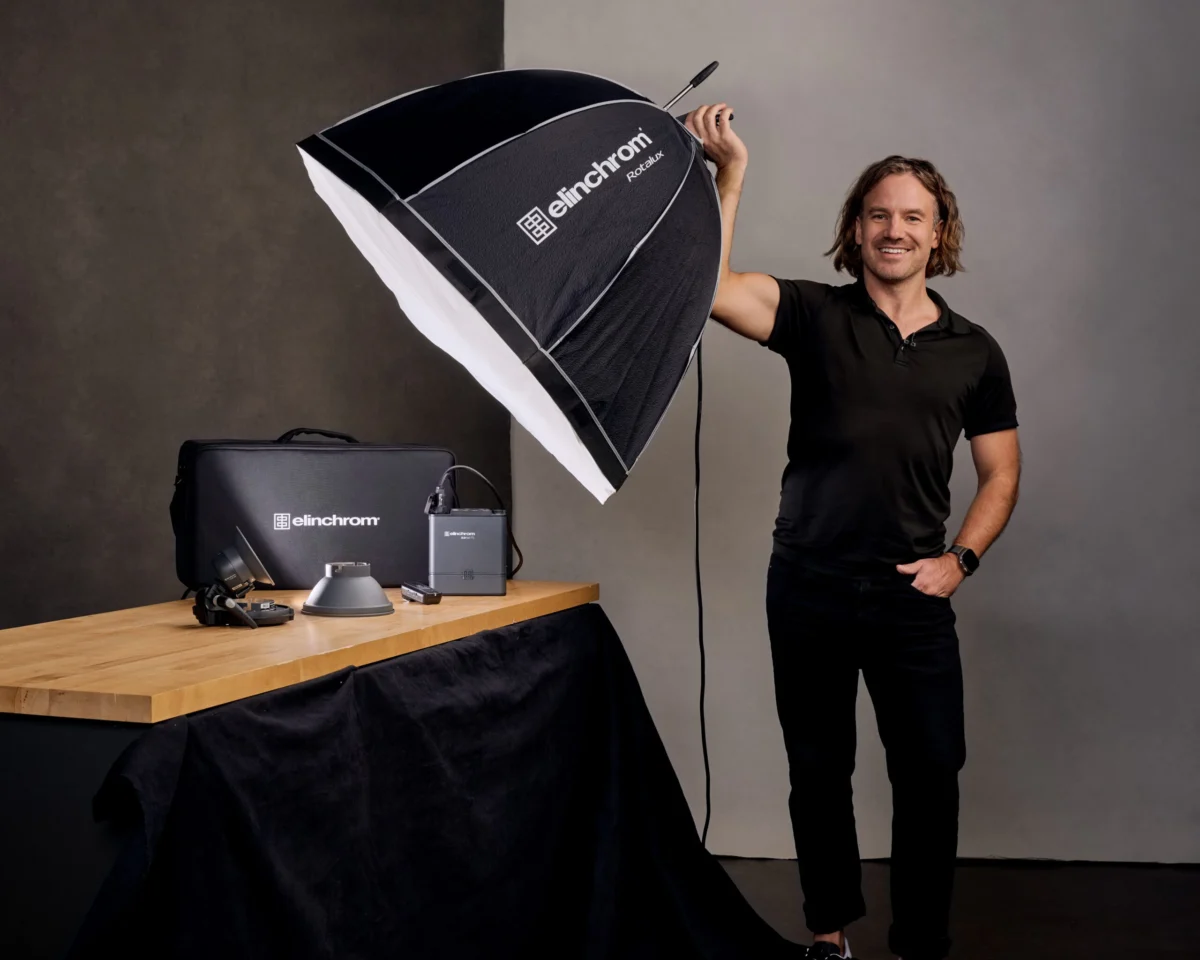
For added dimension, a backlight can be employed to define the couple’s silhouettes against the dark sky and fireworks. Modifiers like snoots or grids can be used to precisely control light spill, ensuring that the light is focused directly on the couple and doesn’t interfere with the background fireworks. The specific lighting setup will ultimately be guided by the photographer’s creative vision and the overall mood they aim to evoke.

The Precision of Manual Focus
Autofocus systems can often struggle in low-light conditions and when faced with the rapidly changing light patterns of fireworks. To ensure sharp and precisely focused portraits, switching to manual focus is imperative. Before the fireworks commence, photographers can use autofocus to lock focus on the couple. Once the focus is set, the lens should be switched to manual focus mode to prevent any accidental adjustments during the critical shooting period. Utilizing the camera’s live view feature can be helpful for magnifying the image and achieving critical focus on the couple’s eyes.
The Art of the Composite: Layering for Perfection
For photographers seeking ultimate control over the final image, creating a composite offers a powerful solution. This technique involves combining multiple exposures to achieve a perfectly lit portrait of the couple and a spectacular fireworks display. The process begins with the use of a tripod to ensure consistency in framing.

Lightroom for Pre-Processing: The first step in creating a composite is to process the individual images. It is essential to edit all the photos intended for the composite in the same manner to maintain a cohesive look. Photographers can start by editing the portrait of the couple, refining exposure, color balance, and contrast. This edited image can then be used as a reference for batch editing the subsequent fireworks shots, ensuring consistency across the entire set.
Photoshop for Layering and Blending: Once the individual images are prepared, they are imported into Adobe Photoshop. The photos are stacked into a single document, with the portrait of the couple typically placed on the bottom layer. The blend mode for the fireworks layers is then set to "Lighten." This blend mode selectively reveals the brightest pixels of the upper layers, effectively layering the vibrant fireworks over the couple’s portrait. Layer masks are then used to meticulously mask out unwanted elements from each layer, refining the composite and ensuring a seamless integration of the couple and the fireworks.

Capturing the Sparkler Send-off: A Wedding Staple
While not technically fireworks, sparklers are a beloved element at many weddings, often used for grand exits. Photographing sparklers requires a slightly different approach but shares some core principles with fireworks photography.
The Advantage of Longer Sparklers: When advising couples on sparkler purchases for wedding photos, photographers often recommend opting for 36-inch sparklers over the shorter 10-inch varieties. The extended burn time of larger sparklers provides a more generous window for posing the wedding party and capturing multiple shots, increasing the likelihood of achieving the desired outcome.

Balancing Light and Motion: Sparklers are a relatively weak light source. To capture them effectively, photographers may need to increase their ISO and utilize a wide aperture to gather sufficient light. The specific camera settings will depend on whether the subjects are moving or standing still.
- Moving Subjects: For dynamic shots, such as a sparkler exit, slightly higher ISO and wider apertures are generally recommended to freeze motion. Shutter speeds may need to be adjusted to account for the movement.
- Static Subjects: For posed shots with sparklers, lower shutter speeds can be used to allow more light to enter the camera, potentially creating more pronounced light trails from the sparklers themselves.
Safety First: The Essential Water Bucket

Handling open flames, even small ones like sparklers, necessitates a strong emphasis on safety. A crucial piece of equipment for any sparkler photography session is a bucket of water. This provides a safe and designated place to dispose of used sparklers, preventing any potential fire hazards.
Conclusion: Igniting Unforgettable Memories
Photographing couples portraits with fireworks, and their close cousins, sparklers, offers a unique opportunity to add an extraordinary element to a couple’s special day. By mastering the technical aspects of location scouting, exposure control, white balance, lens selection, and lighting, photographers can transform these fleeting moments into enduring works of art. The insights shared by experienced professionals underscore the importance of meticulous planning, creative vision, and a commitment to capturing the magic of love against the dazzling backdrop of exploding light. The resulting images are not merely photographs; they are vibrant testaments to a couple’s journey, illuminated by the spectacular artistry of pyrotechnics.

The following inspirational images, contributed by talented photographers, showcase the breathtaking potential of incorporating fireworks and sparklers into couples’ portraiture. These examples offer a glimpse into the creativity and technical skill required to achieve such stunning results, serving as a valuable resource for photographers looking to elevate their own wedding and engagement photography.
- (Image descriptions and credits would be inserted here, mirroring the original article’s format but with enriched context if available.)
The art of capturing couples portraits against a backdrop of fireworks or the glow of sparklers is a testament to the photographer’s ability to blend technical expertise with artistic vision. It requires a deep understanding of light, composition, and the ephemeral beauty of celebratory displays. As weddings continue to embrace unique and personalized elements, the demand for photographers skilled in these dynamic and challenging scenarios is likely to grow, promising even more dazzling and memorable imagery for couples to cherish.