The announcement represents the culmination of extensive research and development aimed at solving the logistical challenges of operating drones in conjunction with moving vehicles. Unlike conventional drones that require manual setup, calibration, and external storage, the BYD-DJI system is fully integrated into the vehicle’s architecture, featuring a specialized automotive-grade drone bay mounted on the roof. This system allows for automated launch, recovery, and charging, effectively turning the vehicle into a mobile base station for aerial intelligence. The collaboration leverages BYD’s expertise in electronic integration and DJI’s mastery of flight control and imaging, creating a seamless user experience that is controlled directly through the vehicle’s primary infotainment system.
The Genesis of the BYD-DJI Strategic Alliance
The partnership between BYD and DJI was first teased during BYD’s "Dream Day" event held at its global headquarters in Shenzhen. During this event, BYD Chairman and President Wang Chuanfu outlined the company’s "Xuanji" architecture—a holistic smart vehicle intelligence strategy that treats the car as a living electronic entity. The integrated drone system is a flagship component of this architecture, designed to provide "eyes in the sky" for drivers and passengers.
Historically, the automotive and drone industries operated in silos. While many enthusiasts have used DJI drones to film their vehicles, the process was often cumbersome, requiring a second operator or frequent stops to deploy the aircraft. The BYD-DJI alliance seeks to eliminate these friction points. By embedding the drone into the vehicle’s hardware and software stack, the companies have addressed critical issues such as wind resistance during launch, precision landing on a moving or stationary vehicle, and the thermal management of high-output batteries within a confined roof-mounted hangar.
Technical Specifications and the Integrated Drone Bay
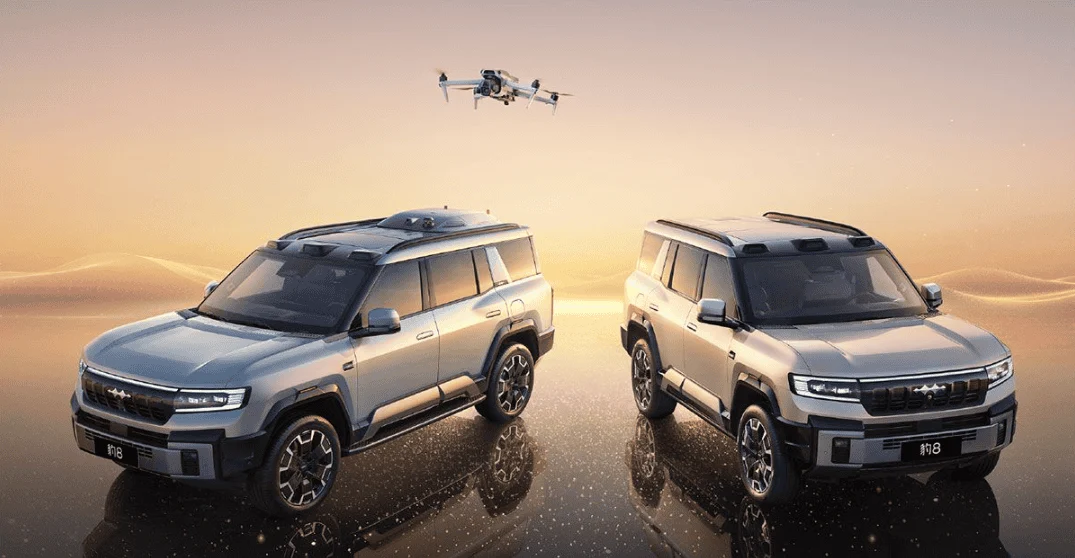
At the heart of this innovation is the "Smart Vehicle-Mounted Drone Bay." Engineered to withstand various weather conditions and high-speed travel, the bay is an aerodynamic housing unit located on the roof of the vehicle—specifically the Yangwang U8 luxury SUV in its initial rollout. This bay features an automated opening and closing mechanism, a cooling system for the drone’s batteries, and a precision charging pad that replenishes the drone’s power using the vehicle’s massive traction battery.
The drone itself is a customized version of DJI’s high-performance hardware, optimized for vehicle-centric operations. It features:
- High-Speed Tracking: The drone utilizes advanced computer vision and GPS synchronization to follow the vehicle at speeds of up to 50 km/h while maintaining a stable cinematic lock.
- 4K/60fps Imaging: Equipped with a three-axis gimbal and a high-resolution sensor, the drone captures professional-grade footage, which is streamed in real-time to the vehicle’s internal displays with ultra-low latency.
- One-Click Operation: The user interface is simplified for driver safety. With a single touch on the central console, the drone can take off, perform a 360-degree aerial sweep of the surroundings, and return to its hangar automatically.
- Intelligent Obstacle Avoidance: Utilizing DJI’s omnidirectional sensing technology, the drone can navigate complex environments, such as forest trails or mountainous terrain, without manual intervention from the driver.
Chronology of Development and Launch
The journey toward this launch followed a rigorous timeline of engineering milestones. In early 2023, BYD and DJI formed a joint task force to explore the feasibility of a vehicle-integrated UAS. The primary challenge was the "precision landing" problem—ensuring a drone could land on a small target atop a vehicle that might be parked on uneven terrain or subjected to high winds.
By mid-2023, the first prototypes were tested in the Gobi Desert, focusing on dust resistance and high-temperature performance. In January 2024, during the BYD Dream Day, the concept was demonstrated to the public for the first time, showcasing the drone’s ability to swap batteries automatically within the roof bay, allowing for near-continuous flight operations. The formal commercial launch in early 2025 signifies that the technology has met the stringent safety and durability standards required for mass-market automotive components.

Enhancing Safety and Utility: Beyond Cinematography
While the marketing for the BYD drone often emphasizes travel vlogging and "social media ready" content, the practical applications extend significantly into the realms of safety and navigation. The drone acts as a remote sensor, providing a perspective that even the most advanced LiDAR and camera suites on a car cannot achieve.
- Traffic and Route Reconnaissance: In scenarios where a driver encounters a traffic jam or a road closure on a remote trail, the drone can be launched to scout the road ahead. It provides a real-time aerial view of traffic density or physical obstacles, allowing the driver to make informed decisions about rerouting.
- Search and Rescue Support: For outdoor enthusiasts, the drone serves as a vital safety tool. If a vehicle becomes stuck or an occupant is lost in a wilderness area, the drone’s thermal imaging capabilities and high-altitude vantage point can be used to locate individuals or identify the best path for recovery.
- Environmental Monitoring: The drone can be programmed to monitor the area surrounding a vehicle while it is parked at a campsite, providing a security perimeter and alerting the owner to potential hazards or wildlife via a mobile app.
Market Implications and Competitive Analysis
The launch of a dedicated drone system places BYD in a unique position within the global NEV market. While competitors like Tesla have focused heavily on FSD (Full Self-Driving) software, and brands like Huawei and Xiaomi are emphasizing smartphone-to-car connectivity, BYD is expanding the physical utility of the vehicle.
Industry analysts suggest that this move is a strategic play to dominate the luxury "off-road" and "adventure" segments. By integrating DJI technology, BYD is appealing to a demographic that values both high-tech gadgets and outdoor exploration. This integration also creates a "moat" around the BYD ecosystem; because the drone bay and software are proprietary to the BYD-DJI partnership, it is difficult for third-party manufacturers to offer a comparable level of seamlessness.
Furthermore, the data generated by these drones could eventually be used to enhance autonomous driving algorithms. Aerial data provides a unique dataset for training AI on complex intersections and rural road layouts, potentially giving BYD an advantage in the development of next-generation ADAS (Advanced Driver Assistance Systems).
Expert Reactions and Regulatory Considerations
Industry experts have reacted with a mix of enthusiasm and caution. "The integration of a drone into a vehicle is the ultimate expression of the car as a mobile platform," said Dr. Lin Wei, a senior automotive analyst. "However, the challenge will be navigating the complex web of global drone regulations. In many jurisdictions, ‘beyond visual line of sight’ (BVLOS) flight is restricted, and operating a drone from a moving vehicle may require specific legal clarifications."
BYD has addressed these concerns by implementing "Geofencing" technology. The drone’s software is programmed to comply with local "No-Fly Zones" and altitude restrictions automatically. Additionally, the system includes a "Safe Return" protocol that ensures the drone stays within a specific radius of the vehicle and returns immediately if the connection is weakened or if battery levels drop below a critical threshold.
Conclusion: A New Era for the Automotive Ecosystem
BYD’s launch of the smart drone system in collaboration with DJI is more than a luxury add-on; it is a signal of the future of mobility. As cars transition from mechanical tools to intelligent companions, the inclusion of auxiliary robotic systems like drones will become increasingly common. This innovation proves that BYD is committed to a holistic vision of technology, where the vehicle serves as a hub for various forms of intelligent hardware.
By successfully bridging the gap between the ground and the air, BYD and DJI have not only enhanced the travel experience for users but have also opened new doors for safety, documentation, and industrial application. As this technology matures and trickles down from the flagship Yangwang models to more affordable segments of the BYD lineup, the sight of a drone launching from the roof of a car may soon become a standard feature of the modern highway and the untamed trail alike. The evolution of the "Smart Vehicle" has officially taken flight, promising a future where our perspective of the road is no longer limited by the height of the windshield.