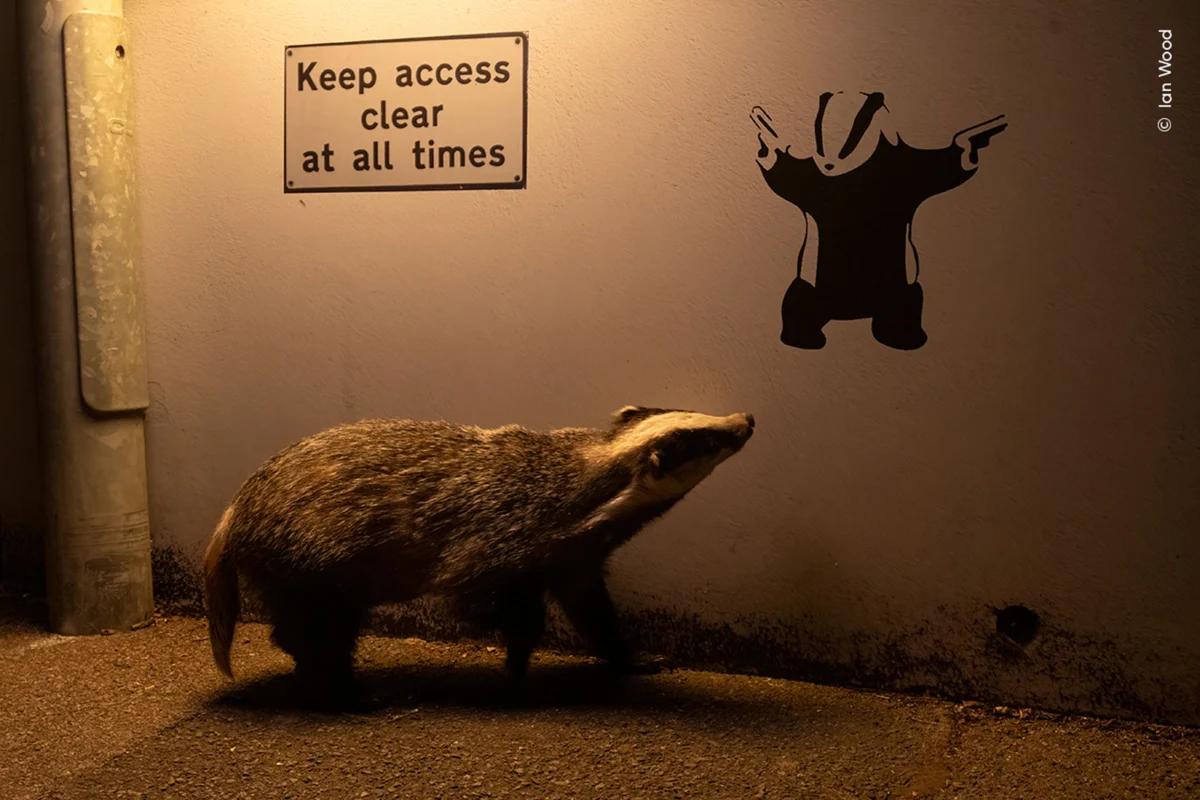
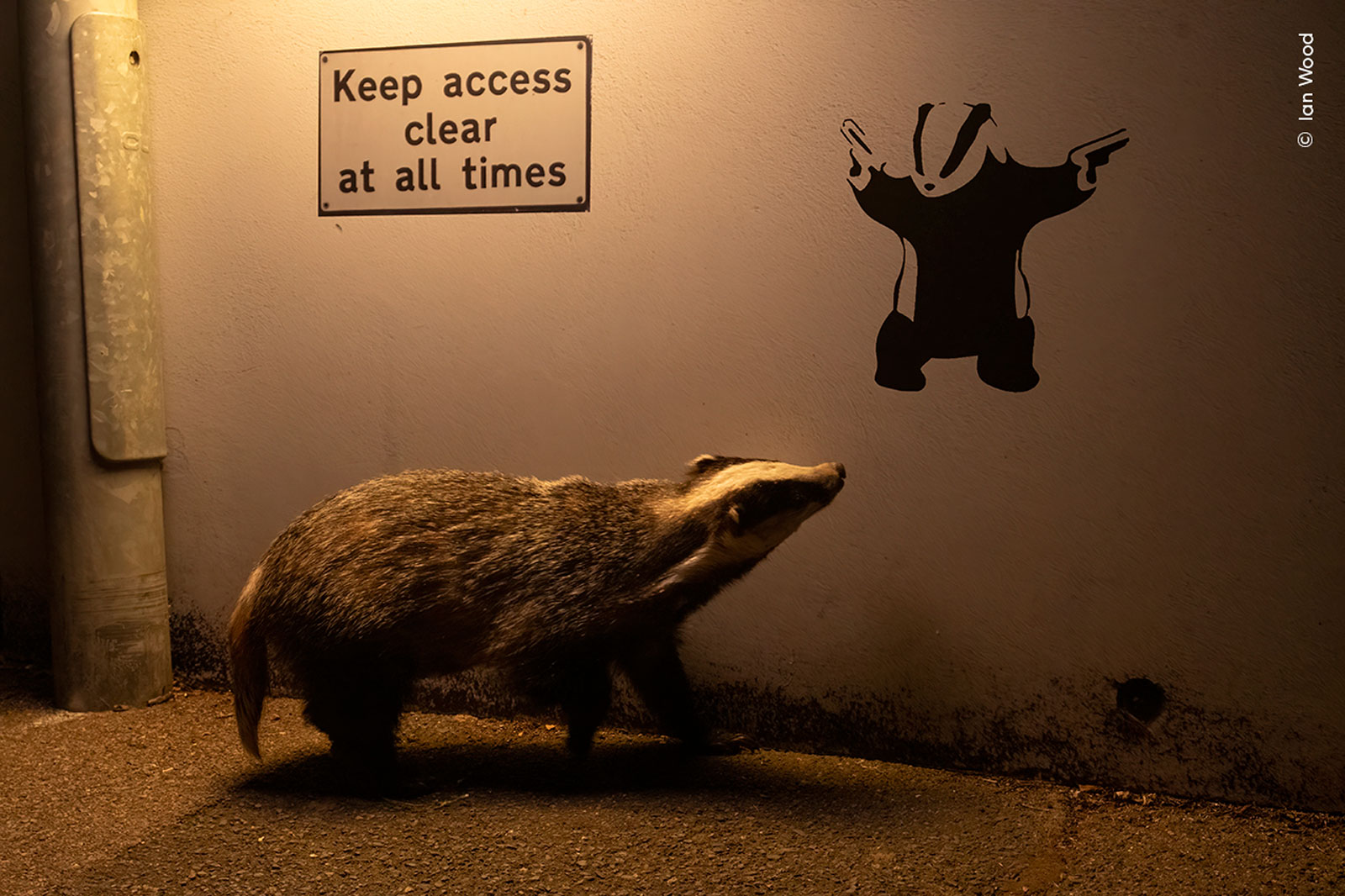
Ian Wood, a British photographer, has been awarded the prestigious Wildlife Photographer of the Year People’s Choice Award for 2024 with his captivating image, "No Access." The photograph, a perfectly timed capture of a Eurasian badger pausing to glance at familiar graffiti in St Leonards-on-Sea, England, emerged victorious in the tenth edition of the public-voted competition. This win not only celebrates Wood’s keen eye and patience but also casts a spotlight on the intricate relationship between urban expansion and the natural world, prompting critical discussions on wildlife conservation.
The Acclaim of the People’s Choice Award
The Wildlife Photographer of the Year (WPY) competition, developed and produced by the Natural History Museum, London, is globally recognised as one of the most prestigious showcases for wildlife photography. Celebrating its 60th edition, the competition annually attracts tens of thousands of entries from both amateur and professional photographers across the globe, united by a mission to inspire and advocate for our planet through the emotive power of photography. The People’s Choice Award, a distinct category within WPY, offers the global public an opportunity to vote for their favourite image from a shortlist curated by the Natural History Museum and an international judging panel. This year, the People’s Choice Award saw unprecedented engagement, with over 76,000 wildlife photography enthusiasts and nature lovers casting their votes for one of the 25 nominated images. This record turnout underscores the growing global interest in wildlife and the powerful connection people feel with nature through visual storytelling. The selection process for the People’s Choice Award begins with the expert judges of the main WPY competition, who narrow down nearly 60,000 submissions to a shortlist of 25. These finalists are then presented to the public, allowing a broad demographic to participate in celebrating exceptional wildlife photography.
The Intriguing Narrative of "No Access"
Ian Wood’s winning photograph, "No Access," is more than just a snapshot; it’s a poignant narrative embedded within an urban landscape. The image depicts a Eurasian badger, a species synonymous with the British countryside, navigating the human-dominated environment of St Leonards-on-Sea. The badger’s upward gaze at the graffiti, which starkly reads "No Access," creates a compelling visual irony. The photographer’s journey to capture this moment began with observation. Residents in the area had a habit of leaving food scraps on pavements for foxes, an practice that inadvertently drew badgers from a nearby sett into the urban fabric. Noticing a badger’s nocturnal forays along the specific wall late one night, Wood strategically set up a small hide on the edge of the road. His dedication and patience paid off, as he successfully photographed the creature illuminated solely by the soft glow of a lamppost, capturing its serene amble and curious glance. The composition, lighting, and narrative elements combine to create an image that resonates deeply, highlighting the quiet resilience of wildlife adapting to, and often struggling within, human environments.
Official Responses and the Photographer’s Perspective
Dr. Douglas Gurr, Director of the Natural History Museum, lauded Wood’s achievement, stating, "Ian’s flawlessly timed image offers a unique glimpse of nature’s interaction with the human world, underscoring the importance of understanding urban wildlife." Dr. Gurr further emphasised that the photograph serves as "a powerful reminder that local nature and wildlife, often just outside our homes, can inspire and captivate us." This sentiment reflects the Natural History Museum’s broader commitment to fostering a deeper connection between people and the natural world, particularly within increasingly urbanised settings.
Ian Wood himself expressed profound humility and gratitude upon learning of his win. "The outpouring of badger love since my photo was nominated for the People’s Choice Award has been beautifully overwhelming. Finding out that it has won is truly humbling," he remarked. However, Wood quickly pivoted from personal triumph to a more critical message, revealing a "darker side" to his seemingly benign image. This candid reflection elevates "No Access" from a mere aesthetic achievement to a powerful statement on pressing conservation issues.

A Call to Action: The Badger Cull Controversy
The "darker side" to which Ian Wood refers directly relates to the controversial badger cull in England. Wood, who resides in rural Dorset and is actively involved in re-wilding efforts to enhance habitats for a diverse array of wildlife, highlighted the devastating impact of this policy. "The badger cull — which is still ongoing — has decimated their numbers, and I fear that unless the cull is stopped, we’ll only see badgers in urban settings in several parts of England," he warned. His winning image, therefore, becomes a poignant symbol of this displacement and the shrinking natural habitats available to badgers.
The badger cull is a contentious government policy primarily aimed at controlling bovine tuberculosis (bTB) in cattle. Initiated in 2013, the cull involves the licensed killing of badgers, which are perceived as carriers and transmitters of the disease. Proponents of the cull argue it is a necessary measure to protect the agricultural industry and prevent further economic losses from bTB outbreaks. They cite scientific studies suggesting badgers play a role in disease transmission, particularly in high-incidence areas. However, the policy has faced widespread opposition from wildlife conservation groups, animal welfare organisations, and a significant portion of the scientific community. Critics argue that the scientific evidence supporting the effectiveness of the cull is inconclusive, with some studies suggesting it may even exacerbate the spread of bTB by disrupting badger social structures and causing them to range more widely. Furthermore, ethical concerns regarding the culling methods and the welfare of badgers are frequently raised. Organisations like the Badger Trust have consistently campaigned against the cull, advocating for alternative strategies such as badger vaccination, improved cattle biosecurity, and enhanced cattle testing.
Wood’s statement underscores a critical implication of the cull: the potential forced urbanisation of badger populations. As rural habitats become more perilous due to culling operations, badgers may increasingly seek refuge in urban and suburban areas where they are less likely to be targeted. While this might offer temporary safety, it also brings new challenges, including increased road casualties, conflicts with humans, and reliance on anthropogenic food sources. "My hope is for this image to raise awareness of the damaging effect of the badger cull and help push for change," Wood concluded, transforming his artistic victory into a powerful plea for conservation. The image, therefore, serves as a vivid reminder that the choices made in rural conservation can have ripple effects that reshape urban ecosystems and human-wildlife interactions.
Celebrating Photographic Excellence: The Highly Commended Images
Beyond the winning entry, the People’s Choice Award also recognised four "Highly Commended" images that captivated the global audience with their unique beauty and compelling narratives. These photographs, diverse in their subjects and geographical origins, represent the pinnacle of wildlife photography’s ability to reveal the wonders of the natural world.
"Earth and Sky" by Francisco Negroni (Chile): This unforgettable capture presents a dramatic natural spectacle from Chile. Negroni’s lens immortalised a double lenticular cloud, an unusual atmospheric phenomenon, brilliantly illuminated at nightfall by the fiery lava emanating from the Villarrica volcano. The image is a breathtaking testament to the raw power and ethereal beauty of Earth’s geological and meteorological forces converging in a single, awe-inspiring moment. Lenticular clouds, often mistaken for UFOs due to their smooth, lens-like appearance, form when stable, moist air flows over a mountain or range of mountains, creating standing waves. Combined with the volcanic eruption, Negroni captured a scene of rare grandeur.
"Edge of Night" by Jess Findlay (Canada): Findlay’s action shot offers a haunting glimpse into the nocturnal world of a barn owl. The image shows a ghostly barn owl in mid-flight, exiting through the hayloft window of a derelict barn, embarking on its nightly hunt. The photograph perfectly captures the stealth and grace of this crepuscular predator, highlighting its mastery of the twilight hours. Barn owls, known for their distinctive heart-shaped faces and silent flight, are efficient hunters of small mammals, playing a vital role in ecosystem balance. Findlay’s image beautifully conveys the fleeting moment between safety and the perilous quest for survival.
"Whiteout" by Michel d’Oultremont (Belgium): This image depicts a stoat, a small, agile carnivore, sitting up to observe its territory amidst a pristine, snowy landscape in Belgium. The stoat’s winter coat, a pristine white save for its black tail tip, allows it to blend almost seamlessly into its environment, a perfect example of natural camouflage. D’Oultremont’s photograph is a masterclass in capturing an animal in its natural habitat, showcasing its survival adaptations. Stoats, known for their curious and energetic nature, are formidable hunters, even in the harsh conditions of winter.
"Spiked" by David Northall (South Africa): Northall’s interesting and intense capture portrays a bloodied yet determined honey badger returning to finish off a Cape porcupine. The scene unfolds after an earlier confrontation where the porcupine, a formidable adversary, had attempted to defend itself using its sharp quills. The image vividly illustrates the relentless nature of the honey badger, renowned for its tenacity and fearlessness in the face of danger. Honey badgers are celebrated for their intelligence and sheer will, often confronting animals many times their size. This photograph is a raw depiction of the brutal realities of survival in the wild, showcasing both predator and prey’s formidable defenses.
These four highly commended images, alongside Ian Wood’s "No Access," were selected from the initial shortlist of 25 finalists, which itself was drawn from almost 60,000 images submitted to the 60th Wildlife Photographer of the Year competition. The breadth and depth of talent displayed in these photographs underscore the global passion for wildlife and conservation.

The Enduring Legacy of Wildlife Photographer of the Year
The Wildlife Photographer of the Year competition transcends mere photographic artistry; it is a powerful platform designed to shine a light on inspiring and impactful stories from the natural world. Its ultimate goal is to create advocates for our planet by using photography’s unique emotive power to connect people with nature, fostering a deeper appreciation and a sense of responsibility for its preservation. The competition welcomes entries from amateur and professional photographers of all ages from around the world, ensuring a diverse range of perspectives and experiences are represented.
The five celebrated images – Ian Wood’s winning "No Access" and the four highly commended finalists – are currently on display. They can be viewed online and on the interactive voting screens at the flagship exhibition located at the Natural History Museum, London, until June 29, 2025. This extended exhibition period allows a broad international audience to engage with these powerful visual narratives and reflect on the messages they convey.
Looking ahead, the images entered into the 61st Wildlife Photographer of the Year competition are presently undergoing a rigorous judging process by an international panel of experts. The anticipation builds for the next annual awards ceremony, which is scheduled to take place at the Natural History Museum, London, in October 2025. Each year, the competition continues to evolve, pushing the boundaries of wildlife photography and reaffirming its vital role in global conservation efforts. The Natural History Museum, as the developer and producer of this esteemed competition, remains at the forefront of showcasing nature’s beauty and fragility, inspiring generations to protect the planet’s invaluable biodiversity.