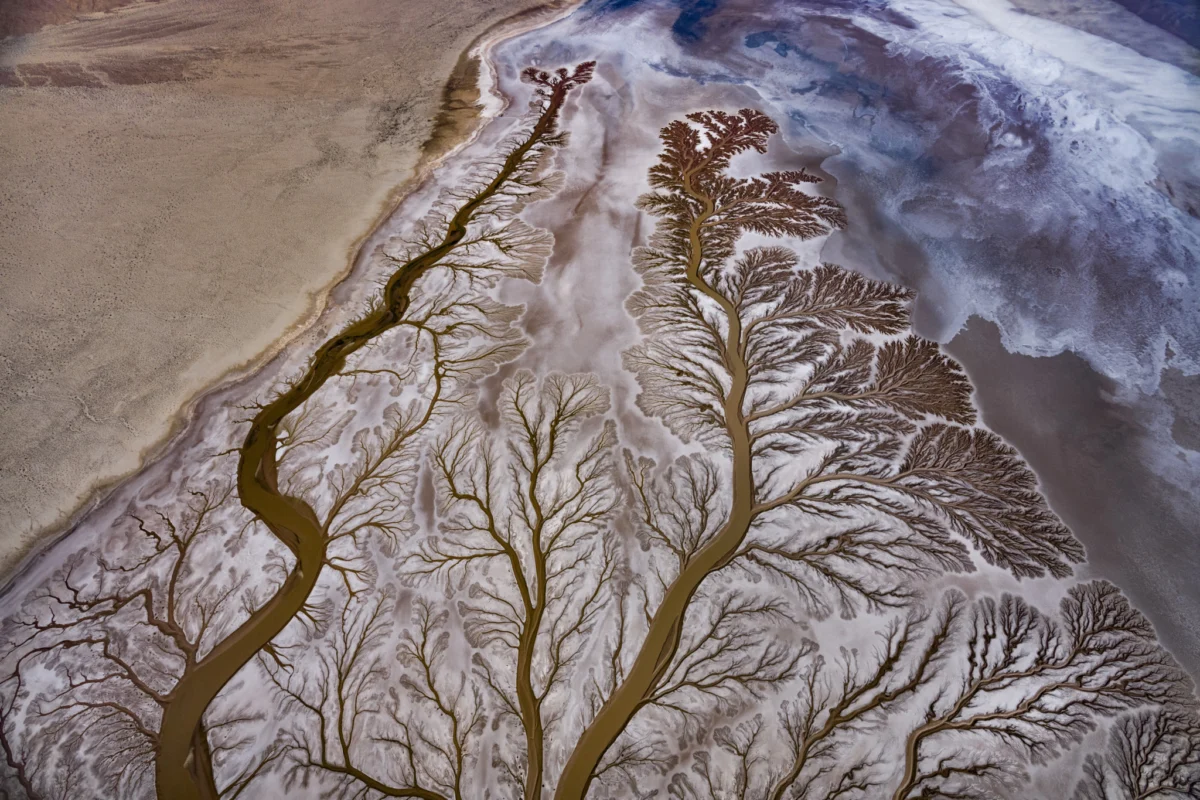
The profound existential questions of human identity and purpose have long been a source of introspection, mirroring the complex relationship between humanity and the natural world. For many, these contemplations are brought into sharp focus when confronted with landscapes of immense scale and profound ecological significance, such as the Colorado River Delta. This vast, intricate network of waterways, once a vibrant ecosystem where a mighty river met the sea, now stands as a stark testament to both ecological degradation and the emergent power of dedicated restoration.
A Landscape Unveiled
The initial encounter with the Colorado River Delta, as described by an observer from a high vantage point, was one of overwhelming scale and unexpected beauty. Flying over the region, thousands of miles from a northern Canadian upbringing, the expectation was of a more confined, finger-like extension of the river. Instead, the reality that unfolded from 10,000 feet was a five-mile expanse of "sheer beauty," a landscape so vast and wide that its photographic representation initially presented a formidable challenge. The objective was clear: to capture images that were not only aesthetically striking but also conveyed a message of life and renewal amidst a complex ecological narrative.
This profound connection with the natural world began early in life. At the age of nine, entrusted with operating a snowmobile independently, an individual embarked on a journey of exploration that would shape a lifetime of engagement with wild animals and their habitats. This early immersion fostered an intimate understanding of the interconnectedness of life, a realization that ignited a deep love for the planet’s intricate ecosystems. This formative experience, a prelude to future encounters with environments like the Colorado River Delta, underscored the importance of direct observation and personal connection in understanding ecological dynamics.
The Art of the Delta from Above
The act of photographing the delta involved a meticulous approach, with the pilot and observer working in tandem to identify optimal perspectives. Adjustments in altitude, ranging from 200 to 1,000 feet, allowed for a dynamic engagement with the landscape. As the aircraft descended, the experience transformed, evoking the sensation of navigating a "three-dimensional canvas of poetry and art." The intricate patterns observed from these lower altitudes were deeply symbolic, reminiscent of the "tree of life." This complex mosaic of silt and sediment, with its interwoven veins, capillaries, and branches, was perceived as the very "lungs of the Earth," a powerful metaphor for the delta’s ecological function. The challenge, however, was to translate these breathtaking patterns of life into photographic moments that could resonate with viewers, adorning their walls and sparking contemplation.
A River’s Decline: The Shadow of Human Impact
Despite its breathtaking beauty, the Colorado River Delta’s story is one of "terrible beauty." Since the 1950s, the narrative of this once-mighty river has been one of diminishment. An overburdened system, subjected to extensive diversion and consumption, has led to the river failing to reach its natural terminus at the sea. The journey of the Colorado River is an epic one, commencing high in the Rocky Mountains and traversing over 1,500 miles through seven U.S. states. Its path winds through diverse landscapes, including alpine forests, iconic red rock canyons, and expansive desert floodplains, before reaching its former delta in northwest Mexico, where it once flowed into the Sea of Cortez.
The current ecological crisis in the region is exacerbated by the most severe drought in 1,200 years. However, this climatic challenge is only one facet of the delta’s complex predicament. The river’s story is also a stark illustration of how escalating human population growth and the demands of heavy industry have led to the denudation, drainage, and decay of one of North America’s most vital waterways. This environmental degradation has had profound consequences for the delta’s biodiversity and the livelihoods of the communities that depend on its ecological health.
A Glimmer of Hope: The Delta’s Restoration
Amidst the dire ecological circumstances, a potent symbol of hope has emerged. In recent years, water has once again begun to flow into the delta, a direct outcome of an unprecedented binational restoration effort. This ambitious undertaking, a testament to collaborative conservation, involved a diverse array of stakeholders, including environmental organizations, the governments of both the United States and Mexico, and local communities in the Mexicali Valley. These concerted efforts have injected a renewed sense of optimism for the future of this critically important ecosystem.
The History of Diversion and Degradation
The decline of the Colorado River’s flow to the sea is not a recent phenomenon. Following World War II, the burgeoning agricultural and industrial demands of the American Southwest led to the construction of numerous dams and diversion projects along the river’s course. The Hoover Dam, completed in 1936, and the Glen Canyon Dam, finished in 1963, are among the most significant structures that have fundamentally altered the river’s natural flow. These massive infrastructure projects were designed to harness the river’s water for irrigation, urban consumption, and hydroelectric power generation.
By the mid-20th century, the majority of the Colorado River’s flow was being diverted before it could reach Mexico. This over-allocation of water resources, often exceeding the river’s natural capacity, set the stage for the ecological crisis that would unfold in the delta. The reduced inflow of freshwater drastically altered the salinity levels in the remaining estuarine areas, impacting the delicate balance of plant and animal life. Furthermore, the sediment carried by the river, crucial for maintaining the delta’s landmass, was trapped behind dams, leading to coastal erosion and the loss of vital habitats.
The Magnitude of the Drought
The current drought gripping the region is not an isolated event but part of a longer-term trend of declining precipitation and increasing temperatures, a phenomenon linked to global climate change. Scientific studies, including paleoclimate reconstructions using tree rings and sediment cores, have indicated that the current arid conditions are historically extreme. The prolonged lack of rainfall in the Rocky Mountains, the primary source of the Colorado River’s water, has resulted in critically low reservoir levels, including Lake Mead and Lake Powell, which serve as vital water storage for millions of people across seven states. The implications of such a prolonged drought extend far beyond the immediate water supply, impacting agriculture, energy production, and the ecological integrity of the entire Colorado River Basin.
The Binational Restoration Effort: A New Chapter
The agreement to allow pulsed flows of water into the Colorado River Delta represents a significant shift in approach. This initiative, often referred to as "Pulse Flow," is a collaborative effort between the United States and Mexico, facilitated by organizations such as the Environmental Defense Fund and Pronatura Noroeste. The primary objective is to re-establish a connection between the river and the Sea of Cortez, even if temporarily. These controlled releases of water, timed strategically, aim to:
- Rehydrate the Delta Wetlands: The pulsed flows provide essential water to the remaining riparian and wetland habitats, supporting native vegetation and providing crucial refuge for migratory birds and other wildlife.
- Support Biodiversity: The influx of freshwater helps to dilute salinity levels in areas where it remains, creating more favorable conditions for a wider range of species. This includes supporting the recovery of native plant communities and providing foraging grounds for birds, fish, and other fauna.
- Replenish Groundwater: The managed floods can help to recharge local groundwater aquifers, which are vital for both ecological processes and human use.
- Promote Sediment Transport: While not fully replicating natural sediment loads, the pulsed flows can contribute to the movement of sediment, helping to maintain the delta’s landforms and prevent further erosion.
The initial pulse flow events, beginning in 2014, were met with widespread enthusiasm and scientific observation. During these events, the barren riverbed in the lower delta began to transform, with vegetation emerging and wildlife returning. These successes, though on a smaller scale than the historical delta, provided tangible evidence of the ecosystem’s resilience and the potential for recovery.
Official Responses and Scientific Perspectives
The commitment to the binational restoration effort has been underscored by official statements from both U.S. and Mexican government agencies. These entities have recognized the ecological and economic importance of the Colorado River Delta and the need for collaborative solutions. Statements from the U.S. Bureau of Reclamation and Mexico’s National Water Commission (CONAGUA) have highlighted the shared responsibility in managing the Colorado River and its delta.
Scientists and conservationists involved in monitoring the restoration efforts have provided crucial data and analysis. Dr. Frank E. Miller, a renowned hydrologist specializing in the Colorado River, has noted that while the pulse flows are a significant step, they are not a complete solution to the river’s systemic issues. He emphasizes that long-term sustainable water management, including reducing overall demand and exploring innovative water conservation technologies, remains paramount. Similarly, ornithologists have reported observing increased numbers of migratory birds utilizing the revitalized wetland areas, indicating a positive impact on avian populations that rely on the delta as a critical stopover point along their migration routes.
Broader Implications and Future Outlook
The story of the Colorado River Delta’s restoration holds significant implications beyond its immediate ecological recovery. It serves as a powerful case study for other degraded river systems worldwide facing similar pressures from climate change and human water use. The success of the binational collaboration demonstrates that even in the face of immense challenges, concerted efforts involving diverse stakeholders can yield positive outcomes.
However, the long-term viability of the delta’s recovery hinges on several critical factors:
- Continued Water Allocation and Management: The sustainability of the pulse flows and the health of the remaining delta ecosystem depend on responsible water management practices throughout the entire Colorado River Basin. This includes addressing existing water rights, promoting water conservation, and potentially re-evaluating agricultural water use efficiency.
- Climate Change Mitigation: The ongoing impacts of climate change, including rising temperatures and altered precipitation patterns, pose a persistent threat to the Colorado River’s water supply. Global efforts to mitigate climate change are therefore intrinsically linked to the future of the delta.
- Sustained Funding and Political Will: The restoration efforts require ongoing financial investment and sustained political commitment from both governments to ensure their long-term success.
The Colorado River Delta, once a symbol of ecological decline, is now emerging as a beacon of resilience and a testament to the possibility of renewal. The intricate patterns of silt and sediment, once a silent elegy to a lost ecosystem, now whisper of a future where nature, with human intervention and understanding, can begin to heal. The "terrible beauty" of the delta is gradually being softened by the promise of life and the enduring spirit of restoration.
With gratitude,
Paul Nicklen