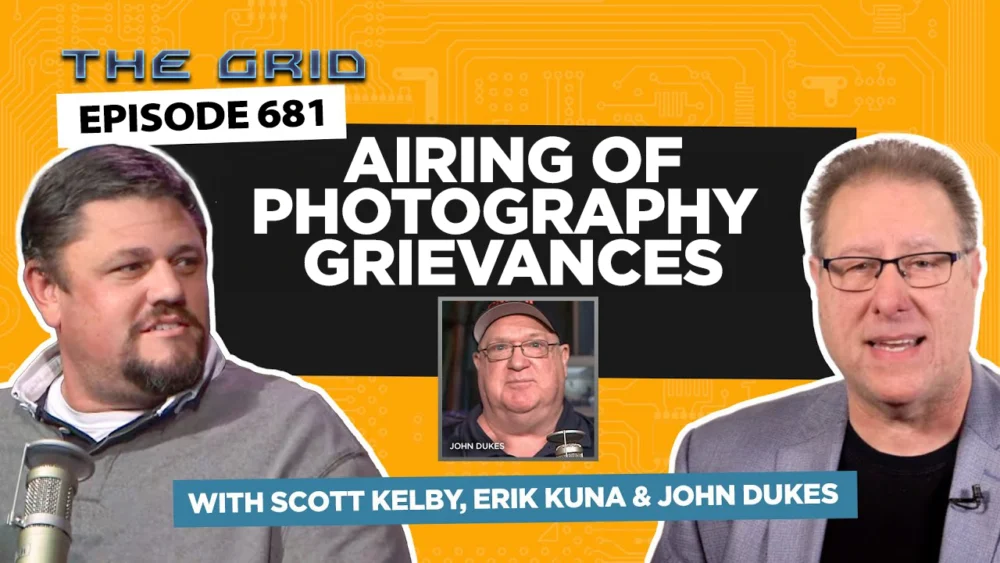
This week, Episode 708 of The Grid, the widely recognized online photography talk show, featured a highly anticipated segment of Blind Photo Critiques, with hosts Scott Kelby and Erik Kuna dissecting a diverse portfolio of submitted images. The session offered profound insights into various photographic genres, including landscapes, astrophotography, portraits, wildlife, travel, and street photography, emphasizing both technical post-processing acumen and fundamental compositional principles crucial for elevating photographic artistry. The episode, a staple for photographers seeking to refine their craft, underscored the enduring value of expert critique in a rapidly evolving digital landscape.
The Enduring Appeal of The Grid and Blind Critiques
The Grid, a cornerstone of online photography education, has for years served as a vital resource for photographers globally, offering weekly discussions, tutorials, and critiques. Hosted by Scott Kelby, CEO of KelbyOne and a prolific author and educator in the photography and Adobe software space, alongside Erik Kuna, a renowned photographer and educator, the show leverages their combined decades of experience to provide practical, actionable advice. The "Blind Photo Critiques" segment, in particular, stands out for its objectivity. Submissions are reviewed anonymously, ensuring that the focus remains squarely on the image itself—its strengths, weaknesses, and potential for improvement—rather than the photographer’s reputation or equipment. This format fosters an unbiased learning environment, allowing viewers to see common photographic pitfalls and effective solutions through the eyes of seasoned professionals.
The origins of The Grid trace back to a period of significant transition in photography, moving from analog to digital, and from desktop software to cloud-based solutions. KelbyOne, the educational platform behind The Grid, emerged as a leader in providing accessible, high-quality training for Adobe products like Photoshop and Lightroom, alongside broader photographic techniques. The Grid quickly became an extension of this mission, offering a dynamic, live, and interactive platform for community engagement and continuous learning. Its longevity, spanning hundreds of episodes, attests to its relevance and the consistent demand for expert guidance in a field where technology and artistic trends are in constant flux.
Key Technical Insights for Lightroom Users
A significant portion of Episode 708 was dedicated to demonstrating advanced techniques within Adobe Lightroom, a ubiquitous tool in the modern photographer’s workflow. Scott Kelby meticulously illustrated how targeted adjustments, particularly through masking and gradients, can fundamentally alter an image’s impact. He showcased how these tools are not merely for correction but are powerful instruments for artistic direction, guiding the viewer’s eye to the intended focal points.
One of the highlighted techniques involved leveraging Lightroom’s often-underutilized masking tools. While many users are familiar with basic radial and linear gradients, Kelby delved into more nuanced applications, demonstrating how precise local adjustments can dramatically enhance an image’s depth and dimensionality. For instance, he illustrated how to subtly darken edges to create a natural vignette, drawing attention inward, or how to selectively brighten a subject without affecting the background. This granular control, he explained, is paramount in achieving a polished, professional look that distinguishes a well-edited photograph from a merely captured one.
Furthermore, the episode tackled the common challenge of recovering detail from washed-out images. Kelby provided a step-by-step walkthrough of techniques to restore contrast, definition, and color saturation, effectively breathing new life into photographs that might otherwise be deemed unusable. This segment was particularly valuable for photographers who often encounter difficult lighting conditions, such as harsh midday sun or overly bright scenes, emphasizing that post-processing can salvage and even elevate images captured under less-than-ideal circumstances.
Another compelling demonstration involved using color adjustments to evoke a specific mood, specifically achieving a warm, "golden-hour" aesthetic. Kelby detailed how to manipulate color temperature, tint, and saturation, alongside selective hue adjustments, to transform an image captured at any time of day into one imbued with the rich, inviting glow characteristic of sunrise or sunset. This artistic application of Lightroom tools showcased the software’s capacity not just for technical correction but for creative expression, allowing photographers to infuse their personal vision into their work. The emphasis was on understanding the interplay of color science and emotional impact, providing viewers with a framework to apply these principles to their own diverse portfolios.
The Paramount Lesson: Clarity of Subject and Elimination of Distraction
Beyond the intricate technical demonstrations, the overarching and repeatedly emphasized lesson from Kelby and Kuna was the fundamental importance of clearly defining the subject and ruthlessly eliminating anything that competes for attention. This principle, while seemingly simple, is often overlooked by photographers of all skill levels and forms the bedrock of compelling imagery.
Kelby and Kuna consistently returned to this point across all genres of photography reviewed. In landscape photography, they critiqued compositions where sprawling vistas lacked a definitive focal point, causing the viewer’s eye to wander without direction. For portraits, they highlighted instances where distracting backgrounds or competing elements within the frame detracted from the subject’s impact. Even in astrophotography, where the night sky itself is often the subject, they pointed out how light pollution or an overly busy foreground could dilute the grandeur of the stars.
The solutions presented were varied, illustrating that there isn’t a single magic bullet. Sometimes, the answer lay in applying the very Lightroom techniques demonstrated earlier—using masks and targeted adjustments to subtly darken or desaturate distracting elements, thereby allowing the main subject to pop. Other times, the solution was more fundamental: a better crop. Kelby and Kuna demonstrated how aggressive cropping, even if it meant sacrificing some periphery, could dramatically improve an image’s focus and impact by simply removing extraneous information. They emphasized that a strong crop is not merely about fitting an image into a certain aspect ratio but about strengthening its narrative and visual hierarchy.
This core lesson underscores a critical aspect of photographic vision: the ability to see not just what is in the frame, but what shouldn’t be. It’s a testament to the idea that photographic excellence often hinges on subtraction as much as it does on addition. By simplifying the composition and ensuring the viewer’s gaze is directed unequivocally, photographers can create images that are not only aesthetically pleasing but also communicate their intended message with clarity and power.
Broader Implications for the Photography Community and Education
Episode 708 of The Grid exemplifies a broader trend in photography education: the democratization of high-level instruction and the continuous emphasis on foundational principles alongside technological proficiency. In an era where billions of photographs are taken daily, standing out requires more than just a good camera; it demands a sophisticated understanding of light, composition, and post-processing.
Platforms like KelbyOne and shows like The Grid play a crucial role in bridging the gap between amateur enthusiasm and professional execution. They offer accessible, bite-sized, yet profound lessons that cater to a global audience, transcending geographical limitations and traditional classroom settings. The ability to watch replays, like the one provided for this episode, further enhances the learning experience, allowing viewers to revisit complex concepts and practice techniques at their own pace.
The focus on Lightroom techniques also highlights the indispensable role of post-processing in modern photography. Gone are the days when a photograph was considered "finished" straight out of the camera. Contemporary photographic practice integrates capture and post-production as two inseparable stages of creation. Understanding software like Lightroom is no longer an optional skill but a fundamental requirement for anyone serious about photography, whether as a hobbyist or a professional. Data from Adobe consistently shows the widespread adoption of Lightroom, with millions of users globally relying on its powerful editing capabilities to refine their images. This episode serves as a timely reminder of the depth and breadth of tools available and the artistic potential they unlock.
Furthermore, the emphasis on compositional clarity and subject identification resonates across all visual arts. It speaks to the universal principles of effective communication. In a visually saturated world, the ability to create an image that immediately grasps and holds attention is invaluable. The "Blind Photo Critiques" format not only educates individual photographers but also fosters a culture of critical thinking and constructive feedback within the wider photographic community, encouraging continuous improvement and a higher standard of visual literacy.
The Evolution of Photographic Learning
The journey of photographic education has undergone a profound transformation. From the apprenticeship model of early photography and the darkroom workshops of the mid-20th century, to college photography programs, the internet has revolutionized access to knowledge. Online platforms, spearheaded by educators like Scott Kelby and Erik Kuna, have made expert-level instruction available to anyone with an internet connection, often at a fraction of the cost of traditional education. This accessibility has democratized photography, fostering a global community of learners and practitioners.
The format of The Grid, with its blend of live interaction, practical demonstrations, and critical analysis, represents the pinnacle of modern online learning. It addresses the diverse needs of its audience, from beginners grappling with basic settings to seasoned professionals seeking advanced post-processing techniques. The engagement observed in the comments sections and social media surrounding such episodes further solidifies the impact of this interactive, community-driven approach to learning.
In conclusion, Episode 708 of The Grid‘s "Blind Photo Critiques" served as a compelling masterclass, effectively blending advanced Lightroom techniques with timeless compositional wisdom. Scott Kelby and Erik Kuna’s methodical deconstruction of submitted photographs, coupled with their clear, actionable advice, provided invaluable lessons for photographers across all genres. The episode underscored that while technical proficiency in tools like Lightroom is essential, the true artistry lies in the clarity of one’s photographic vision—knowing what to include, and perhaps more importantly, what to exclude, to craft an image that truly resonates. The replay of this episode continues to offer a rich educational resource, reinforcing the notion that continuous learning and critical self-assessment are key to achieving photographic excellence in the digital age.