The evolution of the smartphone from a basic communication device to a sophisticated tool for visual expression has fundamentally altered the landscape of modern photography. According to recent market data from the International Data Corporation (IDC), the iPhone remains a dominant force in the global premium smartphone market, largely driven by its advancements in computational photography. As mobile imaging sensors become more capable of rivaling entry-level dedicated cameras, the demand for sophisticated techniques to maximize the potential of these devices has surged. Professional-grade portraiture, once the exclusive domain of high-end DSLR and mirrorless systems, is now increasingly accessible to the general public through the strategic application of lighting, composition, and narrative styling.
The Technological Evolution of iPhone Portraiture
To understand the current state of mobile portraiture, one must look at the chronology of Apple’s hardware and software integration. The pivotal moment occurred in 2016 with the release of the iPhone 7 Plus, which introduced the dual-lens system and the inaugural "Portrait Mode." This feature utilized a depth-mapping technique to simulate "bokeh"—the aesthetic quality of the out-of-focus parts of an image—previously only achievable through large-aperture lenses.
Since then, the introduction of the Neural Engine and the "Photonic Engine" in later models has allowed for real-time semantic rendering. This technology identifies specific features, such as eyes, hair, and skin textures, and applies discrete processing to each. In 2023 and 2024, the iPhone 15 and 16 series further refined this with "Next-Generation Portraits," which allow users to shift focus between subjects after a photo has been taken. This technological backdrop provides the foundation for the following seven artistic strategies designed to elevate iPhone portraiture from casual snapshots to compelling visual narratives.
1. Strategic Implementation of High-Contrast Lighting
High-contrast lighting, often referred to in classical art as chiaroscuro, is a technique that emphasizes the interplay between bright highlights and deep shadows. In the context of the iPhone’s CMOS sensor, high-contrast environments test the device’s dynamic range. To achieve a dramatic effect, photographers are encouraged to seek out "hard light" sources, such as direct midday sun or focused indoor lamps.
The methodology involves positioning the subject where the light source meets a shadow boundary. By tapping the subject’s face on the iPhone interface and utilizing the exposure slider (represented by a sun icon), the photographer can intentionally "underexpose" the image. This process ensures that the highlights remain detailed while the shadows recede into a rich, dramatic black. Data suggests that high-contrast images often perform better in black-and-white formats, as the absence of color further emphasizes the structural geometry of the subject’s face.
2. Utilization of Environmental Light Patterns
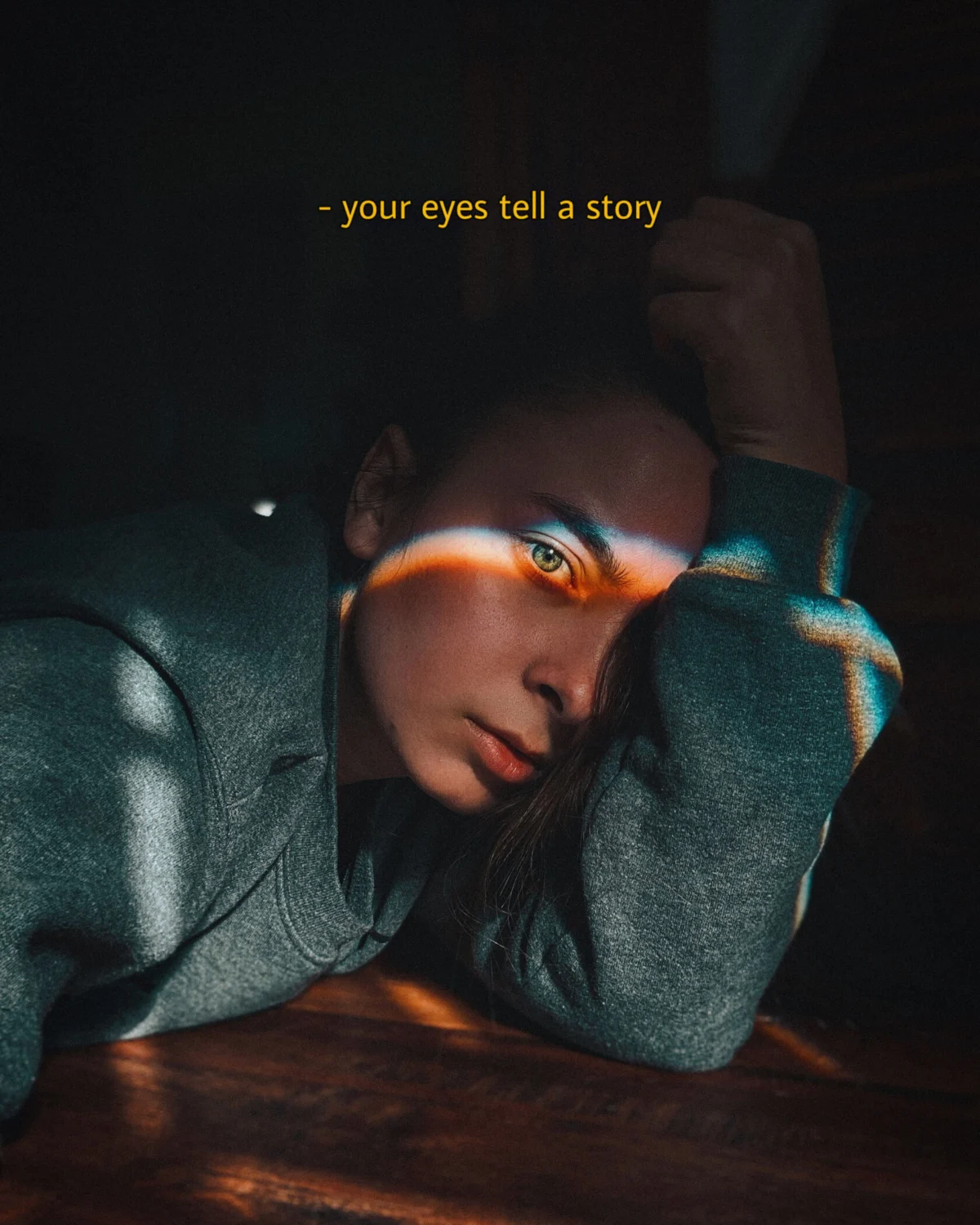
Beyond simple illumination, the use of patterns—shadows cast by physical objects—adds a layer of complexity to a portrait. Known in the film industry as "gobos" (go-betweens), these patterns can be found naturally in the environment, such as sunlight filtering through venetian blinds, the lattice of a fence, or the organic shapes of foliage.
Technically, the iPhone’s software excels at identifying these patterns when the subject is close to the background. By positioning a subject so that the light pattern falls across their features, the photographer creates a sense of depth and mystery. This technique is particularly effective for highlighting specific anatomical features, such as the iris of the eye, while obscuring others. Analysis of mobile photography trends indicates that textured lighting is a key differentiator between amateur work and "fine art" mobile photography.
3. Advanced Posing and Low-Angle Perspectives
The physical orientation of the camera relative to the subject significantly influences the psychological impact of the portrait. While eye-level shots are standard, professional photographers often employ low-angle perspectives to instill a sense of power or dynamism. Using the iPhone’s wide-angle or ultra-wide-angle lens at a low height can elongate the subject’s frame and create a more immersive experience for the viewer.
Posing also plays a critical role in the narrative. The "framing" technique, where the subject’s hands are used to draw attention to the face, creates a natural focal point within the digital frame. Furthermore, asking a subject to tilt their head or place a hand on their neck can alter the mood from formal to candid. These adjustments are essential for breaking the "static" nature of traditional headshots, providing a more fluid and engaging composition.
4. Evoking Mood Through Movement and Burst Mode
One of the most significant advantages of modern smartphone photography is the high frame rate available through "Burst Mode." This feature allows the capture of ten frames per second, making it possible to document fleeting moments of movement that the human eye might miss.
To create a "dreamy" or ethereal mood, photographers often incorporate flowing elements, such as fabric, long dresses, or hair in motion. By having the subject move or toss fabric into the air and utilizing Burst Mode, the photographer can select the precise millisecond where the movement is most graceful. This approach negates the limitations of the iPhone’s shutter lag and ensures that the final image possesses a professional, high-shutter-speed aesthetic.
5. Multi-Subject Composition and Depth of Field
Capturing two or more individuals presents a unique challenge for the iPhone’s Image Signal Processor (ISP). The device must calculate multiple depth planes to ensure all subjects are rendered correctly. A sophisticated way to handle this is by varying the distance of the subjects from the lens.
When one subject stands closer to the camera and another stands slightly back, it creates a "layered" effect. If the iPhone is set to Portrait Mode, the device will apply a soft blur to the subject further away, mimicking the shallow depth of field of a 35mm full-frame camera. This technique is highly effective for sibling or couple portraits, as it emphasizes the relationship between the individuals through spatial orientation rather than just a side-by-side stance.
6. The Role of Props in Visual Storytelling
In journalistic and editorial photography, a prop is rarely just an object; it is a narrative device. Incorporating items such as vintage books, coffee cups, or flowers can immediately communicate a theme—whether it be cozy domesticity, intellectualism, or romanticism.
The use of props also provides a practical benefit: it gives the subject a "task," which often results in more natural facial expressions and body language. For more avant-garde portraits, props like blindfolds or translucent fabrics can be used to convey internal emotional states. This shift from "taking a picture" to "creating a scene" is a hallmark of professional-grade mobile photography.
7. Wardrobe Styling and Color Theory
The aesthetic success of a portrait is heavily dependent on the subject’s attire. Professional photographers often utilize color theory—such as complementary colors (blue and orange) or analogous colors (various shades of green)—to ensure the subject either pops from the background or blends harmoniously into it.
For instance, a subject in a neutral-toned woolen jumper in a forest setting evokes a "cozy" and organic theme. Conversely, a sequinned outfit in a metropolitan environment creates a sense of glamour and high-energy urban life. The iPhone’s "Smart HDR" technology is specifically tuned to recognize and enhance these color relationships, ensuring that skin tones remain accurate while the colors of the clothing are vibrant and saturated.
Broader Impact and Implications
The democratization of high-quality portraiture via the iPhone has had profound implications for the photography industry. According to data from Flickr, the iPhone has consistently been the most used "camera" on the platform for several years, surpassing traditional giants like Canon and Nikon. This shift has forced the traditional camera industry to pivot toward high-end professional markets, as the "point-and-shoot" segment has been almost entirely absorbed by smartphones.
Furthermore, the rise of social media platforms like Instagram and TikTok has created a "visual-first" culture where the ability to produce high-quality imagery is a form of social and professional currency. As AI-driven post-processing continues to evolve, the line between "captured" reality and "computed" reality will continue to blur. However, as the techniques outlined above demonstrate, the fundamental principles of photography—light, composition, and story—remain the essential components of a compelling portrait, regardless of the hardware used.
In conclusion, the iPhone is no longer merely a device for documentation; it is a sophisticated instrument for art. By mastering high-contrast light, environmental patterns, creative posing, movement, multi-subject layering, prop usage, and intentional styling, users can transcend the limitations of mobile hardware and produce portraits that are both technically proficient and emotionally resonant. This intersection of human creativity and computational power represents the next frontier of the photographic medium.