The traditional paradigm of street photography has long favored the "golden hour" or the crisp clarity of a bright afternoon; however, a burgeoning movement among mobile photographers is challenging these conventions by embracing adverse weather conditions as a primary creative catalyst. While casual users often retreat indoors during rain, snow, or fog, professional practitioners, including Philadelphia-based fine art street photographer Andrew Gimblet, argue that these environmental challenges provide the necessary atmospheric depth to transform mundane urban scenes into compelling visual narratives. This shift in perspective is supported by advancements in mobile hardware, specifically the Apple iPhone, which has increasingly integrated sophisticated computational photography and environmental sealing to facilitate high-end art production in the most demanding climates.
The Technical Evolution of Mobile Street Photography
The feasibility of capturing high-quality street images in inclement weather has been significantly bolstered by the evolution of smartphone hardware. Since the introduction of the iPhone 7, Apple has progressively improved the Ingress Protection (IP) ratings of its devices. Current models, such as the iPhone 14 and 15 series, boast an IP68 rating, signifying resistance to dust and water submersion for up to 30 minutes at a depth of six meters. This technical foundation allows photographers to operate in heavy rain without the cumbersome waterproof housings required by traditional DSLR or mirrorless systems.
Beyond physical durability, the integration of computational photography—specifically Smart HDR and Deep Fusion—allows the iPhone to manage the complex lighting scenarios common in bad weather. In rainy or foggy conditions, light is often diffused, leading to low-contrast scenes that can appear "flat." The iPhone’s internal image signal processor (ISP) works to recover highlight and shadow detail in real-time, providing a robust RAW file that serves as a canvas for post-processing.
Tactical Approaches to Precipitation and Urban Storytelling
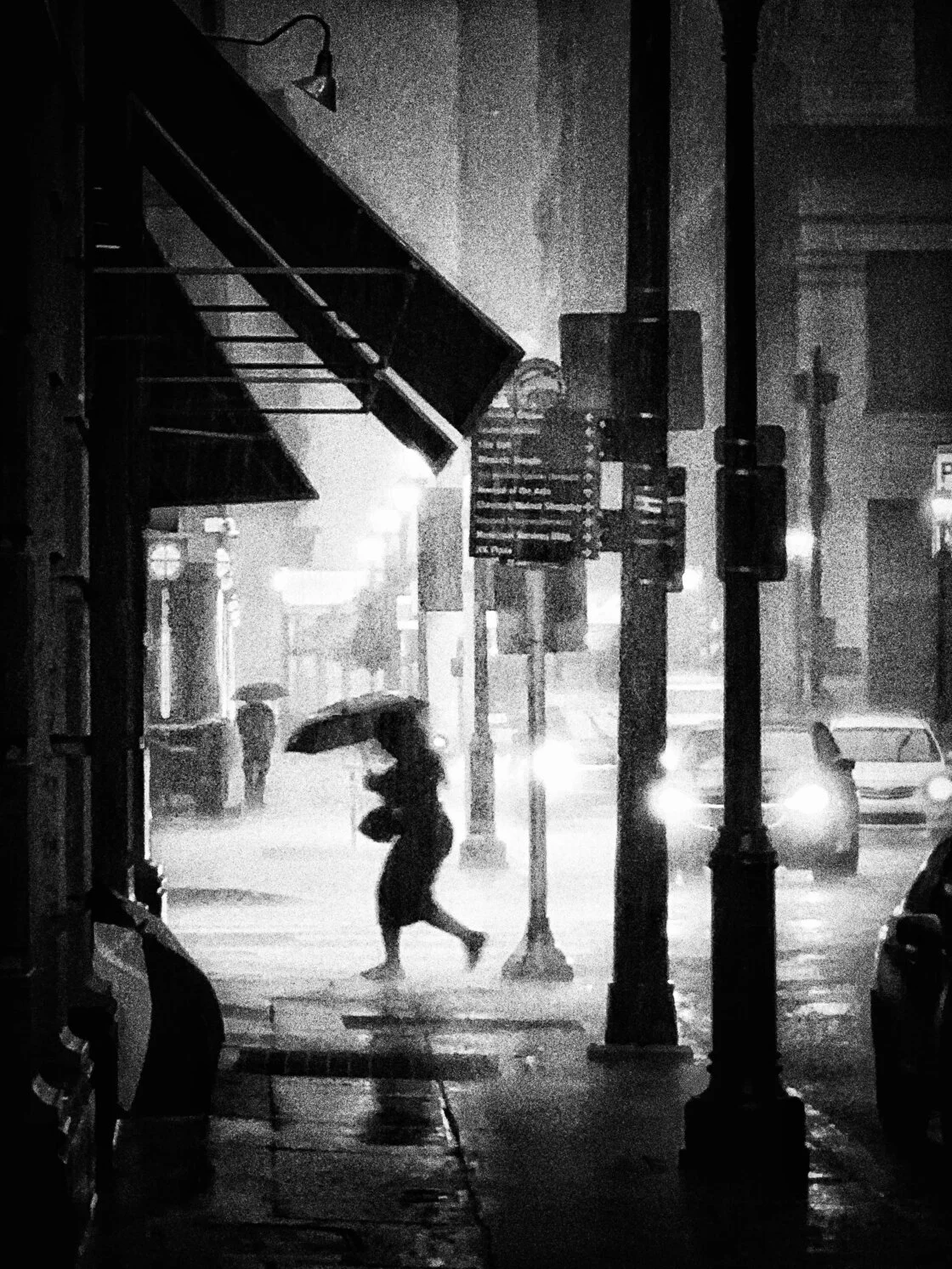
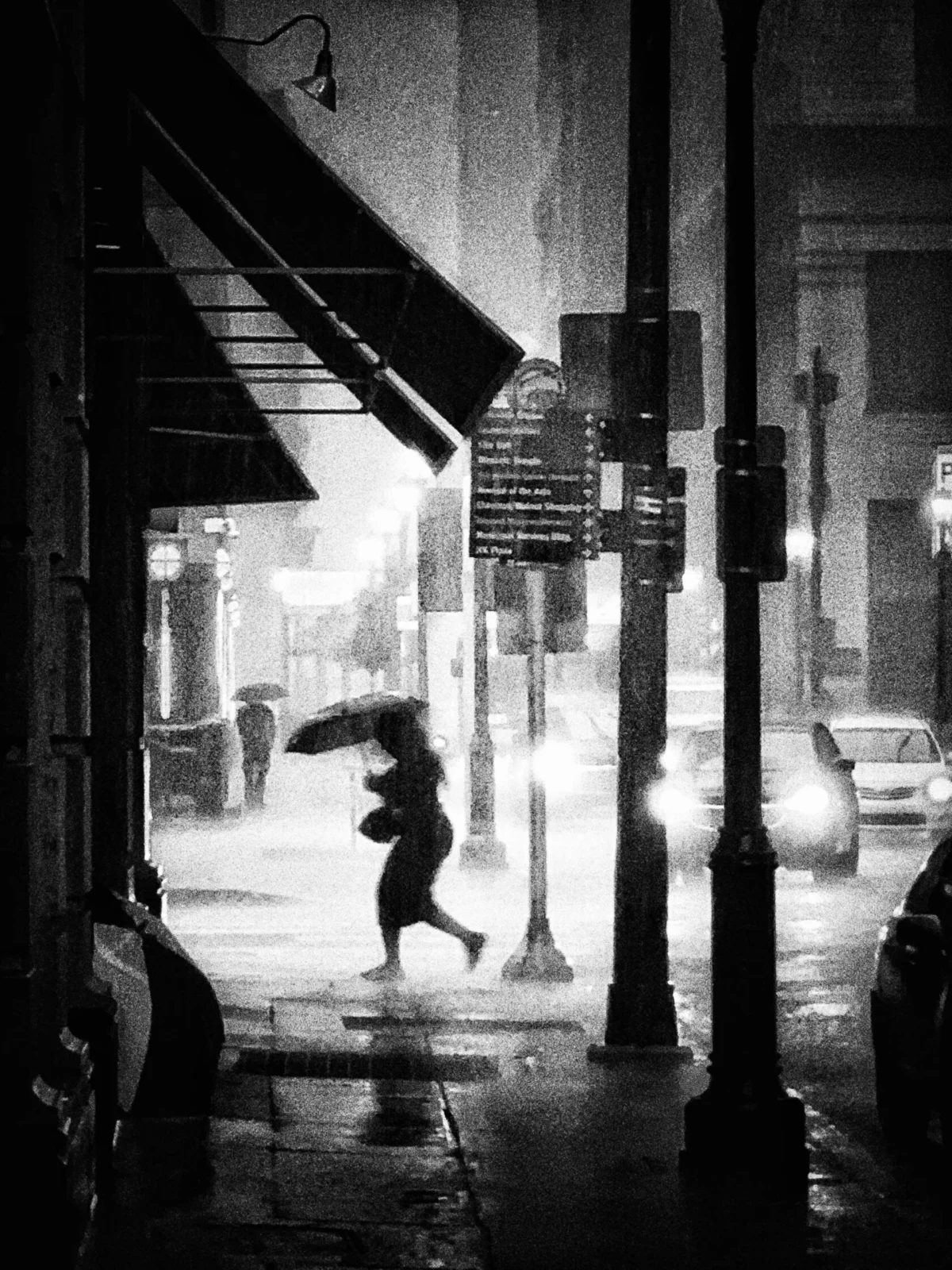
Rain serves as a transformative element in the urban environment, altering the texture of surfaces and the behavior of the populace. One of the most effective strategies for capturing the essence of a storm without compromising the photographer’s comfort is the utilization of architectural "fishing holes." These are covered areas—awnings, bus shelters, archways, and doorways—that provide a dry vantage point from which to observe the street.
The presence of umbrellas introduces a specific geometric and color-based focal point into the frame. In a gray, rain-slicked city, a brightly colored umbrella provides a "color pop" that draws the viewer’s eye, while the circular shape offers a contrast to the rigid, vertical lines of metropolitan architecture. Photographers often wait for a "lone figure" to enter the frame, using the subject to convey a sense of isolation or resilience against the elements.
Creative Obstructions and Window Optics
Inclement weather allows for the exploration of "obstructed views," a technique where the photographer shoots through a secondary medium to create an abstract or impressionistic effect. Rain-streaked windows—whether in a café, a bus, or a train station—act as a natural filter. By positioning the iPhone lens close to the glass and manually setting the focus on the water droplets, the background is rendered into a soft, bokeh-heavy blur.
This technique relies on the principle of shallow depth of field. While mobile sensors are smaller than full-frame counterparts, the proximity of the lens to the droplets creates a physical focus fall-off that isolates the foreground. This creates an "abstract quality" that encourages the viewer to interpret the scene emotionally rather than literally, a hallmark of fine art street photography.
The Physics and Geometry of Puddle Reflections
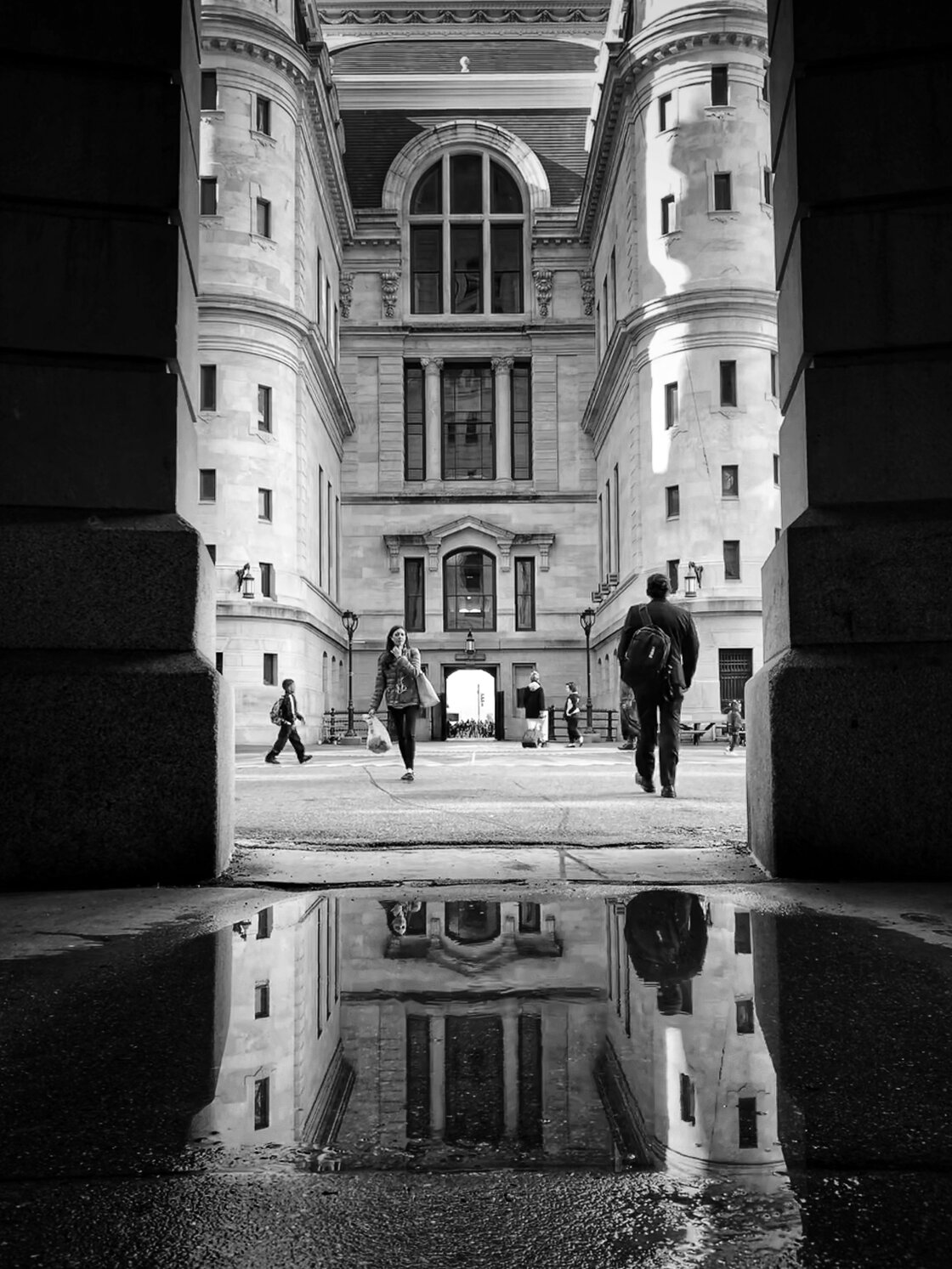
Post-precipitation environments offer perhaps the most celebrated opportunity in modern street photography: the puddle reflection. Achieving a professional-grade reflection shot requires a departure from eye-level perspective. Practitioners recommend a low-angle approach, often flipping the iPhone upside down so the lens is situated mere millimeters above the water’s surface. This maximizes the reflective surface area and creates a symmetrical "world within a world."
To capture the "decisive moment"—a term coined by Henri Cartier-Bresson—photographers utilize Burst Mode. On modern iPhones, this is triggered by dragging the shutter button to the left or holding the volume-up button, depending on user settings. This allows for the capture of 10 frames per second, ensuring that the subject’s gait, such as the specific "V" shape of a walking person’s legs, is perfectly frozen in the reflection.
Advanced Post-Processing: The Symmetrical Flip
A common analytical technique used to enhance the impact of reflection photography is the vertical inversion. By rotating the final image 180 degrees during the editing phase, the reflection is placed at the top of the frame. This "creative twist" creates a sense of cognitive dissonance in the viewer, forcing them to re-evaluate the orientation of the image. This technique is easily executed within the native iOS Photos app or third-party suites like Adobe Lightroom Mobile, and it serves to elevate a standard reflection into a piece of surrealist art.
Winter Narratives and Exposure Compensation Challenges
Snowfall presents a unique set of challenges for the iPhone’s internal light meter. Because the camera is calibrated to "18% gray"—a middle-tone standard—the overwhelming whiteness of a snowy scene can trick the sensor into underexposing the image. This results in snow that appears muddy or gray rather than bright and pristine.
To counteract this, photographers must utilize manual exposure compensation. By tapping the subject on the iPhone screen and swiping the "sun" icon upward, the user can manually overexpose the shot, ensuring the whites remain bright. This technical adjustment is crucial for maintaining the "bright and airy" mood associated with winter scenes. Furthermore, shooting against dark backgrounds—such as brick buildings or dark coats—is necessary to make individual snowflakes visible to the sensor.
Atmospheric Fog and the Management of Mystery
Fog is perhaps the most sought-after condition for "moody" street photography. It provides a natural "depth haze," where objects further from the lens gradually fade into obscurity. This creates a sense of three-dimensional depth that is often difficult to achieve in clear conditions.
The key to successful fog photography is the inclusion of a strong foreground element to anchor the composition. A lone figure or a street lamp serves as a point of reference, while leading lines—such as a bridge railing or a road—draw the eye into the "mystery" of the background. In these conditions, silhouettes are particularly effective. By tapping on the brightest part of the fog and swiping down to reduce exposure, the photographer can render the subject as a pitch-black shape, emphasizing form over detail.
The Monochrome Solution: Contrast and Texture
A significant drawback of bad-weather photography is the "muddy" color palette caused by overcast skies. The professional solution is the conversion of these images to black and white. Removing color forces the viewer to focus on contrast, texture, and light.
Successful monochrome street photography requires a high dynamic range—the presence of both deep blacks and bright highlights. Even in flat, gray weather, photographers look for artificial light sources, such as car headlights, neon signs, or street lamps, to provide the necessary "spark" of contrast.
The Digital Darkroom: Third-Party Ecosystems
While the iPhone’s native tools are powerful, the professional community often relies on a specific ecosystem of apps to finalize their work.
- Adobe Lightroom Mobile: Provides granular control over the histogram and selective masking.
- Snapseed: A Google-owned app favored for its "Tune Image" and "Expand" features.
- Blackie: A specialized app designed specifically for high-contrast black and white photography, emulating the grain and response of traditional film stocks.
The choice of app often dictates the "vibe" of the final piece—whether it is a clean, modern digital edit or a grainy, "grungy" look reminiscent of mid-century film photography.
Broader Impact and the Democratization of Fine Art
The work of photographers like Andrew Gimblet demonstrates a broader trend in the art world: the democratization of high-end urban documentation. By utilizing a device that is nearly ubiquitous, Gimblet and his contemporaries are proving that the "bad" in bad weather is a subjective label. From a journalistic and artistic standpoint, these conditions provide a more honest and evocative look at urban life than the sterilized perfection of a sunny day.
As mobile technology continues to bridge the gap between amateur snapshots and gallery-ready art, the "bad weather" movement serves as a reminder that the most compelling stories are often found in the conditions most people try to avoid. The city, when viewed through a rain-streaked lens or a thick morning fog, reveals a layer of mystery and emotion that remains hidden in the light of day. For the modern iPhone street photographer, the arrival of a storm is not a signal to stop, but a prompt to begin.