The transition from single-lens mobile devices to sophisticated multi-lens arrays has fundamentally altered the landscape of digital photography, placing professional-grade optical tools into the hands of hundreds of millions of users worldwide. As smartphone manufacturers, led prominently by Apple Inc., continue to refine their hardware, the distinction between casual snapshots and professional-grade imagery has blurred, necessitating a deeper understanding of how different focal lengths—specifically Wide, Ultra Wide, and Telephoto—impact the final composition. This shift is not merely a hardware upgrade but a paradigm shift in visual storytelling, where the user must transition from being a passive observer to an active director of optical perspective.
The Evolution of the iPhone Camera System: A Brief Chronology
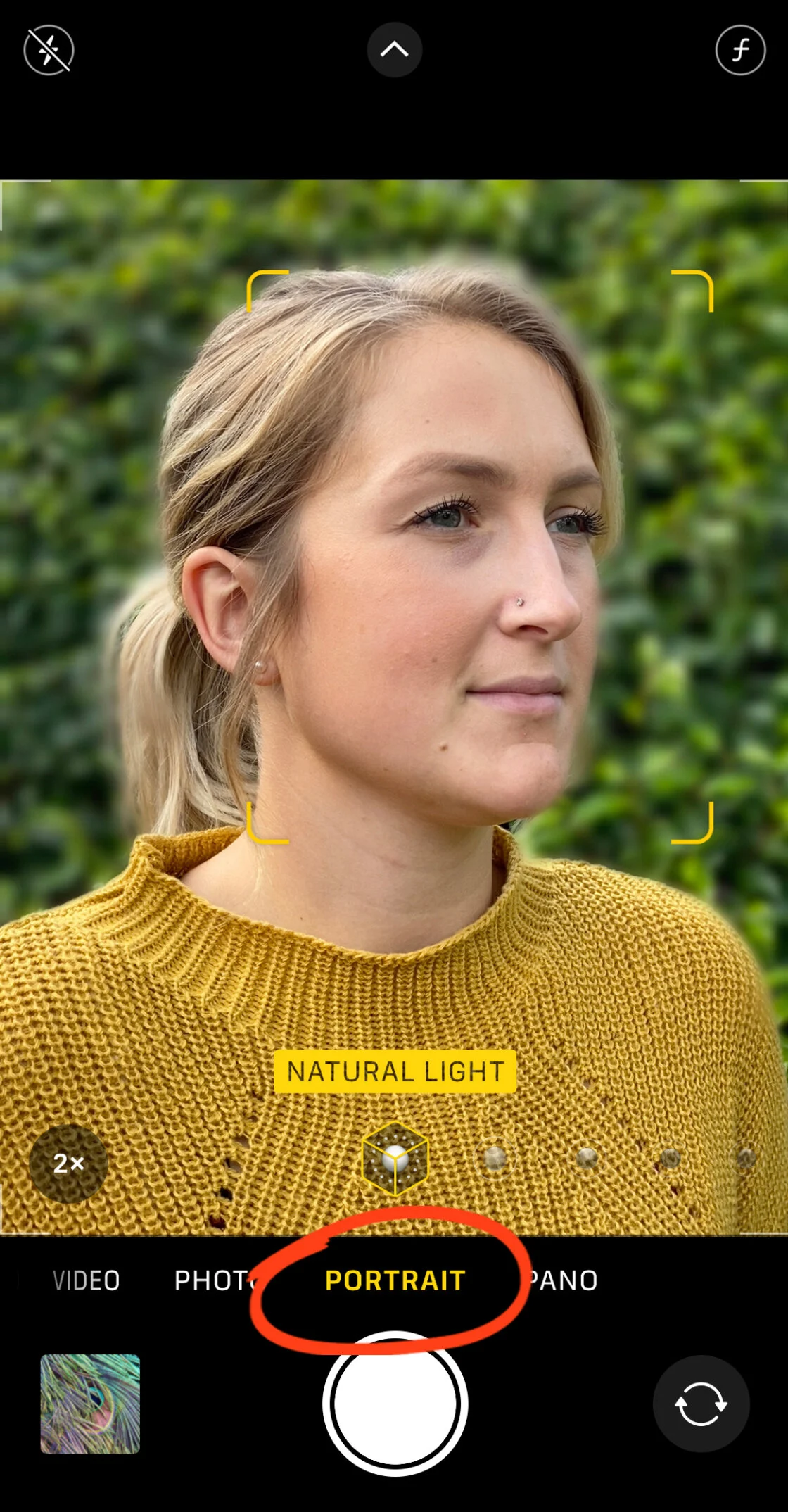
The journey toward the current multi-lens standard began in earnest in 2016 with the release of the iPhone 7 Plus. This device introduced the first dual-lens system on an Apple smartphone, featuring a 12-megapixel Wide lens alongside a 12-megapixel Telephoto lens. This innovation allowed for the introduction of "Portrait Mode," a software-driven depth-of-field effect that simulated the bokeh of high-end DSLR cameras.
By 2019, the launch of the iPhone 11 Pro marked the introduction of the "Pro" camera system, which added a third lens: the Ultra Wide. This 13mm-equivalent lens provided a 120-degree field of view, enabling photographers to capture expansive landscapes and tight interior spaces that were previously impossible to document without external attachments. The progression continued through the iPhone 12, 13, 14, and 15 series, with significant milestones such as the introduction of Sensor-shift optical image stabilization, ProRAW capabilities, and the 48-megapixel Main sensor. Most recently, the iPhone 15 Pro Max introduced the tetraprism design for a 5x optical zoom, pushing the boundaries of mobile telephoto capabilities to a 120mm focal length equivalent.
Technical Analysis of the Triple-Lens Array
To effectively utilize a modern iPhone camera, one must understand the specific technical attributes and ideal use cases for each lens. The "Main" or Wide lens is typically the most versatile and features the largest sensor. On recent Pro models, this is a 24mm-equivalent lens with a fast f/1.78 aperture, designed to excel in low-light conditions and provide the highest level of detail. It is the default lens for most daily photography, offering a balance of field-of-view and depth that mimics the human eye’s central focus.
The Ultra Wide lens, usually a 13mm-equivalent with an f/2.2 aperture, is characterized by its ability to exaggerate perspective. By capturing a significantly wider area, it allows for creative compositions that emphasize the foreground or encompass massive structures. However, this lens often introduces "barrel distortion" at the edges, a phenomenon where straight lines appear to curve outward—a trait that can be used artistically or corrected via software.
The Telephoto lens serves the opposite purpose, narrowing the field of view to bring distant subjects closer. Depending on the model, this may be a 3x (77mm) or 5x (120mm) optical zoom. Beyond simply "zooming in," the Telephoto lens provides "lens compression," a visual effect where the background appears closer to the subject, creating a more intimate and flattering look for portraiture. Understanding these optical physics is essential for any user looking to move beyond the "Point and Shoot" methodology.
The Role of Computational Photography and AI Integration
While the physical glass and sensors are critical, the "magic" of the iPhone camera lies in its silicon. Apple’s A-series chips utilize a Neural Engine to perform billions of operations per second the moment a shutter is pressed. This process, often referred to as computational photography, involves techniques such as Deep Fusion and Smart HDR.
Deep Fusion works by taking multiple exposures at different shutter speeds and analyzing them pixel-by-pixel to optimize for texture and detail in mid-to-low light. Meanwhile, the Photonic Engine, introduced with the iPhone 14, applies these enhancements earlier in the imaging pipeline on uncompressed images, preserving more data and color accuracy. This synergy between hardware (the lenses) and software (the processing) means that the choice of lens is not just a choice of zoom level, but a choice of how the onboard AI will interpret the light and shadow in a given scene.
Educational Imperatives in the Mobile Era
As the hardware has grown more complex, a significant "knowledge gap" has emerged among consumers. While many users own devices capable of professional output, few utilize the manual controls or understand the optical differences between their lenses. This has led to the rise of specialized educational platforms such as the iPhone Photo Academy, led by experts like Kate Wesson. These courses aim to bridge the gap between owning a high-end device and producing high-end art.
Industry analysts suggest that the demand for mobile photography education has increased by over 40% in the last three years, correlating with the rise of social media platforms like Instagram and TikTok, where visual quality is a key metric for engagement. Educational modules often focus on "intentionality"—choosing the Ultra Wide lens not just because a building is large, but because the photographer wants to create a sense of scale and drama.
Market Impact and the Decline of the Dedicated Camera
The proliferation of multi-lens smartphones has had a profound impact on the global imaging market. According to data from the Camera & Imaging Products Association (CIPA), global shipments of digital cameras have plummeted from a peak of 121 million units in 2010 to approximately 8 million units in 2023. The "point-and-shoot" category has been almost entirely eradicated, as the convenience and increasing quality of the iPhone’s Wide and Ultra Wide lenses offer a superior alternative for the average consumer.
Furthermore, the professional sector is seeing a slow but steady integration of smartphones into professional workflows. News organizations and independent journalists now frequently use iPhones for field reporting, citing the ability to switch between a wide-angle "establishing shot" and a telephoto "interview shot" on a single, pocketable device as a revolutionary efficiency.
Official Responses and Industry Perspectives
While Apple rarely comments on third-party educational content, their marketing strategy heavily emphasizes the "Shot on iPhone" campaign, which showcases the capabilities of their multi-lens systems in the hands of professional cinematographers and photographers. During the launch of the iPhone 15 Pro, Greg Joswiak, Apple’s Senior Vice President of Worldwide Marketing, stated that the new system provides "the equivalent of seven pro lenses in your pocket," referring to the various focal lengths achievable through the combination of optical glass and high-resolution sensor cropping.
Competitors like Samsung and Google have responded with their own multi-lens innovations, such as the 100x "Space Zoom" on the Galaxy S series and the "Real Tone" processing on the Pixel series. This competition has created a virtuous cycle of innovation, ensuring that mobile photography hardware continues to evolve at a rapid pace.
Broader Implications and the Future of Mobile Imaging
Looking forward, the implications of the multi-lens iPhone extend into the realms of Augmented Reality (AR) and spatial computing. The inclusion of LiDAR (Light Detection and Ranging) sensors alongside the camera lenses on Pro models allows the device to build a 3D map of its surroundings. This technology, combined with the data from the Ultra Wide and Wide lenses, is foundational for the development of "Spatial Photos" and "Spatial Videos" designed for the Apple Vision Pro headset.
The future of iPhone photography likely lies in the further integration of periscope lenses for even greater optical zoom and the use of larger, 1-inch type sensors that can compete with premium compact cameras. As these advancements materialize, the need for user education will only grow. The distinction between a "user" and a "photographer" is no longer defined by the equipment they carry, but by their mastery over the lenses at their disposal.
In conclusion, the modern iPhone is no longer just a communication device with a camera attached; it is a sophisticated optical instrument. By understanding the unique characteristics of the Wide, Ultra Wide, and Telephoto lenses, and by leveraging the computational power of the device, users can transcend simple documentation and enter the realm of professional-grade visual artistry. The move from a single lens to a multi-lens system represents one of the most significant technological democratizations in the history of the arts, ensuring that the tools for high-level creativity are available to anyone with the desire to learn.