Mobile photography has undergone a significant transformation over the last decade, evolving from a casual convenience into a sophisticated medium for fine art and professional journalism. While many amateur photographers relegate their equipment to their pockets during inclement weather, seasoned street photographers argue that rain, snow, and fog provide the most compelling conditions for visual storytelling. The convergence of advanced smartphone sensor technology and the unpredictable aesthetics of "bad" weather has created a new frontier for urban documentation. Philadelphia-based fine art street photographer Andrew Gimblet and other industry experts suggest that the challenges posed by adverse conditions—low light, moisture, and reduced visibility—are precisely the elements that elevate a standard street scene into a cinematic narrative.
The Evolution of Mobile Hardware in Adverse Conditions
The ability to capture high-quality imagery in challenging weather is largely supported by the rapid advancement of hardware durability and processing power. Modern mobile devices, particularly the iPhone 15 and 16 series, feature IP68 ratings under IEC standard 60529, allowing for water resistance at depths of up to six meters for up to 30 minutes. This technical threshold has effectively removed the barrier of equipment damage that once deterred photographers from shooting in the rain. Furthermore, the integration of computational photography—where software algorithms automatically adjust for low light and high contrast—allows for the retention of detail in the shadows of a storm or the highlights of a snowy landscape.
As the global mobile photography market is projected to reach significant valuations by 2030, the shift toward "moody" or atmospheric aesthetics has become a dominant trend on platforms such as Instagram and Vero. This shift emphasizes the importance of mastering specific techniques tailored for non-ideal lighting and environmental conditions.
1. Leveraging Rain as a Narrative Tool
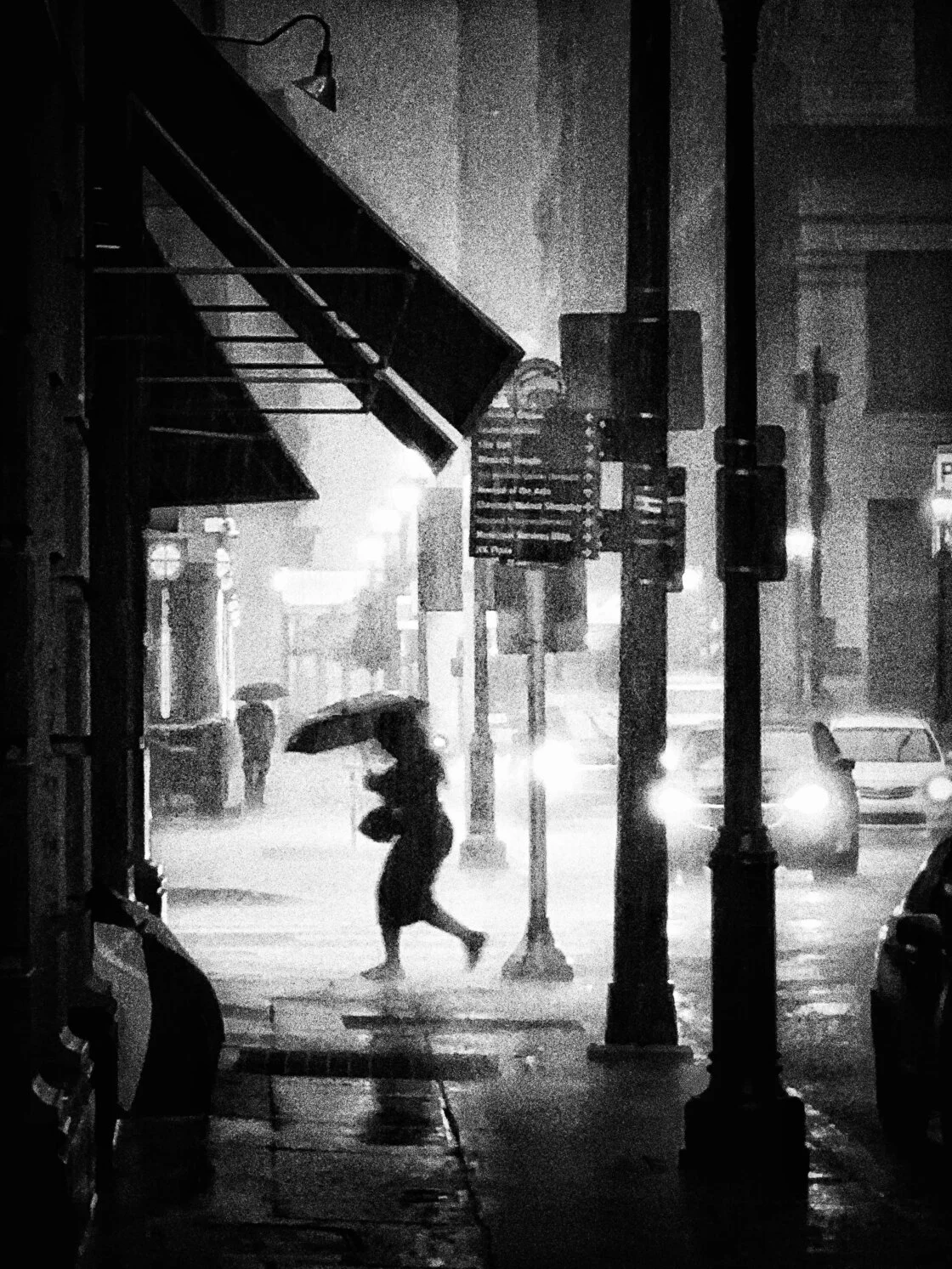
Rain serves as a natural filter for the urban environment, altering the way light interacts with surfaces. For the street photographer, the primary objective during a downpour is to identify a "fishing hole"—a pre-selected location with strong architectural lines where the photographer can remain dry while observing the flow of subjects. Common vantage points include bus stops, building awnings, and historical archways.
The presence of umbrellas introduces geometric variety and vibrant color splashes into otherwise monochromatic rainy scenes. From a compositional standpoint, an umbrella acts as a focal point that anchors the viewer’s eye. Industry analysis suggests that the "human vs. element" narrative is one of the most relatable themes in street photography, as it documents the universal experience of navigating the city’s natural obstacles.
2. The Optics of Moisture and Window Photography
Shooting through glass covered in raindrops offers a unique opportunity to explore abstraction. This technique relies on the iPhone’s ability to manage depth of field. By placing the lens in close proximity to a window—whether in a cafe, a bus, or a train station—and manually setting the focus on the droplets, the background is transformed into a soft, blurred "bokeh" effect.
This approach creates a layer of separation between the viewer and the subject, evoking a sense of voyeurism or introspection. Photographers are encouraged to use the "AE/AF Lock" feature by long-pressing on the screen to ensure the camera does not hunt for focus as subjects move past the glass. This technical precision allows the raindrops to remain sharp while the city lights and pedestrians dissolve into impressionistic shapes.
3. Puddle Reflections and the Physics of Symmetry
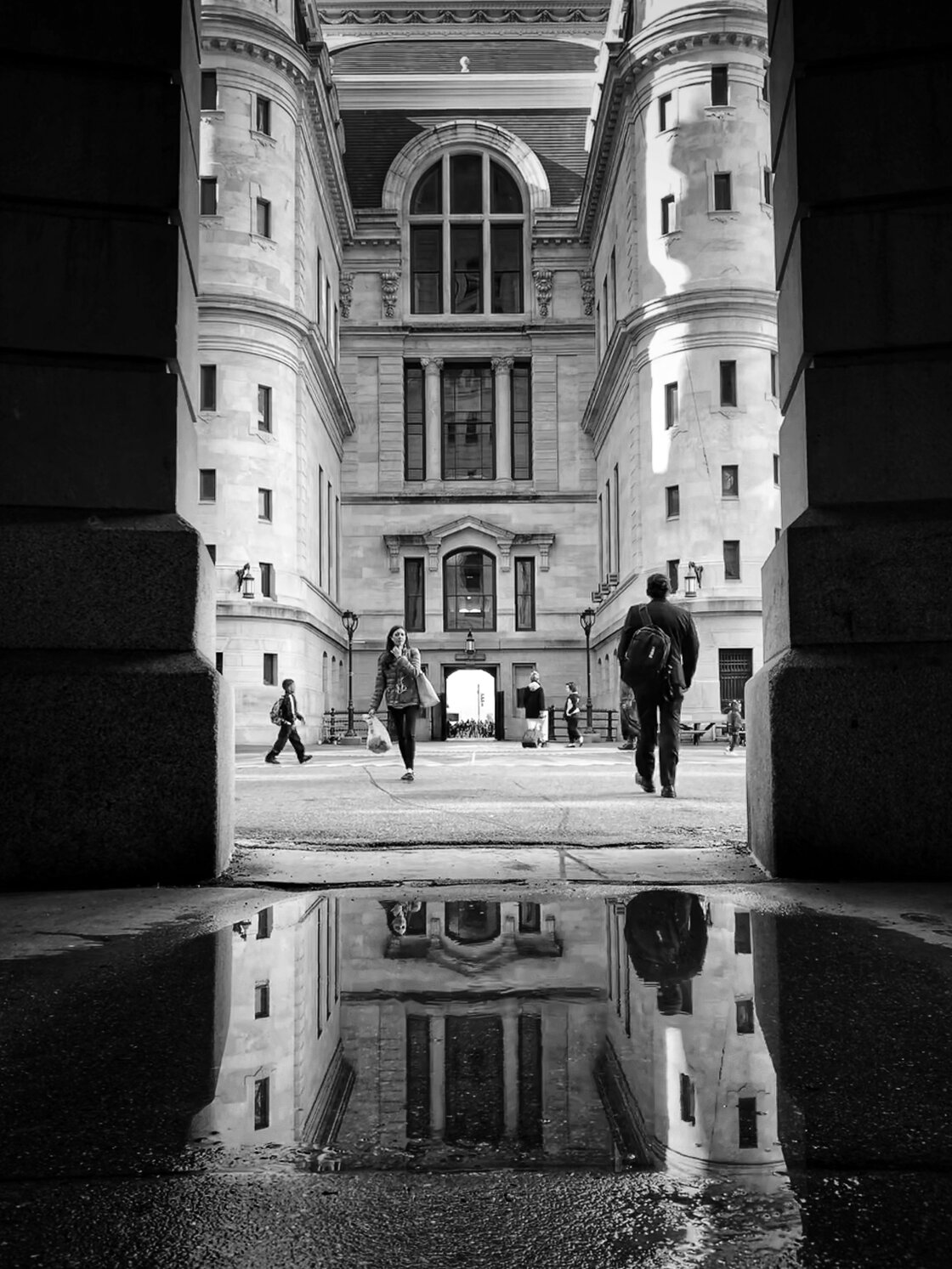
Post-rain environments provide a secondary set of opportunities through the formation of puddles. Puddles act as temporary mirrors, offering a symmetrical perspective of the city’s architecture and its inhabitants. To maximize the impact of a reflection, the camera lens must be positioned as close to the water’s surface as possible.
A common professional tactic involves inverting the iPhone so that the lens, located at the top of the device, is situated mere millimeters above the puddle. This low-angle perspective expands the field of view within the reflection. Utilizing "Burst Mode" is critical in these scenarios; by capturing a high-speed sequence of images as a pedestrian walks through the frame, the photographer can select the exact moment where the subject’s gait and the reflection align perfectly.
4. Post-Processing Techniques: The Inversion Strategy
A significant trend in modern reflection photography is the "inversion edit." By rotating a reflection-heavy photo 180 degrees during the editing process, the photographer creates a surrealist image where the water-bound world appears at the top of the frame. This technique disrupts the viewer’s spatial expectations and forces a more prolonged engagement with the image.
Data from photography workshops indicates that inverted images often receive higher engagement because they require the brain to "decode" the scene. This simple manipulation, achievable within the native iOS Photos app or third-party suites like Snapseed, highlights the creative flexibility inherent in mobile editing.
5. Capturing the Winter Narrative through Snow
Snow transforms the color palette of a city into a high-key environment. It provides a clean, minimalist backdrop that simplifies complex urban scenes. However, snow photography requires a specific understanding of the "storytelling" element. The most impactful winter photos often depict the physical struggle or the quiet isolation of the season—subjects wrapped in heavy coats, the clearing of sidewalks, or the muffled silence of a park.
To capture falling flakes effectively, photographers should seek out dark backgrounds, such as brick walls or shadowed alleyways. The contrast between the white snow and the dark background is essential for visibility, as snowflakes will disappear against a bright or overcast sky.
6. Technical Calibration: Overcoming Exposure Bias
Snow presents a unique challenge to the iPhone’s internal light meter. Because the camera is programmed to seek a neutral gray, a frame filled with white snow can trick the sensor into underexposing the image, resulting in "muddy" or gray-looking snow.
To rectify this, photographers must manually adjust the exposure slider. After tapping to set the focus, swiping upward on the screen increases the exposure value (EV), ensuring the snow remains bright and crisp. Conversely, reducing the exposure can create a "low-key" moody effect, emphasizing the harshness of a winter storm. This manual intervention is a hallmark of professional-grade mobile photography.
7. The Aesthetic of Mystery in Foggy Conditions
Fog acts as a natural diffuser, reducing contrast and muting colors to create a dream-like, ethereal atmosphere. In street photography, fog is used to isolate subjects and create a sense of depth. As objects recede into the distance, they gradually lose detail and fade into the mist—a phenomenon known as atmospheric perspective.
Leading lines, such as bridges, railings, or wet pavement, are particularly effective in fog. They guide the viewer’s eye into the "unknown" parts of the frame. The most successful foggy images typically feature a strong, dark subject in the foreground to provide a point of reference and a sense of scale against the surrounding void.
8. Silhouette Creation and Light Management
Foggy and overcast conditions are ideal for silhouette photography. By positioning a subject against the brightest part of the fog and significantly reducing the exposure, the photographer can strip away the subject’s features, leaving only a dark, anonymous outline. This anonymity adds to the mystery and allows the viewer to project their own narrative onto the scene.
The technical execution involves tapping the brightest part of the background to lock the exposure and then sliding the brightness control down until the subject is completely black. This technique is highly effective for creating dramatic, fine-art prints that emphasize shape and form over color and detail.
9. The Monochrome Shift: Enhancing Texture and Emotion
One of the most effective ways to handle the "flat" lighting of bad weather is to convert images to black and white. Removing color forces the viewer to focus on texture, contrast, and composition. In rain and fog, the subtle gradations of gray can be more evocative than a dull, desaturated color palette.
Professional mobile photographers often utilize specialized apps such as Adobe Lightroom Mobile, Snapseed, or Blackie to fine-tune their monochrome edits. These tools allow for the adjustment of "grain," which can emulate the look of traditional film photography, adding a timeless quality to modern digital captures. High contrast is key in black and white; seeking out areas where bright light (like a street lamp) meets deep shadow (like an alley) will produce the most striking results.
Broader Impact and Implications for Modern Media
The democratization of high-end photography through the iPhone has shifted the landscape of visual media. News outlets and galleries increasingly accept mobile-captured imagery, recognizing that the best camera is the one that is present during the "decisive moment." The ability to shoot in bad weather is no longer a niche skill but a fundamental requirement for the modern visual storyteller.
Analysis of social media trends suggests that "atmospheric" photography—images that capture specific weather-related moods—resonates more deeply with audiences than standard "fair-weather" shots. This is attributed to the emotional weight that weather carries in human psychology. By mastering these nine tips, photographers are not just taking pictures; they are documenting the atmospheric soul of the city, proving that there is no such thing as bad weather for photography—only different types of light.
As Andrew Gimblet’s work demonstrates, the intersection of patience, technical knowledge, and the right equipment allows for the creation of compelling art in the most inhospitable environments. For the iPhone photographer, the next storm is not a reason to stay indoors, but a call to the streets.