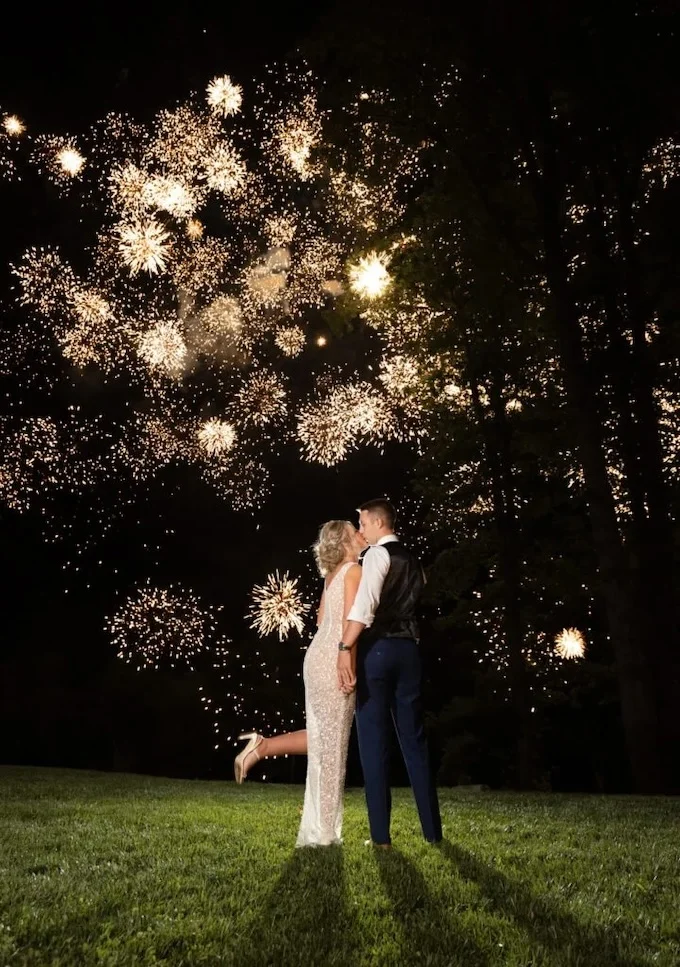
Fireworks are no longer confined to the fleeting spectacle of Independence Day. Their dazzling allure has become a staple at theme parks, sporting events, and, perhaps most surprisingly, at weddings. For photographers, fireworks offer a unique and breathtaking canvas for crafting truly epic couples portraits. However, achieving these striking images requires a blend of technical expertise in both fireworks photography and the art of capturing intimate couple moments. This guide delves into essential tips and creative ideas for photographers looking to infuse their couples sessions with the explosive excitement of a grand finale.

The brief, often ephemeral nature of fireworks displays – typically lasting a mere five to eight minutes – necessitates meticulous planning and efficient execution. Success hinges on anticipating the display, scouting optimal locations, and having a clear photographic strategy in place before the first rocket ignites.
Strategic Location Scouting: The Foundation of a Stellar Shot
The initial and perhaps most crucial step in photographing fireworks for couples portraits is identifying the ideal vantage point. When a wedding timeline includes a fireworks display, photographers should proactively seek information regarding the launch location and trajectory. Key sources for this intelligence include the couple themselves, the wedding planner, and venue staff.

The definition of the "best" angle is subjective and depends entirely on the desired aesthetic. An open expanse might be preferred for capturing the sheer scale of fireworks dominating the sky, with the couple as silhouettes or looking on in awe. Conversely, a location offering natural foreground elements like trees or architectural features can be used to frame the shot, adding depth and context. Thorough scouting is paramount to ensuring compelling composition, which is the linchpin of successful fireworks portraits.
Maximizing Dynamic Range: RAW Files and Precision Exposure Settings
Photographing fireworks presents a significant lighting challenge: the ambient environment is inherently dark, while the explosive bursts can easily overexpose, or "blow out," highlights if exposure settings are not carefully managed. To preserve the maximum detail in both the dark surroundings and the brilliant pyrotechnics, photographers must prioritize capturing images in RAW format.

RAW Files vs. JPEG: The Technical Imperative
RAW files offer unparalleled flexibility in post-production, allowing for extensive recovery of detail in both shadow and highlight areas. In contrast, JPEG files, due to their inherent compression, significantly reduce the dynamic range captured, limiting the ability to salvage lost information. For fireworks portraits, where extreme contrast is the norm, RAW is not merely a preference but a necessity for achieving a polished final image.

Exposure Settings: A Starting Point for Success
While specific settings will vary based on camera equipment, ambient light conditions, and the intensity of the fireworks, a foundational approach can be established.

- Aperture: An aperture between f/8 and f/11 is often recommended. This range provides sufficient depth of field to keep both the couple and a significant portion of the fireworks in focus, while also yielding sharp image quality.
- Shutter Speed: This is where the magic of long exposure comes into play. Shutter speeds ranging from 5 to 10 seconds are common. A longer exposure allows more light from the fireworks to register on the sensor, resulting in more vibrant trails and a fuller sky. Shorter exposures, around 2-5 seconds, will capture less of the fireworks’ transient beauty.
- ISO: Keeping the ISO as low as possible, typically between 100 and 400, is crucial for minimizing digital noise, especially in the darker areas of the frame.
- Focus: Manual focus is essential. Autofocus systems often struggle in low light and with the rapidly changing, bright subjects of fireworks.
Crucially, photographers must consult their camera’s histogram. This graphical representation of tonal distribution is invaluable. An ideal histogram for this scenario will show data distributed across the spectrum without excessive spiking on the far right (indicating blown highlights) or the far left (indicating underexposed shadows). A balanced histogram suggests that details are being retained across the dynamic range.
Mastering White Balance: Achieving Harmonious Tones
The color temperature of fireworks can vary dramatically, and achieving a consistent and pleasing white balance is key. A good starting point for white balance is often the "Tungsten" preset, which tends to counteract the warm tones of many artificial lights and can provide a balanced base for the cooler hues often present in fireworks.

If artificial light is being used to illuminate the couple, such as a flash or continuous light source, a CTO (Color Temperature Orange) gel can be applied to the light. In this scenario, setting the camera’s white balance to approximately 3200 Kelvin can help harmonize the flash with the ambient light and fireworks. Fine-tuning will be necessary to align with the photographer’s creative vision for the final image.
Lens Selection: Framing the Grandeur
The choice of lens depends on the desired field of view and compositional intent. A wide-angle lens is often favored for its ability to capture the expansive grandeur of the fireworks display and include the couple within the scene. However, photographers must consider that extreme wide-angle lenses can make communication with the couple more challenging if they are positioned at a distance.

Zoom lenses can be advantageous for their versatility. When used for tighter shots, they can effectively compress the scene, making the fireworks appear larger and more prominent within the frame. Conversely, a wide-angle lens is generally superior for encompassing both the couple and the full scope of the fireworks. It’s also worth noting that shooting slightly wider and cropping in post-production is a viable strategy if necessary, allowing for greater compositional flexibility.
The Art of Long Exposure: Capturing Motion and Light Trails
The extended shutter speeds inherent in fireworks photography are not just for capturing brightness; they are also instrumental in rendering the dynamic motion of the pyrotechnics. Long exposures, typically in the 5-10 second range, allow the light trails of the fireworks to be visibly traced across the night sky, adding a sense of movement and artistry to the image. Shorter exposures, while capturing more distinct bursts, will reveal less of this fluid light.

To mitigate camera shake during these prolonged exposures, a sturdy tripod is an absolute necessity. Furthermore, using a cable release, remote control, or the camera’s built-in delay timer (a 2-second delay is usually sufficient) will prevent any vibration from the photographer’s touch when pressing the shutter button, ensuring sharp images.
Illuminating Your Subjects: The Crucial Role of Lighting
Unlike typical fireworks photography where subjects are often secondary or intentionally left in shadow, couples portraits necessitate deliberate and skillful illumination of the subjects. The good news is that the brief window of the fireworks display allows for ample time to pre-set lighting and exposure before the show begins.

The lighting approach should mirror that of any portrait session, focusing on the couple as the primary subjects. The goal is to achieve a harmonious balance between the artificial light illuminating the couple and the ambient light from the fireworks. A common setup involves positioning the primary light source at approximately a 45-degree angle to the couple and camera, often with a slightly top-down orientation.
To further define the subjects, a backlight can be employed. Alternatively, modifiers like snoots or grids can be used to precisely control light spill, ensuring the light falls exclusively on the couple and not into the surrounding environment, which could compete with the fireworks. The specific lighting configuration will ultimately be guided by the photographer’s creative direction and the desired mood of the portrait.

Precision Focus: Embracing Manual Control
Autofocus systems can be notoriously unreliable when faced with the dynamic and often low-light conditions of fireworks photography. To ensure the couple remains perfectly sharp, switching to manual focus is imperative. Utilizing the camera’s live view function can aid in precisely focusing on the couple. Once focus is established, it is vital to confirm that manual focus is engaged and to leave it in that mode for the duration of the fireworks display.
The Power of Composites: Building a Masterpiece
For photographers seeking ultimate control over the final image, creating a composite offers a powerful solution. This technique involves combining multiple exposures: one perfectly lit and posed portrait of the couple, and several separate exposures capturing the fireworks. A tripod is indispensable for this method to ensure perfect alignment between frames.

Post-Production Workflow: Lightroom and Photoshop
The post-production process for a composite begins in Lightroom (or the photographer’s preferred editing software). Consistency is key, so all images intended for the composite should be edited identically. A streamlined workflow involves editing the couple’s portrait first and then applying those same adjustments to the fireworks exposures via batch editing.

The compositing itself is typically executed in Photoshop. The individual image files are stacked within a single document. By setting the blend mode of the fireworks layers to "Lighten," the brightest elements – the fireworks – will become visible. Layer masks are then used to selectively blend and refine the composition, seamlessly integrating the fireworks into the portrait of the couple.
Beyond Fireworks: The Sparkler Send-off
While not technically "fireworks," sparklers are a popular and visually striking element at weddings, particularly during grand exits. Their inclusion in couples’ sessions warrants specific photographic considerations.

The Advantage of Larger Sparklers
When advising couples on sparkler choices for photographs, recommending 36-inch sparklers over their 10-inch counterparts is highly beneficial. The extended burn time of larger sparklers provides photographers with more time to compose shots, direct the couple, and capture a greater variety of images.

Technical Settings for Sparkler Photography
Sparklers are a localized light source, and capturing them effectively often requires adjustments to camera settings to compensate for low ambient light.

- Moving Subjects (e.g., a grand exit): To freeze the motion of subjects moving through the sparkler light, higher ISO settings and wider apertures (e.g., f/2.8 or f/4) are often necessary. Shutter speeds may need to be faster to prevent motion blur.
- Static Subjects: For posed portraits with sparklers, photographers can afford to use lower shutter speeds, allowing more light to gather. This enables a more controlled exposure and potentially lower ISO.
Essential Safety Measure: The Safety Bucket
Handling sparklers inherently involves fire. It is paramount to have a designated safety bucket filled with water readily available. This provides a secure and immediate place to extinguish used sparklers, mitigating any fire hazards.

Conclusion: A Symphony of Light and Love
Photographing couples against the dazzling backdrop of fireworks or the whimsical glow of sparklers offers a unique opportunity to create truly memorable and artistic portraits. By mastering location scouting, understanding exposure and lighting, and employing thoughtful post-production techniques, photographers can transform fleeting moments of pyrotechnic brilliance into timeless testaments of love and celebration. The visual impact of these captures not only elevates the couple’s album but also underscores the photographer’s skill in harnessing dramatic elements to tell a compelling visual story.
The integration of fireworks into wedding photography has evolved from a novelty to a sophisticated art form, demanding technical prowess and creative vision. As these displays become more common, photographers who can expertly navigate the challenges of capturing such dynamic events will continue to offer couples unparalleled opportunities to immortalize their special day with a touch of spectacular magic. The images presented throughout this guide serve as a testament to the stunning possibilities that arise when love meets light in the night sky.