The Enduring Power of Migrant Mother: An Early Glimpse into an American Icon
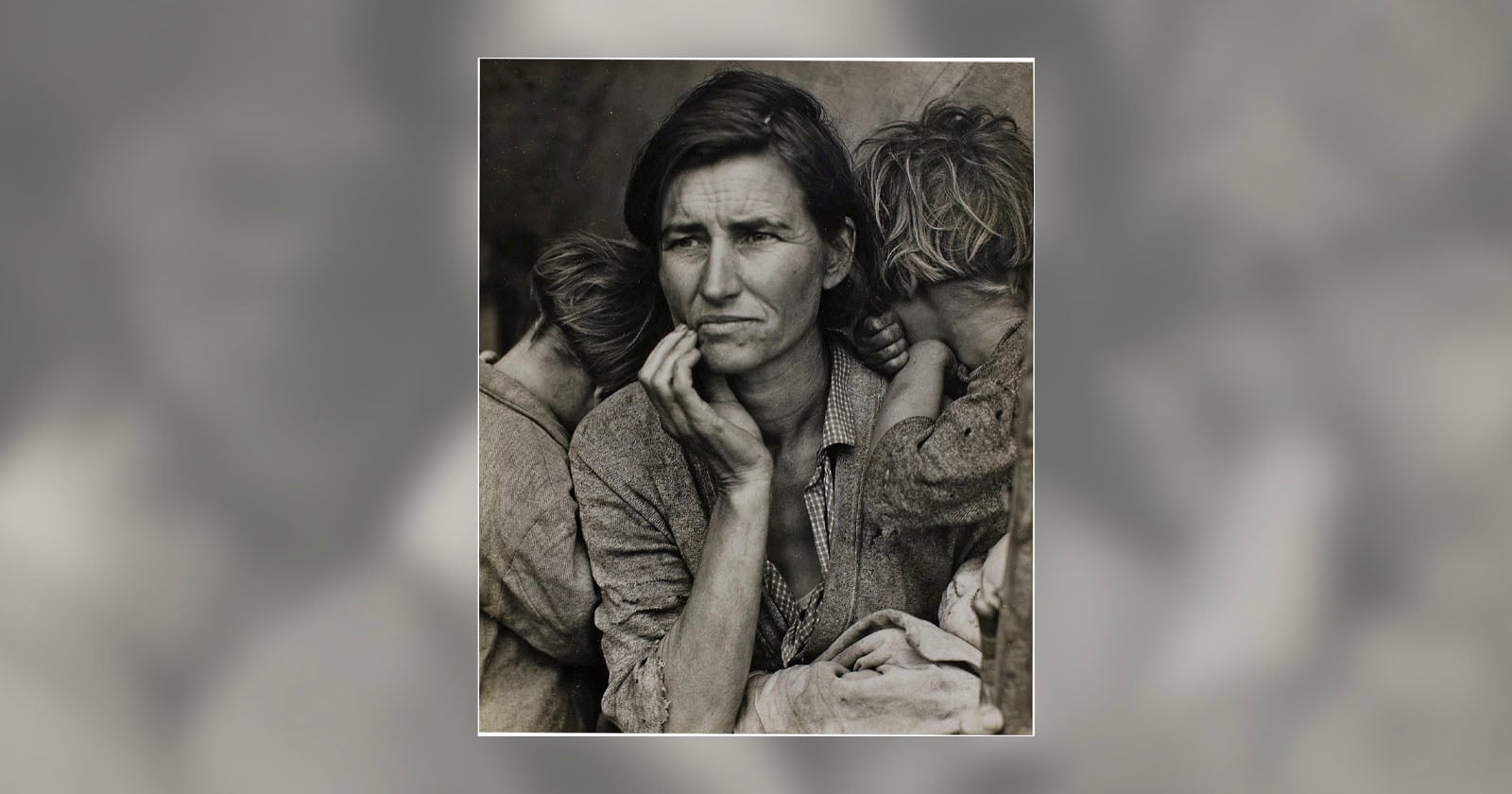
The undeniable centerpiece of Sotheby’s online print and photographic auction is an "exceptionally early" print of Dorothea Lange’s Migrant Mother. This photograph, easily among the most recognized images ever captured and arguably one of the top two most famous depictions of a human being, standing alongside Steve McCurry’s Afghan Girl, is expected to fetch between $100,000 and $150,000. Its appearance marks the first time this particular print has been offered at auction, adding to its allure and historical weight.
A Symbol of an Era: The Great Depression and the Resettlement Administration
To fully appreciate the gravity of Migrant Mother, one must understand the tumultuous period in which it was created. The Great Depression, spanning from 1929 to the late 1930s, plunged the United States into an unprecedented economic crisis, marked by mass unemployment, widespread poverty, and widespread internal migration, particularly from the Dust Bowl states to California in search of agricultural work. It was against this backdrop of immense hardship that President Franklin D. Roosevelt’s administration launched a series of New Deal programs designed to provide relief, recovery, and reform.
Among these initiatives was the Resettlement Administration (RA), established in 1935, which later evolved into the Farm Security Administration (FSA) in 1937. The RA/FSA’s mission was multifaceted: to combat rural poverty, resettle farmers on more productive land, and provide assistance to migrant workers. A crucial component of their work was a photographic project, spearheaded by Roy Stryker, aimed at documenting the lives of ordinary Americans affected by the Depression. This initiative sought to garner public and congressional support for government aid programs by humanizing the crisis through powerful visual narratives.
Dorothea Lange, already a respected documentary photographer, was recruited by the RA in 1935. Her task was to visually chronicle the struggles of migrant farm workers in California, capturing the raw reality of their daily existence, their displacement, and their resilience. Lange’s empathetic approach and keen eye for human dignity made her an ideal choice for this crucial government project. Her photographs were not merely records; they were potent tools of social advocacy, designed to evoke empathy and spur action.
The Story Behind the Lens: A Chance Encounter in Nipomo
The now-iconic image of Migrant Mother was made in March 1936, during one of Lange’s assignments in California. Having spent nearly a month documenting the dire conditions faced by migrant laborers, Lange was on her way back to Berkeley when she spotted a makeshift camp of stranded pea pickers near Nipomo. Despite initially driving past, a powerful instinct compelled her to turn back. This decision led her to the tent where she encountered Florence Owens Thompson and her children.
Thompson, a 32-year-old mother of seven, was a Cherokee woman who had been widowed and then left by a second partner. She and her family were among the thousands of "Okies" and "Arkies" who had migrated west, seeking opportunities that often proved elusive. They were stranded in the pea-pickers’ camp after their car broke down, and Thompson had just sold the tires from her car to buy food for her children. Lange spent approximately ten minutes with Thompson, taking a sequence of six negatives with her 4×5-inch Graflex camera.
Lange later recalled the encounter: "I saw and approached the hungry and desperate mother, as if drawn by a magnet. I do not remember how I explained my presence or my camera to her, but I do remember she asked me no questions. I made five exposures, working closer and closer from a general to a more specific. I did not ask her name or her history. She told me her age, that she was thirty-two. She said she had been in California for some time in the pea fields, that there was no work, and that they were living on frozen vegetables from the surrounding fields, and birds that the children shot. She had just sold the tires from her car to buy food. There she sat in that lean-to tent with her children huddled around her, and seemed to know that my pictures might help her, and so she helped me. There was a sort of equality about it."
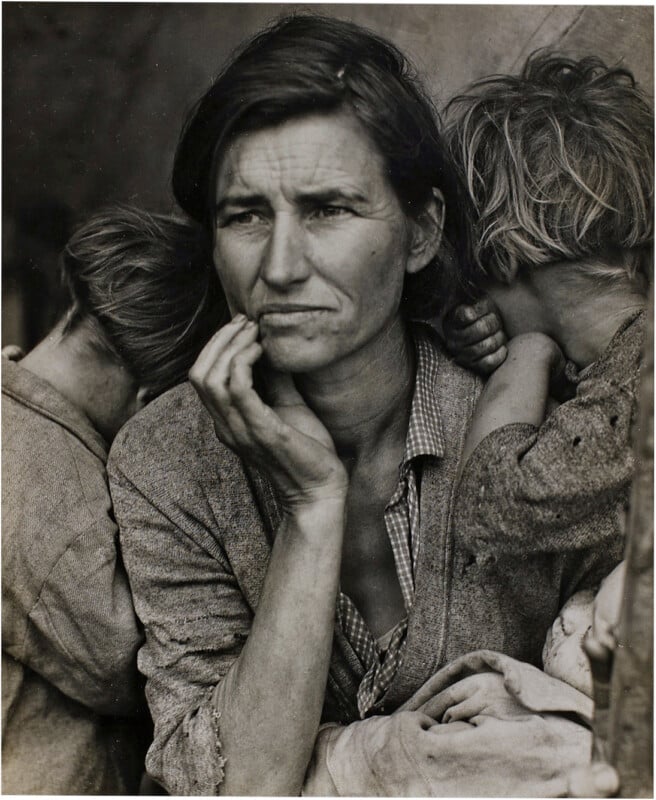
The final, and most famous, composition shows Thompson, her face etched with worry and weariness, resting her chin on her hand. Two of her children lean into her shoulders, their faces turned away from the camera, their vulnerability palpable. The image is a masterful blend of intimate portraiture and universal symbolism, capturing the essence of maternal strength amidst overwhelming adversity.
Immediate and Lasting Impact: A Catalyst for Change
Within days of its creation, Lange’s photographs of Florence Owens Thompson were rushed to publication. The San Francisco News published them as part of a series detailing the desperate circumstances confronting migrant workers. While not included in the initial article on March 10, the following day, Lange’s Migrant Mother illustrated an article titled "What Does the ‘New Deal’ Mean to This Mother and Her Child?" The immediate impact was profound: the newspaper alerted federal authorities to the dire conditions, leading to the rapid dispatch of 20,000 pounds of food to the camp in Nipomo.
Beyond its immediate journalistic purpose, Migrant Mother transcended its original context to become an enduring symbol of the Great Depression. It galvanized public opinion, humanized the suffering, and underscored the urgent need for social welfare programs. The image became a powerful icon in American culture, reprinted countless times in newspapers, magazines, and textbooks, shaping the collective memory of the era. Its powerful evocation of hardship, resilience, and maternal love continues to resonate, making it one of the most significant photographs of the 20th century.
The Unique Characteristics of this Auction Print
The specific print on offer at Sotheby’s is distinguished by its "exceptionally early" production, believed to have been executed in 1936 and likely printed between 1936 and 1937. This early provenance is critical, as it places the print squarely within the timeframe of its immediate impact and initial circulation.
What further sets this print apart are two distinctive details. Firstly, it retains the credit stamp of the Resettlement Administration, a direct link to its original purpose and institutional origin. This stamp is a tangible piece of its history as a government-commissioned document. Secondly, and perhaps more subtly, the print features Thompson’s thumb visible in the lower right corner. Sotheby’s notes this as a "distinctive detail that was subsequently removed from later printings." This minor imperfection, a remnant of the original negative or early cropping choices, makes this print a unique historical artifact, offering a glimpse into the initial presentation of the image before it was refined for broader reproduction. Later versions of the image, the more commonly seen iteration, cropped out this thumb, creating a tighter, perhaps more aesthetically "perfect" composition, but one that lacks the raw immediacy of this early rendition.
The print’s estimated value of $100,000 to $150,000 reflects not only its iconic status but also its rarity, early date, and unique characteristics. In the competitive market for historical photography, prints directly linked to an image’s initial dissemination, especially those with unique identifying marks, command premium prices. For collectors, owning such an early print of Migrant Mother is akin to possessing a foundational document of American social history and photographic art.

Sugimoto’s Meditations on Time and Light: Radio City Music Hall, New York City
Alongside Lange’s historical document, Sotheby’s is featuring a masterpiece of contemporary photography: Hiroshi Sugimoto’s Radio City Music Hall, New York City. This monumental work, estimated to sell for between $200,000 and $300,000, is a prime example of Sugimoto’s groundbreaking Theaters series and represents a profound exploration of time, light, and perception. Its appearance at auction is particularly notable as it is print number one of a series of just five, is quite large (47 by 58 ¾ inches), and has never been offered for auction before.
Introducing the Artist and the Series: A Conceptual Vision
Hiroshi Sugimoto, born in Tokyo in 1948 and based in New York and Tokyo, is one of the most celebrated and influential photographers working today. His diverse body of work, spanning several distinct series, is characterized by a meticulous technical approach, a profound conceptual rigor, and a philosophical engagement with themes of time, history, memory, and the nature of reality. Sugimoto often works with large-format cameras, producing prints of exquisite detail and tonal range, typically in black and white.
The Theaters series, initiated in 1978, is arguably one of Sugimoto’s most iconic and thought-provoking projects. The concept is elegantly simple yet intellectually profound: Sugimoto photographs the interiors of movie theaters, drive-ins, and opera houses, exposing the film for the entire duration of a feature film. The projector’s light, normally flickering to create moving images, is accumulated over hours, resulting in a single, intensely bright white screen that becomes the central luminous element in the frame. The theater itself, often grand and ornate, is rendered in remarkable detail, illuminated by the ambient light reflected from this brilliant screen.
The Conceptual Vision: Time Collapsed into Light
Sugimoto’s Theaters series challenges conventional notions of photography and cinema. By collapsing the entire narrative arc of a film into a single, static image, he transforms the ephemeral experience of watching a movie into a timeless monument. The blank white screen, instead of displaying a story, becomes a pure manifestation of light, representing all the light that has passed through the projector during the film’s running time. It is a visual metaphor for the passage of time, an ultimate distillation of cinematic experience.
In these photographs, the audience, normally an integral part of the cinematic experience, disappears entirely. Their presence is only subtly implied by the empty seats and the ambient illumination that fills the space. This absence creates a sense of profound stillness and contemplation, inviting the viewer to consider the architecture of the theater itself as a container of collective memory and shared experience. Sugimoto once explained, "Every time I take a picture of a theater, I take it from the middle of the first row of the balcony. It’s as if I’m taking a picture of the screen from the point of view of the audience, but I’m taking it from the point of view of the light."
Radio City Music Hall: A Specific Masterpiece
Radio City Music Hall, New York City is one of the most compelling and renowned works from Sugimoto’s Theaters series. Completed in 1978, it captures the majestic Art Deco interior of one of America’s most famous entertainment venues. The Radio City Music Hall, a landmark of 20th-century American architecture and design, is known for its opulent scale and distinctive aesthetic.
Sugimoto’s photograph transforms this familiar space into something ethereal and transcendent. The vast interior, rendered in exquisite detail, becomes the true subject. The accumulated light from the projection transforms the screen into a brilliant, almost otherworldly rectangle of pure white. The staggered rows of seating, the glowing aisle lights, and the intricate architectural details are all bathed in this soft, pervasive luminescence, creating a rhythmic pattern of converging waves that draw the eye towards the luminous void of the screen. The absence of human figures enhances the sense of timelessness, allowing the viewer to absorb the grandeur of the space and the conceptual power of the light itself.
The print’s large scale (47 by 58 ¾ inches) further amplifies its immersive quality, allowing the viewer to experience the subtle textures and tonal gradations that are hallmarks of Sugimoto’s work. This particular print is not only a stellar example of the series but also holds significant market value due to its rarity. Being print number one of a small edition of five, and having never before been offered at auction, places it in an elite category for collectors of contemporary art photography. The estimated value of $200,000 to $300,000 reflects its artistic merit, its significance within Sugimoto’s oeuvre, and its exceptional provenance.
The Broader Landscape of the Sotheby’s Auction
Sotheby’s October Prints and Photographs auction serves as a microcosm of the dynamic and increasingly robust market for photographic art. Major auction houses like Sotheby’s play a crucial role in validating photographic works as fine art, placing them alongside traditional painting and sculpture in terms of cultural and monetary value. The inclusion of works by artists as diverse in their approach and historical context as Dorothea Lange and Hiroshi Sugimoto highlights the breadth and depth of the photographic medium.
The market for historical documentary photography, exemplified by Lange’s Migrant Mother, remains strong, driven by both aesthetic appreciation and historical significance. Collectors are drawn to images that not only possess artistic quality but also serve as important historical documents, offering insights into past eras and societal shifts. The demand for early prints, especially those with unique characteristics and clear provenance, underscores the desire for authenticity and proximity to the moment of creation.
Concurrently, the market for contemporary conceptual photography, as represented by Sugimoto’s Theaters series, continues to thrive. Collectors are increasingly seeking out works by artists who push the boundaries of the medium, offering intellectual challenges and innovative visual experiences. Sugimoto’s ability to combine technical mastery with profound philosophical inquiry makes his works highly coveted. The rarity of specific prints, particularly those from small editions and those making their auction debut, often translates into significant price appreciation.
The full October Prints and Photographs auction curated by Sotheby’s offers a diverse array of remarkable images beyond these two highlights, spanning various periods, styles, and artistic movements. Such sales provide a vital platform for the circulation and re-evaluation of photographic masterpieces, ensuring their continued relevance and accessibility to a global audience of collectors, institutions, and art enthusiasts. The successful sale of these two iconic prints will undoubtedly reinforce the enduring power and value of photography as a fundamental art form and a crucial mirror to human experience.