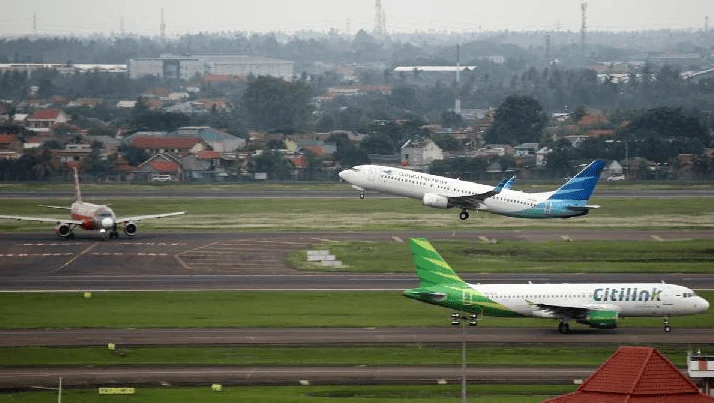
The anticipation of these peak dates is based on the synchronization of the national holiday calendar and the observed travel patterns of the Indonesian public. March 22 is identified as the initial surge, likely representing the early wave of travelers who wish to avoid the immediate pre-holiday rush or those taking advantage of extended school and workplace leave. Conversely, March 28 is expected to be the absolute peak of the outbound flow, occurring just days before the projected Eid al-Fitr celebration on March 31, 2025. During these windows, the concentration of passengers at major terminals is expected to test the limits of existing infrastructure, requiring a highly coordinated response from all stakeholders in the aviation ecosystem.
Historical Context and Growth Projections
The scale of flight movements during the Lebaran period has shown a consistent upward trajectory following the full lifting of pandemic-era travel restrictions. For 2025, industry analysts and government officials anticipate a volume that may surpass the previous year’s records. In 2024, the aviation sector saw a robust recovery, but 2025 is poised to be the first year where operational capacity is fully optimized to meet a demand that has returned to, and in some sectors exceeded, 2019 levels.
At Soekarno-Hatta International Airport alone, projections suggest that the facility will facilitate more than 23,000 aircraft movements throughout the entire Lebaran transport period, with the daily average spiking significantly on the designated peak dates of March 22 and 28. This volume includes scheduled commercial flights, chartered services, and the crucial "extra flights" requested by airlines to accommodate the overflow of passengers. The Ministry of Transportation has indicated that the total number of air travelers nationwide could see a 10% to 15% increase compared to the previous year, driven by improved economic conditions and a more stable domestic airline industry.
Strategic Preparations by Airport Authorities and AirNav Indonesia
To manage the anticipated surge, Angkasa Pura—the state-owned enterprise responsible for airport management—has initiated comprehensive readiness protocols. These preparations involve the technical auditing of runways, taxiways, and apron areas to ensure they can handle high-frequency rotations without compromising safety. At Soekarno-Hatta, the operation of the third runway will be crucial in maximizing the number of take-offs and landings per hour, effectively reducing potential congestion in the skies over Jakarta.
AirNav Indonesia, the country’s air navigation service provider, is also preparing to implement "slot management" strategies. By optimizing flight slots, AirNav aims to distribute the traffic load more evenly across the day, though the preference for morning and late afternoon flights among passengers remains a challenge. Air traffic controllers will be placed on high-alert shifts, and contingency plans for inclement weather—which remains a factor in March—are being finalized to minimize delays.
Furthermore, the "Integrated Lebaran Transport Command Centers" (Posko Terpadu) will be established at all major airports. these centers serve as a nexus for coordination between the Ministry of Transportation, the military (TNI), the police (Polri), and healthcare providers. Their primary objective is to monitor passenger flow in real-time, address security concerns, and provide immediate medical assistance if required.
Airline Strategies and Fleet Readiness
Domestic carriers, including the Garuda Indonesia Group (Garuda and Citilink) and the Lion Air Group, are readying their fleets to meet the peak demand. Airline executives have noted that aircraft availability is the primary focus, with maintenance schedules being accelerated to ensure that as many hulls as possible are airworthy by mid-March.
To address the shortage of seats on popular routes—such as Jakarta to Medan, Surabaya, Makassar, and Padang—airlines have filed for thousands of extra flight slots. These additional flights are often scheduled during "off-peak" hours, including late-night and early-morning departures, to maximize the utilization of both the aircraft and the airport’s 24-hour operational window.
In terms of pricing, the government continues to enforce the "Upper Limit Price" (Tarif Batas Atas or TBA) policy to prevent excessive fare hikes during the period of high demand. While airlines are encouraged to offer competitive pricing, the surge in demand typically sees most tickets sold at or near the maximum allowable price. Authorities have warned that any carrier found violating these price caps will face stiff administrative sanctions, as the government seeks to keep the Mudik tradition accessible to a broad segment of the population.
Infrastructure and Passenger Experience Enhancements
Recognizing that the "Puncak Pergerakan Pesawat Lebaran 2025" is not just about aircraft but also about the people inside them, airport operators are focusing on the "ground experience." Terminal congestion is a major concern; therefore, digital transformation initiatives are being pushed to the forefront. Passengers are being strongly encouraged to use web check-in services and mobile applications to reduce queues at physical counters.
At Soekarno-Hatta’s Terminal 3, facial recognition boarding systems and automated baggage drops are expected to expedite the processing of travelers. Additionally, the airport is increasing the number of ground handling staff and "passenger service ambassadors" to assist those who may be less familiar with digital systems, particularly elderly travelers returning to their ancestral homes.
Comfort measures are also being upgraded. This includes ensuring that air conditioning systems, prayer rooms (musholla), and restroom facilities are maintained at peak performance levels to handle the increased foot traffic. Food and beverage outlets have been instructed to maintain adequate stock levels and provide varied options for those who may be fasting, as the Lebaran period follows the month of Ramadan.
Safety, Security, and Health Protocols
While the global health landscape has stabilized, airport authorities remain vigilant. Health protocols during the 2025 Lebaran period will focus on general hygiene and the monitoring of any emerging public health concerns. Hand sanitizing stations remain a fixture, and thermal scanners may be utilized as a non-intrusive measure to ensure that the traveling public remains healthy.
Security remains the highest priority. The Aviation Security (Avsec) teams, bolstered by personnel from the National Police and the Military, will conduct intensified surveillance and random checks. The goal is to ensure that the high volume of people does not become a vulnerability. Advanced screening technologies, including dual-view X-ray machines and explosive trace detectors, will be fully operational at all security checkpoints to maintain a high throughput rate without sacrificing safety standards.
Socio-Economic Impact and Logistics
The spike in flight movements also has a significant impact on the logistics sector. While passenger travel takes center stage, the belly-hold capacity of commercial aircraft is a vital artery for the movement of goods, particularly perishable items and gifts associated with the holiday. Logistics companies are adjusting their schedules to account for the priority given to passenger movements on March 22 and 28.
Economically, the Lebaran period is a massive driver of domestic consumption. The movement of millions of people from urban centers like Jakarta to regional areas results in a significant redistribution of wealth. The aviation sector’s ability to facilitate this movement efficiently is directly linked to the economic vitality of regional tourism and hospitality industries, which see a surge in bookings during the holiday week.
Challenges and Mitigations
Despite the meticulous planning, several challenges persist. The primary concern is the potential for "cascading delays." In a high-frequency environment, a delay in one flight can have a domino effect on subsequent rotations. To mitigate this, airlines are being encouraged to have "standby" aircraft at major hubs to step in if a technical issue arises.
Weather also remains a wildcard. March in Indonesia is often characterized by transitional weather patterns that can lead to sudden thunderstorms. AirNav and the Meteorology, Climatology, and Geophysical Agency (BMKG) are collaborating to provide minute-by-minute weather updates to pilots and flight dispatchers, ensuring that safety is never compromised for the sake of the schedule.
Advice for the Traveling Public
For passengers planning to travel during the Puncak Pergerakan Pesawat Lebaran 2025, authorities have issued several recommendations. First and foremost is the importance of early booking. As the peak dates of March 22 and 28 are well-publicized, seat availability is expected to disappear weeks, if not months, in advance.
Passengers are also advised to arrive at the airport at least three to four hours before their scheduled departure. The increased traffic on access roads leading to airports, such as the Sedyatmo Toll Road in Jakarta, can significantly add to travel time. Utilizing public transport options, such as the Airport Rail Link or specialized shuttle buses, is recommended to alleviate road congestion.
Conclusion and Outlook
The Puncak Pergerakan Pesawat Lebaran 2025 represents more than just a logistical peak; it is a testament to the resilience and dynamism of Indonesia’s aviation industry. The coordination between government bodies, private carriers, and infrastructure operators on March 22 and 28 will serve as a benchmark for the country’s operational capabilities.
By focusing on the pillars of safety, service, and synchronization, the aviation sector aims to ensure that the millions of Indonesians participating in the Mudik tradition can do so with peace of mind. As the nation moves toward the holiday, the eyes of the region will be on Indonesia’s ability to manage one of the world’s most concentrated periods of domestic air travel, setting the stage for a successful and celebratory Eid al-Fitr 2025.