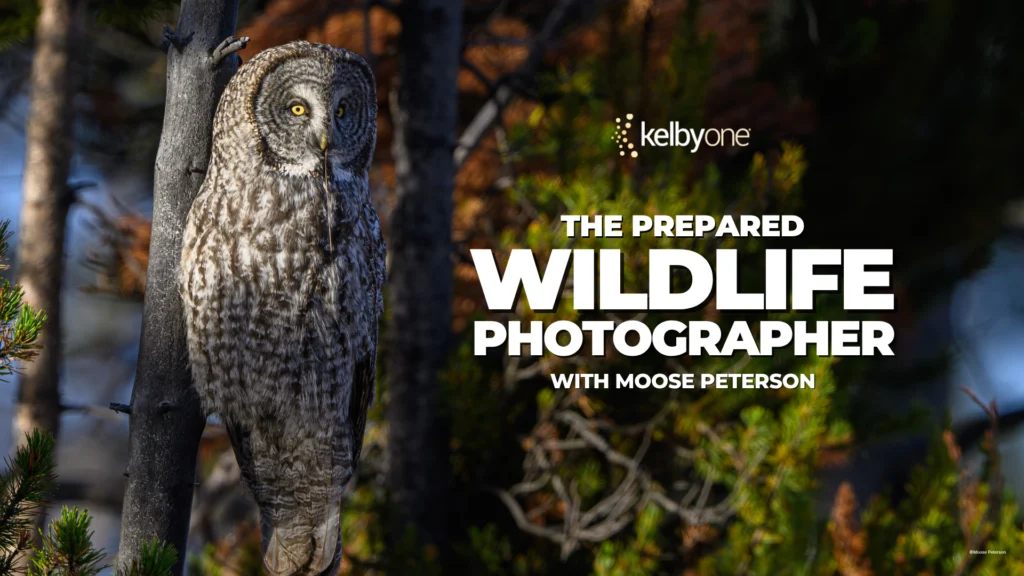
In the dynamic and often unpredictable realm of wildlife photography, success frequently hinges on moments measured in mere seconds. The ability to capture a rare behavioral display, a dramatic predator-prey interaction, or the perfect light illuminating a wild subject demands not just skill, but an unparalleled level of preparedness. Renowned wildlife photographer and educator Moose Peterson has addressed this critical need with the launch of his new course, "The Prepared Wildlife Photographer," available through KelbyOne. This educational initiative fundamentally shifts the focus from reactive adjustments in the field to proactive, meticulous preparation, ensuring photographers are technically proficient and creatively liberated when the decisive moment arrives.
The core philosophy underpinning Peterson’s course is simple yet profound: wildlife doesn’t wait. Unlike studio or landscape photography where conditions can often be controlled or patiently awaited, the wild offers no such luxury. A bird taking flight, a big cat stalking its prey, or a rare animal emerging from cover can vanish as quickly as it appears. In such scenarios, fumbling with exposure settings, adjusting focal length, or troubleshooting gear means missing the shot entirely. Peterson’s methodology champions the idea that technical decisions—ranging from optimal exposure and precise focal length to the intricate nuances of camera setup—should be made long before the photographer steps into the field, transforming complex operations into second nature.
The Essence of ‘The Prepared Wildlife Photographer’
Peterson’s course is meticulously structured to guide photographers through every preparatory step. It begins with fundamental camera maintenance, emphasizing the critical importance of firmware checks and sensor cleaning—often overlooked but vital aspects of maintaining optimal image quality and camera performance. Modern digital cameras, with their sophisticated operating systems, regularly receive firmware updates that can introduce new features, improve performance, or fix bugs. Ensuring a camera is running the latest firmware is a baseline for reliability, while a clean sensor is paramount for pristine, spot-free images, particularly crucial when shooting wide-open apertures or in bright conditions.
Beyond basic maintenance, the curriculum delves into advanced topics essential for wildlife photography. Working with long lenses, for instance, presents unique challenges in terms of stability, focusing speed, and depth of field. Peterson provides practical strategies for mastering these powerful tools, enabling photographers to effectively isolate subjects and create compelling compositions from a distance. The course also dedicates significant attention to achieving perfectly dialed-in exposure, a cornerstone of professional-grade imagery. Understanding how aperture, shutter speed, and ISO interact, and how to pre-set these parameters for anticipated scenarios, significantly reduces reaction time in the field.
Further enriching the learning experience, Peterson explores the creative use of flash for adding color and dimension to images, moving beyond its traditional role as mere fill light. He dissects the strategic decision-making process between utilizing teleconverters for extended reach versus relying on the crop mode capabilities of modern high-resolution sensors, offering insights into image quality implications, focusing speed, and practical application. Perhaps one of the most innovative and memorable aspects of the course is his "teddy bear exercise," a unique pedagogical tool designed to simulate real-world wildlife encounters in a low-stakes environment. By practicing exposure and composition on a stationary object, photographers can ingrain muscle memory and decision-making processes, building confidence before confronting the unpredictable beauty of actual wildlife.
The overarching goal, as Peterson articulates, is to elevate the technical side of photography to an instinctive level. When photographers are no longer preoccupied with the mechanics of their equipment, their minds are free to concentrate entirely on the subject, its behavior, and the unfolding narrative. This liberation allows for a deeper connection with the wildlife and a more profound ability to tell its story through evocative imagery.
The Man Behind the Lens: Who is Moose Peterson?
Moose Peterson is not merely a photographer; he is an institution in the world of nature and aviation photography. With a career spanning several decades, he has garnered international acclaim for his stunning images, his unwavering dedication to conservation, and his prolific educational contributions. A Canon Explorer of Light, a recognized expert in digital workflow, and an author of numerous books and articles, Peterson’s influence extends far beyond the lens. He has consistently advocated for ethical photography practices, emphasizing respect for wildlife and their habitats. His work has been featured in countless publications, including National Geographic, Audubon, and Outdoor Photographer, cementing his reputation as a master visual storyteller.
Peterson’s teaching philosophy is rooted in practical experience and a genuine desire to empower fellow photographers. His approachable yet rigorous teaching style makes complex technical subjects accessible to a broad audience, from aspiring enthusiasts to seasoned professionals seeking to refine their craft. The development of "The Prepared Wildlife Photographer" course is a natural extension of his life’s work, distilling years of field experience and technical expertise into a structured, actionable program designed to address a fundamental challenge in the genre.
Why Preparation is Paramount in Wildlife Photography
The pursuit of compelling wildlife photography is fraught with unique challenges that underscore the necessity of preparation. Unlike controlled environments, the natural world is inherently unpredictable. Animals move rapidly, light conditions shift without warning, and rare behaviors may only manifest for a split second. A photographer spending countless hours tracking a elusive species, enduring harsh weather, and investing significantly in specialized equipment understands that every moment counts. Industry data suggests that even seasoned professionals may only capture a truly "peak action" shot a fraction of the time they spend in the field, making the optimization of every potential opportunity crucial.
Furthermore, ethical considerations play a significant role. A prepared photographer is a less intrusive photographer. When equipment is dialed in and decisions are pre-meditated, there is less need to linger, make repeated adjustments, or disturb the subject. This minimizes stress on the animals and helps maintain the integrity of their natural behaviors, aligning with the principles of responsible wildlife observation and conservation. The rising popularity of wildlife photography, fueled by advancements in digital camera technology and the pervasive influence of social media, has intensified the demand for high-quality, impactful imagery. This competitive landscape further necessitates a robust technical foundation to stand out.
The technical evolution of camera gear also means that photographers must stay abreast of their equipment’s capabilities. Modern mirrorless cameras, with their advanced autofocus systems, high burst rates, and impressive low-light performance, offer unprecedented opportunities. However, harnessing this power requires a deep understanding of settings, customization options, and the optimal use of accessories. Peterson’s course addresses this by turning potential technical hurdles into avenues for creative expression.
A Deeper Dive into Course Modules and Techniques
"The Prepared Wildlife Photographer" isn’t just a conceptual guide; it’s a practical blueprint. Each module builds upon the last, fostering a holistic understanding of readiness:
- Camera Maintenance and Optimization: This section goes beyond simply checking firmware. It delves into understanding firmware release notes, performing safe updates, and the nuances of sensor cleaning—from blower brushes to wet cleaning techniques—emphasizing preventative measures against dust and grime. It covers settings customization, explaining how to create custom user profiles for different scenarios (e.g., birds in flight, low light, fast action) to instantly recall optimal configurations.
- Mastering Long Lenses: Peterson details the physics and practicalities of using telephoto lenses, often ranging from 300mm to 800mm or beyond. This includes discussions on minimizing camera shake (tripods, monopods, beanbags), effective autofocus techniques for moving subjects, and managing the extremely shallow depth of field inherent in these lenses. He covers the importance of lens calibration for optimal sharpness and how to effectively compose shots with such narrow fields of view.
- Exposure Precision and the "Teddy Bear Exercise": The course unpacks the exposure triangle (aperture, shutter speed, ISO) in the context of wildlife. It teaches how to anticipate lighting conditions, pre-set exposure compensation for common scenarios (e.g., bright snow, dark forests), and utilize metering modes effectively. The "teddy bear exercise" is a practical workshop where students are encouraged to set up a stuffed animal in various lighting conditions and practice rapid exposure adjustments without looking at their camera’s screen, building an intuitive understanding of light and settings. This method dramatically improves speed and accuracy in the field.
- Creative Lighting with Flash: Moving beyond basic fill flash, Peterson demonstrates how to use external flashes to sculpt light, add catchlights to eyes, and even introduce dramatic color effects, especially effective during golden hour or in challenging low-light situations. This section covers flash power settings, diffusion techniques, and synchronization with ambient light to achieve balanced and aesthetically pleasing results.
- Teleconverters vs. Crop Mode: This module offers a detailed comparative analysis. Teleconverters extend focal length but can impact lens speed and image quality. Crop mode, leveraging high-resolution sensors, allows for post-processing magnification without physically altering the lens, but at the cost of overall pixel count. Peterson provides scenarios where each option excels, guiding photographers in making informed decisions based on their gear, desired output, and specific shooting conditions.
The KelbyOne Partnership: Delivering Expert Education
KelbyOne, a leading online platform for photography and creative education, serves as the ideal host for Peterson’s comprehensive course. Known for its high-quality production values and roster of world-class instructors, KelbyOne provides an accessible and engaging learning environment. The partnership allows Peterson to reach a global audience, delivering his invaluable insights through video lessons, practical demonstrations, and downloadable resources. A KelbyOne spokesperson might note that collaborations with industry titans like Moose Peterson underscore their commitment to providing unparalleled educational content that directly addresses the real-world challenges faced by photographers. The platform’s structure, allowing users to watch the first lesson for free, exemplifies their dedication to making quality education discoverable and building confidence in their offerings.
Broader Implications for the Wildlife Photography Community
The introduction of "The Prepared Wildlife Photographer" has significant implications for the broader wildlife photography community. Firstly, it elevates the standard of technical proficiency expected from practitioners. As more photographers adopt Peterson’s methodologies, the overall quality and consistency of wildlife imagery are likely to improve, setting a higher benchmark for professional and amateur work alike.
Secondly, the emphasis on preparedness intrinsically promotes more ethical photography. By minimizing the time spent adjusting gear in the presence of wildlife, photographers reduce their footprint and the potential for disturbance. This aligns with a growing global consciousness regarding conservation and responsible interaction with nature, fostering a community that values both stunning imagery and the well-being of its subjects.
Finally, the course reinforces the trend of specialized online education as a powerful tool for skill development. In an era where geographical barriers are increasingly irrelevant, expert knowledge can be disseminated widely, democratizing access to top-tier instruction. This model allows photographers from diverse backgrounds and locations to learn directly from a master, continually pushing the boundaries of their craft.
Accessing the Course and Future Outlook
For anyone passionate about capturing the magic of the natural world, "The Prepared Wildlife Photographer" offers a transformative learning experience. The course is now available on KelbyOne, with the first lesson offered free of charge, providing an excellent opportunity for prospective students to experience Peterson’s teaching style and the course content firsthand. In a field where moments are precious and opportunities fleeting, the ability to act decisively and confidently is the ultimate differentiator. Moose Peterson’s latest offering equips photographers with not just the knowledge, but the ingrained habits necessary to seize those critical seconds and create images that truly resonate, inspiring awe and a deeper appreciation for the wild. As technology continues to evolve and the allure of wildlife photography grows, the principles of preparedness and thoughtful execution, championed by Peterson, will remain timeless pillars of success.