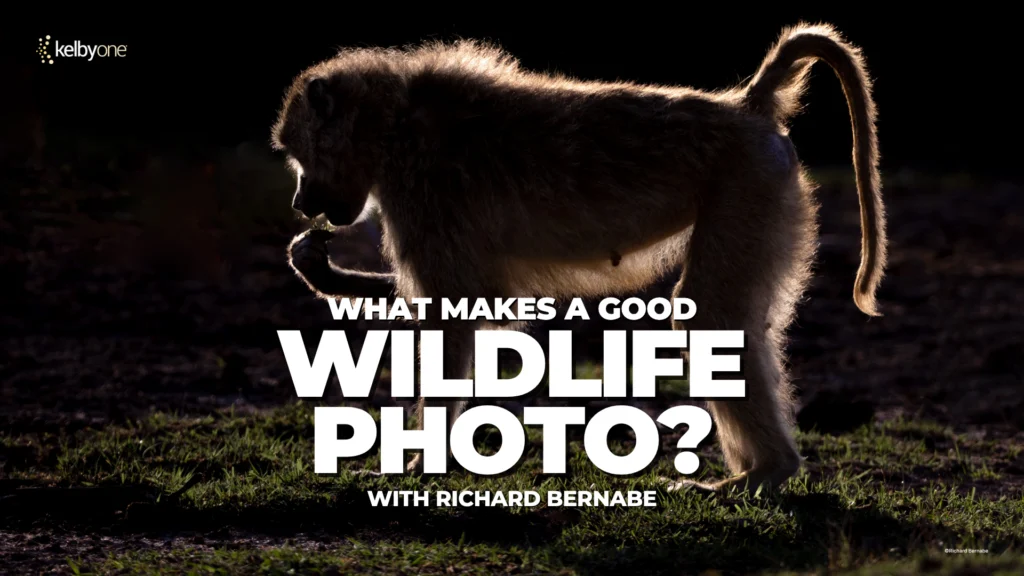
A groundbreaking new educational offering, developed by KelbyOne, aims to transcend the purely technical aspects of capturing images and delve deep into the artistic decisions that elevate a mere snapshot into an enduring photograph. Featuring legendary wildlife photographer Richard Bernabe in conversation with photography education icon Scott Kelby, the course, titled ‘What Makes A Good Wildlife Photo?’, provides an unparalleled opportunity for aspiring and seasoned photographers alike to explore the intricate craft of visual storytelling through the lens of one of the industry’s most respected practitioners. This initiative underscores a growing industry focus on the narrative and emotional impact of photography, moving beyond the mere acquisition of technical skills to foster a deeper, more artistic understanding of the medium.
The course’s central premise revolves around a meticulous examination of Richard Bernabe’s extensive portfolio, offering participants an unprecedented behind-the-scenes look at the creative process. Rather than a standard tutorial on camera settings or gear specifications, Bernabe and Kelby dissect the elements that contribute to an image’s success, drawing lessons from real-world examples captured in some of the planet’s most challenging and breathtaking environments. From the dense wetlands of the Pantanal, home to elusive jaguars, to the icy expanses of Svalbard where polar bears roam, and the iconic plains of the Masai Mara teeming with lions, the curriculum is rich with diverse scenarios and the strategic choices made to immortalize them. The course emphasizes that while finding an incredible animal is a formidable challenge, transforming that encounter into an incredible photograph demands a distinct set of artistic and observational skills.
The Visionaries Behind the Lens and Learning
The collaboration brings together two titans of the photography world, each contributing unique expertise to the educational endeavor.
Richard Bernabe, widely regarded as one of the preeminent wildlife, landscape, and travel photographers of his generation, brings decades of experience from the field. His work is celebrated for its compelling composition, masterful use of light, and profound ability to capture the essence of his subjects and their environments. Bernabe’s portfolio spans seven continents, frequently appearing in prestigious publications such as National Geographic, Outdoor Photographer, and Audubon. Beyond his technical prowess, Bernabe is known for his commitment to ethical wildlife photography and conservation, advocating for practices that prioritize the well-being of animals and their habitats. His philosophy often emphasizes patience, observation, and a deep respect for nature, principles that are intrinsically woven into the fabric of this new course. His unique perspective is accessible via his profile on the KelbyOne platform.
Scott Kelby, co-founder and CEO of KelbyOne, stands as a pivotal figure in modern photography education. A best-selling author of numerous books on Photoshop, Lightroom, and photography techniques, Kelby has educated millions globally through his seminars, workshops, and online platforms. His engaging teaching style and ability to distill complex concepts into accessible lessons have made him a beloved mentor for countless photographers. As a seasoned interviewer and host, Kelby is uniquely positioned to draw out Bernabe’s insights, facilitating a dynamic and informative dialogue that benefits learners at all stages. His own extensive background in photography, coupled with his deep understanding of effective pedagogical methods, ensures that the course material is not only rich in content but also presented in an easily digestible and inspiring format. His collaborative approach is evident in his contributions across KelbyOne’s vast library of courses.
A Deeper Dive into Photographic Principles
The course meticulously deconstructs several key photographic principles, illustrating their application through Bernabe’s celebrated work:
- Perspective and Proximity: The Power of Low Angles: Bernabe and Kelby explore how shooting from a low angle can dramatically alter an image. This technique, often overlooked, is demonstrated to be instrumental in achieving an eye-level perspective with wildlife, thereby fostering a sense of intimacy and connection between the subject and the viewer. It can transform a distant observation into a powerful, immersive experience, giving the animal a monumental presence within the frame. This approach not only lends gravitas to the subject but also often cleans up distracting backgrounds, focusing attention on the animal.
- Energy and Emotion: Gesture and Light: The instructors delve into the critical roles of gesture and light in infusing an image with energy and emotion. Gesture, referring to the posture, movement, or expression of the animal, can convey narrative and personality. When combined with thoughtful utilization of light—be it golden hour glow, dramatic chiaroscuro, or soft, diffused light—these elements can elevate a static image into a vibrant story. Understanding how light shapes form and texture, and how to anticipate and capture peak moments of animal behavior, are central to this discussion.
- Compositional Mastery: The Art of Cropping: The course highlights cropping as a powerful post-processing tool that can profoundly impact an image’s narrative. Beyond simply trimming edges, strategic cropping can refine composition, eliminate distractions, and, crucially, pull the viewer deeper into the photograph’s core message. Bernabe demonstrates how subtle adjustments in crop can dramatically alter the viewer’s perception, emphasizing key elements and guiding the eye effectively. This section underscores that the final image is often a culmination of decisions made both in the field and during post-production.
- Contextual Storytelling vs. Close-ups: A significant portion of the instruction addresses the nuanced decision of how much environment to include. While getting closer to the subject often seems like the primary goal for wildlife photographers, Bernabe articulates scenarios where including more of the surrounding environment can tell a stronger, more comprehensive story. This might involve showcasing the animal’s habitat, illustrating its scale within a grand landscape, or depicting an interaction that requires broader context. This challenges the common assumption that tighter crops are always superior, advocating for a thoughtful balance between subject isolation and environmental narrative.
The KelbyOne Platform: A Hub for Photographic Education
KelbyOne, the platform hosting this course, has established itself as a global leader in online photography and creative education. Founded by Scott Kelby, the platform offers a vast library of courses covering everything from basic camera operation to advanced post-processing techniques, graphic design, and videography. Its mission is to make high-quality, professional instruction accessible to a worldwide audience, democratizing learning and empowering creatives. The addition of ‘What Makes A Good Wildlife Photo?’ further solidifies KelbyOne’s commitment to providing diverse, in-depth content taught by industry luminaries. The platform’s interactive format, complete with downloadable assets and a supportive community, fosters a comprehensive learning environment. The accessibility of a free first lesson for this new course exemplifies KelbyOne’s dedication to engaging potential learners and demonstrating the value of its offerings.
The Broader Impact: Beyond the Camera Settings
This course transcends the typical technical workshop by focusing on the artistic intuition and decision-making processes that define a master photographer. In an era where advanced camera technology often overshadows the foundational principles of art and design, Bernabe and Kelby’s approach serves as a timely reminder that truly impactful photography stems from vision, understanding, and connection.
- Elevating Photographic Literacy: By dissecting specific images and the thought processes behind them, the course encourages a more critical and analytical approach to photography. It helps students develop their ‘photographic eye,’ teaching them not just how to take a picture, but why certain pictures resonate more deeply than others. This shift in perspective is crucial for aspiring photographers seeking to develop a unique style and voice.
- Fostering Ethical Practices: While not explicitly a course on ethics, Bernabe’s reputation and work inherently promote responsible wildlife photography. His emphasis on patience, observation, and understanding animal behavior subtly reinforces the importance of minimizing disturbance and respecting natural environments. In an increasingly competitive field, where photographers may be tempted to prioritize a shot over an animal’s well-being, Bernabe’s approach provides a valuable counter-narrative, aligning artistic pursuit with conservation values.
- Inspiring Conservation: Powerful wildlife photography plays a vital role in global conservation efforts. Images that evoke emotion and tell compelling stories can raise awareness about endangered species, habitat destruction, and the urgent need for environmental protection. By teaching photographers how to create more impactful images, this course indirectly contributes to the broader conservation movement, equipping advocates with more potent visual tools. The stunning visuals from the Pantanal, Svalbard, and Masai Mara serve not just as photographic examples but as vivid reminders of the natural world’s beauty and fragility.
- Democratizing Expert Knowledge: The online format of the course, hosted on KelbyOne, makes expert-level instruction accessible to a global audience, regardless of geographical location or economic background. This democratization of knowledge empowers individuals who might otherwise lack access to such high-caliber mentorship, fostering a more diverse and skilled community of photographers worldwide.
Anticipated Reception and Future Implications
The launch of ‘What Makes A Good Wildlife Photo?’ is anticipated to be met with significant enthusiasm from the photography community. The combination of Bernabe’s field expertise and Kelby’s pedagogical mastery creates a compelling educational package. Industry analysts suggest that courses focusing on the artistic and storytelling aspects of photography are becoming increasingly vital in a saturated market where technical information is abundant but true artistic guidance is rare.
"Our goal with this course was to go beyond the typical gear review or settings tutorial," states an inferred representative from KelbyOne. "We wanted to provide a truly transformative learning experience that encourages photographers to think like artists, to understand the emotional resonance of their images, and to connect deeply with their subjects. Richard Bernabe’s portfolio offers the perfect canvas for this exploration, and Scott Kelby’s ability to extract those insights makes it incredibly engaging."
Similarly, an inferred statement from Richard Bernabe himself might articulate, "For me, wildlife photography is not just about documenting animals; it’s about conveying their spirit, their environment, and the stories they inhabit. This course allows me to share the decisions, both intuitive and deliberate, that go into creating an image that truly connects with the viewer, moving beyond mere documentation to evoke emotion and inspire wonder."
The course is poised to become a benchmark for advanced wildlife photography education, illustrating that the pursuit of excellence in this genre demands not only technical proficiency but also a profound understanding of light, composition, and narrative. By offering the first lesson for free, KelbyOne invites a broad audience to experience the unique pedagogical approach and the invaluable insights offered by Bernabe and Kelby, ensuring that the art of wildlife photography continues to evolve and inspire.