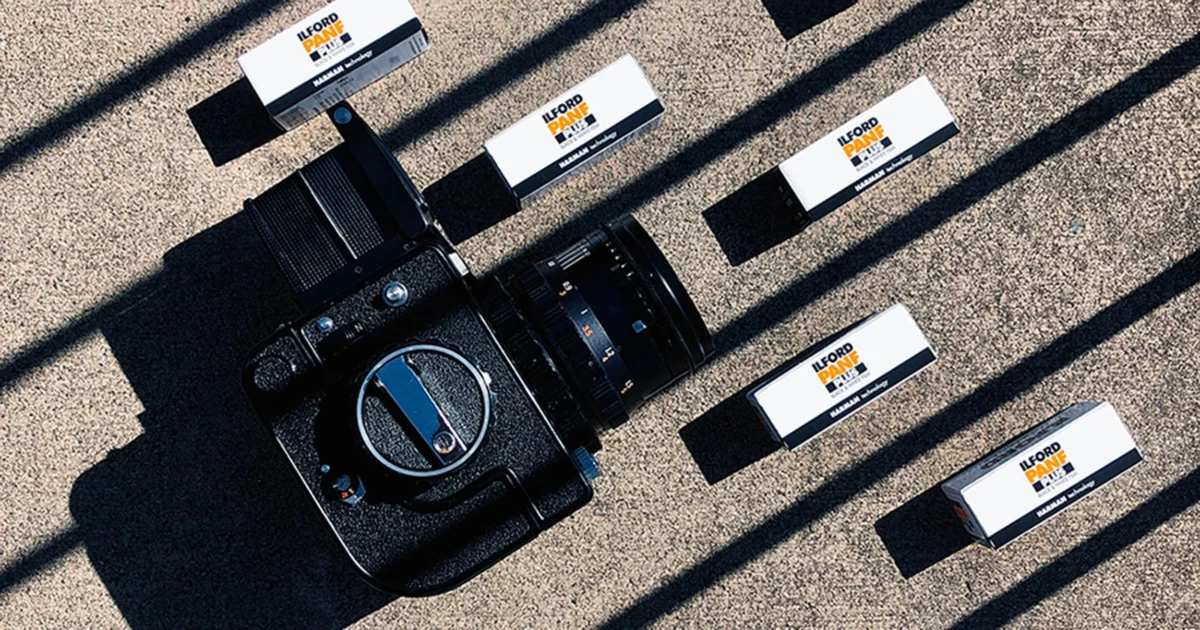
Within the discerning world of analog photography, a select group of emulsions known as the "Sub-100 Club" holds a revered status, distinguished by their ultra-low ISO ratings. These films, operating below ISO 100, are not for the casual shooter but rather for those who seek meticulous detail, controlled tonality, and a distinctive aesthetic. Among these esteemed members, Ilford Pan F+ stands as a venerable patriarch, a black and white film renowned for its exceptionally fine grain, razor-sharp rendition, and an often dramatic, brooding character that sets it apart. Its enduring appeal has recently culminated in a significant expansion, with Ilford announcing its availability in 4×5 and 8×10 large format sizes in 2026, a move long anticipated by a passionate cohort of photographers.
A Legacy Forged in Silver Halide: The Evolution of Ilford Pan F+
The story of Ilford Pan F+ is deeply intertwined with the history of photographic film itself, tracing its origins back to 1948 when the original Pan F panchromatic black and white emulsion was first introduced. For over three-quarters of a century, this film has witnessed seismic shifts in photographic technology, yet it has not only survived but thrived, continually evolving to meet the demands of discerning artists and technicians. Its journey through the decades is a testament to Ilford’s unwavering commitment to analog photography and continuous innovation.
The first major evolution arrived in 1992, marking the film with the distinctive "plus" suffix that remains part of its identity today. This update signified enhancements in emulsion technology, likely improving aspects such as tonal range, sharpness, and overall consistency. However, Ilford’s dedication didn’t stop there. Further emulsion refinements were implemented as recently as the 2000s, demonstrating a proactive approach to maintaining the film’s relevance and performance in an ever-changing photographic landscape. These updates, often subtle to the casual observer, are critical for optimizing film characteristics like spectral sensitivity, latent image stability, and response to various developers.
Ilford, a brand synonymous with black and white photography, has consistently invested in its film lines, even as many competitors pivoted entirely to digital. This steadfast commitment has fostered a loyal community of photographers who value the unique qualities and creative control that films like Pan F+ offer. The longevity and continuous refinement of Pan F+ underscore its foundational importance within Ilford’s portfolio and its place as a cornerstone for photographers seeking excellence in black and white imaging.
The "Sub-100 Club": A Niche of Precision and Artistry
The "Sub-100 Club" films, including Pan F+, Cinestill 50D, and others, occupy a specialized but highly valued niche. Unlike their faster counterparts such as Ilford Delta 3200 or Kodak TMax P3200, which are designed for low-light performance and possess a characteristic grain structure, low ISO films prioritize ultra-fine grain and exceptional resolving power. They are the choice for photographers who can dictate their lighting conditions, whether through ample natural light, studio setups, or by employing tripods for extended exposures.

This segment of the film market caters to an audience that values meticulous image quality above all else. For these photographers, the slower speed is not a limitation but an invitation to a different kind of photographic practice—one that emphasizes deliberate composition, precise exposure, and often, a deeper engagement with the technical aspects of the medium. The allure of these films lies in their ability to render scenes with a clarity and smoothness that can rival, and in some cases surpass, digital sensors of comparable resolution, especially when considering the aesthetic qualities of silver halide.
Unrivaled Fine Grain and Acuity: The Hallmarks of Pan F+
At the core of Ilford Pan F+’s reputation are its incredibly fine grain and exceptional sharpness. These two characteristics are often conflated but represent distinct yet complementary aspects of image quality. Pan F+ boasts some of the finest grain available on the market, a direct consequence of its ISO 50 speed. This ultra-fine grain is achieved through the use of smaller, more uniform silver halide crystals in the emulsion, which, when developed, result in a smoother, less granular image structure.

For photographers working with 35mm film, Pan F+ offers an unparalleled opportunity to achieve image cleanliness and detail traditionally associated with larger formats like medium format. This means that even with the smaller negative size of 35mm, prints can be enlarged significantly—to mural proportions—without the distracting presence of visible grain, maintaining a smooth tonal gradient and crisp detail. This makes it an ideal choice for exhibitions or high-end archival printing where resolution and smoothness are paramount.
Beyond its fine grain, Pan F+ is engineered for high acutance, or edge sharpness. Acutance refers to the perceived sharpness of an image, which is largely influenced by the contrast at the boundaries between dark and light areas. While resolution measures the film’s ability to record fine details, acutance enhances the perception of those details. Pan F+ achieves this through its inherent emulsion characteristics, which naturally exhibit higher edge contrast. This local contrast boost makes the transitions between tones more defined, giving the impression of greater sharpness and clarity, even independently of ultimate resolution.

It is important to note that acutance can also be significantly influenced by the choice of developer. Developers like Rodinal (now Adox Adonal) or FX-2 are known for their high acutance properties, effectively amplifying the film’s inherent edge sharpness. When combined with Pan F+, these developers can produce images with striking, almost etched detail. This interplay between film and chemistry offers photographers a powerful tool for customizing their final output, allowing them to lean into Pan F+’s strengths or fine-tune its characteristics to suit specific artistic visions. For those who demand crisp, rich details in their black and white imagery, Pan F+ provides an exceptional foundation.
The Signature Dramatic Contrast: A Brooding Aesthetic
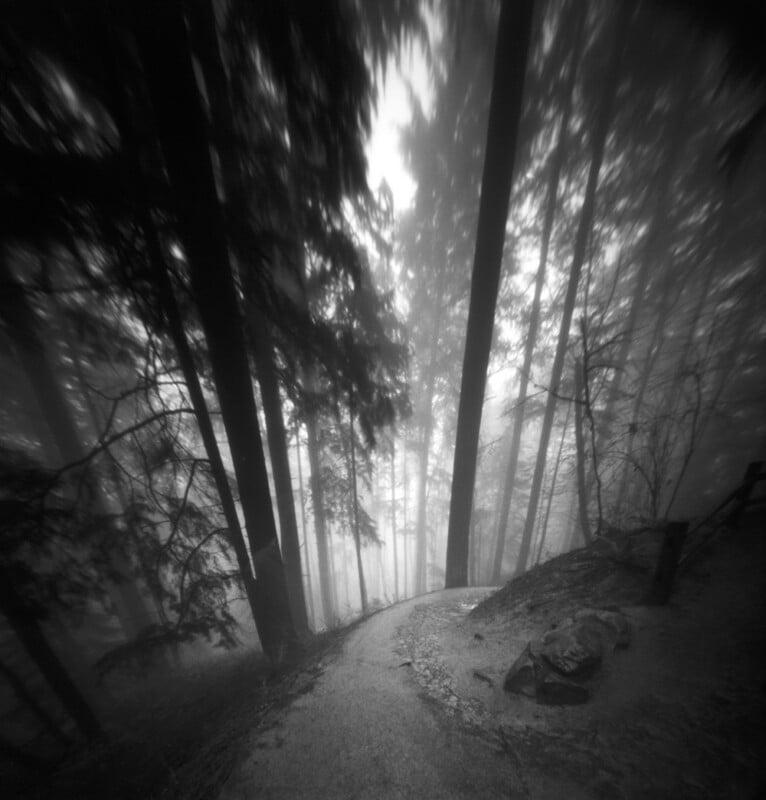
The third defining characteristic of Ilford Pan F+ is its distinctive dramatic contrast and moody tonality. Images captured on Pan F+ are often described as having a brooding, atmospheric character, reminiscent of classic film noir aesthetics. The film tends to produce deep, inky blacks that saturate the image, juxtaposed with bright, crisp whites. Even the midtones often lean towards a darker, more intense mood, contributing to an overall sense of drama.

This high inherent contrast is not to be confused with a reduction in tonal nuance. On the contrary, Pan F+ is capable of rendering a rich spectrum of grays within its dramatic framework, offering plenty of subtlety and detail within both shadow and highlight areas. However, its predisposition towards strong contrast means that photographers must approach exposure and development with a clear understanding of its characteristics. Overexposure can quickly lead to blocked highlights, while underexposure might plunge shadows into an impenetrable darkness.
Historically, this inherent contrast made Pan F+ a favorite among architectural photographers, who valued its ability to render structural details with stark clarity and powerful graphic impact. The clean lines and strong tonal separations were ideal for emphasizing form and texture in buildings and urban landscapes. Conversely, some photographers have expressed reservations about using Pan F+ for portraiture, arguing that its unforgiving sharpness and high contrast can accentuate every wrinkle, line, or blemish on the human face, potentially leading to unflattering results.

However, for a different school of portrait photographers, this very characteristic is a virtue. Those who seek to create dramatic, intense, or character-driven portraits—celebrating the unique features and lived experiences etched into a face—will find Pan F+ to be an incredibly potent tool. Its ability to create a "film noir" look, with stark lighting and profound shadows, can imbue portraits with a sense of gravitas, mystery, and emotional depth that flatter, softer films simply cannot achieve. The film’s dramatic flair encourages a deliberate and artistic approach to lighting and composition, pushing photographers to harness its power rather than simply record reality.
Navigating the Slow Speed: Challenges and Creative Liberation
The trade-off for Pan F+’s exceptional fine grain and sharpness is its slow speed, rated at ISO 50. This means it requires significantly more light than faster films, posing practical challenges but also opening up unique creative avenues. Pan F+ is, by nature, a "bright day" film, ideally suited for well-lit outdoor scenes, or a "tripod film," necessitating stable camera support for longer exposures. Alternatively, pairing it with a super-fast lens (e.g., f/1.4, f/1.2) can compensate for the low ISO, allowing for handheld shooting in moderately bright conditions.

However, embracing its slow speed can unlock creative possibilities that are less accessible with faster films. For instance, in bright daylight, the low ISO allows for extended shutter speeds without overexposing the film. This facilitates intentional motion blur, transforming flowing water into silky smooth cascades or bustling streets into ghostly streaks of movement. Panning effects, where a moving subject is tracked with a slow shutter speed to blur the background, also become more pronounced and artistically compelling.
Furthermore, the slow speed enables photographers to utilize very wide apertures (like f/1.4 or f/2.0) even in intensely bright conditions without needing extreme neutral density filters. This allows for incredibly shallow depths of field, isolating subjects with exquisite background blur (bokeh) that can add a dreamlike quality or emphasize particular elements within a frame. This level of control over depth of field in broad daylight is a distinct advantage for portraitists and fine art photographers who wish to craft images with a precise visual hierarchy and ethereal qualities. The inherent limitations of Pan F+’s speed thus become catalysts for creative problem-solving and unique artistic expression.

Critical Technical Considerations for Optimal Results
While Ilford Pan F+ offers remarkable image quality, its unique characteristics also necessitate careful attention to specific technical considerations, particularly regarding reciprocity failure and latent image retention. These aspects, if overlooked, can significantly impact the quality of the final negative.
Reciprocity Failure: Compensating for Extended Exposures
Reciprocity failure is a phenomenon inherent to photographic emulsions where, at very long or very short exposure times, the film’s sensitivity deviates from its rated ISO. Essentially, the film becomes less efficient at capturing light over extended periods, requiring additional exposure beyond what a light meter indicates. Being a slow-speed film, Pan F+ is frequently employed for long exposures, making an understanding of its reciprocity characteristics crucial.

Ilford has continually refined the Pan F+ emulsion, and the modern formulation exhibits reasonably manageable reciprocity rates. For exposures between 1 and 10 seconds, photographers should compensate by adding approximately 1/2 to 1 extra stop of exposure. For example, a metered 10-second exposure might require an actual exposure of 15 to 20 seconds. Beyond this range, Pan F+ continues to slow down, albeit gradually. By the time a metered exposure reaches 60 seconds, it typically requires a full +2 stops of compensation, meaning an actual exposure of around 240 seconds (4 minutes) might be necessary for a well-exposed negative.
This represents a significant improvement from earlier Pan F+ emulsions, as recently as 2004, where the film demanded 2 stops of overexposure as early as the 30-second mark. Ilford’s ongoing development efforts have evidently enhanced the film’s performance in lower light conditions and during extended exposures, making it more forgiving for long-exposure photography. Despite these improvements, accurate compensation remains vital. Photographers are advised to consult Ilford’s official data sheets or conduct personal tests to fine-tune their reciprocity compensation for their specific development processes and desired results, especially for exposures exceeding one minute.

Latent Image Retention: The Urgency of Development
Another critical characteristic of Pan F+ that distinguishes it from many other films is its comparatively poor latent image retention (LIR). Latent image retention refers to the stability of the invisible image formed on the film after exposure but before chemical development. Most films can retain this latent image for extended periods without significant degradation. Pan F+, however, is an exception.
This film is notorious for its susceptibility to latent image fading if left undeveloped for too long after exposure. The chemical reactions initiated by light exposure continue subtly within the emulsion, and over time, if not arrested by development, the latent image can degrade. This degradation typically manifests as thin negatives, appearing as if they were severely underexposed or underdeveloped, with a noticeable loss of shadow detail and overall density.
Ilford’s official data sheet recommends developing Pan F+ within three months of exposure, but many experienced users advocate for an even shorter timeframe—as soon as possible, or at most within a few weeks. The general consensus among professionals is: expose Pan F+, finish the roll, and get it into the darkroom promptly. This practice minimizes the risk of image degradation and ensures that the film’s full tonal range and detail are preserved. This sensitivity makes Pan F+ less suitable for photographers who prefer to stockpile exposed rolls for later development or those who might expose a roll over several months. It demands a disciplined approach to the film-to-darkroom workflow, rewarding diligence with pristine negatives.
Responding to Demand: Large Format Expansion in 2026
In a significant announcement that reverberated through the analog photography community, Ilford confirmed in 2026 the long-awaited availability of Pan F+ in 4×5 and 8×10 sheet film formats. This development marks a pivotal moment for large format photographers who have, for decades, expressed a desire to harness Pan F+’s exceptional qualities in larger negative sizes.

The expansion into large format is not merely a convenience; it unlocks new realms of creative possibility. Large format photography is inherently characterized by its meticulous process, unparalleled resolution, and extraordinary control over perspective and focus. The combination of these attributes with Pan F+’s ultra-fine grain and high acutance promises negatives of astonishing detail and sharpness, capable of producing prints with breathtaking clarity and tonal depth. Architectural photographers, fine art landscape artists, and studio portraitists will particularly benefit, gaining the ability to capture intricate textures and expansive scenes with an almost hyper-realistic rendition.
This strategic decision by Ilford underscores its continued commitment to the analog market and its responsiveness to the specific needs of its dedicated user base. In an era where many predicted the demise of film, Ilford’s investment in expanding a niche product like Pan F+ into large format demonstrates confidence in the enduring demand for high-quality photographic emulsions. It also reflects a broader resurgence of interest in film photography, particularly among younger generations and those seeking a more tactile, deliberate, and craft-oriented approach to image-making. The availability of Pan F+ in these larger formats is a testament to the film’s iconic status and its vital role in the contemporary analog photography landscape.

The Enduring Allure of Ilford Pan F+
Ilford Pan F+ remains a film of compelling contrasts—a product of meticulous engineering that offers unparalleled technical performance, yet demands a thoughtful, almost artisanal approach from the photographer. Its reputation as a "tricky" film to master, less forgiving than more flexible emulsions like Ilford Delta or Kodak TMax films, contributes to its mystique. This isn’t a film for those seeking instant gratification; it requires practice, experimentation, and a willingness to understand its unique personality. However, the rewards for this dedication are profound: negatives of exquisite detail, smooth tonality, and a dramatic flair that imprints a distinctive character on every image.
The inherent qualities of Pan F+—its fine grain, sharpness, and brooding contrast—combine to create images with a quality all their own. They possess a certain depth and presence that is difficult to replicate with other films or even digital capture. Whether capturing the intricate lines of a historic building, the nuanced textures of a landscape, or the dramatic contours of a human face, Pan F+ delivers results that are both technically superb and emotionally resonant.

As the analog renaissance continues to unfold, Ilford Pan F+ stands as a beacon of enduring quality and innovation. Its recent availability in large format sizes further solidifies its position as a go-to emulsion for photographers who prioritize ultimate image fidelity and artistic control. For those willing to embrace its quirks and learn its language, Pan F+ offers a photographic journey filled with discovery and the potential to create truly unforgettable images.
Available in 35mm, 120, and now, as of 2026, in 4×5 and 8×10 sheet film formats, Ilford Pan F+ is readily accessible to a wide range of photographers. For those in Portland, Oregon, Blue Moon Camera and Machine offers this exceptional film, alongside expert development services and a curated selection of analog gear. PetaPixel Members are encouraged to take advantage of a 10% discount on all lab services with Blue Moon, making it an opportune time to explore the unique qualities of this venerable film.