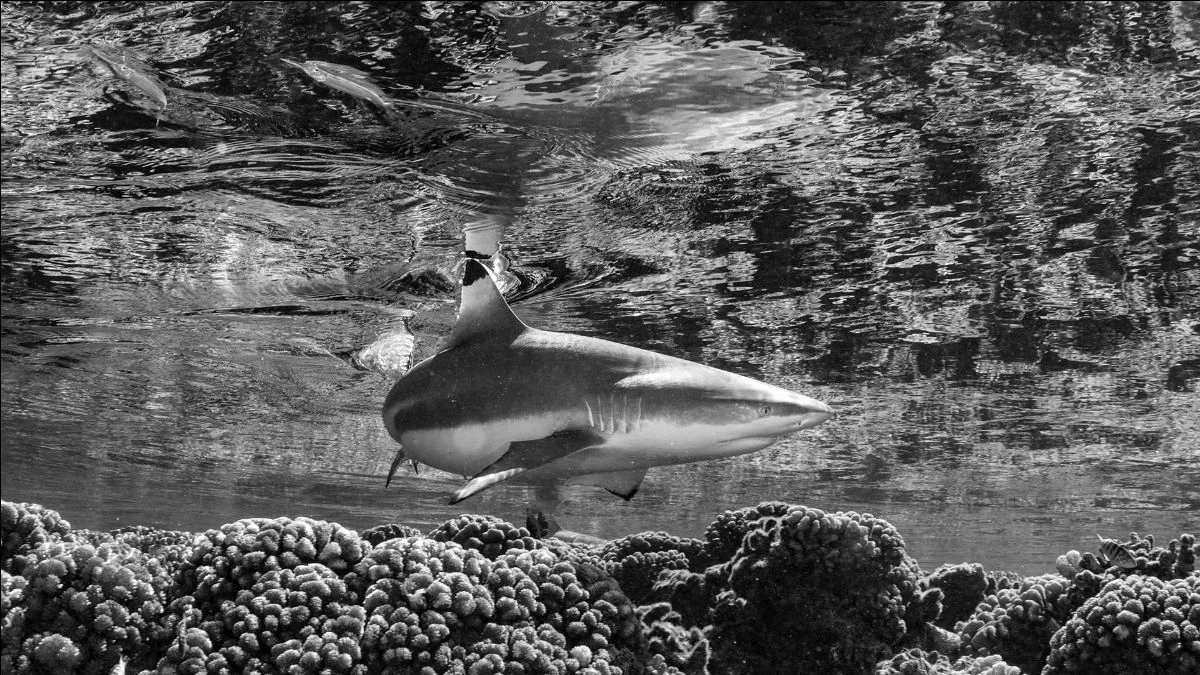
Waking before dawn aboard the SeaLegacy 1, a routine developed during the Pacific crossing from Mexico to Tahiti, held a unique undercurrent of anticipation. This particular morning, the air crackled with excitement as the crew and I prepared for what promised to be the most anticipated dive of our expedition. Beneath a sky ablaze with stars and illuminated by a radiant full moon, we donned our masks and submerged into the inky blackness of the ocean. Initially, the underwater world was deceptively tranquil. However, this calm was a prelude to a dramatic transformation, as the waters began to stir, heralding the commencement of one of the ocean’s most extraordinary natural phenomena.
A Natural Gathering Point: The Fakarava Atoll
The Fakarava atoll, situated approximately 700 nautical miles north of Papeete, French Polynesia, is a UNESCO Biosphere Reserve renowned for its pristine lagoons, idyllic shores, and vibrant coral ecosystems. For much of the year, its waters teem with a diverse array of marine life, including numerous fish species, seabirds, sea turtles, manta rays, and sharks, all coexisting in a relatively undisturbed harmony. However, during the warmer months, a significant ecological event unfolds: the annual aggregation of thousands of resident groupers for their synchronized spawning.
This gathering is not merely a biological curiosity; it is a cornerstone of the atoll’s ecological health. The process begins with the migration of groupers, particularly females laden with eggs and males seeking to fertilize them, towards the mouth of the channel connecting the atoll’s vast lagoon to the open ocean. This channel, spanning roughly 10 by 30 nautical miles, acts as a crucial nexus. The tidal currents here are powerful and predictable: for six-hour periods, deep ocean water surges into the lagoon, followed by six hours of outflow. This rhythmic exchange is vital for nutrient dispersal and, critically, for the dissemination of the groupers’ fertilized eggs, ensuring the propagation of the species and the sustenance of the wider marine food web.

The Apex Predators Arrive: A Symphony of Survival
The peak of this event, often coinciding with the highest tide around the full moon, signals the commencement of the spawning. And where there is an abundance of food, predators are never far behind. Following the migrating groupers is a formidable contingent of sharks, estimated to number in the hundreds. These sharks, drawn by the concentrated food source, patrol the reefs like an organized, albeit wild, armada. Their presence is not an act of indiscriminate predation but a critical component of the ecosystem’s natural regulatory mechanisms.
The original account vividly describes the scene: "Following closely in the wake of the fish, however, is a fleet of hundreds of sharks roving like motorcycle gangs over the reefs." This imagery underscores the sheer scale and intensity of the event. The groupers, understanding the imminent danger, employ their natural defenses. As the team positioned themselves for observation at the edge of the atoll, they witnessed thousands of groupers congregating around coral heads, relying on their camouflage to remain undetected. Their large eyes would nervously track the movements of the sharks, a silent testament to the ever-present threat.
The Unfolding Drama: A Frenzy of Life and Death
The tension in the water was palpable. The original text notes, "Every once in a while, the silence would be shattered by a loud crunch echoing through the depths, and suddenly, the waters would be filled with the twisting and thrashing of hundreds of sharks." This description captures the raw power and primal nature of the event. The initial stages involve the sharks actively hunting the groupers, a necessary culling of weaker or less vigilant individuals.
The climax of the spawning ritual occurs when the female groupers, at depths of approximately 100 feet, release their eggs. This act triggers an explosion of activity. Males swarm around the females, releasing milt to fertilize the eggs. In this chaotic, yet profoundly ordered, ballet of reproduction, thousands of groupers engage in the perpetuation of their species. The spectacle is further amplified by the swift descent of hundreds of sharks, converging on the nutrient-rich cloud of eggs and milt. The original narrative captures the profound emotional impact: "The scene was at once breathtaking and heart-wrenching – and it was over in the blink of an eye." This duality is central to understanding the natural world; what appears brutal to human observers is, in fact, a finely tuned mechanism for survival and renewal.

Ecological Significance and Conservation Imperatives
The Fakarava spawning event is more than just a dramatic display; it is a powerful illustration of ecological equilibrium. As the article wisely points out, "So many of the vital cycles we witness within nature can appear incredibly chaotic and even violent to us humans, so much so that it leaves us questioning their purpose." However, this perspective often overlooks the immense timescales and intricate interdependencies that shape these ecosystems.
Supporting Data and Context:
- Biodiversity Hotspot: Fakarava is part of the Tuamotu Archipelago, a region known for its high marine biodiversity. The atoll’s designation as a UNESCO Biosphere Reserve in 2007 underscores its global importance for conservation.
- Grouper Species: The groupers involved in such aggregations are often large species, such as the Napoleon wrasse (Cheilinus undulatus) or various species of Epinephelinae. These species can take many years to reach sexual maturity, making their reproductive success critical for population stability.
- Shark Species Diversity: The sharks observed at Fakarava during spawning events can include a variety of species, such as grey reef sharks (Carcharhinus amblyrhynchos), blacktip reef sharks (Carcharhinus melanopterus), and potentially larger species like tiger sharks (Galeocerdo cuvier) or hammerheads (Sphyrna spp.), depending on the specific location and conditions.
- Ecological Role of Sharks: Sharks play a vital role in marine ecosystems by controlling prey populations, removing sick or injured individuals, and acting as nutrient transporters. Their presence is a strong indicator of a healthy ocean environment. Studies have shown that the removal of apex predators can lead to cascading negative effects throughout the food web, disrupting the balance of an entire ecosystem.
- Threats to Spawning Aggregations: Such aggregations are highly vulnerable to overfishing. Historically, these events have been targeted by commercial fisheries, leading to significant population declines and even local extinctions of certain grouper species.
The article articulates a profound truth: "Every tiny detail, from the mottling of the grouper’s scales to how each and every egg is either fertilized or consumed by another organism, contributes somehow to that balance." This intricate web of life, honed over millennia, relies on every component, including the predators.
Beyond Coexistence: A Relationship of Dependence
The concluding sentiment of the article offers a crucial reframing of humanity’s relationship with the natural world: "At the end of the day, there is no such thing as ‘learning to live’ with sharks and other wildlife. We live because of them." This statement challenges anthropocentric views and highlights the fundamental reliance of human societies on healthy marine ecosystems. The oceans provide essential services, including climate regulation, food security, and economic opportunities through tourism and fisheries. The decline of apex predators and key species like groupers has direct implications for the health and productivity of these vital systems.

The author’s hope, in capturing the "wonder, drama, and beauty of places like Fakarava," is to galvanize local and global efforts towards conservation. Protecting these wild and vital ecosystems is not merely an environmental concern; it is an imperative for the long-term sustainability of human well-being. The future of these magnificent spectacles, and the health of our planet, depends on recognizing our interconnectedness and acting decisively to preserve the delicate balance of life in our oceans. The images captured, such as "Prism and Blues" and "In the Shallows," serve as powerful visual reminders of what is at stake and the extraordinary natural heritage we must strive to protect. The continued presence of sharks and the success of the grouper spawning are not just indicators of a healthy ecosystem; they are testaments to the resilience of nature when given the chance to thrive, and a stark warning of what we stand to lose if that balance is irrevocably broken.